When Apple Inc. announces an increase to its quarterly cash dividend alongside its annual capital return program updates, the impact extends far beyond immediate cash payouts to shareholders. An Apple dividend raise serves as a bellwether for technology sector maturity, signaling institutional confidence in free cash flow, setting benchmarks for mega-cap corporate finance, and reallocating billions across dividend-focused index funds.
The Strategic Intent Behind Apple's Capital Return Program
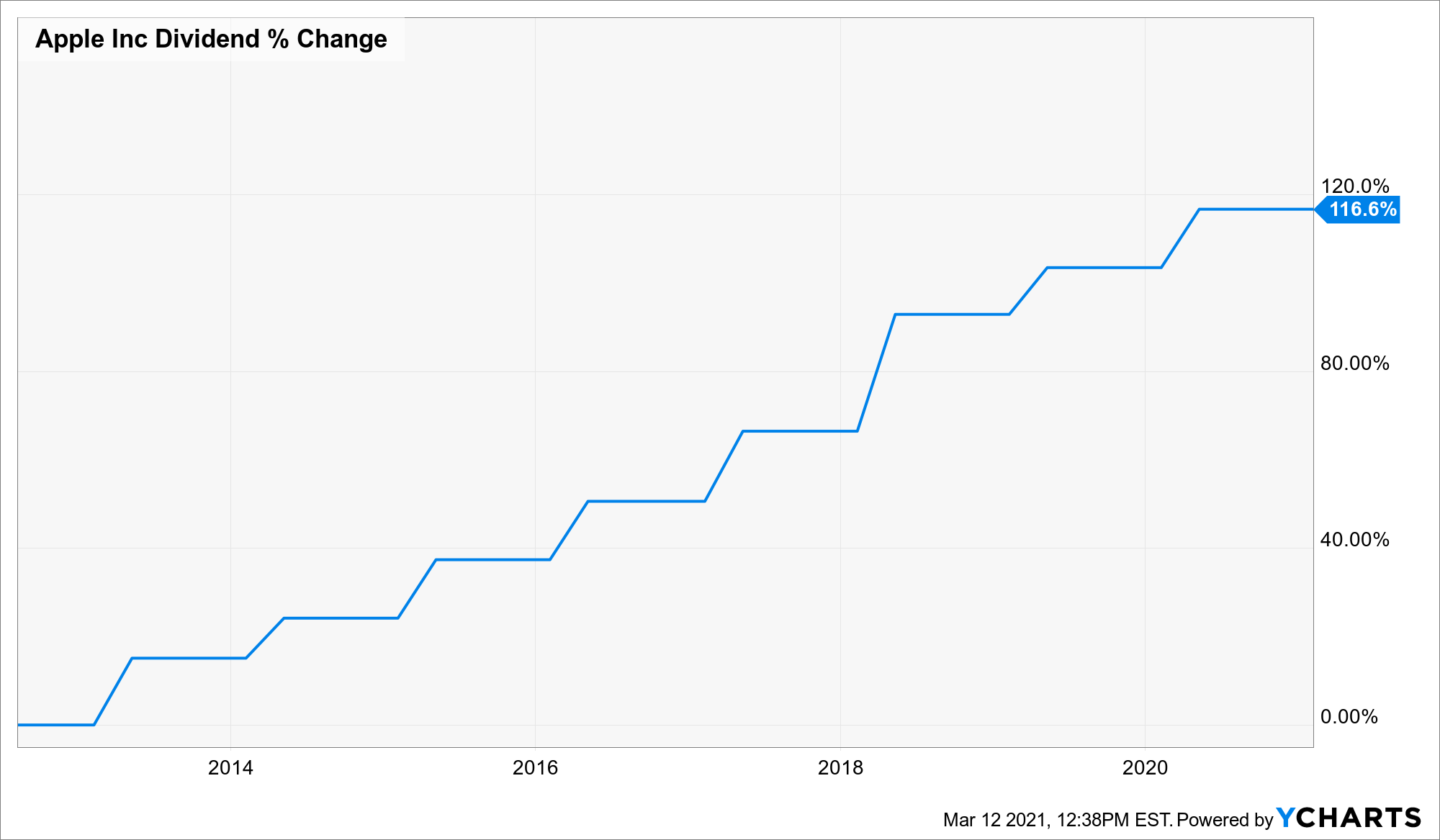
Apple’s capital allocation strategy represents one of the largest corporate wealth distribution frameworks in global financial history. When Apple re-initiated its quarterly cash dividend in 2012 under Chief Executive Officer Tim Cook, it marked a structural transition from a hyper-growth tech firm hoarding cash to a mature financial powerhouse returning excess capital to investors.
To understand the full scope of a dividend increase, investors must analyze how Apple structures its overall capital allocation model. Apple does not view dividends in isolation; rather, dividends are part of a dual-track program dominated by share buybacks.
Total Capital Returned = Cash Dividends + Share Repurchases
While share repurchases reduce overall share count—thereby boosting earnings per share (EPS) and future dividend sustainability—cash dividends provide direct income to shareholders.
Free Cash Flow Generation as the Foundation
Apple’s capability to consistently raise its payout relies on its massive free cash flow (FCF) generation. Operating across high-margin segments—primarily iPhone sales, Wearables, and its expanding Services ecosystem (App Store, iCloud, Apple Pay, Apple Music, and subscriptions)—Apple generates tens of billions of dollars in cash from operations every quarter.
Because software and digital services carry higher operating margins than consumer hardware, the growth of Apple's Services division has structurally protected its cash flow profile. This high-margin cash generation ensures that even during temporary hardware sales slowdowns, Apple maintains a low FCF payout ratio, leaving ample liquidity for research and development, supply chain investments, capital expenditures, and ongoing capital returns.
The Role of Share Repurchases in Dividend Growth
A critical mechanism enabling Apple's predictable annual dividend increases is its massive share buyback program. By spending tens of billions of dollars each year repurchasing and retiring its own common stock, Apple systematically reduces its total basic and diluted share count.
When total outstanding shares decrease, Apple can increase its dividend payout per share without increasing the total aggregate cash outlay required to fund the dividend. For example, if Apple reduces its outstanding share count by 3% to 4% annually, a 4% to 5% increase in the per-share dividend payout results in a flat or only minimally increased cash outflow for the company. This synergistic loop allows Apple to maintain extreme financial flexibility while delivering steady dividend growth.
Macroeconomic and Industry Ripple Effects
When Apple raises its dividend, financial markets register the event across multiple channels. The ripple effects influence competitive technology sector practices, passive ETF capital flows, and institutional portfolio management.
- Apple Dividend Raise
- Mega-Cap Tech Sector: Signals maturity; pressures peers to return cash
- Passive Index Funds: Triggers rebalancing in Dividend Growth ETFs (e.g., VIG)
- Credit Markets: Reaffirms AA+ credit quality and low-risk capital structure
- Retail & Institutional Investors: Shifts AAPL from pure growth to GARP / Income
1. Big Tech Capital Return Norms
Historically, Silicon Valley tech giants avoided paying cash dividends, preferring to reinvest all earnings into capital expenditures, R&D, or corporate acquisitions. Apple’s ongoing dividend commitment proved that a tech leader could continue innovating while distributing billions to shareholders.
In the years following Apple's sustained capital return strategy, mega-cap peers such as Microsoft, Alphabet, Meta Platforms, and Nvidia established or expanded their own cash dividend and share repurchase initiatives. Apple’s annual dividend updates reinforce an industry-wide standard: mature technology firms with high free cash flow are expected to maintain clear, disciplined capital return policies rather than letting idle cash accumulate on balance sheets.
2. Shifts in Passive ETF Flows and Index Rebalancing
An increase in Apple’s dividend directly affects index funds, exchange-traded funds (ETFs), and systematic investment strategies:
- Dividend Appreciation & Growth ETFs: Funds such as the Vanguard Dividend Appreciation ETF (VIG) or dividend-growth benchmarks require companies to demonstrate consecutive years of increasing annual dividend payouts. As Apple extends its track record of annual dividend raises, its weighting and eligibility across dividend-growth indices solidify, driving automated buying from passive passive-income index funds.
- Weighted Sector Funds: Because tech sector ETFs weight companies by market capitalization and financial metrics, increases in total payout ratio can alter rebalancing calculations for broad technology and total market funds.
- Yield-Focused Funds: While Apple’s absolute dividend yield remains relatively modest (typically floating between 0.5% and 1.5% depending on stock valuation), its sheer market capitalization means it accounts for a large percentage of total cash dollars distributed by the S&P 500 index.
3. Institutional Risk Management and Asset Allocation
Institutional investors—such as pension funds, insurance asset managers, and sovereign wealth funds—enforce strict mandates regarding dividend-paying equities. A company with a strong track record of dividend growth is viewed as having lower fundamental balance sheet risk.
When Apple raises its dividend, it re-anchors its stock as a core holding for institutional Growth at a Reasonable Price (GARP) and core equity portfolios. The payout increase acts as a structural floor under the stock price during broader equity market drawdowns, as institutional income managers view yield expansion as a buying signal.
Comprehensive Framework: Capital Return Dynamics
To evaluate how Apple's dividend raise compares to general corporate dividend strategies, consider the functional metrics that govern capital allocation decisions:
| Metric / Dimension | Apple’s Approach | Traditional High-Yield Dividend Stocks | Impact of an Apple Dividend Increase |
|---|---|---|---|
| Primary Capital Distribution Method | Share Buybacks (75–85% of total capital returned) | Cash Dividends (60–90% of total capital returned) | Maintains lower share count, enabling steady per-share dividend growth without cash strain. |
| Dividend Yield Target | Moderate / Low Yield (typically 0.5% – 1.5%) | High Yield (3.5% – 7.0%+) | Focuses on capital appreciation plus growth of income rather than immediate high current yield. |
| FCF Payout Ratio | Conservative (typically under 20–25%) | Elevated (50% – 80%+) | Provides massive safety buffer for ongoing R&D, AI capital expenditures, and economic downturns. |
| Institutional Classification | Tech Growth / Dividend Contender / GARP | Income / Value / Defensive | Expands shareholder base to include both growth funds and dividend-appreciation strategies. |
| Sector Benchmark Effect | High (Sets standard for Big Tech capital policy) | Low (Follows established sector conventions) | Encourages peer tech companies to return excess cash via dividends and systematic buybacks. |
Evaluating the Financial Health Behind the Dividend
Before interpreting a dividend raise as an unqualified buy signal, fundamental analysts and retail investors must evaluate the underlying financial metrics supporting the increase.
- Evaluating Dividend Health
- Free Cash Flow Payout Ratio = Total Cash Dividends paid / Free Cash Flow
- Net Debt & Cash Balance = Total Cash & Marketable Securities minus Total Debt
- Share Reduction Rate = Annual percentage decline in Diluted Shares Outstanding
- CapEx Commitments = Data Center, Infrastructure, and R&D Investments
Free Cash Flow Payout Ratio vs. Net Income Payout Ratio
Traditional stock analysis relies on the net income payout ratio:
$$\text{Net Income Payout Ratio} = \frac{\text{Dividends Per Share}}{\text{Earnings Per Share}}$$
However, in capital-intensive and cash-rich sectors, evaluating the Free Cash Flow (FCF) Payout Ratio offers a far more accurate assessment of dividend safety:
$$\text{FCF Payout Ratio} = \frac{\text{Total Cash Dividends Paid}}{\text{Operating Cash Flow} - \text{Capital Expenditures}}$$
Apple historically maintains an FCF payout ratio below 25%. This conservative buffer means Apple could experience a severe macroeconomic downturn or significant supply chain disruption and still easily cover its dividend obligations without taking on debt or dipping into cash reserves.
Net Cash Target and Balance Sheet Flexibility
Apple has long maintained a stated corporate finance objective of reaching a "net cash neutral" position over time—meaning its total cash and marketable securities equal its outstanding debt.
An annual dividend raise is calibrated against this balance sheet goal. If Apple generates excess cash faster than it can spend on strategic capital expenditures, acquisitions, or share buybacks, increasing the cash dividend provides a permanent, predictable channel to return capital toward the net cash neutral target.
Managing AI Infrastructure and R&D Capital Expenditures
In the modern technology landscape, mega-cap firms must allocate substantial capital toward artificial intelligence (AI) infrastructure, custom silicon development, enterprise data centers, and advanced supply chain security.
Apple’s dividend strategy reflects disciplined balance-sheet management. Unlike companies that over-commit to high cash dividends and subsequently struggle to fund massive capital expenditure cycles, Apple's low payout ratio ensures that elevated spending on next-generation computing architectures does not threaten its dividend payout growth.
Strategic Guidance for Investors
Understanding how an Apple dividend raise affects market dynamics enables investors to refine their portfolio strategies.
Note: The following guidance is for educational and analytical purposes only. Individual investors should consult a certified financial planner or registered investment advisor regarding their specific tax and portfolio circumstances.
1. Dividend Growth Investors (Focus on Compounding)
For investors utilizing a Dividend Reinvestment Plan (DRIP) or focusing on long-term dividend growth:
- Look at Dividend Growth Rate (DGR), Not Yield: Apple's current yield may appear modest, but its continuous dividend growth rate, combined with steady share count reduction, generates strong compounding over a multi-year horizon.
- Monitor Yield on Cost: Investors who bought Apple stock years ago enjoy a high yield on initial cost due to compound dividend increases and stock splits.
2. Value and Income Investors (Focus on Safety and Total Return)
For investors seeking defensive characteristics and low downside risk:
- Evaluate Dividend Safety: Track Apple's quarterly cash flow statements filed with the U.S. Securities and Exchange Commission (SEC) via form 10-Q and form 10-K. Ensure operating cash flow comfortably covers capital expenditures and total cash dividends.
- Assess Capital Return Balance: Confirm that share buybacks remain the dominant allocation channel. If buybacks are drastically curtailed to support cash dividends, it could signal tightening operational cash flow.
3. ETF and Passive Index Allocation
For investors managing exposure through broad-market or smart-beta ETFs:
- Understand Index Weights: Recognize that holding major equity ETFs (such as S&P 500 index funds or Nasdaq-100 funds) already exposes your portfolio to Apple’s dividend policy changes.
- Evaluate Overlap: Be aware that adding specialized dividend-growth ETFs (like dividend appreciation funds) alongside core index funds increases your concentration risk in mega-cap technology stocks.
Investor Checklist: Analyzing an Apple Capital Return Announcement
When Apple releases its annual capital return update (typically alongside its fiscal Q2 financial results), use this checklist to assess the strength of the announcement:
- Calculate the Percentage Increase: Determine the per-share quarterly dividend raise percentage (e.g., from $0.24/share to $0.25/share). Compare this rate against recent historical annual increases to identify acceleration or decelerating trends.
- Review Cash Buyback Authorization: Identify the total new share repurchase authorization granted by the Board of Directors. Determine whether buyback activity is expanding or holding steady.
- Verify FCF Coverage: Check the cash flow statement. Subtract capital expenditures from operating cash flow to get FCF, then divide total dividend distributions by FCF to calculate the updated coverage ratio.
- Examine Debt vs. Cash Reserves: Review total cash, cash equivalents, and marketable securities against long-term debt to evaluate progress toward Apple's net-cash-neutral milestone.
- Analyze Management Guidance: Read the executive commentary from earnings calls regarding capital expenditures, research commitments, and long-term liquidity outlook.
Frequently Asked Questions
How does an Apple dividend raise affect the stock price on the ex-dividend date?
On the ex-dividend date, a stock’s share price is automatically adjusted downward by the exchange by the exact amount of the cash dividend. For example, if Apple pays a quarterly dividend of $0.25 per share, the stock opens $0.25 lower on the ex-dividend date to reflect the distribution of corporate cash. However, normal market trading quickly absorbs this adjustment based on intraday supply and demand dynamics.
Why does Apple spend much more money on share buybacks than on cash dividends?
Share buybacks offer greater capital allocation flexibility and tax efficiency. Repurchasing shares reduces the total number of outstanding shares, which permanently increases earnings per share (EPS) for remaining shareholders. Furthermore, buybacks can be scaled up or down based on market conditions without sending negative dividend-cut signals to the financial markets.
Does Apple qualify as a "Dividend Aristocrat"?
A Dividend Aristocrat is defined as a company in the S&P 500 that has increased its cash dividend payout every year for at least 25 consecutive years. Because Apple re-initiated its dividend in 2012, it has not yet reached the 25-year threshold. However, Apple is widely held in "Dividend Achievers" or "Dividend Appreciation" indices that require a shorter minimum record (such as 10 consecutive years of dividend growth).
How do dividend increases impact Apple's earnings per share (EPS)?
A dividend raise itself does not directly change earnings per share, as dividends are paid out of retained earnings and cash reserves, not net income. However, the overall capital return program—specifically the accompanying share repurchases—directly reduces the denominator (total diluted shares outstanding) in the EPS equation, thereby raising overall earnings per share over time.
How are Apple dividend payments taxed for retail investors?
For U.S. tax residents holding Apple stock in a taxable brokerage account, Apple’s cash dividends are typically classified as qualified dividends, provided the investor meets the required holding period (holding the stock for more than 60 days during a specified 121-day period). Qualified dividends are taxed at preferential long-term capital gains tax rates (0%, 15%, or 20% depending on taxable income) rather than ordinary income tax rates. Investors holding Apple stock in tax-advantaged accounts (such as an IRA or 401(k)) defer or avoid immediate dividend taxes based on account rules.
Next Steps for Portfolio Management
An Apple dividend raise is a key signal of corporate health, disciplined balance-sheet execution, and sustained free cash flow. While the immediate cash payout per share may seem modest relative to classic high-yield defensive utility stocks, the compounding power of steady dividend growth paired with aggressive share repurchases makes Apple a central component of global capital returns.
To apply these insights effectively:
- Audit Portfolio Exposure: Check your combined direct equity holdings and passive ETF allocations to measure your total implicit exposure to Apple's capital return decisions.
- Track Key Announcement Dates: Mark your investment calendar for Apple's annual fiscal second-quarter financial reports (typically released in late April or early May), when capital allocation updates are announced.
- Verify Reinvestment Settings: Ensure your brokerage account is configured correctly for either automatic Dividend Reinvestment (DRIP) to compound shares over time or cash distribution based on your personal income needs.