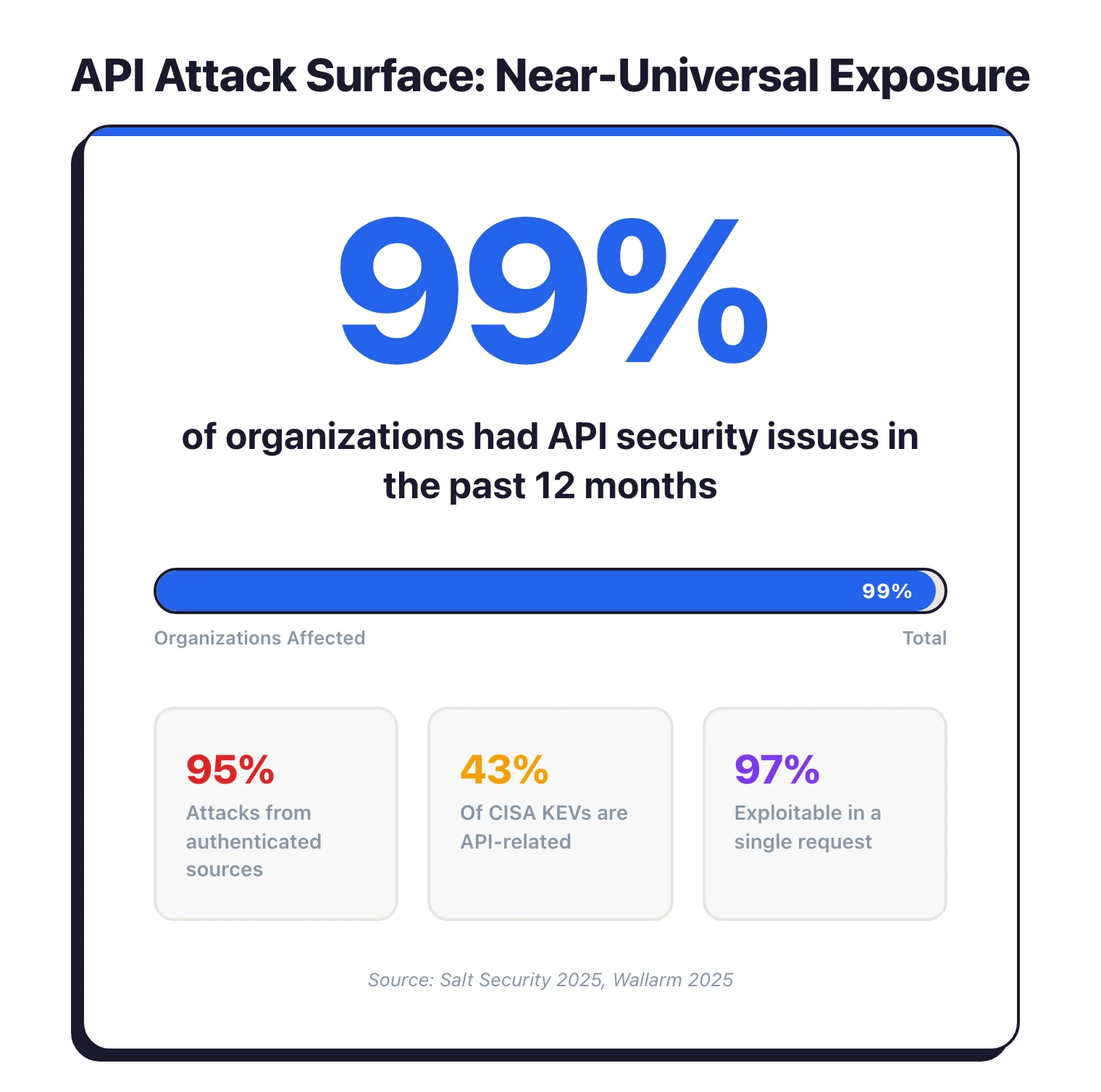
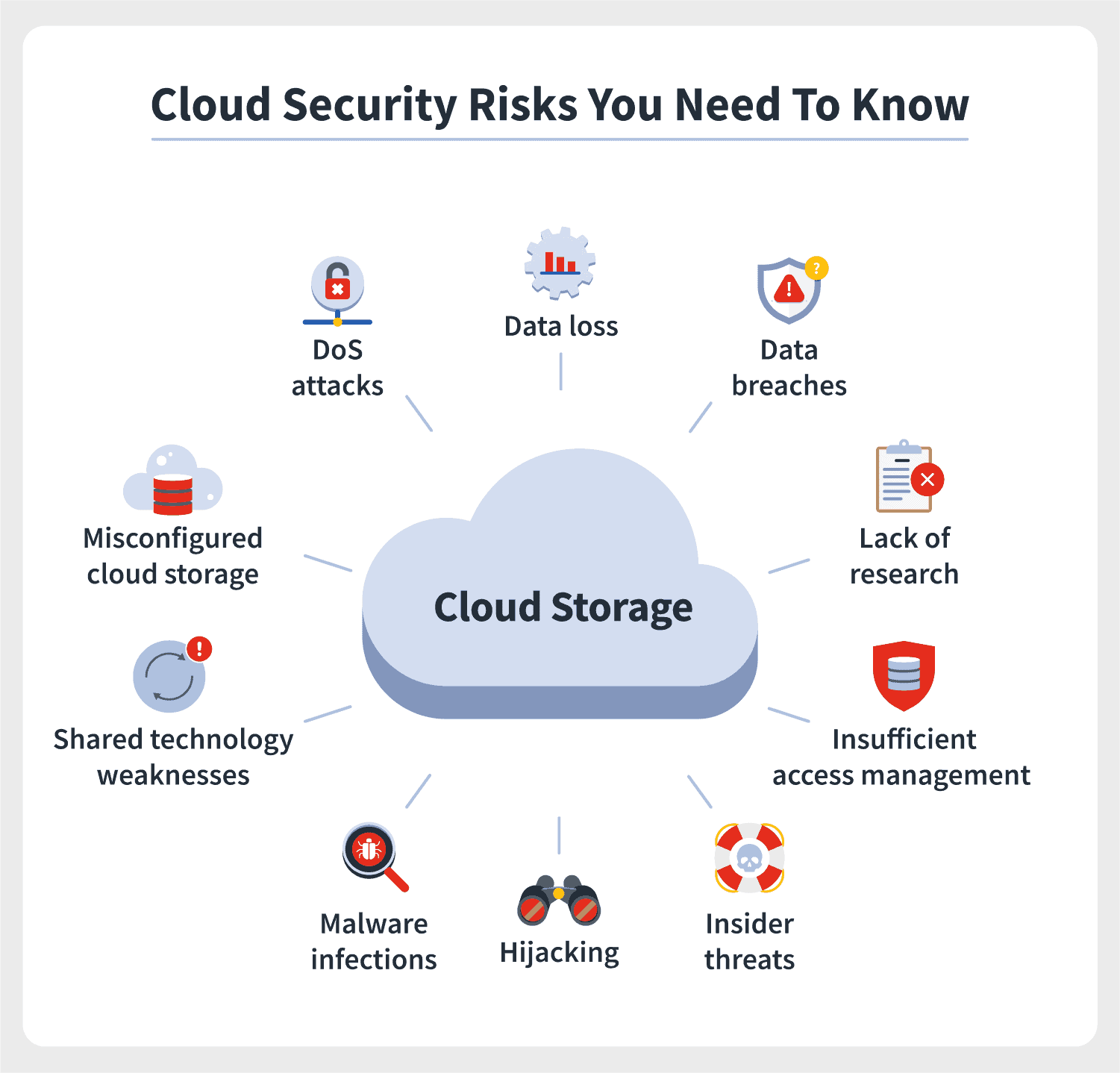
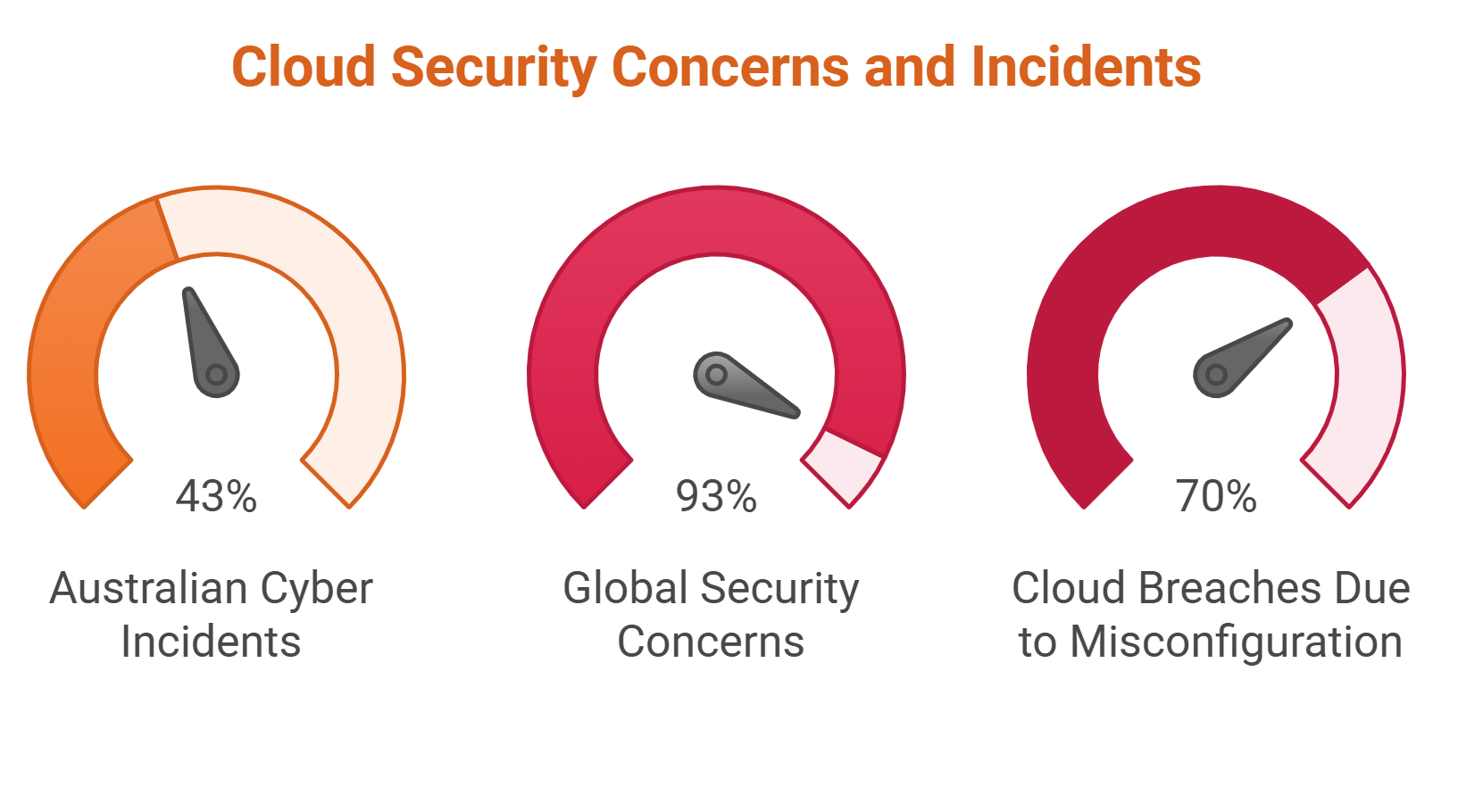
Cloud API security concerns stem from exposed application programming interfaces, automated microservice interactions, and dynamic, multi-tenant cloud infrastructure. Key vulnerabilities include Broken Object Level Authorization (BOLA), Server-Side Request Forgery (SSRF), exposed authentication tokens, and unmonitored shadow APIs. Securing cloud APIs requires strict OAuth 2.0/OIDC authorization, API gateways, mutual TLS, continuous endpoint discovery, and alignment with the cloud shared responsibility model.
The Intersection of Cloud Architecture and API Vulnerabilities
Application Programming Interfaces (APIs) serve as the central connective fabric of modern software development. In cloud-native architectures—spanning Infrastructure as a Service (IaaS), Platform as a Service (PaaS), and serverless environments—APIs govern how internal microservices communicate, how web and mobile applications pull backend data, and how third-party integrations interact with enterprise resources. However, moving workloads to cloud environments introduces architectural characteristics that fundamentally change the API threat landscape.
Traditional on-premises environments relied on fixed perimeter defenses, such as network firewalls and hardware appliances, to isolate API traffic. In contrast, cloud environments are defined by dynamic scaling, distributed microservices, short-lived (ephemeral) workloads, and multi-tenancy. When applications deploy across container orchestrators (such as Kubernetes) or serverless execution platforms (such as AWS Lambda, Azure Functions, or Google Cloud Run), the network perimeter effective disappears. Every API endpoint effectively acts as an exposed entry point to the infrastructure.
- On-Premises Model: User -> Perimeter Firewall -> Monolithic API Server
- Cloud-Native Model: User -> Cloud API Gateway -> Ephemeral Microservices
- Cloud Metadata Service
- Identity Provider
Cloud security operates under the Shared Responsibility Model. Cloud Service Providers (CSPs) manage the security of the cloud—including physical infrastructure, hypervisors, and core networking hardware. Cloud customers remain strictly responsible for security in the cloud, which encompasses application logic, data governance, access controls, identity management, and API implementation. Misunderstandings of this boundary frequently lead organizations to assume their cloud provider automatically secures application-layer API traffic.
The rapid velocity of cloud deployments via Continuous Integration and Continuous Deployment (CI/CD) pipelines further accentuates vulnerability risks. Developers frequently expose internal APIs to public IP space without adequate authentication, deploy non-production testing endpoints alongside production systems, or hardcode cloud access keys within application code.
Major Threat Vectors in Cloud API Environments
API security threats in the cloud range from business logic flaws to cloud metadata exploits. The Open Web Application Security Project (OWASP) Foundation maintains an dedicated framework—the OWASP API Security Top 10—highlighting the most critical vulnerabilities affecting API ecosystems.
| Vulnerability Category | Primary Cloud Exploitation Risk |
|---|---|
| Broken Object Level Auth (BOLA) | Unsanitized ID queries leak tenant data |
| Server-Side Request Forgery (SSRF) | Unauthorized requests reach Metadata Server |
| Broken Property Level Authorization | Data over-fetching exposes private fields |
| Unrestricted Resource Consumption | Layer 7 DoS / Serverless financial drain |
| Unmonitored Shadow / Zombie APIs | Abandoned endpoints bypass cloud policies |
1. Broken Object Level Authorization (BOLA) and Multi-Tenancy Leaks
Broken Object Level Authorization (BOLA) remains the most prevalent and severe cloud API vulnerability. BOLA occurs when an API endpoint accepts an object identifier from an incoming request without verifying whether the requesting user or service holds permission to access that specific resource.
In cloud multi-tenant environments, where database tables or object stores (such as Amazon S3 buckets or Azure Blob Storage) host data for thousands of distinct clients within shared infrastructure, BOLA can lead to total tenant data exposure.
- Exploitation Scenario: A user authenticates to access their profile at
GET /api/v1/tenants/1042/details. By simply changing the numeric ID or UUID in the URI toGET /api/v1/tenants/1043/details, an attacker receives data belonging to a completely different tenant because the backend controller validates token authenticity but fails to perform object-level tenancy checks.
2. Server-Side Request Forgery (SSRF) and Cloud Metadata Exploitation
Server-Side Request Forgery (SSRF) occurs when an API endpoint processes external input containing a URL and attempts to fetch data from that location without proper URL parsing or egress restriction. While SSRF is a general application risk, its impact within cloud environments is exceptionally severe due to cloud instance metadata services (IMDS).
Most major cloud providers maintain internal, non-routable IP addresses (typically 169.254.169.254) that provide running compute instances with information about their cloud environment, network configuration, and temporary IAM access tokens.
- Exploitation Scenario: If a cloud-hosted API accepts a parameter like
POST /api/v1/fetch-avatar?url=http://example.com/image.jpgwithout validating the scheme or domain, an attacker can substitute the target URL withhttp://169.254.169.254/latest/meta-data/iam/security-credentials/. If the application runs on an outdated metadata version (such as AWS IMDSv1 which relies on basic HTTP GET requests without session tokens), the API server will retrieve and return its own temporary IAM credentials to the attacker, leading to full cloud environment compromise.
3. Broken Property-Level Authorization and Data Over-Fetching
Cloud APIs often utilize REST or GraphQL architectures designed to pass complex JSON objects. Broken Property-Level Authorization encompasses both Mass Assignment (allowing users to modify restricted object properties) and Excessive Data Exposure (returning complete object attributes to the client while relying on frontend UI code to filter sensitive fields).
In microservice environments, APIs often return full internal objects (including hashed passwords, private keys, role parameters, or administrative flags) under the assumption that the consumer is an internal application. When these APIs are exposed directly to public network boundaries via API gateways without schema trimming, sensitive cloud attributes are leaked directly to public traffic.
4. Unrestricted Resource Consumption and "Denial of Wallet"
Traditional Denial of Service (DoS) attacks focus on saturating bandwidth or server memory. In cloud environments, API resource exhaustion introduces a secondary economic impact known as Denial of Wallet (DoW).
Cloud architectures leverage elastic autoscaling and serverless compute platforms designed to scale dynamically with incoming load. If an API lacks rate limiting, execution timeouts, maximum payload size restrictions, or pagination boundaries:
- Attackers can issue thousands of computationally expensive requests (e.g., complex GraphQL queries, bulk PDF exports, high-volume database searches).
- The cloud infrastructure scales horizontally to handle the artificial spike in traffic.
- The application remains technically online, but the cloud deployment incurs massive, unbudgeted operational costs for compute runtime, API gateway calls, and network egress within hours.
5. Shadow, Zombie, and Unmonitored APIs
Cloud platforms make launching new environments, microservices, and API routes effortless. This agility introduces significant governance challenges:
- Shadow APIs: Undocumented APIs deployed by development teams outside of official IT review, security architecture clearance, or API gateway coverage.
- Zombie APIs: Outdated API versions (e.g.,
/api/v1/usersremaining live alongside/api/v3/users) left active after deprecation cycles, which lack modern security controls, patch updates, or identity controls.
In dynamic cloud environments, automated microservice discovery can leave unmonitored endpoints connected directly to backend data stores, effectively bypassing central Web Application and API Protection (WAAP) platforms.
Technical Comparison: Legacy vs. Cloud-Native API Security
Securing APIs requires shifting away from legacy network perimeter defenses toward context-aware, identity-centric security models.
| Security Dimension | Legacy API Security Model | Cloud-Native API Security Model |
|---|---|---|
| Defensive Perimeter | Fixed (Hardware Firewalls, Edge DMZ) | Identity-centric, Distributed (Zero Trust Network Access) |
| Traffic Scope | Primarily North-South (Client-to-Server) | Heavy East-West (Service-to-Service) + North-South |
| Authentication & Auth | Basic Auth, API Keys, Session Cookies | OAuth 2.0, OpenID Connect, JWT, Mutual TLS (mTLS) |
| Inventory Management | Static documentation (Manual Swagger/OpenAPI) | Dynamic, Continuous Discovery via CSPM & Gateway Integration |
| Threat Inspection | Signature-based Web Application Firewalls (WAF) | Behavioral Analysis, Schema Validation, Runtime WAAP |
| Resource Protection | Server-level bandwidth limiting | Granular Rate Limiting, Autoscaling Quotas, Budget Controls |
| Cloud Integration | Isolated from cloud IAM state | Directly bound to Cloud IAM, Workload Identities, and Metadata Rules |
Essential Cloud API Security Controls and Architecture
Addressing cloud API vulnerabilities requires a layered defense strategy (Defense-in-Depth) that embeds security controls across identity, network ingress, runtime environments, and development workflows.
- Incoming Client Request
- Cloud WAAP / Edge DDoS Mitigation
- API Gateway (Rate Limiting, OAuth/OIDC Validation)
- Service Mesh (mTLS Enforced for East-West Traffic)
- Microservice Controller (BOLA Checks & IMDSv2 Only)
1. API Gateways and WAAP Integration
Deploying an API Gateway (such as AWS API Gateway, Kong, Apigee, or Azure API Management) serves as the primary ingress control point for cloud APIs. Gateways centralize essential security functions before traffic ever hits backend microservices:
- Centralized Authentication: Offloads token verification (validating JSON Web Tokens, signature verification, and expiration checks) from downstream services.
- Web Application and API Protection (WAAP): Combines standard WAF web protection with automated API schema inspection, blocking malformed XML/JSON payloads that deviate from defined specifications.
- Throttling and Spike Arrest: Enforces strictly governed rate limits based on client identity, IP reputation, or API key tiers to prevent resource exhaustion attacks.
2. Modern Identity and Zero Trust Frameworks
Relying solely on static API keys or IP whitelist checks is insufficient in dynamic cloud deployments. Cloud APIs must adopt robust, standardized identity protocols:
- OAuth 2.0 and OpenID Connect (OIDC): Use OAuth 2.0 for access authorization and OIDC for user authentication. APIs must issue short-lived, cryptographically signed Access Tokens (such as JWTs) containing precise scopes.
- Mutual TLS (mTLS) for East-West Traffic: While API Gateways secure North-South traffic (client-to-server), microservices communicating internally within a Kubernetes cluster or virtual private cloud (VPC) require mutual authentication. Implementing a service mesh (such as Istio or Linkerd) enforces mTLS, encrypting internal communications and verifying identity for every inter-service request.
- Fine-Grained Attribute-Based Access Control (ABAC): Beyond verifying who makes a request (RBAC), authorization engines must evaluate contextual attributes—such as object ownership, tenant context, request originating location, and time—to prevent BOLA and BFLA vulnerabilities.
3. Hardening Cloud Instance Metadata Services
To mitigate SSRF risks targeting instance metadata:
- Enforce AWS IMDSv2 (or equivalent token-backed metadata endpoints): IMDSv2 requires callers to initiate a session via an HTTP
PUTrequest containing a custom header to obtain a temporary token, followed by an HTTPGETrequest using that token. Because standard SSRF vulnerabilities rarely allow attackers to control custom headers during a initial SSRF payload, IMDSv2 effectively neutralizes metadata extraction attacks. - Apply Network Egress Controls: Restrict non-system microservices from reaching internal IP space
169.254.169.254/32using Cloud Security Group rules, Kubernetes NetworkPolicies, or egress firewall rules. - Adopt Workload Identity: Use identity federation mechanisms (such as AWS IAM Roles for Service Accounts - IRSA, Azure Workload Identity, or GCP Workload Identity Federation) rather than assigning broad node-level IAM profiles to entire virtual host clusters.
4. Schema Validation and OpenAPI Specifications
Enforce explicit contract-based API security using OpenAPI Specifications (OAS). By uploading machine-readable OAS contracts to API gateways or WAAP solutions:
- The edge infrastructure implements a Positive Security Model, rejecting any incoming HTTP request containing unexpected data types, unlisted parameters, or oversized payloads before reaching backend code.
- Response payloads can be sanitized against schema contracts to prevent the accidental exposure of private database attributes (preventing Excessive Data Exposure).
Step-by-Step Guide: Implementing Cloud API Security
Building an operational roadmap ensures cloud teams systematically identify, harden, and monitor their exposed API surface.
- Phase 1: Discovery & Inventory Mapping
- Phase 2: Authentication & Authorization Hardening
- Phase 3: Egress & Metadata Control Enforcement
- Phase 4: Shift-Left Testing & Continuous Runtime Inspection
Step 1: Perform Automated Endpoint Discovery and Inventory
You cannot protect endpoints you do not know exist.
- Scan Infrastructure as Code (IaC): Analyze Terraform, CloudFormation, or Helm templates in CI/CD repositories to flag exposed API gateways, load balancers, or public routes.
- Deploy Cloud Security Posture Management (CSPM): Utilize CSPM tooling to scan public cloud environments continuously for unauthenticated ingress rules or untracked public IP addresses assigned to API instances.
- Perform Dynamic Traffic Analysis: Implement passive network monitoring or API discovery tools that analyze API call logs (e.g., AWS CloudTrail, API Gateway access logs) to inventory active routes, identify orphaned "Zombie APIs," and map data flow.
Step 2: Establish Centralized Authentication and Authorization Architecture
- Route all public API traffic through an enterprise API Gateway.
- Enforce cryptographic validation of OAuth 2.0 JWT tokens at the gateway level. Ensure algorithms are explicitly restricted (preventing the
alg: noneJWT signature bypass attack). - Implement mandatory object-level authorization checks inside microservice controllers. Verify that
requesting_user_tenant_id === targeted_object_tenant_idon every query execution.
Step 3: Enforce Egress Restrictions and IMDS Hardening
- Audit cloud infrastructure compute settings across all regions. Disable IMDSv1 globally, mandating IMDSv2 across all AWS EC2 instances, or enforce strict metadata access constraints in Google Cloud Platform and Azure.
- Configure outbound egress filters on your cloud VPC containers. Deny internal microservices access to non-essential private endpoints, service management networks, and cloud metadata IPs unless specifically required.
Step 4: Implement API Rate Limiting and Cost Guards
- Define granular rate-limiting policies within your API gateway:
- Unauthenticated endpoints (e.g.,
/api/v1/login): Strict rates (e.g., maximum 5 requests per minute per IP). - Authenticated endpoints: Tiered rate limits based on user authorization levels and subscription plans.
- Unauthenticated endpoints (e.g.,
- Set cloud billing alerts and infrastructure autoscaling limits (such as ceiling thresholds on serverless concurrency limits) to mitigate Denial of Wallet scenarios.
Step 5: Shift-Left Security Testing in the CI/CD Pipeline
- Static Application Security Testing (SAST): Integrate SAST scanners in code repositories to detect hardcoded API keys, JWT validation flaws, and bad framework routing definitions prior to code merge.
- Dynamic API Testing (DAST): Run automated API security testing tools against staging environments, fuzzing endpoints using OpenAPI contracts to detect BOLA, SQL injection, and parameter tampering vulnerabilities before production releases.
Frequently Asked Questions
What makes cloud API security different from general web application security?
General web application security focuses primarily on protecting HTML user interfaces and client-side web browser rendering against risks like Cross-Site Scripting (XSS). Cloud API security focuses heavily on machine-to-machine state data access, JSON/XML payload integrity, broken authorization logic (BOLA/BFLA), high-throughput service traffic, and interactions with cloud infrastructure layers (such as IAM identities and Cloud Instance Metadata Services).
How do cloud metadata service attacks (SSRF) target cloud APIs?
If a cloud API accepts user-controlled URLs without input sanitization, an attacker can manipulate the API to issue an internal HTTP request to non-routable cloud metadata IP addresses (e.g., 169.254.169.254). If successful, the metadata server returns temporary cloud credentials (such as AWS IAM role tokens), allowing the attacker to authenticate directly against the victim's cloud provider account.
What is a "Shadow API," and why is it dangerous in cloud infrastructure?
A Shadow API is an active endpoint deployed within an organization's environment without explicit approval, security review, or registration within an API management system. In cloud environments, where launching infrastructure is fast and easy, developers might expose test APIs directly to the internet. These endpoints often lack security logging, authentication controls, and WAAP protection, giving attackers an unmonitored backdoor into cloud networks.
How does Mutual TLS (mTLS) improve cloud microservices security?
Mutual TLS forces both the client service and the receiving microservice to authenticate each other's identity using X.509 digital certificates before establishing an encrypted TLS connection. In microservice architectures running on shared cloud infrastructure (like Kubernetes), mTLS guarantees that unauthorized internal workloads cannot intercept data or call restricted internal API endpoints, realizing a core requirement of Zero Trust architecture.
What role does an API Gateway play in securing cloud microservices?
An API Gateway acts as a controlled entry point (proxy) sitting between external clients and backend cloud microservices. It centralizes essential security policies, including TLS termination, OAuth 2.0 authentication token validation, request rate limiting, traffic scrubbing via WAF integration, schema enforcement, and centralized access logging. This prevents downstream microservices from having to implement security logic individually.
Next Steps for Securing Cloud API Ecosystems
To build a resilient cloud API security posture, enterprise technology teams should take immediate, structured action:
- Conduct an Endpoint Audit: Perform an immediate automated scan of all public cloud accounts to construct a centralized inventory of public and private APIs, mapping them directly against OpenAPI contracts.
- Enforce Metadata Hardening: Standardize infrastructure templates to require IMDSv2 across compute workloads, eliminating exposed SSRF credential theft vectors.
- Implement Standardized Gateway Policies: Transition isolated public microservice routes behind a managed API Gateway, enforcing OAuth 2.0/OIDC validation and baseline rate limiting.
- Adopt Automated Security Assessment: Embed API-focused static and dynamic security scanning (DAST/SAST) into automated deployment pipelines to identify broken authorization logic prior to production release.
For ongoing technical standards and operational guidance, reference formal publications from standardizing bodies, such as the OWASP API Security Project, NIST Special Publication 800-204 (Security Strategies for Microservices Architectures), and official cloud provider architectural security frameworks.