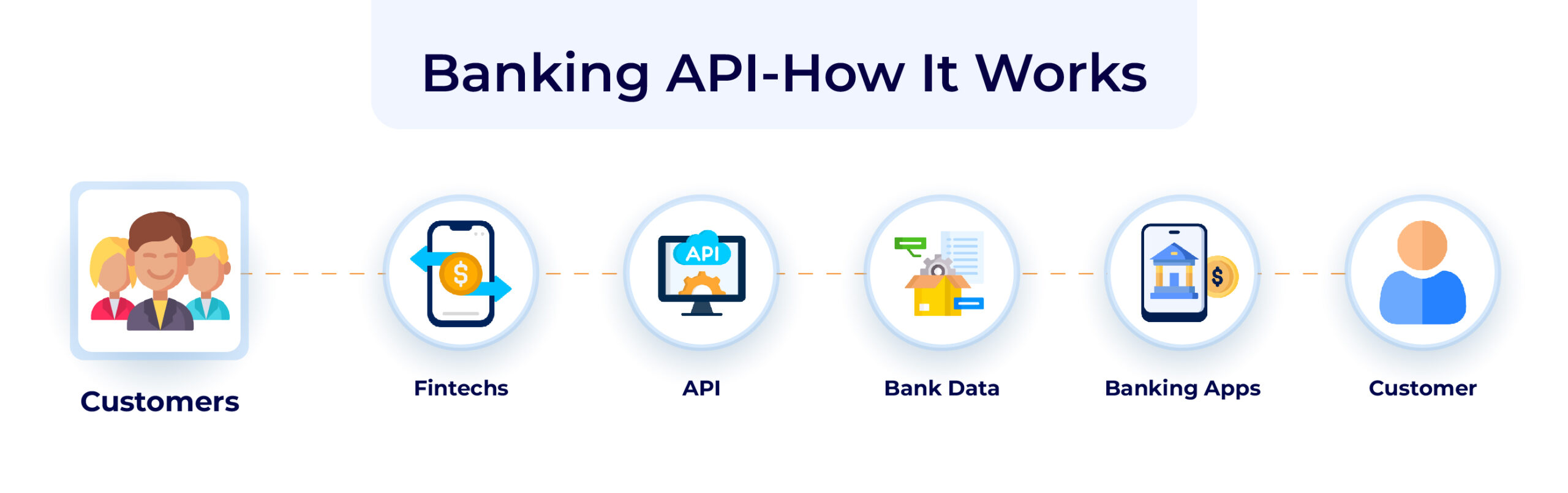
API ingredients in modern financial platforms are the modular, third-party, and internal Application Programming Interfaces (APIs) that handle core services like account aggregation, identity verification (KYC/AML), payment rails, core ledger processing, credit underwriting, and investment management. These standardized digital connectors allow platforms to assemble robust fintech ecosystems without building core infrastructure from scratch.
Modern fintech infrastructure relies heavily on composable architecture. Rather than building proprietary banking ledgers, card issuing engines, and fraud models, software engineering teams integrate modular API services. This decouples business logic from low-level regulatory and processing infrastructure, drastically accelerating time-to-market while lowering engineering overhead.
Understanding how these API components interact, secure sensitive data, and enforce transactional integrity is vital for enterprise architects, software engineers, and financial product leaders building scalable platforms.
The Shift to Composable Financial Architecture
Traditionally, building a financial institution required constructing a monolithic core system connected directly to legacy clearing houses, credit bureaus, and payment networks via complex mainframe protocols. This approach created high barriers to entry, rigid development cycles, and fragile integration points.
Composable finance replaces legacy monoliths with a microservices model powered by RESTful, GraphQL, and gRPC APIs. In this operational model, specialized third-party providers act as infrastructure utility layers. A modern digital wallet, for instance, may use one API for customer identity verification, another for bank account linking, a third for debit card issuing, and an internal core engine to manage account balances.
- User Experience Layer (Mobile App / Web Dashboard / SDK)
- Platform Business Logic Layer (Orchestration, Rules Engine, Custom Features)
- Data & KYC APIs (Plaid, Persona)
- Payments & Rails APIs (Stripe, FedNow)
- BaaS & Core Ledgers (Mambu, Unit)
- Platform Business Logic Layer (Orchestration, Rules Engine, Custom Features)
By assembling these distinct API ingredients, engineering teams maintain focus on proprietary user experiences and risk algorithms while outsourcing regulatory overhead, network access, and physical ledger maintenance to specialized vendors.
The 6 Essential API Ingredients of Modern Platforms
Every competitive financial application relies on a combination of six fundamental API layers. Each category handles a specific functional domain, complete with dedicated data standards, compliance obligations, and security protocols.
1. Identity Verification and KYC/AML APIs
Before a user can execute a transaction or deposit funds, financial platforms must verify their legal identity to satisfy Know Your Customer (KYC) and Anti-Money Laundering (AML) mandates enforced by regulatory authorities such as the Financial Crimes Enforcement Network (FinCEN) in the U.S. or the European Banking Authority (EBA).
Modern identity APIs automate identity verification by processing government IDs, biometrics, and database records in real time.
- Key Capabilities: Automated document verification (OCR extraction of passports and driver's licenses), biometric liveness detection, facial matching, social security number (SSN) cross-referencing, and continuous AML watch-list screening (PEP and sanctions checks).
- Data Standards: JSON payloads utilizing Base64-encoded binary images or direct secure upload tokens, accompanied by webhook notifications for asynchronous verification checks.
- Representative Providers: Persona, Trulioo, Onfido, Sumsub.
2. Account Aggregation and Open Banking APIs
Account aggregation APIs serve as data bridges, allowing users to connect external bank accounts to financial applications safely. They eliminate the need for manual micro-deposits or micro-entry of account details.
These APIs execute balance checks, extract historical transaction logs, and fetch account metadata to support underwriting, money transfers, and personal financial management tools.
- Key Capabilities: Instant account authorization, real-time balance checks, standardized transaction categorizations, income verification, and recurring bill detection.
- Data Standards: Open Banking standards such as the Financial Data Exchange (FDX) format in North America and UK Open Banking Read/Write Standards, utilizing OAuth 2.0 user-consent flows.
- Representative Providers: Plaid, MX, Yodlee, Tink.
3. Payment Processing and Money Movement APIs
Payment APIs provide programmatic interfaces to legacy clearinghouses and real-time payment rails. They facilitate the movement of money between external bank accounts, payment cards, wallets, and instant payment schemes.
- Key Capabilities: ACH (Automated Clearing House) batch payments, wires, real-time rails (such as FedNow and RTP in the U.S., or SEPA Instant in Europe), card processing, and cross-border remittance routing.
- Data Standards: ISO 20022 messaging standards for bank-to-bank communications, wrapped in modern REST interfaces enforcing idempotency keys for transaction deduplication.
- Representative Providers: Stripe, Dwolla, Modern Treasury, Astra.
- Client App to Platform Server: Submit Payment Request
- Platform Server to Payment API Gateway: POST /v1/transfers (Header: Idempotency-Key: 1234)
- Payment API Gateway to Platform Server: 202 Accepted (Status: Pending)
- Platform Server to Client App: Display Processing State
- Payment API Gateway to Platform Server: Webhook Event: transfer.paid
- Platform Server to Client App: Display Payment Complete
4. Banking-as-a-Service (BaaS) and Core Ledger APIs
Banking-as-a-Service APIs allow non-bank companies to embed financial products—such as FDIC-insured checking accounts, savings accounts, and physical or virtual card issuing—into their existing software.
Core ledger APIs manage the double-entry accounting engine, maintaining absolute transactional accuracy, balance calculations, and fee accruals across millions of sub-accounts.
- Key Capabilities: Virtual account generation, routing number assignments, physical and virtual card issuing (with custom authorization rules), real-time ledger updates, and interest calculation engines.
- Data Standards: Strict double-entry ledger structures where every debit has an equal and opposite credit entry, returned over secure REST or gRPC channels.
- Representative Providers: Unit, Treasury Prime, Synctera, Mambu, Thought Machine.
5. Credit, Scoring, and Underwriting APIs
Credit APIs enable platforms to assess consumer and commercial risk programmatically. These services query legacy credit bureaus, alternative data sources, and platform-native transaction histories to output real-time credit scores, pre-approvals, and loan terms.
- Key Capabilities: Hard and soft credit inquiries, cash-flow underwriting algorithms, debt-to-income (DTI) calculations, and automated regulatory disclosure generation (such as adverse action notices).
- Data Standards: JSON and legacy MISMO XML payloads requiring high levels of security due to FCRA (Fair Credit Reporting Act) legal compliance.
- Representative Providers: Alloy, Nova Credit, Experian API Exchange, Equifax Developer Platform.
6. Investment, Wealth, and Capital Markets APIs
Wealthtech APIs provide access to securities exchanges, automated portfolio management, fractional share trading, and crypto asset custody. They manage trade execution, settlement routines, and tax lot accounting.
- Key Capabilities: Market order execution, limit orders, fractional trading, portfolio rebalancing, tax-loss harvesting calculations, and automated tax form generation (e.g., 1099-B).
- Data Standards: FIX (Financial Information eXchange) protocol internally, wrapped in WebSockets for real-time market data streaming and REST APIs for account management.
- Representative Providers: Alpaca, DriveWealth, SnapTrade, Apex Fintech Solutions.
Architectural Comparison of Core API Categories
The following matrix compares the core API categories across operational metrics, technical requirements, and regulatory implications:
| API Category | Primary Use Case | Key Technical Protocols | Critical Compliance & Security Standards | Typical Latency Expectations |
|---|---|---|---|---|
| Identity / KYC | User onboarding & identity validation | REST, JSON Web Tokens (JWT), Webhook callbacks | CIP, BSA, USA PATRIOT Act, GDPR, CCPA | Asynchronous (2s to 30s) |
| Account Aggregation | Bank account linking & balance checks | OpenID Connect, OAuth 2.0, FAPI, FDX | SOC 2 Type II, Open Banking Regulations | Synchronous (500ms to 3s) |
| Payments & Rails | ACH, Card, Wire, & RTP transfers | RESTful API, Webhooks, ISO 20022 | PCI-DSS, NACHA rules, Electronic Fund Transfer Act | Synchronous submission, Async clearing |
| BaaS & Ledgers | Core banking, deposit accounts, card issuing | REST, gRPC, Event Streams (Kafka/RabbitMQ) | FDIC/NCUA insurance rules, Card Brand Rules | Synchronous (< 200ms for ledger updates) |
| Credit & Scoring | Risk evaluation & lending decisions | REST, Secure XML/MISMO | FCRA, ECOA, GLBA | Synchronous (< 1s) |
| Investment | Brokerage, trading, & asset management | REST, WebSockets, FIX Protocol | SEC rules, FINRA compliance, AML/KYC | Low Latency (< 100ms for market orders) |
Security, Infrastructure, and Integration Blueprints
Connecting external API ingredients into a unified platform requires strict architectural patterns to prevent money laundering, fraud, data leaks, and inconsistent balances.
Financial-Grade Security Profiles (FAPI) and mTLS
Standard OAuth 2.0 implementation is insufficient for high-value financial transactions. Modern platforms implement the Financial-grade API (FAPI) security profile, designed by the OpenID Foundation.
FAPI adds strict requirements to standard OAuth flows, including:
- Mutual TLS (mTLS): Enforces cryptographic authentication between both client and server at the transport layer, preventing sender-constrained token abuse.
- Encrypted Request Parameters: Prevents tampering with request objects (such as transfer amounts or destination account numbers) in transit.
- Short-Lived Signed JWTs: Requires JSON Web Tokens to be signed using asymmetric keys (RS256 or ES256) and verified against strict expiration timestamps.
Idempotency and Distributed Transaction Resilience
Because network calls can fail unpredictably, executing financial operations without strict idempotency guarantees risks duplicate charges or missing ledger records.
An idempotency key is a unique identifier generated by the client application (typically a UUID v4) sent within the HTTP request header.
POST /v1/transfers HTTP/1.1 Host: api.paymentservice.com Authorization: Bearer secret_token_abc123 Idempotency-Key: e8a946b2-601d-4076-a979-5e263d9ab044 Content-Type: application/json { "amount": 5000, "currency": "USD", "destination_account": "acc_887123" }
When an API provider receives a request with an idempotency key:
- It checks if the key exists in its database.
- If the key exists, it returns the cached response from the initial execution without processing the payment again.
- If the key does not exist, it saves the key, executes the transaction, stores the result, and returns the response.
Event-Driven Architectures and HMAC Webhooks
Financial operations depend on real-time asynchronous notifications. Modern platforms implement event-driven architectures utilizing Webhooks and event streams (e.g., Apache Kafka or AWS EventBridge).
To verify that webhooks originate from an authorized API partner and were not modified in transit, providers sign payload data using Hash-based Message Authentication Code (HMAC) signatures.
When receiving webhooks, platforms must execute HMAC verification prior to parsing payload data:
import hmac import hashlib def verify_webhook(payload_body, header_signature, secret_key): # Recreate the signature using the raw body and shared secret computed_signature = hmac.new( key=secret_key.encode('utf-8'), msg=payload_body.encode('utf-8'), digestmod=hashlib.sha256 ).hexdigest() # Use constant-time comparison to prevent timing attacks return hmac.compare_digest(computed_signature, header_signature)
Common Pitfalls and Engineering Failures
Integrating complex financial APIs introduces operational risks that standard web applications rarely face. Software teams frequently run into critical bottlenecks:
1. Hardcoding Business Logic to Vendor-Specific APIs
Directly leaking third-party API payloads into core platform business logic ties your engineering roadmap to vendor schemas. If an API vendor changes endpoints, depreciates versions, or hikes prices, migrating codebases becomes cost-prohibitive.
- Mitigation: Implement the Repository & Adapter Design Pattern. Create internal, domain-specific models (e.g.,
PlatformAccount,PlatformTransfer) and map API partner responses to internal interfaces using abstraction layers.
2. Inadequate Fallback Mechanisms for Provider Outages
APIs experience downtime. If your platform relies on a single provider for KYC or bank account authorization, partner outages completely halt customer onboarding.
- Mitigation: Architecture teams should design smart routing strategies that automatically failover to secondary providers when primary API responses timeout or return 5xx server errors.
3. Mismanaging Webhook Out-of-Order Delivery
Distributed systems cannot guarantee that webhooks will arrive in chronological order. A platform might receive a payment.completed event before a payment.created event due to network latency.
- Mitigation: Implement idempotency storage for webhooks, track state via sequence numbers or absolute timestamps, and use database transactions to prevent stale state overwrites.
Evaluating and Selecting API Ingredients
Selecting the right combination of APIs requires balancing compliance overhead, integration time, developer experience, and cost structures.
- API Evaluation Framework
- Technical Requirements
- SLA & Latency Guarantees
- Sandbox Fidelity & Docs
- SDK Support & Security
- Business & Compliance
- Fee Structure (Flat vs %)
- Sponsor Bank Backing
- Jurisdictional Reach
- Technical Requirements
Key Selection Criteria:
- Sponsor Bank Stability (for BaaS): Ensure your BaaS partner works with established, regulatory-compliant sponsor banks. Operational disruptions at sponsor bank partners directly freeze consumer end-accounts.
- Sandbox Environment Fidelity: Evaluate the quality of provider sandboxes. A high-fidelity sandbox should support edge-case simulations (e.g., network delays, step-up security prompts, compliance rejections) without requiring live funds.
- Pricing Structure Compatibility: Analyze fee structures carefully. Identity and KYC APIs typically charge per verification call, whereas payment processing APIs charge a percentage fee plus a fixed per-transaction cost. Ensure these line items align with your customer acquisition and revenue models.
Frequently Asked Questions
What are the essential API ingredients needed to launch a digital bank?
Launching a digital bank typically requires four core API categories: a Banking-as-a-Service (BaaS) provider to issue virtual accounts and manage accounts, a KYC/AML identity verification API to onboard users safely, an account aggregation API for funding accounts, and a payment processing engine for debit cards and real-time bank transfers.
What is the difference between Open Banking APIs and BaaS APIs?
Open Banking APIs focus on data read/write permissions—allowing consumers to securely share their historical financial data and initiate transfers from existing bank accounts. BaaS APIs go deeper by providing the infrastructure to create brand-new bank accounts, issue debit cards, and manage ledgers directly within your application.
How do modern platforms ensure security when using third-party APIs?
Financial platforms maintain security using Financial-grade API (FAPI) standards, Mutual TLS (mTLS) transport channels, strict tokenization of sensitive credentials (like SSNs and credit card numbers), HMAC signatures on all webhook streams, and continuous compliance adherence to PCI-DSS, SOC 2, and data protection laws.
Why are idempotency keys critical for financial APIs?
Idempotency keys prevent duplicate operations caused by retried network calls. If a payment request times out, the client application can safely retry the request using the same idempotency key. The payment API will return the processed result without double-charging the user's account.
Should financial platforms build core ledger systems in-house or buy via API?
Early-stage platforms and non-bank companies should leverage API-first ledger engines to minimize launch risk, lower initial capital expenditures, and avoid building complex double-entry accounting logic from scratch. Enterprise-scale platforms with unique transactional rules may choose to build proprietary internal ledgers while continuing to outsource external clearing house connectivity via payment APIs.
Recommended Next Steps
To build a resilient fintech product using modular API components:
- Define Core Workflows: Map out user onboarding, account funding, and transactional flows to identify exactly which external API layers are required.
- Audit Security Protocols: Ensure your application architecture supports OAuth 2.0 / FAPI flows, encrypted environment variable management, and HMAC verification for webhooks.
- Abstract Vendor Dependencies: Design internal domain models and adapter patterns before writing integration code to ensure long-term platform flexibility and vendor independence.