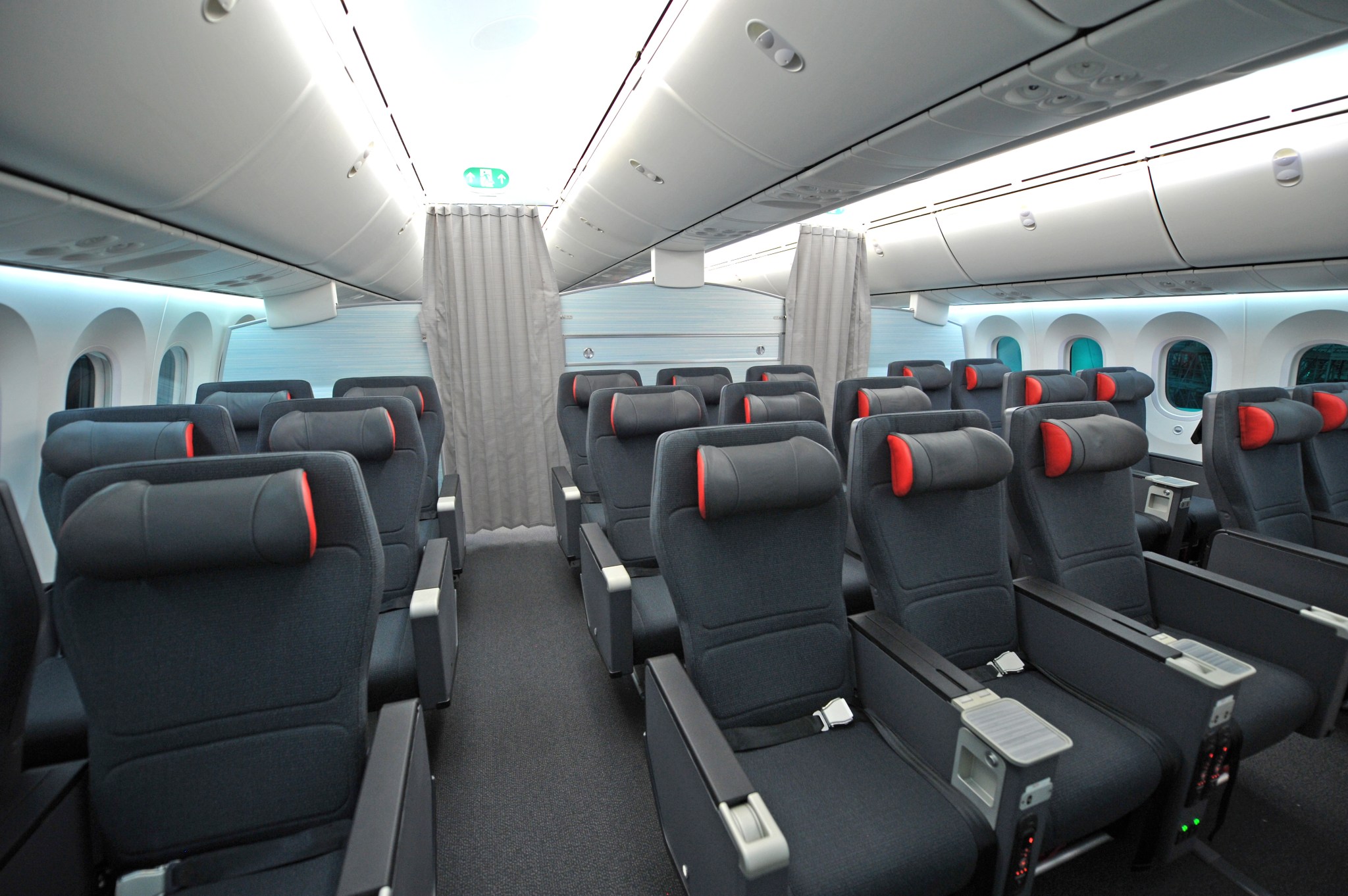
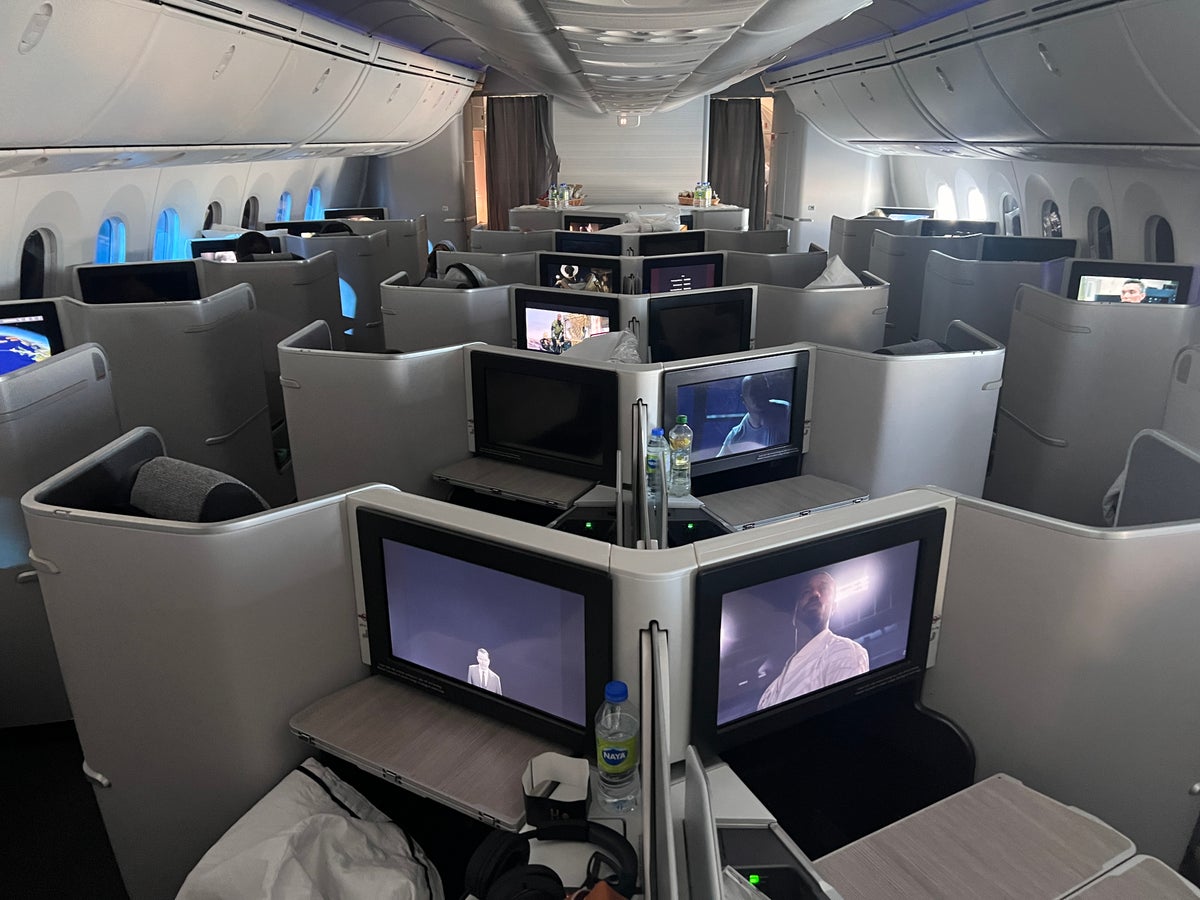
Air Canada’s Boeing 787-9 Dreamliner features a three-cabin configuration designed for long-haul international travel, consisting of Signature Class (Business), Premium Economy, and Economy Class. Understanding the 1-2-1, 2-3-2, and 3-3-3 layouts is essential for maximizing comfort and ensuring specific needs like extra legroom or aisle access are met.
The Boeing 787-9 Dreamliner serves as the backbone of Air Canada’s international fleet in 2026. This aircraft is highly regarded not just for its fuel efficiency, but for its passenger-centric design, including larger windows, higher humidity levels, and lower cabin altitude pressure, all of which contribute to reduced jet lag. However, with 298 seats spread across three distinct service tiers, the "best" seat depends entirely on your budget, loyalty status, and physical requirements.
The Three-Cabin Configuration Overview
Air Canada typically operates the 787-9 with a total capacity of 298 passengers. The aircraft is divided into three primary sections, each offering a different level of service and ergonomic support. As of 2026, the standard layout remains consistent across the long-haul fleet, though minor soft-product updates (like bedding and meal service) may vary by route.
The aircraft is structured as follows:
- Air Canada Signature Class: 30 Executive Pods in a 1-2-1 configuration.
- Premium Economy: 21 seats in a 2-3-2 configuration.
- Economy Class: 247 seats in a 3-3-3 configuration.
The layout is designed to prioritize privacy in the front and density in the back, but even within the Economy cabin, there are significant differences between "standard" seats and "preferred" seats.
Air Canada Signature Class (Business Class)
Located in the forward-most section of the aircraft (Rows 1–8), the Signature Class cabin is the pinnacle of Air Canada's long-haul offering. These seats utilize the "Executive Pod" design, based on the Collins Aerospace Super Diamond platform.
Layout and Privacy
The 1-2-1 reverse-herringbone configuration ensures that every passenger has direct aisle access. This eliminates the need to climb over a neighbor or be disturbed by someone else moving around. The "A" and "K" seats are window seats, angled toward the windows for maximum privacy. The "D" and "G" seats are the center pairs, angled toward each other. While there is a retractable privacy divider between center seats, these are the preferred choice for couples or colleagues traveling together.
Seat Features
Each pod converts into a fully flat bed, measuring 80 inches (203.2 cm) in length. The seat width is approximately 21 inches, though the design feels more spacious due to the open side-table area. Signature Class passengers have access to a 18-inch touchscreen entertainment system, noise-canceling headphones, and a dedicated power suite featuring an AC outlet and USB ports.
Recommended Seats in Signature Class
- Middle Rows (3–6): These are considered the "sweet spot" of the cabin. They are far enough from the front galley and lavatories (Row 1) to avoid noise and light pollution, and far enough from the second galley and Premium Economy curtain (Row 8) to maintain a quiet atmosphere.
- Avoid Row 1 and Row 8: Row 1 is closest to the cockpit and the main galley, where flight attendants prepare meals. Row 8 is adjacent to the second galley and the walk-through area for crew, which can be noisy during mid-flight service.
Premium Economy: The Middle Ground
The Premium Economy cabin on the 787-9 is a small, intimate section consisting of only three rows (Rows 18–20). This cabin offers a significant upgrade in physical space compared to Economy without the high price tag of Signature Class.
Comfort and Dimensions
The 2-3-2 layout means fewer middle seats and more elbow room. Seats here offer a 38-inch pitch (legroom) and a 19-inch width, along with a deeper recline and a fold-out footrest. This is often the best value-for-money option for travelers who find Economy too cramped but cannot justify a lie-flat bed.
Bulkhead Considerations (Row 18)
Row 18 is the bulkhead row for Premium Economy. The primary advantage is that there is no one in front of you to recline their seat into your space. However, there are two drawbacks: the legroom is restricted by the wall (you cannot stretch your legs fully under a seat in front), and the entertainment screens are stowed in the armrest, making the seat slightly narrower. Furthermore, Row 18 is where bassinet positions are located, increasing the likelihood of being seated near infants.
Economy Class and Preferred Seating
The Economy cabin is the largest section, spanning from Row 19 to Row 44. It follows a standard 3-3-3 "triple" configuration. While the seats are modern, the 17.3-inch width can feel tight on 10+ hour flights.
Preferred Seats vs. Standard Seats
Air Canada designates certain seats as "Preferred Seats." These are not a separate class of service but offer more legroom or better location within the cabin. These typically include:
- Exit Rows (Row 31): These offer the most legroom in the entire Economy cabin. However, these seats are near the lavatories, which leads to high foot traffic and "loitering" by other passengers. You must also be able and willing to assist in an emergency.
- Bulkhead Seats (Row 19): Located immediately behind Premium Economy, these offer extra knee room but suffer from the same issues as Row 18 (armrest-mounted screens and bassinet proximity).
- Forward Economy: Rows 19 through 26 are often designated as preferred because they allow for faster deplaning.
Seats to Avoid in Economy
- Rows 29 and 30: These rows are located directly in front of the mid-cabin lavatories. They often have limited recline to avoid intruding on the lavatory walls, and the constant sound of flushing and light from the toilets can be disruptive.
- Row 44: The very last row of the aircraft. These seats are next to the rear galley and lavatories. They often do not recline fully and are the last to receive meal service.
- Missing Windows: On the Boeing 787-9, certain rows may have a misaligned window or a missing window due to the placement of air conditioning risers. Passengers in Row 28 should be aware that their view may be partially obstructed.
Technical Specifications and Amenities
The 787-9 is equipped with Air Canada’s latest Panasonic eX3 in-flight entertainment system. Every seat, regardless of cabin, features a touch-screen monitor, a USB port for charging devices, and access to the onboard Wi-Fi (for a fee).
Air Canada 787-9 Seat Map Specifications
| Feature | Signature Class | Premium Economy | Economy Class |
|---|---|---|---|
| Seat Configuration | 1-2-1 | 2-3-2 | 3-3-3 |
| Seat Pitch (Legroom) | 80" (Lie-flat) | 38" | 30" - 31" |
| Seat Width | 21" | 19" | 17" - 17.3" |
| Entertainment Screen | 18" | 11" | 9" |
| Power Outlets | AC + USB | AC + USB | Shared AC + USB |
| Total Seats | 30 | 21 | 247 |
Cabin Environment and Passenger Well-being
One of the reasons the 787-9 seat map is so popular is the aircraft's advanced technology. The Dreamliner is built primarily of composite materials, which allows for a higher cabin humidity level compared to traditional aluminum aircraft. This prevents the "dry eyes" and "dry throat" common on long flights.
Additionally, the cabin is pressurized to 6,000 feet—about 2,000 feet lower than conventional jets. This helps the body absorb more oxygen, reducing fatigue and headaches. The windows are also 30% larger than those on a Boeing 777 and use electrochromic dimming rather than plastic shades, allowing passengers to maintain a view outside even when the "shade" is darkened.
How to Select Your Seat Effectively
To ensure you get the best seat on your 2026 flight, follow these steps:
- Check the Aircraft Type: Confirm your flight is operated by a 787-9 and not a 787-8, as the seat counts and row numbers differ.
- Use the Aeroplan Status: If you hold Aeroplan Elite Status, you may be eligible for complimentary Preferred Seat selection at the time of booking.
- Monitor the Map: Seat maps are dynamic. Check back 24 hours before departure (at check-in), as blocked seats for operational reasons or held for families are often released.
- Consult Real-Time Data: While official maps provide the layout, sites like AeroLOPA provide highly accurate, to-scale renderings of seat alignment with windows.
Frequently Asked Questions
Which seat is best for sleeping in Economy?
The best seat for sleeping in Economy is generally a window seat in the middle of the cabin (Rows 22-26). A window seat provides a surface to lean against and ensures you won't be disturbed by neighbors needing to use the lavatory. Choosing a seat away from the galleys (Rows 18-19 and 30-31) minimizes noise and light disruptions.
Does the Air Canada 787-9 have "hidden" extra legroom?
Yes, Row 31 (the exit row) has significantly more legroom than any other row in Economy, including the bulkhead. However, it comes with the trade-off of being near the lavatories. Another "hidden" benefit is Row 18 in Premium Economy, which lacks a seat in front, though leg extension is limited by the bulkhead wall.
Are the middle seats in Signature Class good for solo travelers?
Yes. Although they are side-by-side, the "Executive Pod" design features a substantial privacy divider that can be raised. Solo travelers often end up in these seats when window pods are fully booked, and they still offer the same level of privacy and direct aisle access.
Is the Wi-Fi reliable on the 787-9?
As of 2026, Air Canada has upgraded most of its 787 fleet to high-speed satellite-based Wi-Fi. While it is generally reliable for browsing, messaging, and email, streaming video can still be subject to latency depending on the aircraft's position over oceans or polar regions.
What is the difference between the 787-8 and 787-9 layouts?
The 787-9 is a "stretched" version of the 787-8. While the cabin types and seat designs are identical, the 787-9 has more seats (298 vs. 255) and more rows in the Economy section. The 787-9 is predominantly used for higher-demand long-haul routes like Toronto to London or Vancouver to Tokyo.
Practical Recommendation
When booking your seat on an Air Canada 787-9, prioritize the middle of the cabin sections to avoid the high-traffic areas near galleys and lavatories. If you are flying Economy and value legroom above all else, Row 31 is your best bet, but bring noise-canceling headphones to drown out the lavatory activity. For those in Signature Class, aiming for Rows 3 through 6 will provide the most consistent and quiet experience. Always verify your seat assignment via the official Air Canada website or mobile app 24 hours before your flight to account for any last-minute aircraft swaps.