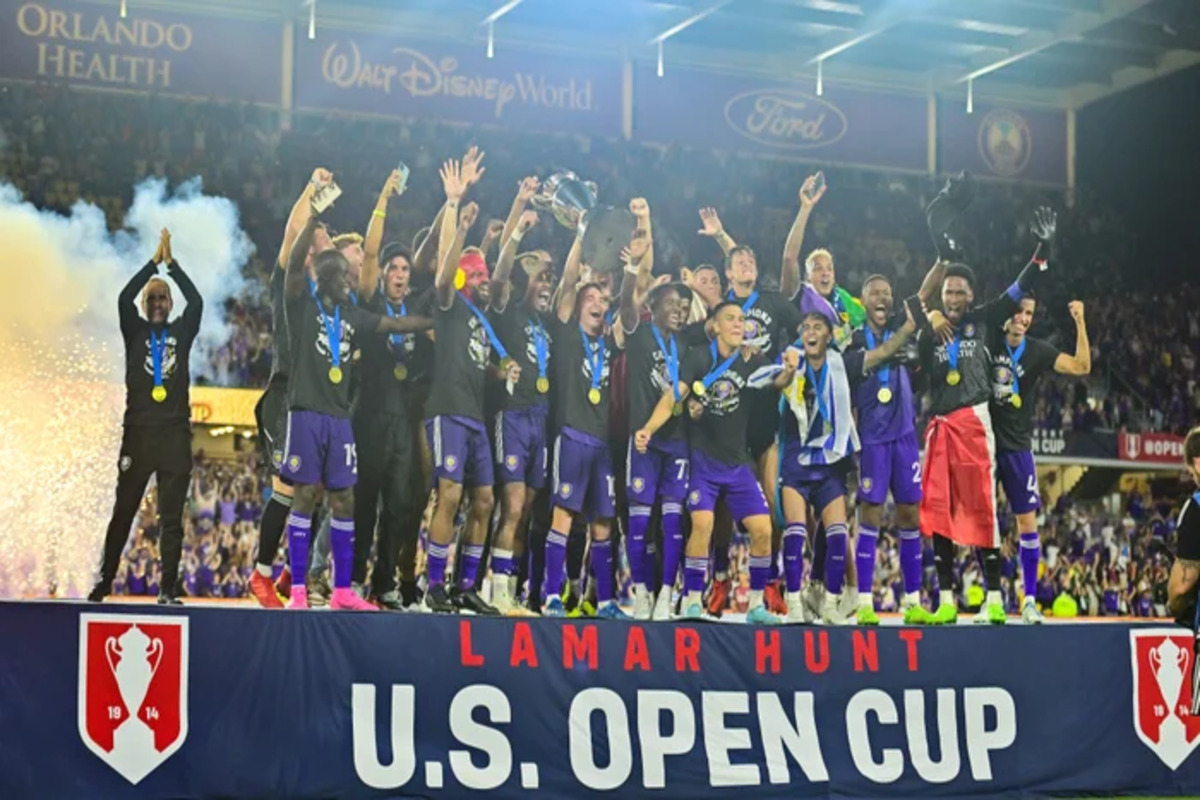
The 2025 Lamar Hunt U.S. Open Cup featured a hybrid participation model involving eight Major League Soccer (MLS) first teams alongside entries from MLS NEXT Pro. This structure, formalized through an agreement between the U.S. Soccer Federation and MLS, aimed to preserve the tournament's 110-year legacy while managing the congested schedules of top-flight professional clubs.
The 2025 edition of the U.S. Open Cup served as a critical turning point for domestic soccer in the United States. Following a period of intense negotiation regarding the role of Major League Soccer in the country's oldest knockout competition, the 2025 season implemented a stabilized version of the "participation model" first trialed in 2024. For fans, players, and administrators, the 2025 tournament was not just about the trophy; it was about the survival and evolution of a soccer tradition that dates back to 1914.
The Evolution of the 2025 Participation Agreement
The landscape of the 2025 U.S. Open Cup was shaped primarily by the friction between the U.S. Soccer Federation (USSF) and Major League Soccer (MLS) that began in late 2023. MLS had initially sought to withdraw all first teams from the competition, citing fixture congestion caused by the expanded Leagues Cup and the CONCACAF Champions Cup. However, USSF denied this request, leading to a compromise that defined the 2025 season.
Under the 2025 agreement, MLS committed to a "hybrid" entry system. This system ensured that the U.S. Open Cup remained a sanctioned, top-tier competition while allowing MLS to prioritize its primary roster for international and league commitments. The 2025 tournament was the first time this model was applied with a full year of lead time, allowing for better logistical planning and marketing than the reactionary measures seen in the previous cycle.
The agreement also focused on increased investment. MLS and U.S. Soccer collaborated to enhance the commercial viability of the tournament. This included better travel subsidies for lower-division clubs and a more structured broadcast schedule. For the 2025 season, the narrative shifted from "Will they play?" to "How will they perform?", as the mixture of MLS first teams and NEXT Pro squads created a unique competitive dynamic.
Selection Criteria for MLS First Teams
One of the most discussed aspects of the 2025 U.S. Open Cup was the specific selection process for the eight MLS first teams that participated. Unlike historical iterations where every U.S.-based MLS team entered the fold, the 2025 edition used a merit-based and eligibility-based filter.
The eight MLS first teams were typically selected based on the following hierarchy:
- The Defending Champion: The winner of the 2024 U.S. Open Cup received an automatic berth to defend their title with their full first-team roster.
- Non-Champions Cup Qualifiers: The remaining slots were filled by the highest-ranking U.S.-based MLS teams from the previous season's Supporters' Shield standings that did not qualify for the 2025 CONCACAF Champions Cup.
This selection logic was designed to prevent the "over-scheduling" of the league’s most successful teams, who were already committed to a minimum of six additional mid-week matches in continental play. For the 2025 tournament, this meant that the "middle class" of MLS became the standard-bearers for the league, often leading to more balanced and unpredictable matchups against top-tier USL Championship sides.
The Role of MLS NEXT Pro and Youth Integration
The 2025 tournament saw a massive influx of MLS NEXT Pro teams. These squads, which serve as the primary developmental bridge for MLS franchises, entered the tournament in the earlier rounds. This provided a significant platform for "Homegrown" players and young prospects to experience high-stakes, knockout soccer against seasoned professionals from the USL and amateur divisions.
Technical staff across the league utilized the 2025 Open Cup as a "proving ground." Roster rules for these NEXT Pro entries allowed for a limited number of first-team "call-ups" for specific matches, though these were strictly regulated to maintain the integrity of the competition. The 2025 season highlighted the narrowing gap between the top of the developmental pyramid and the lower professional leagues, with several NEXT Pro sides making deep runs into the middle rounds of the tournament.
However, the use of NEXT Pro teams remained controversial among traditionalists. Critics argued that the absence of global stars like Lionel Messi or Cucho Hernandez in the early rounds diminished the "magic" of the cup—the possibility of a David vs. Goliath upset where an amateur side faces a world-class roster. Proponents, conversely, argued that the 2025 model was the only sustainable way to keep MLS involved in any capacity.
Tournament Structure and Phases
The 2025 U.S. Open Cup followed a traditional knockout format, but with specific entry points designed to accommodate the various tiers of the American soccer pyramid.
Early Rounds (Rounds 1–3)
The opening stages featured a heavy concentration of Open Division teams, including those from the NPSL, USL League Two, and local amateur qualifiers. These teams were joined by professional sides from USL League One, NISA, and several MLS NEXT Pro entries. The geographic pairing of teams in these rounds was strictly enforced to minimize travel costs, a perennial challenge for independent clubs.
Middle Rounds (Rounds 4–5)
This is where the USL Championship (Division II) teams entered the fray. In 2025, the USL Championship teams often acted as the favorites in this bracket. The 2025 season saw a resurgence in USL performance, with several clubs leveraging their home-field advantage to knock out MLS NEXT Pro opponents. The Round of 32 (Fourth Round) was historically the entry point for the eight designated MLS first teams.
The Closing Stages (Quarterfinals to Final)
By the Quarterfinal stage, the tournament typically distilled into a mix of the eight MLS first teams and the most resilient USL Championship sides. The 2025 semifinals and final were treated as premier events, with U.S. Soccer providing centralized marketing support to ensure high attendance and viewership.
| Feature | 2024 Implementation | 2025 Implementation |
|---|---|---|
| MLS First Teams | 8 Teams | 8 Teams (Refined Selection) |
| MLS NEXT Pro Teams | 11 Teams | Expanded Participation (Approx. 15-20) |
| Travel Subsidies | Baseline coverage | Increased grants for Open Division clubs |
| Winner Prize Money | $300,000 | $300,000 + Performance Bonuses |
| Broadcast Partner | Various/USSF Streaming | Unified Streaming (MLS/USSF Partnership) |
| Champions Cup Berth | Included for Winner | Included for Winner |
Financial Incentives and the "Open Cup 100" Initiative
To combat the perception that the tournament was a financial burden, the 2025 season saw the maturation of the "Open Cup 100" initiative. This program was designed to ensure that the tournament’s 110th year was its most financially stable for lower-league participants.
The 2025 prize pool remained competitive, with $300,000 awarded to the champion and $100,000 to the runner-up. Perhaps more importantly, the "team that advances furthest from each lower division" received a $25,000 bonus. This provided a massive incentive for amateur and Division III teams, for whom $25,000 can cover a significant portion of an annual operating budget.
Furthermore, travel logistics were overhauled. In previous years, a cross-country trip for a Round of 16 match could bankrupt a small club. In 2025, the federation utilized a more robust travel grant system, funded in part by the commercial growth of the tournament and sponsorships from national brands. This allowed clubs to focus on the pitch rather than the balance sheet.
Roster Rules and Technical Compliance
The 2025 U.S. Open Cup operated under specific Technical Regulations that governed player eligibility, particularly for clubs with multiple professional tiers (like MLS and NEXT Pro). These rules were essential to prevent "roster stacking" and to ensure fair play.
- Cup-Tied Rule: Any player who appeared for an MLS NEXT Pro team in the early rounds was "cup-tied" to that specific team. They could not later play for the MLS first-team parent club in the same tournament cycle. This prevented MLS teams from using the early rounds as a fitness trial for stars while saving them for the final.
- Professional Player Definition: To be eligible for the Open Division (amateur) slots, players could not have played under a professional contract within a specific window prior to the tournament. This maintained the "amateur" integrity of the initial rounds.
- Foreign Player Limits: Teams were limited to five "foreign players" on their game-day rosters, consistent with USSF's mission to develop domestic talent through the tournament.
Media Rights and Broadcasting
Streaming and accessibility were major focal points for the 2025 MLS U.S. Open Cup. Following the fragmented broadcast landscape of earlier years, the 2025 tournament benefited from a more streamlined approach.
While the MLS Season Pass on Apple TV remained the home for the eight MLS first teams' regular-season matches, U.S. Soccer retained the rights to the Open Cup. A deal was struck to ensure all matches from the Round of 32 onwards were available on a centralized platform, often involving a combination of Warner Bros. Discovery (Max/TNT) for the later rounds and free streaming via the USSF website or YouTube for the early stages.
This hybrid media model helped the 2025 tournament reach a broader audience. By keeping the early rounds free to watch, the federation encouraged "grassroots" viewership, while the high-production value of the final stages on major streaming platforms catered to the casual sports fan.
Impact on CONCACAF Champions Cup Qualification
The stakes for the 2025 U.S. Open Cup remained incredibly high due to its link to the CONCACAF Champions Cup. As the premier regional club competition, the Champions Cup is the only path for an American club to reach the FIFA Club World Cup.
The winner of the 2025 U.S. Open Cup was awarded a direct slot in the 2026 CONCACAF Champions Cup. Because several MLS teams were excluded from the Open Cup, this created a "golden opportunity" for USL Championship clubs. A USL team winning the Open Cup would have been a historic achievement, granting a second-division club the right to compete against the giants of Mexico’s Liga MX. This "pathway to the world stage" is a defining characteristic of the Open Cup that MLS first-team players and USL veterans alike treated with the utmost seriousness in 2025.
Frequently Asked Questions
Which MLS teams were eligible for the 2025 U.S. Open Cup?
Eligibility was determined by a combination of previous season performance and participation in other continental competitions. Generally, the eight MLS first teams included the defending Open Cup champion and the top seven U.S.-based teams from the Supporters' Shield standings that did not qualify for the CONCACAF Champions Cup. All other U.S.-based MLS clubs were represented by their MLS NEXT Pro affiliates.
Why did some MLS teams use their NEXT Pro squads instead of first teams?
This was part of a negotiated agreement between MLS and U.S. Soccer to alleviate fixture congestion. MLS argued that with the addition of the Leagues Cup and an expanded Champions Cup, first-team players were at high risk for injury. The NEXT Pro squads allowed the clubs to fulfill their tournament obligations while providing developmental minutes to younger players.
Is the U.S. Open Cup the same as the MLS Cup?
No. The MLS Cup is the trophy awarded to the winner of the Major League Soccer playoffs (the league championship). The U.S. Open Cup is a knockout "cup" competition open to all sanctioned amateur and professional clubs in the United States, similar to the FA Cup in England.
How did the 2025 tournament handle travel for smaller clubs?
In 2025, U.S. Soccer implemented increased travel grants and regionalized brackets for the first three rounds. This ensured that amateur and lower-league professional teams did not face prohibitive costs when drawn against opponents several states away, which had been a significant issue in the tournament's past.
Can a USL Championship team win the 2025 U.S. Open Cup?
Yes. Every team entered in the tournament has a mathematical path to the trophy. USL Championship teams often perform well because they enter their full first-team rosters, whereas some MLS organizations in 2025 utilized developmental squads in the earlier rounds.
Final Recommendation for Fans and Clubs
For the most comprehensive experience of the U.S. Open Cup, supporters should focus on the Third and Fourth Rounds, which typically occur in late spring. These rounds represent the "heart" of the tournament, where the most dramatic upsets occur between established USL Championship sides and the incoming MLS entries. Clubs looking to participate in future editions should prioritize USSF sanctioning and ensure their rosters comply with the "cup-tied" regulations early in the season to avoid eligibility disputes.