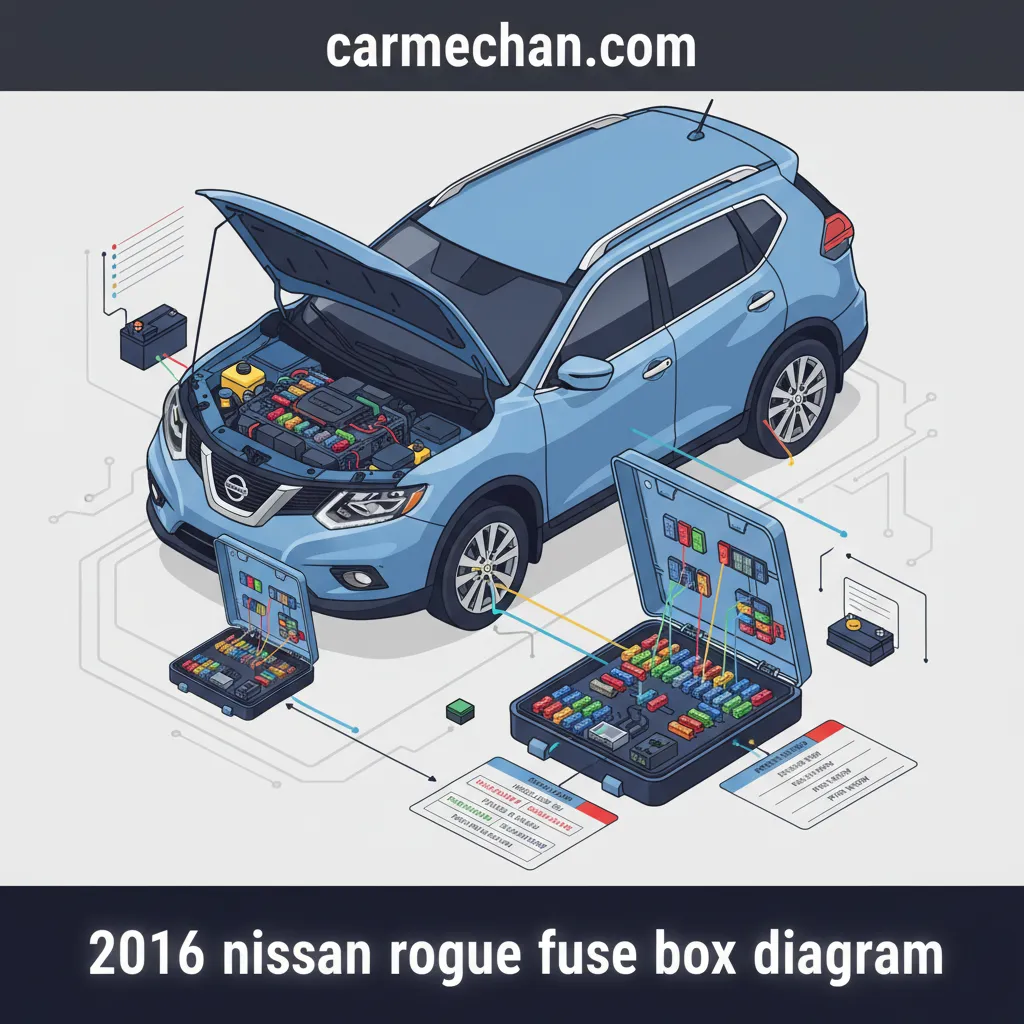
To troubleshoot electrical issues in a 2016 Nissan Rogue, you must access one of the three primary fuse locations: the passenger compartment panel (located under the driver-side dashboard), the engine compartment fuse boxes (near the battery and washer fluid), or the fusible link on the positive battery terminal. These boxes house fuses and relays that protect vital circuits like the fuel pump, headlights, and interior power outlets.
The 2016 Nissan Rogue (T32 generation) is a sophisticated vehicle that relies heavily on its electrical architecture to manage everything from fuel injection to the NissanConnect infotainment system. As of 2026, many of these vehicles have reached a decade of service, meaning owners are more likely to encounter "blown" fuses resulting from aging components, aftermarket accessory installations, or simple wear and tear. Understanding the fuse box diagram is the first step in avoiding costly diagnostic fees at a dealership.
The Role of Fuses in the 2016 Nissan Rogue
A fuse is a sacrificial safety device designed to protect an electrical circuit from excessive current. In the 2016 Rogue, the electrical system operates on a 12-volt DC platform. When a component draws too much power—perhaps due to a short circuit or a failing motor—the thin wire inside the fuse melts, "breaking" the circuit and preventing the wiring harness from overheating or catching fire.
The Rogue utilizes several types of fuses, including:
- Low-profile Mini Fuses: The most common type found in the cabin.
- J-Case Fuses: Larger, block-style fuses used for high-draw items like the radiator fan.
- Fusible Links: Massive fuses located directly on the battery terminal for the main charging and starter circuits.
Passenger Compartment Fuse Box: Location and Details
The interior fuse box is the most frequently accessed panel because it controls the "convenience" electronics. If your 12V power outlet (cigarette lighter) has stopped working or your dome lights won't turn on, this is the first place to look.
How to Access
The interior fuse box is located on the driver’s side of the vehicle. Sit in the driver’s seat and look to the left of the steering column, near your left knee. You will see a plastic cover integrated into the lower dash.
- Grasp the notch at the bottom or side of the cover.
- Pull firmly toward you to snap the cover off.
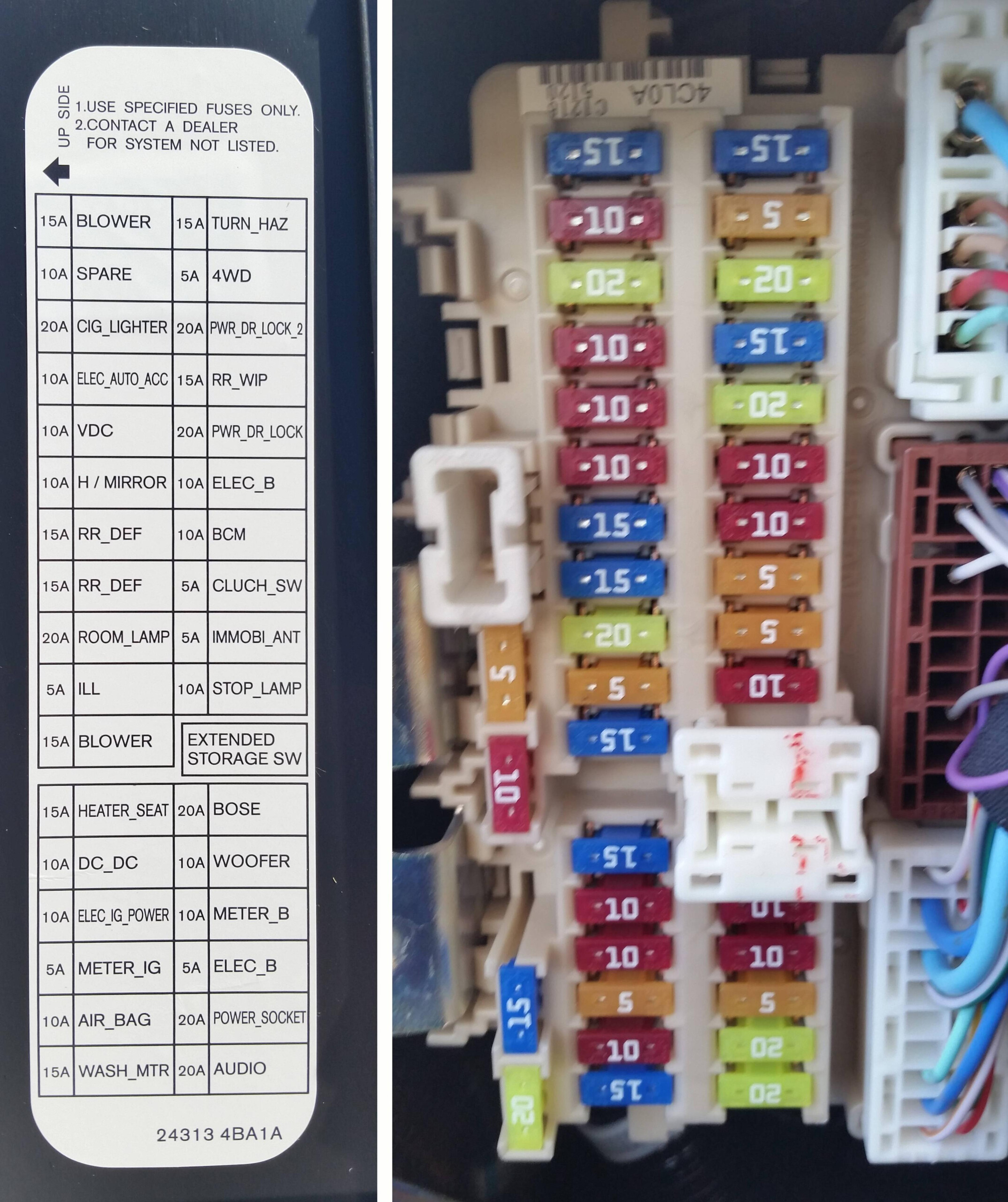
- The back of this plastic cover contains a printed diagram (legend) that identifies each fuse.
Interior Fuse Box Diagram Legend
While the physical layout may vary slightly based on trim levels (S, SV, or SL), the following table represents the standard 2016 Nissan Rogue interior fuse assignments.
| Fuse Number | Amperage (A) | Component Protected |
|---|---|---|
| 1 | 10A | Mirror, Power Door Lock |
| 2 | 10A | Stop Lamp (Brake Lights) |
| 3 | 10A | Airbag (SRS System) |
| 4 | 20A | Front Power Socket (12V Outlet) |
| 5 | 10A | Audio System / NissanConnect |
| 6 | 10A | OBD-II Diagnostic Port |
| 7 | 10A | Meter (Instrument Cluster) |
| 8 | 15A | Blower Motor (Heater/AC) |
| 9 | 15A | Blower Motor (Heater/AC) |
| 10 | 10A | Air Conditioning Control |
| 11 | 20A | Rear Power Socket |
| 12 | 10A | Spare |
Note: The blower motor for the HVAC system often uses two fuses (8 and 9). If your fan stops working entirely, you must check both.
Engine Compartment Fuse Boxes: Locations and Diagrams
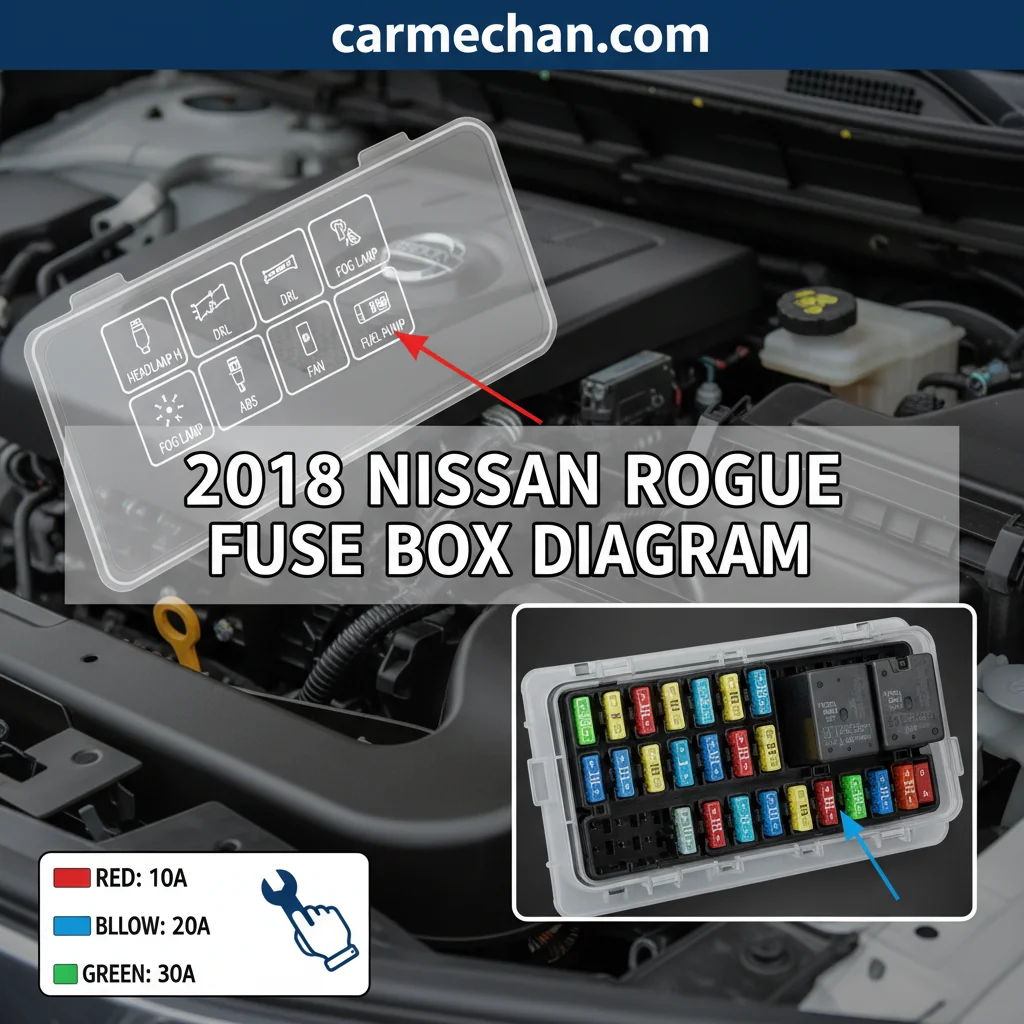
The engine bay of the 2016 Rogue contains significantly more power distribution points. These are generally split into three distinct modules located on the driver's side of the engine bay, near the battery.
1. The IPDM E/R (Intelligent Power Distribution Module Engine Room)
This is the "brain" of the engine bay's power. It is a thin, black box mounted vertically between the battery and the driver-side fender.
- Access: You must depress the plastic tabs on the top/sides of the cover and lift it upward.
- Primary Functions: Controls the fuel pump, headlights (High/Low beams), and the A/C clutch.
2. Fuse/Relay Box 1 (Near Washer Fluid)
Located near the front-left fender, this box primarily houses relays and fuses for the cooling fans and the Anti-lock Braking System (ABS).
3. Fuse/Relay Box 2 (Near the Battery)
This smaller rectangular box contains fuses for the ignition system and various engine sensors.
Engine Bay Fuse Diagram (Common Assignments)
| Component | Amperage | Location |
|---|---|---|
| Headlamp High (Right) | 10A | IPDM E/R |
| Headlamp High (Left) | 10A | IPDM E/R |
| Headlamp Low (Right) | 15A | IPDM E/R |
| Headlamp Low (Left) | 15A | IPDM E/R |
| Fuel Pump | 15A | IPDM E/R |
| Horn | 10A | IPDM E/R |
| Front Fog Lamps | 15A | IPDM E/R |
| Radiator Fan (High) | 40A | Relay Box 1 |
| ABS Motor | 50A | Relay Box 1 |
The Battery Terminal Fusible Link
If your 2016 Nissan Rogue has absolutely no power—no dash lights, no starter click, no interior lights—the problem might not be a standard fuse, but the Fusible Link.
This is a multi-circuit fuse block mounted directly onto the positive (+) battery terminal. It is protected by a clear plastic cover. Inside, you will see several metal strips. If one of these strips is melted, it indicates a major short circuit or a massive power surge (often caused by jumping the battery incorrectly).
- Main Alternator Fuse (140A - 250A): Protects the charging system.
- Power Window/Lock Main: Often 60A or 80A.
- Warning: You cannot replace individual segments of the fusible link. If one segment blows, the entire terminal assembly must typically be replaced.
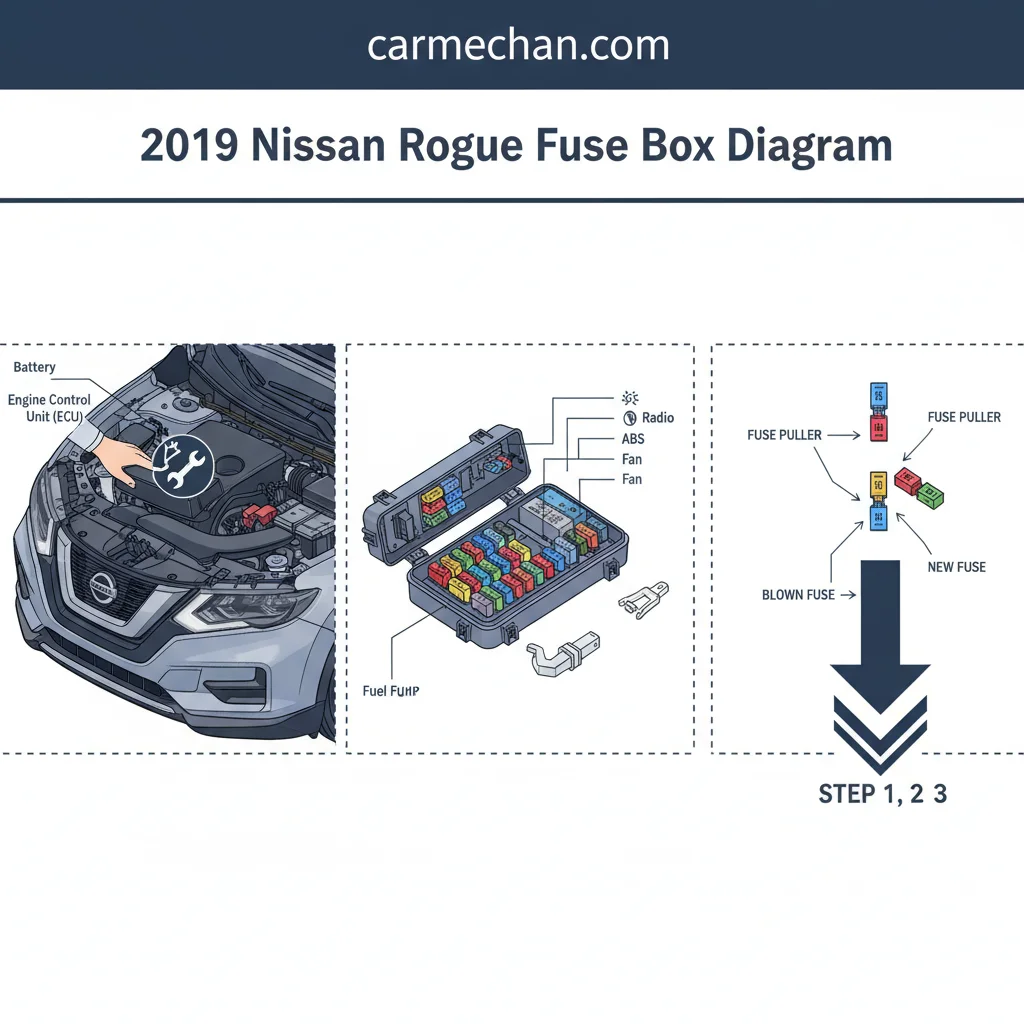
How to Identify and Replace a Blown Fuse
As we move through 2026, many car owners prefer DIY solutions to save money. Replacing a fuse is a simple task that requires no special mechanical skills, provided you follow safety protocols.
Step 1: Safety First
Ensure the vehicle is parked, the engine is off, and the ignition is in the OFF position. Replacing a fuse while the circuit is live can cause a spark that may damage sensitive electronics like the Engine Control Module (ECM).
Step 2: Locate the Fuse
Use the diagrams provided in this guide or on the back of your fuse box covers to identify the fuse associated with the failing component.
Step 3: Inspect the Fuse
Use the fuse puller tool (usually located inside the interior fuse box or the engine bay box). Pull the fuse straight out.
- Visual Inspection: Look at the U-shaped wire inside the transparent plastic. If the wire is broken or there is a dark "scorch" mark inside, the fuse is blown.
- Multimeter Test: If you have a multimeter, set it to the "Continuity" setting (the icon that looks like a sound wave). Touch the probes to the two small metal tabs on the top of the fuse. If the meter beeps, the fuse is good. No beep means it's blown.
Step 4: Replace with the Correct Rating
This is the most critical step. Fuses are color-coded by amperage:
- Red: 10A
- Blue: 15A
- Yellow: 20A
- Clear/White: 25A
- Green: 30A
Never replace a blown fuse with one of a higher amperage. For example, if a 10A fuse blows, do not put a 20A fuse in its place. Doing so allows more current to flow than the wires can handle, which can lead to an electrical fire.
Troubleshooting Common 2016 Rogue Electrical Issues
12V Power Outlet (Cigarette Lighter) Not Working
This is the most common issue. Usually, it’s caused by a metallic object (like a coin or a cheap charger) falling into the socket and causing a short.
- Check: Interior Fuse #4 (20A).
Headlights Failing to Turn On
If both headlights fail at once, it is rarely the bulbs. It is more likely a relay or a fuse in the IPDM E/R.
- Check: IPDM E/R fuses for Headlamp Low/High. If the fuses are good, the "Headlamp Relay" (which is often integrated into the IPDM board) may be the culprit.
HVAC Blower Motor Only Works on High (or Not at All)
If the fan doesn't blow air, check Interior Fuses #8 and #9. If the fuses are fine but the fan only works on the highest speed, the Blower Motor Resistor has likely failed, not the fuse.
All-Wheel Drive (AWD) Warning Light
On the 2016 Rogue, the AWD system relies on several electronic sensors. If a fuse related to the ABS or the 4WD Control Unit blows, the system will disable itself for safety.
- Check: Engine bay fuse for "ABS/VDC" and interior fuse for "Electronic Components."
Preventive Maintenance and Technical Tips
By 2026, the wiring in a 2016 Nissan Rogue may become brittle. When inspecting fuse boxes, look for signs of corrosion (green or white powdery residue) on the terminals. This is common if the engine bay covers haven't been secured properly, allowing moisture to enter.
If a fuse blows immediately after you replace it, do not replace it again. This indicates a permanent short circuit. Common areas for shorts on the T32 Rogue include the wiring harness near the rear liftgate (chafing from opening/closing) and the harness passing through the driver-side firewall.
Frequently Asked Questions
Where is the fuse puller in a 2016 Nissan Rogue?
The fuse puller is a small white plastic tweezer-like tool. It is typically stored inside the passenger compartment fuse panel, snapped into a holder on the back of the cover or near the spare fuses.
Why does my Rogue keep blowing the radio fuse?
This is often caused by an internal fault in the head unit or a short in the steering wheel control wiring. If you have installed an aftermarket "CarPlay" or "Android Auto" screen, ensure the wiring harness is properly insulated and not pinched behind the dashboard.
Can I spray contact cleaner into the fuse box?
Yes, but only use a dedicated "Electronic Contact Cleaner" that is plastic-safe and non-conductive. Ensure the battery is disconnected and the cleaner has evaporated completely before reinserting fuses and reconnecting power.
Are the fuses for the 2016 Rogue the same as the Rogue Sport?
No. While they share a name, the Rogue and the Rogue Sport (known as the Qashqai elsewhere) are built on different platforms. Their fuse layouts and box locations differ significantly. Always ensure you are looking at the diagram for the standard T32 Rogue.
What should I do if the diagram on my cover is faded?
If the legend on your plastic cover is unreadable, refer to the "Electrical System" section of your owner's manual. If the manual is missing, you can download a digital PDF version from the Nissan USA official website or follow the tables provided in this guide.
Summary of Next Actions
If you are currently facing an electrical failure in your 2016 Nissan Rogue, start by identifying whether the problem is interior (radio, lights, windows) or exterior/mechanical (headlights, engine cooling, wipers).
- Access the appropriate box (Interior for cabin issues, Engine bay for mechanical issues).
- Locate the specific fuse using the tables in this guide.
- Perform a visual or multimeter test.
- Replace with an identical amperage fuse.
- Test the component.
If the fuse is intact but the component still doesn't work, the issue may lie with a faulty relay, a disconnected ground wire, or the component itself (such as a burnt-out motor). For persistent issues, especially those involving the IPDM E/R, consulting a certified technician is recommended to prevent damage to the vehicle's computer systems.