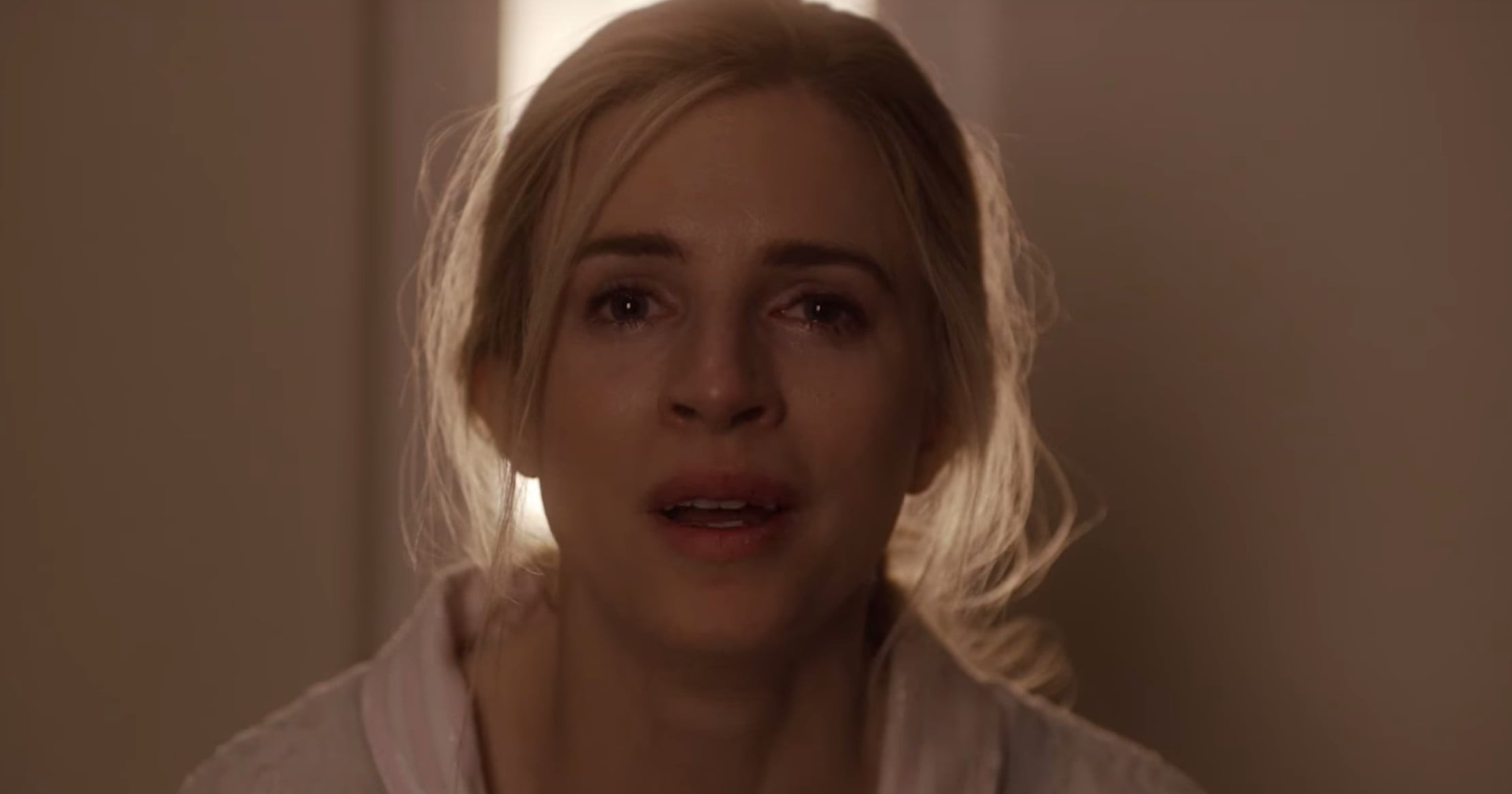
The OA Season 2 premiered on Netflix on March 22, 2019, nearly three years after the genre-bending mystery series first captivated audiences in December 2016. Created by Brit Marling and Zal Batmanglij, the second installment—subtitled Part II—deepened the show’s intricate mythology, shifting genres from a domestic trauma drama to a mind-bending sci-fi noir before its abrupt cancellation, which left fans searching for explanations regarding its complex plotlines and unresolved fate.
Understanding the Journey to The OA Season 2 Release Date
The path from the debut of The OA in December 2016 to the arrival of Season 2 on March 22, 2019, was defined by an unusually long production cycle. Unlike standard annual television schedules, creators Brit Marling and Zal Batmanglij approached the series with a novel-like cinematic structure in mind. They envisioned the entire narrative as a massive, multi-part film rather than a traditional episodic television show. This meticulous approach required extensive writing time before a single frame of footage was captured.
Netflix officially renewed The OA for a second season in February 2017, roughly two months after the surprise drop of the first season. However, the sheer complexity of the scripts, which incorporated quantum mechanics, interdimensional travel, Russian organized crime, and intricate choreography, extended pre-production significantly. Principal photography for Part II began in January 2018 and wrapped in summer 2018, followed by months of intricate post-production, visual effects integration, and sound design. When Netflix finally announced the March 22, 2019 release date alongside an official trailer in February 2019, it ended a 27-month hiatus that had tested the patience of a fiercely dedicated fanbase.
The Narrative Shift: Genre and Premise of Part II
When viewers returned to The OA for Season 2, they encountered a narrative landscape that deliberately subverted expectations set by the first season. While Part I largely unfolded through the framing device of Prairie Johnson recounting her harrowing experiences as a captive in a subterranean laboratory to a group of suburban high schoolers and their teacher, Part II expanded the scope across alternate dimensions.
The second season introduces a parallel reality where Prairie Johnson never suffered the blinding bus accident that shaped her early life. Instead, in this new dimension, she is Nina Azarova, a wealthy Russian heiress living in San Francisco and working as a medium. Concurrently, the narrative follows Private Investigator Karim Washington, played by Kingsley Ben-Adir, as he investigates the mysterious disappearance of a teenage girl named Michelle Vu. Karim’s search leads him to an enigmatic, interactive augmented-reality puzzle house in Nob Hill that serves as a nexus for missing persons and interdimensional experimentation.
Meanwhile, the "Homer’s Angels" group—consisting of Steve, BBA (Betty Broderick-Baleen), Angie, and other loyal followers—embark on a cross-country journey to locate Prairie across dimensions. When their paths intersect in San Francisco, the boundaries between reality, dreams, quantum physics, and performance art dissolve entirely.
Key Differences Between Season 1 and Season 2
To fully appreciate the evolution of the series, it is helpful to examine how the production, setting, and thematic focus shifted between the two seasons. The table below outlines these core structural transformations.
| Feature | Season 1 (Part I) | Season 2 (Part II) |
|---|---|---|
| Primary Setting | Subterranean cages, unglamorous rural Michigan, flashbacks to Russia | San Francisco, Nob Hill puzzle house, Treasure Island, parallel dimensions |
| Primary Genre | Psychological drama, trauma recovery, magical realism | Sci-fi noir, detective mystery, quantum multiverse fiction |
| Core Protagonist Identity | Prairie Johnson / The OA (blind captive and storyteller) | Nina Azarova (Russian medium and heiress) / The OA |
| Central Mystery | What happened to Prairie during her seven-year disappearance? | What is the connection between the missing teenagers, the puzzle house, and interdimensional travel? |
| Narrative Mechanics | Oral storytelling, flashbacks, interpretive movements | Active investigation, interactive gaming, lucid dreaming, dimensional jumping |
The Mechanics of Dimensions and Movements Explained
At the heart of The OA lies a controversial yet emotionally resonant mythos: the Movements. Developed through near-death experiences (NDEs) by Prairie, Homer, Hap, Scott, Rachel, and Renata, these physical movements function as a somatic passcode capable of healing physical trauma, curing blindness, and opening portals to parallel universes.
In Season 2, the scientific implications of these movements are explored through the antagonist, Dr. Hunter Aloysius Percy (Hap). Hap constructs a massive, garden-like apparatus fueled by rose seeds, human breath, and sound frequencies that allows him to map the multiverse. He discovers that every human consciousness has a corresponding echo in countless alternate dimensions. By executing the movements within a specific emotional and spatial framework, a traveler can leap into the body of their dimensional counterpart.
This mechanics-driven plotline recontextualizes the shocking finale of Season 1. In the first season's climax, the cafeteria shooter enters the high school, and the five captives perform the movements to disrupt him, resulting in Prairie being shot and seemingly transported to an alternate hospital dimension. Season 2 reveals that their synchronized focus successfully created a dimensional portal, proving that Prairie's fantastic tales were fundamentally true, even if her framing methods were unorthodox.
The Cliffhanger Ending and Sudden Cancellation
Season 2 concluded with one of the most audacious, fourth-wall-breaking finales in modern television history. In the climax, Hap and Prairie jump into a third dimension—one that mirrors our own reality. In this dimension, the actors playing the characters, Brit Marling and Jason Isaacs, are filming a television show called The OA. Prairie wakes up in this reality as an actress named Brit, married to Jason Isaacs (Hap), and suffers an on-set accident. Steve, who has also leaped into this dimension, confronts Hap before fleeing the studio lot in an ambulance with Brit.
This meta-fictional twist opened limitless possibilities for a planned five-season arc. However, in July 2019, just four months after the release of Season 2, Netflix announced the cancellation of The OA, citing viewing metrics and the high cost of production. The decision sparked intense fan protests, including hunger strikes outside Netflix headquarters and viral digital campaigns. Despite these efforts, Netflix executives confirmed the cancellation was permanent, leaving the narrative permanently frozen on its cliffhanger.
Frequently Asked Questions
Why did it take so long for The OA Season 2 to be released?
The extended 27-month gap between seasons was due to the creative philosophy of creators Brit Marling and Zal Batmanglij. They treated the entire series as a multi-part cinematic feature rather than standard episodic television. Extensive scriptwriting for the complex multi-dimensional plot, alongside rigorous physical choreography and high-end visual effects, required a prolonged production timeline.
Will Netflix ever revive The OA for Season 3?
As of 2026, Netflix has not reversed its decision, and the series remains officially canceled. Creators Brit Marling and Zal Batmanglij have stated in interviews that they own the intellectual property rights, but revival plans depend on alignment of schedules, funding, and creative momentum. For now, the story stands as a two-season experiment in serialized television.
Do I need to rewatch Season 1 before watching Season 2?
Yes. Season 2 builds directly upon the complex character relationships, mythology of the near-death experiences, and the physical movements established in Season 1. Jumping straight into Part II without the foundational context of the captives' imprisonment and Prairie's backstory will make the narrative developments difficult to follow.
What are the "Movements" in The OA?
The Movements are a sequence of synchronized physical gestures and breathing techniques discovered by individuals who experienced clinical death. When performed with emotional resonance by five people, they generate kinetic energy capable of healing injuries, shifting consciousness, and tearing open dimensional rifts to parallel universes.
How does Season 2 resolve the cliffhanger from Season 1?
Season 2 immediately answers the cliffhanger by revealing that the school shooting finale successfully opened a portal. The narrative transitions from a rural trauma mystery into a San Francisco-based sci-fi noir, following Prairie as she inhabits her alternate-reality counterpart, Nina Azarova, while uncovering a larger conspiracy involving human consciousness and the multiverse.
Final Recommendations for Viewers
For viewers discovering The OA or revisiting its labyrinthine plotlines, the best approach is to watch both seasons with an openness to its unique blend of emotional earnestness and high-concept science fiction. While the abrupt cancellation of Season 2 remains a painful reminder of the precarious nature of serialized streaming dramas, the existing twenty-eight episodes form a singular, ambitious artistic statement that rewards close attention and rewatching. Approach the viewing experience not as a conventional procedural puzzle to be solved, but as a modern myth about empathy, connection, and the unseen dimensions of human consciousness.