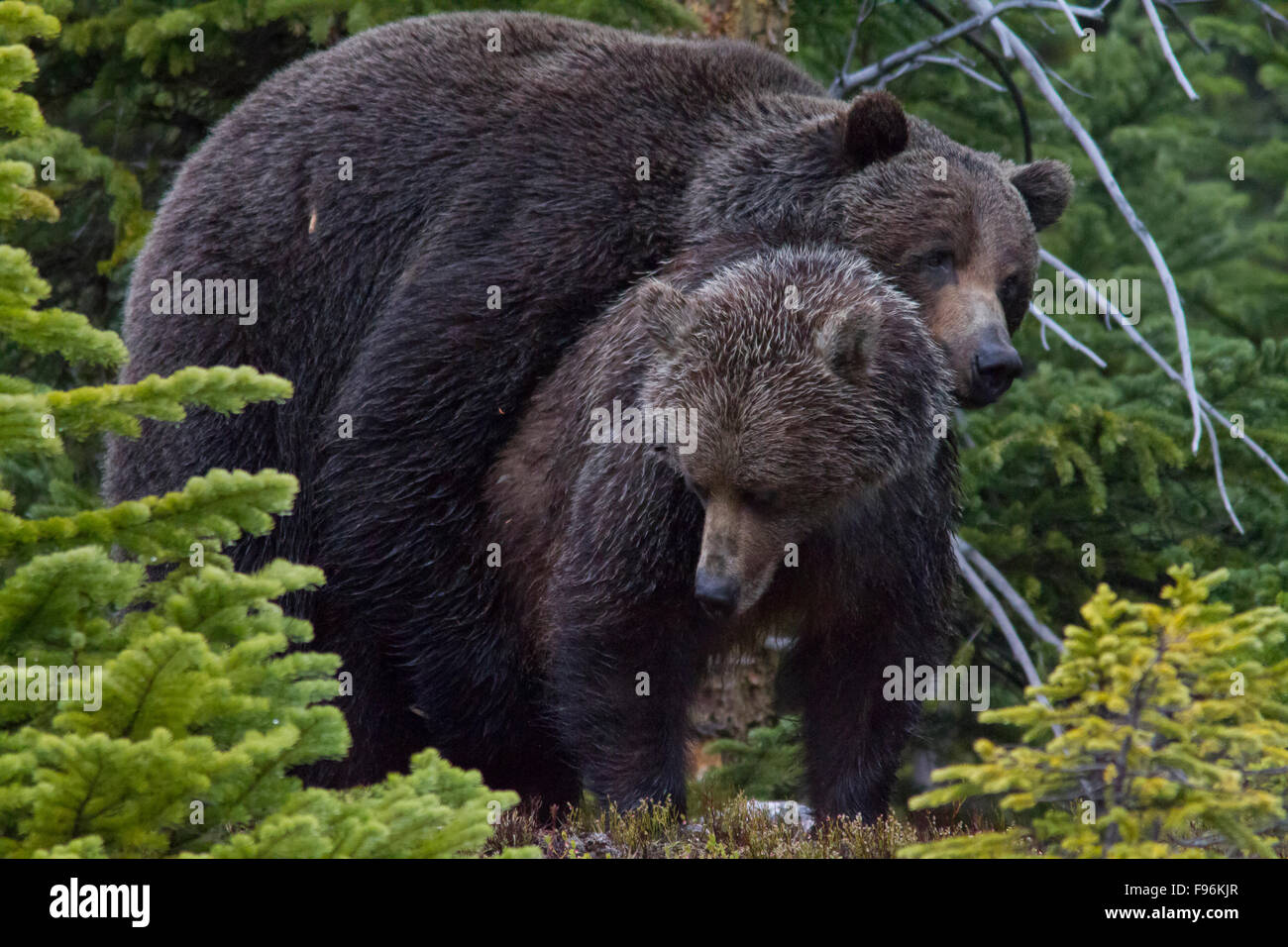
In the animal kingdom, size often dictates hierarchy, and for the grizzly bear (Ursus arctos horribilis), the difference between the sexes is stark. Male grizzly bears are significantly larger and heavier than females, a biological phenomenon known as sexual dimorphism. On average, an adult male can weigh between 1.5 and 2 times as much as a mature female, often standing several inches taller at the shoulder.
While both sexes possess the characteristic "hump" of muscle over their shoulders and the formidable claws synonymous with the species, the scale of a male (boar) compared to a female (sow) is one of the most reliable ways to distinguish them in the wild. This disparity is not merely a matter of genetics but is deeply rooted in evolutionary survival strategies, reproductive roles, and environmental pressures.
The Physical Dimensions of Grizzly Bears
To understand the scale of these animals, one must look at the raw data collected by wildlife biologists across North America. As of 2026, long-term studies from the Interagency Grizzly Bear Study Team and various provincial wildlife agencies in Canada continue to reinforce a consistent size gap between boars and sows.
Weight Comparisons
Weight is the most variable metric for a grizzly bear because it fluctuates wildly based on the season. However, the gap between sexes remains proportional throughout the year.
- Adult Males (Boars): In the interior regions, such as the Rocky Mountains or Yellowstone National Park, an adult male typically weighs between 400 and 700 pounds (180 to 318 kg). In high-productivity coastal environments where salmon is abundant, large males can exceed 1,000 pounds (450 kg).
- Adult Females (Sows): In the same interior regions, adult females generally weigh between 250 and 450 pounds (115 to 205 kg). Coastal females are larger but rarely cross the 600-pound mark, keeping them significantly lighter than their male counterparts.
Height and Length
When standing on all four legs, a grizzly bear is measured at the "shoulder height," where the muscle hump is most prominent.
- Males: A large boar usually stands about 3.5 to 4.5 feet at the shoulder. When standing upright on its hind legs, a male can reach heights of 7 to 9 feet.
- Females: Sows are generally shorter, averaging 3 to 3.5 feet at the shoulder. Their upright height usually tops out around 6.5 to 7 feet.
Why Are Male Grizzlies Larger Than Females?
The size difference in grizzly bears is a classic example of sexual selection and reproductive investment. In biology, when one sex is significantly larger than the other, it is usually due to the competitive nature of mating or the different energetic requirements of raising offspring.
Intra-Sexual Competition
Male grizzly bears do not help raise cubs; their primary "job" in the evolutionary sense is to secure mating rights with as many females as possible. During the mating season (May through July), large boars engage in fierce competition. A larger body size provides a massive advantage in physical confrontations.
Larger males can defend larger territories and displace smaller rivals. Over thousands of years, this has created an evolutionary "arms race" where the largest, strongest males are the ones who successfully pass on their genes. This is often referred to as intrasexual selection.
Reproductive Costs for Females
While males invest their energy into muscle mass and skeletal size for combat, females must invest their energy into the high cost of reproduction. A female grizzly bear's biological priority is to accumulate enough body fat to survive hibernation while simultaneously gestating and eventually nursing cubs.
Producing high-fat milk requires an incredible amount of metabolic energy. If a female were as large as a male, her caloric requirements for basic maintenance would be much higher, potentially leaving her with fewer reserves for her cubs during lean years. A "smaller" frame allows her to be more metabolically efficient, ensuring she can survive the winter and sustain her offspring even when food is not at peak abundance.
Regional Variations: Interior vs. Coastal Grizzlies
It is important to distinguish between "Interior Grizzlies" and "Coastal Brown Bears." While they are the same species (Ursus arctos), their sizes differ based on their diet. This regional variation affects both sexes, but the male-to-female ratio remains consistent.
| Region | Average Male Weight (lbs) | Average Female Weight (lbs) | Primary Food Source |
|---|---|---|---|
| Interior (Yellowstone) | 400 - 600 | 250 - 350 | Pine nuts, moths, elk |
| Interior (Yukon/Alaska) | 350 - 550 | 200 - 400 | Berries, roots, caribou |
| Coastal (Alaska/BC) | 700 - 1,000+ | 400 - 600 | Salmon, sedge, shellfish |
| Kodiak Island | 800 - 1,200+ | 500 - 700 | Salmon, elderberries |
The availability of high-protein fish like salmon allows coastal bears to reach much larger sizes than their mountain-dwelling cousins, who rely more on roots, berries, and occasional carrion. Even in the food-rich coastal areas, the female rarely reaches the size of a mid-sized interior male.
Seasonal Weight Fluctuations: The Role of Hyperphagia
To answer whether a female could ever be bigger than a male, one must look at the time of year. Grizzly bears undergo a state called hyperphagia in late summer and autumn. During this period, they may eat up to 20,000 to 30,000 calories a day to prepare for winter.
A bear can gain 3 to 6 pounds of fat per day during peak hyperphagia. Because of this, a very healthy, fat-laden female in October might weigh more than a malnourished or young male in early spring. However, when comparing individuals in the same health status and at the same point in their life cycle, the male will almost always be the larger animal.
By the time they emerge from their dens in 2026 spring, bears may have lost 15% to 30% of their total body weight. Females that have spent the winter nursing cubs lose even more, often emerging in a depleted state.
Identifying Sex Beyond Size
Since size can be deceptive—especially when observing a lone bear from a distance—wildlife biologists look for other "dimorphic" traits to tell males from females:
- Head Shape: Males tend to have broader, blockier heads with ears that appear smaller and further apart. Females often have a more dainty or "pointed" facial structure, making their ears appear larger and more prominent on top of the head.
- Body Silhouette: Boars often have a more "rectangular" appearance with heavy front ends. Sows can appear "pear-shaped," especially in the fall, as they carry significant fat deposits in their hindquarters to support pregnancy.
- Urination Patterns: This is the most definitive way to tell them apart in the field. Males urinate straight down or slightly forward, while females urinate backward.
- Behavior: If a bear is accompanied by cubs (less than three years old), it is almost certainly a female. Male grizzlies are known to practice infanticide (killing cubs that are not their own to bring the female back into estrus), so females with cubs generally avoid large males.
The Growth Timeline: When Do They Reach Full Size?
Grizzly bears are surprisingly small at birth, weighing only about one pound. Their growth trajectory differs by sex as they reach maturity.
- Cubs and Subadults: For the first few years of life, males and females grow at roughly the same rate. It is difficult to distinguish a male "yearling" from a female "yearling" based on size alone.
- Sexual Maturity: Grizzlies reach sexual maturity between ages 4 and 6. At this point, the male's growth curve accelerates significantly.
- Prime Years: A male grizzly typically continues to gain frame size and muscle mass until he is about 8 to 10 years old. Females tend to reach their maximum frame size earlier, around age 5 or 6, after which most of their weight gain is seasonal fat rather than skeletal growth.
The Impact of Environmental Stressors in 2026
In the current year, 2026, climate shifts and habitat fragmentation are playing roles in the average size of grizzly populations. In areas where traditional food sources (like whitebark pine seeds or specific salmon runs) are declining, we are seeing a slight reduction in average weights.
Interestingly, studies suggest that females may be more resilient to these changes in terms of survival, but their "litter size" and the "birth weight" of cubs suffer. When food is scarce, the size gap between males and females can actually widen, as males may travel much further distances to find high-calorie carrion or hunt larger prey, while females with cubs are limited by the mobility of their young.
Frequently Asked Questions
Can a female grizzly bear ever be bigger than a male?
While it is biologically possible for a very old, large coastal female to be heavier than a young or malnourished interior male, it is extremely rare. In any given habitat, the adult males will consistently outweigh and outsize the adult females.
Does the "hump" on a grizzly's back help determine its sex?
Both males and females have the shoulder hump, which is a mass of muscle used for digging and sprinting. While the hump on a large male may look more "mountainous" and pronounced due to overall muscle mass, it is not a reliable indicator of sex on its own.
Are male grizzlies more aggressive because they are bigger?
Size does play a role in confidence and dominance. However, the most aggressive grizzly behavior is often seen in "females with cubs" (sows with COY). While a male is physically more powerful, a female defending her offspring is widely considered one of the most dangerous animals in North America.
How do biologists weigh grizzly bears in the wild?
Biologists use culvert traps or helicopter darting to sedate bears. Once safe, they use a tripod and a heavy-duty scale or a "load cell" to lift the bear and get an accurate measurement. In 2026, remote sensing and "photogrammetry" (using cameras to calculate mass based on pixel volume) are becoming more common to reduce the stress on the animals.
Why is there such a big weight range for grizzly bears?
The weight range (250 lbs to 1,000+ lbs) is due to "ecotypes." Grizzlies living in the mountains have a shorter growing season and less protein, while those on the coast have access to fatty fish and a milder climate, allowing them to grow much larger.
Final Summary for Wildlife Observation
If you are observing grizzly bears in the wild, remember that size is the primary indicator of sex, but it must be viewed in context. A bear that looks "huge" might just be a very fat female in autumn, and a bear that looks "small" might be a young male subadult.
To accurately identify a grizzly, look for the combination of a blocky head, wide ear spacing, and a heavy front-end gait—these are the hallmarks of a boar. If the bear is slightly smaller, has a more tapered face, and is moving with smaller bears, you are likely looking at a sow. Understanding these differences not only enriches the viewing experience but also provides vital context for safety, as the behaviors of boars and sows differ significantly throughout the year.