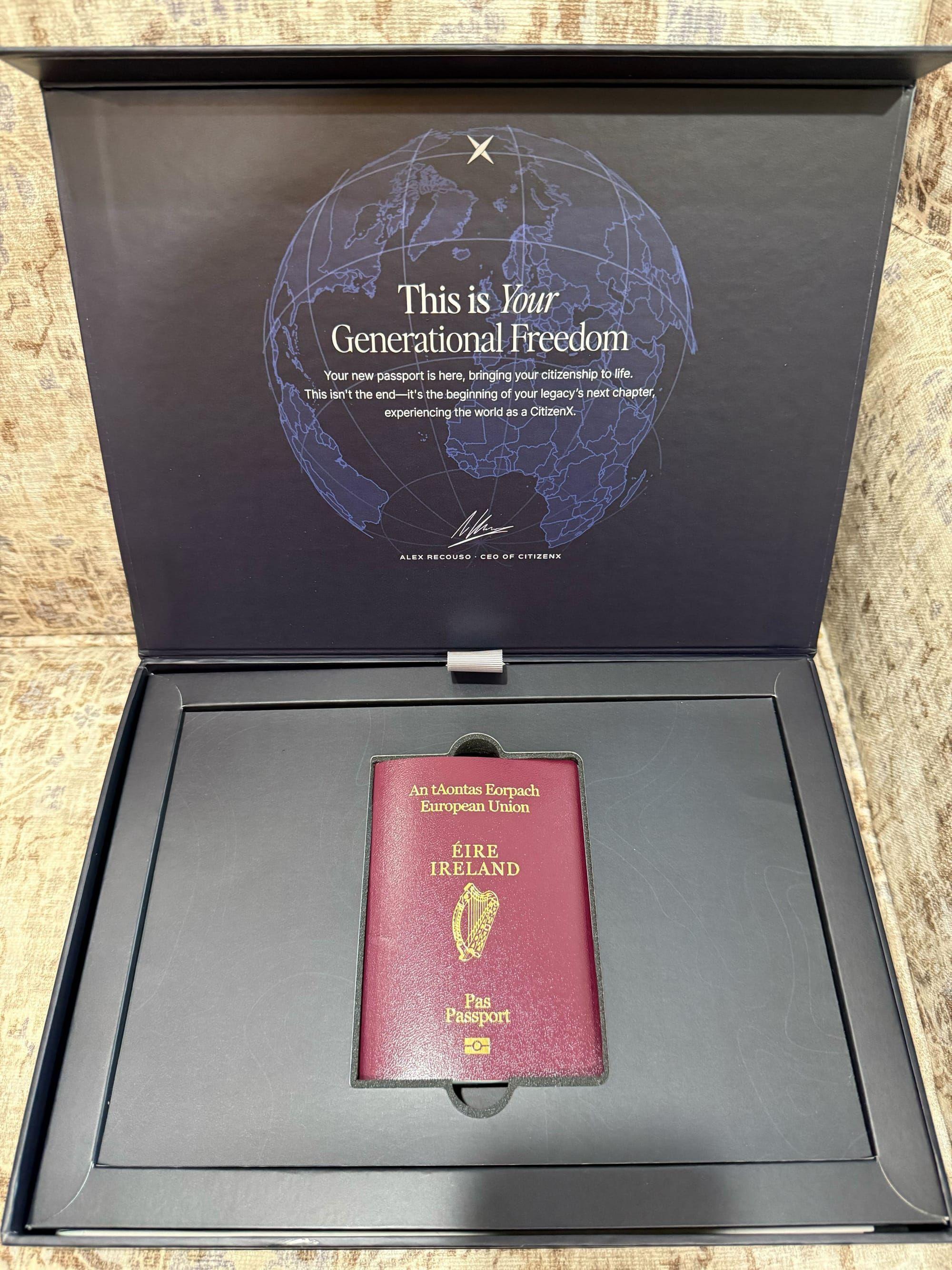
If you were born outside the island of Ireland but have a grandparent who was born in Ireland, you are likely eligible for Irish citizenship. To obtain it, you must apply for entry onto the Foreign Births Register (FBR), a process that, once completed, grants you full Irish citizenship and the right to apply for an Irish passport.
Understanding Citizenship by Descent
The legal framework for Irish citizenship is primarily governed by the Irish Nationality and Citizenship Act of 1956, along with its various amendments. Under Irish law, citizenship is not always automatic for those born abroad. While individuals born to a parent who was born in Ireland are automatically Irish citizens from birth, the rules for those with Irish-born grandparents are different.
For those in the "grandparent category," citizenship is not inherent; it must be "claimed" through a formal registration process. This is known as Foreign Births Registration. Until your birth is recorded in this register, you are not legally considered an Irish citizen, regardless of your ancestry. Once the registration is finalized, your citizenship is effective from the date of registration, not the date of your birth. This has significant implications for your own children, as their eligibility often depends on whether you were registered before they were born.
In 2026, the demand for Irish citizenship remains high due to the mobility and residency rights it affords within both the European Union and the Common Travel Area (CTA) with the United Kingdom. Understanding the nuances of the FBR is the first step toward securing these rights.
The Role of the Foreign Births Register (FBR)
The Foreign Births Register is a statutory record maintained by the Department of Foreign Affairs (DFA) in Dublin. It serves as the official ledger for individuals born abroad who derive their Irish citizenship through a parent or grandparent.
The registration process is a rigorous vetting procedure designed to verify the "paper trail" linking an applicant back to an individual born on the island of Ireland. Because Ireland recognizes birthright citizenship for anyone born on the island before 2005 (and under specific conditions thereafter), a grandparent's Irish birth certificate serves as the "anchor" document for your entire application.
Why Registration is Necessary
Unlike many other nations where ancestry provides a direct path to a passport, Ireland requires this intermediate step for second-generation descendants. You cannot apply for an Irish passport until you possess a Foreign Births Registration Certificate. This certificate is a legal document that serves as proof of your citizenship, much like a naturalization certificate or a birth certificate.
Eligibility Requirements for Grandparent-Based Applications
To successfully apply through the grandparent rule, you must satisfy specific criteria. As of 2026, the fundamental requirements are:
- Direct Ancestry: You must be the biological or legally adopted grandchild of a person born on the island of Ireland. This includes both the Republic of Ireland and Northern Ireland.
- Parental Link: Your parent (the child of the Irish-born grandparent) does not need to have been an Irish citizen at the time of your birth for you to qualify through a grandparent. However, they must be the legal link between you and the grandparent.
- Documentary Proof: You must be able to produce original, long-form civil records for three generations: yourself, your parent, and your grandparent.
The "Great-Grandparent" Question
A common point of confusion is whether one can apply through a great-grandparent. Generally, the answer is no, unless your parent was registered on the Foreign Births Register before you were born. If your parent attained citizenship via their own grandparent (your great-grandparent) before your birth, then you are eligible. If they registered after you were born, the chain of citizenship is usually considered broken for the purpose of the FBR.
Necessary Documentation: The Paper Trail
The most challenging aspect of the application is gathering the required original documents. The Department of Foreign Affairs is strict: they require original long-form civil certificates. Photocopies, "short" certificates (which omit parental details), and baptismal records are typically not accepted unless you can prove that a civil record does not exist.
Documents for the Applicant
- Original civil birth certificate (long-form, showing parents' names).
- Original civil marriage certificate (if you have changed your name through marriage).
- Certified copy of a current passport or national ID card.
- Two original proofs of address (utility bills, bank statements) dated within the last six months.
- Four passport-sized photographs (two of which must be witnessed).
Documents for the Irish-Citizen Parent
- Original civil birth certificate (long-form).
- Original civil marriage certificate (if applicable).
- Original divorce decree (if applicable and if it resulted in a name change).
- A certified copy of a current passport or, if deceased, an original death certificate.
Documents for the Irish-Born Grandparent
- Original civil birth certificate (long-form from the General Register Office or HSE).
- Original civil marriage certificate.
- Original divorce decree (if applicable).
- Original death certificate (if deceased).
| Generation | Required Document Types | Source |
|---|---|---|
| Applicant | Birth, Marriage (if applicable), ID, Proof of Address | Local Civil Registry |
| Parent | Birth, Marriage, Death (if applicable), ID | Local Civil Registry |
| Grandparent | Birth (Irish), Marriage, Death (if applicable) | HSE Ireland / GRO Northern Ireland |
The Step-by-Step Application Process
As of 2026, the application process is a hybrid of an online submission and a physical mail-in requirement.
Step 1: Online Application and Payment
The process begins on the Department of Foreign Affairs official website. You will fill out a comprehensive digital form detailing the lineages of your family. At the end of this stage, you must pay the registration fee. In 2026, the standard fee for an adult application is €278 (including the certificate fee and postage), while the fee for a minor is €153.
Step 2: Witnessing the Application
Once the online form is submitted, you must print the application summary. This document must be signed in the presence of an authorized witness. The witness must be a member of a recognized profession who is not related to you. Common choices include:
- Police officers
- Medical doctors or dentists
- Bank managers
- Solicitors or Notaries Public
- School principals
The witness must also sign and stamp two of your four passport photos and certify the copy of your identification.
Step 3: Mailing the Dossier
You must mail the printed application, the signed photos, and all the original certificates mentioned in the previous section to the Foreign Births Registration office in Balbriggan, Dublin. It is highly recommended to use a trackable, secure courier service, as you are sending irreplaceable original documents.
Step 4: Verification and Processing
The DFA will verify the authenticity of the documents. This involves cross-referencing Irish birth records and, in some cases, contacting the issuing authorities in other countries to confirm the validity of marriage or birth certificates.
Processing Times and Expectations in 2026
Processing times for the Foreign Births Register have historically fluctuated. Following several years of modernization, the turnaround time in 2026 generally ranges from 9 to 12 months.
It is important to note that if your application is incomplete or if a document is missing, the DFA will place your file on hold and contact you. This can reset the waiting period, so ensuring the initial submission is perfect is critical. You can check the status of your application via the DFA’s online tracking system using your application number.
Common Challenges and Troubleshooting
The most frequent reason for application rejection or delay is a discrepancy in names across generations. For example, if a grandmother’s birth certificate says "Mary Kathleen O'Brien" but her marriage certificate says "Kay O'Brien," the DFA may require an affidavit or additional evidence to prove they are the same person.
Missing Irish Records
If you cannot find your grandparent’s Irish birth certificate, you should search the General Register Office (GRO) or the National Archives of Ireland. If the birth was before 1864 (when civil registration became mandatory in Ireland), church baptismal records may be accepted, but you must first obtain a "no record found" letter from the GRO to prove a civil record does not exist.
Name Discrepancies
If an ancestor’s name changed for reasons other than marriage (e.g., anglicization or religious reasons), you should provide as much supporting documentation as possible, such as old passports, census records, or employment records.
Benefits of Irish Citizenship
Completing this process grants you more than just a certificate; it provides a permanent link to your heritage and significant legal advantages.
- EU Rights: As an Irish citizen, you are an EU citizen. This allows you to live, work, and study in any of the 27 EU member states without a visa.
- The Common Travel Area: Irish citizens have a unique right to live and work in the United Kingdom, including access to social security and healthcare, under the CTA agreement.
- Consular Protection: You are entitled to the protection of Irish embassies and consulates worldwide.
- Generational Continuity: By registering, you ensure that any children born after your registration date will also be eligible for Irish citizenship.
Next Steps After Receiving Your Certificate
Once your Foreign Births Registration Certificate arrives, you are officially an Irish citizen. The final step is applying for your Irish Passport.
The passport application is a separate process with its own fee. You can apply via "Passport Online," which is the fastest method. You will need your FBR certificate number and your original birth certificate to complete this. In 2026, the Passport Online service is available to first-time applicants globally, making the transition from citizen to passport-holder relatively seamless.
Frequently Asked Questions
Can I apply if my parent hasn't registered for Irish citizenship?
Yes. If your grandparent was born in Ireland, you can apply directly regardless of whether your parent has registered or holds an Irish passport. You simply need to provide your parent's original birth certificate to prove the genealogical link.
What if my original documents are in a language other than English or Irish?
Any document not in English or Irish must be accompanied by a certified translation. The translation must be performed by a professional translator, and the original document must still be submitted alongside the translation.
Can I apply for my children at the same time?
Yes, you can submit "linked" applications for yourself and your minor children. Each person requires their own application form and fee, but you can share the common "ancestor" documents (like the grandparent's birth certificate) in one package.
What happens to my original documents after the process?
The Department of Foreign Affairs will return all your original documents to you via registered post once the application has been processed. They are usually returned in a separate envelope from your FBR certificate.
Does Ireland allow dual citizenship?
Yes, Ireland permits dual and multiple citizenship. You do not have to renounce your current nationality to become an Irish citizen, though you should check the laws of your home country to ensure they also permit dual nationality.
Is there an interview process?
Generally, there is no interview for citizenship through a grandparent. The process is entirely document-based. However, the DFA reserves the right to contact applicants or witnesses for clarification.
Practical Recommendation
Begin by ordering the long-form Irish birth certificate for your grandparent immediately. This is the foundation of your claim and can sometimes take several weeks to arrive from the GRO or HSE in Ireland. Once you have that document in hand, verify that the names and dates match the subsequent generations' records before paying the application fee. Precision in the documentation phase is the single most important factor in a successful application.