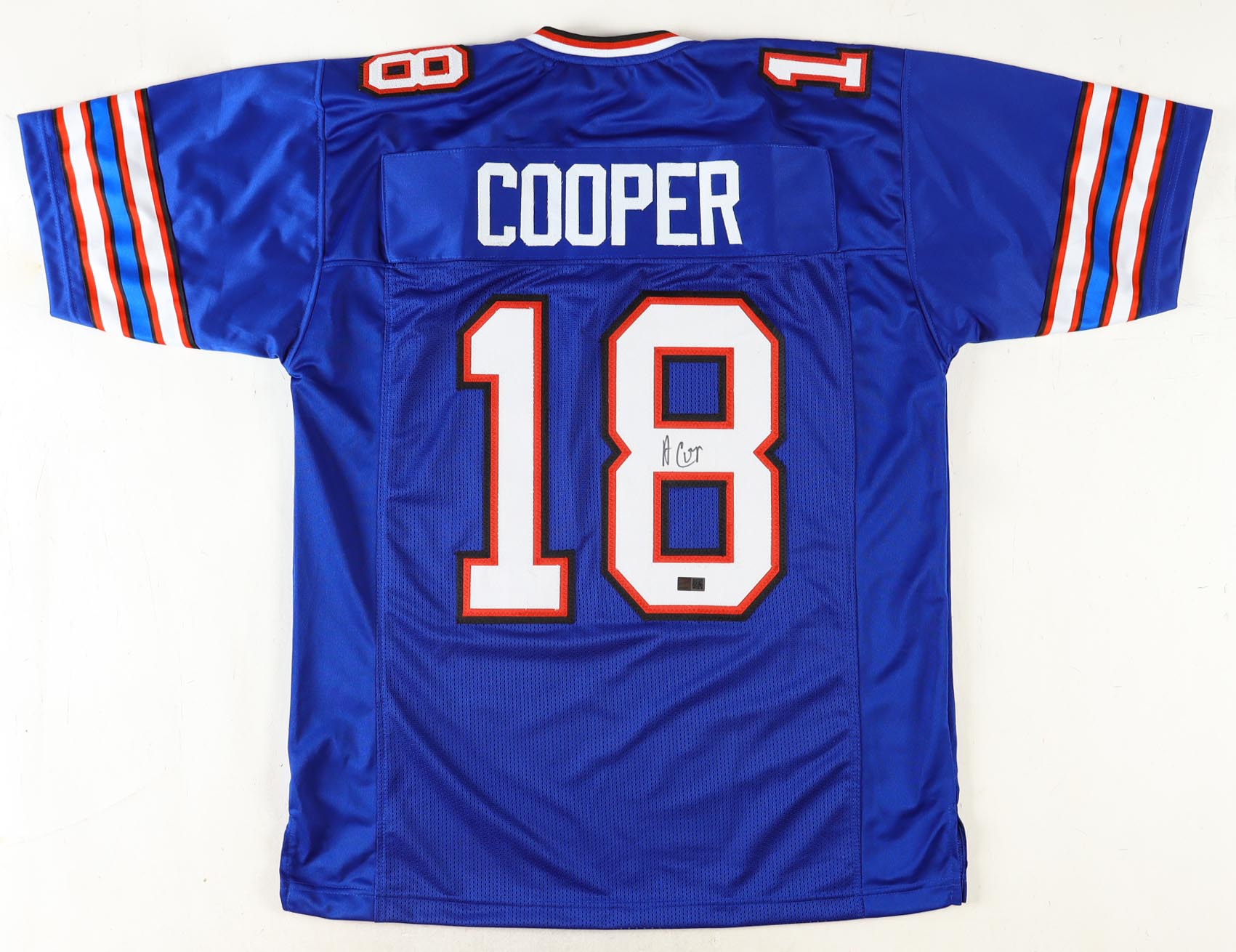
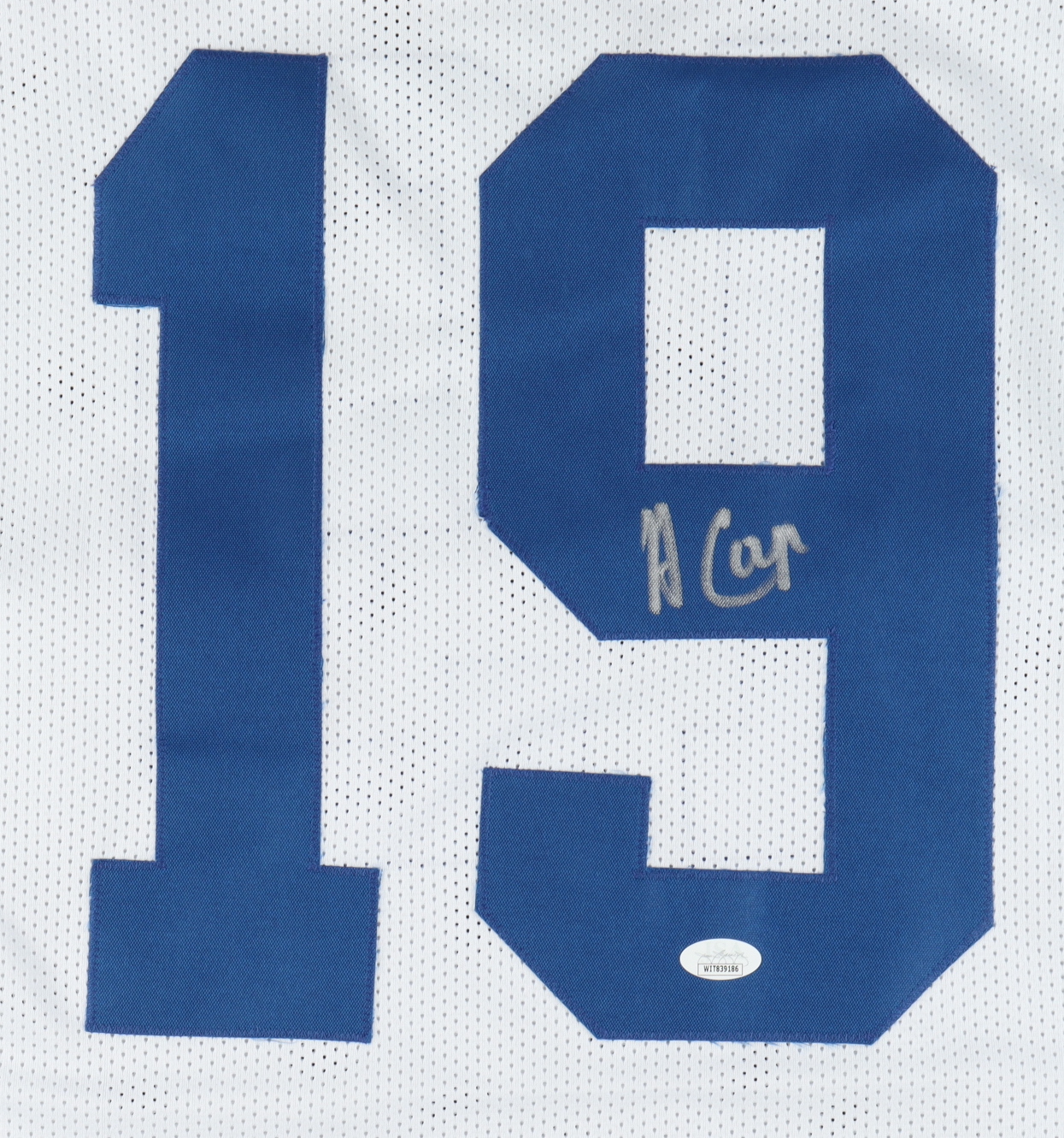
An Amari Cooper signature is defined by its fluid, stylistic "A" and a condensed "Cooper," often featuring his current jersey number. Collectors prioritize pieces with verified "ink flow" and consistent looping. Authenticity is typically confirmed through major services like PSA/DNA or Beckett, focusing on his distinctive pen pressure and slant.
Amari Cooper has established himself as one of the most technically proficient and consistent wide receivers in professional football history. From his dominant collegiate career at Alabama to his impactful stints with the Oakland Raiders, Dallas Cowboys, Cleveland Browns, and Buffalo Bills, Cooper’s autograph has become a staple in the sports memorabilia market. For collectors and fans in 2026, understanding the nuances of his signature is essential for distinguishing genuine items from the high-quality forgeries and "autopen" reproductions that circulate in the secondary market.
The Anatomy of an Amari Cooper Autograph
The signature of Amari Cooper is notable for its balance of speed and structure. Like many professional athletes who sign thousands of items annually, his signature has evolved from a more legible, full-script version into a more efficient "brand" mark. However, several "telltale" characteristics remain relatively constant, providing a roadmap for authentication.
The Dominant "A"
The most striking feature of any Amari Cooper autograph is the initial letter "A." In almost all verified examples, the "A" is oversized compared to the rest of the signature. It typically begins with a sharp upward stroke that loops back down, often resembling a stylized triangle or a cursive "A" with a prominent left-side loop. The crossbar of the "A" is frequently integrated into the transition toward the second half of his first name or directly into the "C" of his surname.
The "Cooper" Transition
While "Amari" is often clearly initiated, the "Cooper" portion of the signature is frequently more compressed. The "C" is usually a large, sweeping hook that may partially envelop the latter letters. In many "rushed" signatures—especially those obtained "in-person" (IP) at training camps or stadiums—the letters following the "C" may devolve into a rhythmic series of peaks and valleys rather than distinct letters.
Jersey Number Inclusion
Amari Cooper is known for frequently appending his jersey number to his signature. This is a critical area for chronologically dating a piece:
- #89: Used during his tenure with the Oakland Raiders (2015–2018).
- #19: Used primarily with the Dallas Cowboys (2018–2021).
- #2: Used during his time with the Cleveland Browns (2022–2024).
- #18: His primary number with the Buffalo Bills (2024–2026).
A signature that includes a number inconsistent with the item (e.g., a Cowboys jersey signed with #89) isn't necessarily a fake—players sometimes sign their "rookie number" out of habit—but it does warrant closer inspection of the item's provenance.
Historical Evolution of the Signature
To explain the Amari Cooper signature fully, one must look at how his penmanship has shifted across different phases of his career. Collectors often categorize his autographs into three distinct eras.
The Collegiate/Rookie Era (2012–2015)
During his time at the University of Alabama and his rookie year with the Raiders, Cooper’s signature was at its most legible. The letters "m-a-r-i" were often distinguishable, and the "C" in Cooper was clearly separated from the "i" in Amari. These early signatures are highly prized by "purest" collectors who prefer a full-name script.
The Veteran/Pro-Bowl Era (2016–2022)
As his popularity surged during his Pro Bowl years, the signature became more streamlined. The "A" became more of a focal point, and the end of the signature became a quick "flick" of the wrist. This era produced the highest volume of authenticated memorabilia, particularly during his high-profile years in Dallas.
The Modern/Legacy Era (2023–2026)
In the current 2026 landscape, Cooper’s signature is a masterclass in efficiency. It is characterized by high-speed execution. Collectors look for "ink drag" and "pressure points" that indicate a natural, confident motion. A signature from this era that looks too slow or "shaky" is often a red flag for a forgery, as Cooper's actual signing motion is now very rapid and practiced.
Authentication and Identifying Forgeries
Given the value of NFL memorabilia, the market is unfortunately saturated with fakes. Understanding the technical side of authentication is vital for any serious buyer.
Ink Flow and Pen Pressure
A genuine Amari Cooper signature is executed with a consistent, fluid motion. When examining a signature under magnification, look for:
- Start and Stop Points: Natural signatures have "tapered" ends where the pen leaves the surface. Forgeries often have "blobs" of ink where the forger hesitated or started slowly.
- Pressure Variation: Authentic signatures show varying thickness in the ink lines based on the speed and direction of the stroke.
- The Autopen Threat: Autopen machines use a mechanical arm to replicate a signature. These are perfectly identical every time. If you see two jerseys with the exact same signature down to the millimeter, they are autopen reproductions, not hand-signed.
Third-Party Verification (TPV)
In 2026, the "Big Three" authentication services remain the industry standard. An Amari Cooper signature should ideally come with a Certificate of Authenticity (COA) or a "Letter of Authenticity" (LOA) from one of the following:
- PSA/DNA (Professional Sports Authenticator): Known for their "In-the-Presence" authentication and their comprehensive database of player exemplars.
- Beckett Authentication Services (BAS): Highly respected for their expertise in modern NFL stars.
- JSA (James Spence Authentication): A long-standing leader in sports autograph verification.
Market Value Comparison (2026 Estimates)
The value of an Amari Cooper signature varies significantly based on the medium and the level of authentication.
| Item Type | Average Market Value (2026) | Rarity Level | Recommended Authentication |
|---|---|---|---|
| Signed NFL Duke Football | $250 - $450 | Moderate | PSA/DNA or JSA |
| Authentic Game-Used Jersey | $1,200 - $3,500 | High | Team Provenance + BAS |
| Rookie Premiere Auto Card | $500 - $1,500+ | High | Slabbed (PSA/Beckett) |
| Full-Size Replica Helmet | $350 - $600 | Moderate | JSA or PSA/DNA |
| 8x10 Action Photograph | $120 - $200 | Low | Standard COA |
| Mini Helmet | $150 - $250 | Low | Standard COA |
Note: Values depend on the "eye appeal" of the signature and the condition of the item.
Technical Specifications: Pens and Surfaces
The visual quality of a Cooper signature depends heavily on the tools used during the signing session.
The Best Pens for Cooper Signatures
- Silver/Gold Paint Pens: Best for helmets and dark-colored jerseys. These pens require the player to maintain a steady pressure, often resulting in a slightly "thicker" and more deliberate Amari Cooper signature.
- Blue Sharpie/Staedtler: The industry standard for white footballs and jerseys. Blue ink is preferred over black because black ink can "acidify" or fade into a brownish-yellow hue over decades, whereas blue maintains its vibrancy longer.
- Alcohol-Based Markers: Used primarily for trading cards. These dry instantly, preventing the "smudging" that can occur if a player stacks cards too quickly after signing.
Surface Challenges
Signing a curved surface like a football or a helmet requires a different hand position than signing a flat card. Collectors should expect "jitter" on football signatures, as the pebbled leather of a "Duke" NFL ball can cause the pen to jump. Conversely, signatures on "flat" items like photos or jerseys should be smooth and continuous.
Common Mistakes When Collecting Amari Cooper
- Ignoring the "Stray Mark": Sometimes Cooper’s pen will skip or leave a small dot near the start of the "A." New collectors often think this is a flaw, but it is actually a common trait of his natural signing grip.
- Overvaluing Unauthenticated Items: An "unslotted" or uncertified Amari Cooper autograph is worth only a fraction of a certified one, regardless of how "real" it looks.
- Neglecting Storage: Signatures, especially those in sharpie, will fade if exposed to direct sunlight or UV-heavy fluorescent lighting. Always use UV-protected acrylic cases for helmets and footballs.
FAQ: Amari Cooper Signature Explained
Does Amari Cooper sign his full name?
In the early years of his career, he signed a more complete "Amari Cooper." In recent years (2024–2026), he has moved toward a more stylized version where "Amari" is clear, but "Cooper" is often represented by a large "C" followed by a wavy line.
How can I tell if an Amari Cooper signature is an autopen?
Autopen signatures lack "ink depth." If you look at the signature under a magnifying glass, the ink will be perfectly uniform in thickness and color, with no variation where the pen pressed harder or moved faster. Furthermore, autopen signatures often have "blunt" starts and stops rather than the natural tapers of a human hand.
Which jersey number signature is the most valuable?
Generally, his #89 (Raiders) rookie-era signatures and his #19 (Cowboys) signatures hold the most value due to the historical significance of those career phases. However, game-used items from his time with the Bills (#18) are currently seeing a surge in demand as he cements his "vet leader" legacy.
Is a signature on a "Pro Bowl" ball worth more?
Yes, signatures on specific commemorative items like Pro Bowl balls or "Walter Payton Man of the Year" nominated items typically carry a 20-40% premium over standard "The Duke" footballs, provided the signature is clean and well-placed.
What is the best way to get Amari Cooper's signature in person?
Training camps are the most reliable venues. When signing in a crowd, Cooper tends to use a very shortened version of his signature. For a "fuller" and more aesthetically pleasing autograph, items from private signing sessions (where he is paid to sit and sign) are usually superior in quality.
Practical Recommendation for Collectors
If you are looking to acquire an Amari Cooper signature in 2026, your best path is to prioritize "In-the-Presence" (ITP) authenticated items. These are items where a representative from a company like PSA or Beckett literally watched the player sign the item. This eliminates any doubt regarding "autopen" or clubhouse forgeries.
For those on a budget, look for authenticated 8x10 photos from his Dallas or Cleveland years; these are currently undervalued compared to his helmets and jerseys. If you are an investor, focus on high-grade Rookie Premiere autographed cards (2015), as these represent the "blue chip" asset of the Amari Cooper memorabilia market and continue to show strong year-over-year growth in the 2020s.