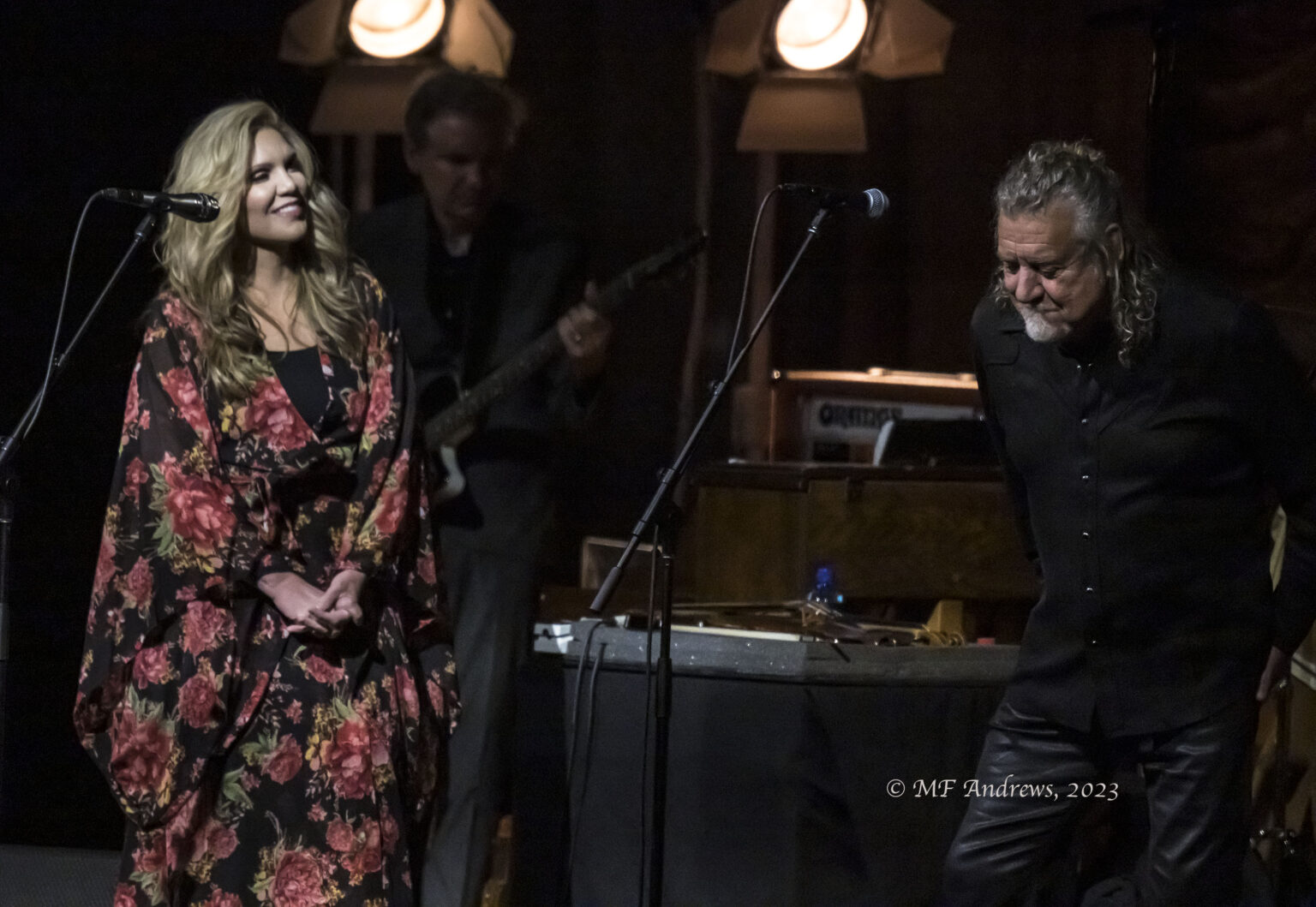
The collaboration between bluegrass icon Alison Krauss and Led Zeppelin frontman Robert Plant is one of modern music's most successful genre-defying unions. While their partnership is best known for their Grammy-winning album Raising Sand, their live performance of the Led Zeppelin classic "Black Dog" serves as a definitive case study in how two disparate musical worlds—Appalachian folk and hard rock—can be synthesized into a cohesive, innovative arrangement.
The Origin and Context of the Collaboration
The partnership between Robert Plant and Alison Krauss began in 2007 under the guidance of legendary producer T-Bone Burnett. The goal was never to recreate the past but to explore the intersections of American roots music, British folk, and the deep emotional resonance found in both country and rock traditions. When this duo began touring, the challenge was to integrate Plant’s expansive, blues-drenched rock catalog with Krauss’s pristine, crystalline bluegrass sensibilities.
"Black Dog," originally released by Led Zeppelin on their untitled fourth album in 1971, is a hallmark of hard rock. It is characterized by its complex, shifting time signatures, heavy, driving guitar riffs, and Plant’s soaring, banshee-like vocal delivery. When the pair decided to include this track in their setlists, they did not attempt a carbon copy of the original. Instead, they approached the song as a folk-blues arrangement, stripping away the stadium-filling distortion in favor of acoustic textures, rhythmic interplay, and a more deliberate, melodic pace. This transition explains why the collaboration is so frequently studied by musicologists and fans alike: it represents a masterclass in reinterpretation.
Musical Deconstruction: From Hard Rock to Americana
To understand the collaboration behind this specific performance, one must look at the technical shift in instrumentation. The original "Black Dog" is famously built around Jimmy Page’s guitar riff, which occupies a space of pure electric aggression. In the Krauss and Plant iteration, the guitar parts are often reimagined through the lens of a roots-ensemble arrangement.
The focus shifts to the "pocket"—the rhythmic space between the notes. Alison Krauss brings a refined, violin-led melodicism that interacts with the vocal lines, whereas the original relied on vocal call-and-response against an electric guitar. By slowing the tempo, the duo exposes the underlying blues progression that was always present in the song but often obscured by the sheer volume of the original studio recording. This choice allows listeners to hear the influence of artists like Lead Belly and traditional folk practitioners, grounding a rock anthem in the soil of its inspirations.
The Role of T-Bone Burnett’s Production Style
T-Bone Burnett’s influence on the "Black Dog" interpretation cannot be overstated. Burnett is known for a "less is more" philosophy, favoring warm, analog-sounding production and performances that emphasize space and silence over density. In the context of their collaborative performances, this aesthetic forced both Plant and Krauss to inhabit a middle ground.
For Plant, the task was to reign in the legendary roar of his youth and apply his voice to a more subtle, rhythmic delivery. For Krauss, the task was to apply a rock-steady precision to a song that was historically designed to be loose and unpredictable. Their collaborative output suggests a mutual respect where the genre boundaries dissolve; they are not playing "Bluegrass Black Dog" or "Rock-and-Roll Folk"; they are playing a song that exists outside of a specific musical timeline.
Comparative Analysis of Performance Elements
The following table breaks down the fundamental differences between the Led Zeppelin original and the Krauss-Plant collaborative approach, illustrating why this specific arrangement is categorized as an "explanation" or "reimagining" rather than a cover.
| Element | Led Zeppelin Original (1971) | Krauss/Plant Collaboration |
|---|---|---|
| Primary Instrumentation | Distorted Electric Guitar, Heavy Percussion | Acoustic Guitar, Fiddle, Upright Bass |
| Vocal Style | High-energy, improvisational rock | Controlled, harmony-focused, melodic |
| Tempo/Rhythm | Fast, aggressive, shifting time signatures | Steady, syncopated, mid-tempo |
| Core Aesthetic | Stadium Rock / Blues-Rock | Americana / Progressive Bluegrass |
| Production Focus | Power and volume dynamics | Clarity and tonal texture |
Vocal Harmony and the Appalachian Influence
One of the most striking aspects of this collaboration is the introduction of vocal harmonies. The original "Black Dog" is essentially a solo vocal performance, with the backing vocals serving as a call-and-response echo. In the Krauss and Plant arrangement, the harmonies are dense and calculated. Alison Krauss’s background as a soprano harmonist allows her to weave intricate counter-melodies around Plant’s lead.
This technique is a hallmark of Appalachian music, where the harmony is meant to lift the lead vocal rather than simply provide background support. By applying this to a rock song, the pair transformed the lyrics—which are often interpreted as a lament about a fickle lover—into something more haunting. The sadness in the lyrics becomes more prominent when sung in the tight, locked-in harmonies characteristic of bluegrass, providing a new layer of emotional depth that the original, more aggressive version ignored.
Why "Black Dog" Remains a Technical Milestone
Critics often cite the Krauss-Plant collaboration as a successful experiment in cross-pollination. The reason the "Black Dog" arrangement is so frequently dissected is that it serves as a bridge for two different audiences. For Led Zeppelin fans, it offers a way to revisit a classic through a high-fidelity, nuanced lens. For bluegrass fans, it serves as an entry point into the history of classic rock.
The collaboration proves that great songs are not tethered to a single instrumentation. If the song works as a composition, it should be able to stand up to a total overhaul in arrangement. The 2026 perspective on this performance confirms that the duo's success was not a fluke of their massive individual reputations, but a result of rigorous musical discipline. They stripped away the "mythology" of Led Zeppelin—the leather pants, the arena stages, and the massive amplification—to find the actual structure of the song.
Addressing Common Questions Regarding the Collaboration
How does the tempo change affect the song’s impact?
The slower tempo in the Krauss-Plant version changes the song from an anthem to a narrative. It allows the listener to digest the lyrics and the melodic structure of the riff, turning the experience from a high-energy visceral reaction to a more intellectual, appreciative listening experience.
Why did Robert Plant choose to work with Alison Krauss?
Plant sought a collaborator who could challenge him to step outside the sonic tropes of classic rock. Krauss, with her background in traditional music, offered a completely different vocal range and approach to arrangement, which helped Plant pivot his late-career output toward the Americana and folk-rock soundscapes that currently define his solo work.
Is this arrangement considered a genre fusion?
Yes, it is often categorized as "Americana fusion." It blends the structural intensity of British blues-rock with the acoustic textures of American roots music. It does not attempt to create a new sub-genre but rather demonstrates the versatility of the song itself.
What role does the fiddle play in the arrangement?
The fiddle replaces the aggressive lead guitar lines. Instead of guitar solos, the arrangement often features fiddle interplay that mimics the phrasing of the original riff but with a sharper, thinner tone that cuts through the mix in a different way, providing a fresh "voice" to the familiar melody.
Can beginners learn to play this version of the song?
While the chords remain accessible, the rhythmic syncopation required to mirror the Krauss-Plant version is significantly more complex than standard strumming patterns. It requires a solid grasp of syncopated rhythm and the ability to maintain harmony lines independently of the main melody.
Practical Application for Musicians and Scholars
If you are a musician or a student of music theory, studying the Krauss-Plant "Black Dog" provides a roadmap for how to arrange older material. The key takeaways from their process are:
- Identify the core melody: Strip the song down to its most basic chord and melody structure, ignoring the production of the original.
- Shift the texture: Ask how the mood changes if you swap a distorted electric guitar for an acoustic instrument or a different tonal color.
- Harmonic integration: Use your collaborator’s strengths to fill the spaces where the original relied on volume or intensity.
- Resist the urge to mimic: The success of their collaboration relied entirely on them being themselves. Krauss did not try to sound like a rock singer, and Plant did not try to sound like a bluegrass artist; they met in the middle.
Future Perspectives in Music Collaboration
As we look at the musical landscape in 2026, the Krauss-Plant partnership remains a gold standard for collaborative integrity. In an era where digital production allows for endless, often soulless, layering, their approach—based on room-filling, live acoustic performance and vocal chemistry—continues to hold weight. Their work on "Black Dog" serves as a reminder that the best musical reinterpretations are those that respect the original while having the courage to tear it down and build it back up from the foundation.
For those interested in exploring this further, the live recordings from their tour offer the best insight into the improvisational aspects of their partnership. The way they signal changes to each other and navigate the song’s difficult time signatures shows a level of musicianship that is often missed in the studio-polished versions. This is not just a legacy act performing hits; it is two master musicians working to find the truth in a song, regardless of where it came from or what it was "supposed" to sound like.