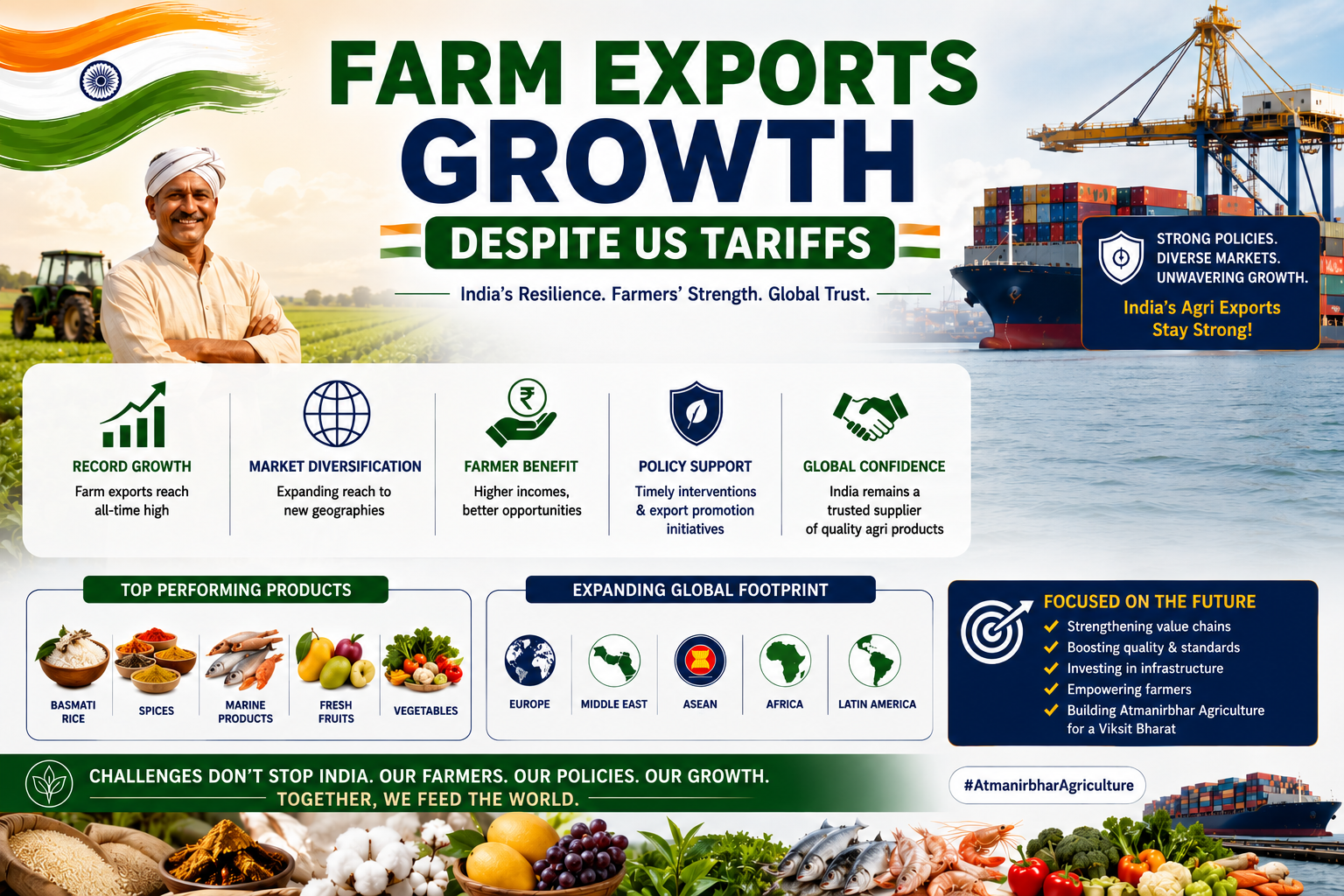
India has solidified its position as a global agricultural powerhouse, leveraging its diverse agro-climatic zones to supply food and raw materials to over 200 countries. In 2026, agriculture export in India is characterized by a strategic shift from raw commodities to value-added processed goods, driven by robust digital traceability, improved logistics, and stringent adherence to international quality standards.
The landscape of Indian agricultural exports is no longer defined solely by volume but by value and sustainability. As global supply chains seek reliability, India’s integration of technology and policy reforms has made it a preferred partner for food security. This guide provides a detailed analysis of the products, procedures, and strategic frameworks governing the Indian agri-export sector.
The Strategic Importance of Agriculture Export in India
As of 2026, the agricultural sector remains the backbone of the Indian economy, contributing significantly to the national GDP and providing a livelihood for nearly half the population. Exporting agricultural products is not merely a trade activity; it is a vital mechanism for increasing farmers' income and stabilizing domestic prices during surplus production.
The Government of India’s Agriculture Export Policy (AEP) has matured, focusing on "Districts as Export Hubs." This approach identifies specific clusters for products like bananas, grapes, and spices, ensuring that infrastructure—from cold storage to testing labs—is localized. Furthermore, the push for organic and "natural" farming has opened lucrative markets in Europe and North America, where consumers are willing to pay a premium for chemical-free produce.
In 2026, the focus has also intensified on "Value-Added Exports." Instead of exporting raw wheat or rice, Indian businesses are increasingly exporting fortified flours, ready-to-eat meals, and processed extracts. This shift captures higher margins and reduces the perishability risks associated with fresh produce.
Key Export Commodities and Market Trends
India’s export basket is incredibly diverse. Understanding which products dominate the market is essential for any prospective exporter.
1. Cereals: Rice and Wheat
Rice remains India’s flagship export. Basmati rice continues to hold a "GI" (Geographical Indication) status that commands high demand in the Middle East and Europe. In 2026, non-basmati rice varieties have also seen a surge in demand from African and Southeast Asian nations seeking affordable food security. Wheat exports, governed by periodic government calibrations to ensure domestic supply, focus on high-protein varieties for the confectionery and baking industries globally.
2. Marine Products
The marine sector, including shrimp and frozen fish, is a top foreign exchange earner. With the implementation of advanced aquaculture practices and stricter quality controls by the Marine Products Export Development Authority (MPEDA), India has overcome previous hurdles regarding antibiotic residues, making its seafood highly competitive in the US and Japanese markets.
3. Spices and Oleoresins
India is the world’s largest producer and exporter of spices. Beyond whole spices like turmeric, chili, and cumin, the export of spice oils and oleoresins has grown. These concentrated extracts are vital in the global pharmaceutical and food processing industries.
4. Fresh Fruits and Vegetables
Mangoes (specifically Alphonso and Kesar), grapes, and onions are the leaders in this category. In 2026, the use of "Sea Protocols"—which allow long-distance transport of perishables via sea instead of expensive air freight—has revolutionized the export of bananas and pineapples to distant markets.
5. Processed Food and Organic Produce
The "India Organic" brand has gained significant traction. Processed items like fruit pulps, dried nuts, and herbal extracts are seeing double-digit growth. The Production Linked Incentive (PLI) scheme for food processing has incentivized large-scale manufacturing for global brands within India.
Essential Registration and Legal Prerequisites
To engage in agriculture export in India, businesses must navigate a specific regulatory framework. This ensures that the products meet both Indian standards and the requirements of the importing nation.
Import Export Code (IEC)
The first step for any exporter is obtaining an Import Export Code (IEC) from the Directorate General of Foreign Trade (DGFT). This 10-digit code is a permanent registration and is mandatory for any commercial shipment leaving the country. In 2026, the application process is entirely digital, often integrated with the national "Single Window Interface for Facilitating Trade" (SWIFT).
Registration Cum Membership Certificate (RCMC)
Exporters must register with the relevant Export Promotion Council (EPC). For most agricultural products, this is the Agricultural and Processed Food Products Export Development Authority (APEDA). For spices, it is the Spices Board, and for marine products, it is MPEDA. Holding an RCMC allows exporters to claim benefits under various government schemes like RoDTEP (Remission of Duties and Taxes on Exported Products).
FSSAI License
Since exports involve food, a license from the Food Safety and Standards Authority of India (FSSAI) is mandatory. Exporters must specifically apply for a "Central License" for export purposes, ensuring that their manufacturing or handling facility adheres to national safety standards.
Phytosanitary and Health Certificates
Importing countries require assurance that the agricultural goods are free from pests and diseases. The National Plant Protection Organization (NPPO) or authorized agencies issue Phytosanitary Certificates after inspection. For animal products, a Health Certificate from the Department of Animal Husbandry is required.
Step-by-Step Export Process
Exporting is a logistical and administrative chain. Each link must be handled with precision to avoid delays or shipment rejections.
- Product Selection and Market Research: Identify products with a surplus in India and high demand abroad. Use the Trade Map (ITC) or APEDA’s "AgriExchange" portal to analyze price trends and competitor behavior.
- Sourcing and Quality Check: Source directly from Farmer Producer Organizations (FPOs) or certified mandis. Ensure the product meets the Maximum Residue Limits (MRLs) of the target country. Testing at NABL-accredited labs is a critical prerequisite.
- Packaging and Labeling: Packaging must be "Export Grade." For example, corrugated boxes for fruits must have specific ventilation. Labels must comply with the importing country’s language and nutritional disclosure laws.
- Booking Logistics: Choose between Air Freight (for high-value perishables) or Sea Freight (for bulk commodities). In 2026, the use of "Reefer" (refrigerated) containers is standard for maintaining the cold chain.
- Customs Clearance: This involves filing a Shipping Bill through the ICEGATE portal. A Customs House Agent (CHA) usually facilitates this, ensuring that the "Let Export Order" (LEO) is obtained after physical or digital inspection.
- Documentation Exchange: Send the Bill of Lading, Commercial Invoice, Packing List, and Certificate of Origin to the buyer’s bank for payment realization, typically through a Letter of Credit (LC) or Wire Transfer.
Summary of Major Export Categories and Target Markets (2026)
| Category | Primary Products | Key Export Destinations | Growth Driver in 2026 |
|---|---|---|---|
| Cereals | Basmati Rice, Non-Basmati Rice, Wheat | Saudi Arabia, UAE, Iran, Nigeria | Food security agreements and GI branding. |
| Marine | Frozen Shrimp, Squid, Cuttlefish | USA, China, Japan, EU | Focus on value-added "Ready-to-Cook" seafood. |
| Spices | Chilli, Turmeric, Cumin, Oils | USA, Vietnam, Thailand, UK | Demand for natural coloring and medicinal properties. |
| Horticulture | Mangoes, Grapes, Onions, Bananas | UK, Netherlands, Malaysia, UAE | Improved sea-protocol and cold-chain logistics. |
| Processed Food | Fruit Pulp, Guava Juice, Fortified Flour | USA, Canada, Australia | PLI scheme and surge in "Ready-to-Eat" global trends. |
Government Support and Incentive Schemes
The Indian government actively promotes exports to manage trade deficits and support rural economies. In 2026, the following schemes are pivotal:
- RoDTEP (Remission of Duties and Taxes on Exported Products): This scheme replaces older incentives, providing a mechanism to refund embedded central, state, and local duties that were previously non-refundable to exporters.
- Production Linked Incentive (PLI) for Food Processing: This scheme provides financial incentives to companies that reach specific investment and sales targets, specifically focusing on creating global Indian food brands.
- Transport and Marketing Assistance (TMA): This provides assistance for the international component of freight and marketing of agricultural products to mitigate the disadvantage of higher transportation costs for Indian exporters.
- Agriculture Export Policy (AEP) Clusters: There are now over 50 functional clusters where the government provides common facility centers, testing labs, and streamlined logistics to help small exporters achieve economies of scale.
Overcoming Challenges in Agri-Export
Despite the growth, exporters face several hurdles that require proactive management.
Stringent Sanitary and Phytosanitary (SPS) Measures
Developed markets like the EU and Japan have very low tolerances for pesticide residues. Indian exporters must implement "Farm-to-Fork" traceability. Using blockchain-based platforms like APEDA’s Grapenet or Tracenit allows buyers to verify the origin and chemical usage of the produce, significantly reducing the risk of shipment rejection.
Logistics and Infrastructure
While the PM Gati Shakti National Master Plan has improved port connectivity, "last-mile" connectivity from rural farms to cold storage remains a challenge. Exporters are encouraged to invest in or partner with private integrated cold-chain operators to maintain product integrity.
Price Volatility
Agricultural prices are subject to weather conditions and global demand shifts. Using "Forward Contracts" and keeping a close watch on the "Agmarknet" prices can help exporters hedge against sudden domestic price spikes that could make their export contracts unprofitable.
The Role of Technology and Traceability
By 2026, technology is no longer optional in agriculture export. Digital tools are used for:
- Soil Health Monitoring: Ensuring the crop is grown in optimal conditions, which is often a requirement for organic certification.
- Smart Warehousing: IoT-enabled warehouses track temperature and humidity in real-time, sending alerts to exporters if conditions deviate, thus preventing spoilage.
- Blockchain Traceability: Providing a transparent record of the entire journey of a product, from the specific farm in Maharashtra to a supermarket shelf in London. This transparency is the single most significant factor in building trust with international buyers.
FAQs about Agriculture Export in India
What is the most profitable agricultural product to export from India in 2026?
Processed foods and spice oleoresins currently offer the highest profit margins. While bulk commodities like rice have high volume, the value-addition in processed mango pulp, organic herbal extracts, and "ready-to-eat" traditional Indian meals provides better returns due to lower competition and higher market positioning.
Do I need a specific license for organic exports?
Yes. To export products as "Organic," you must obtain certification under the National Programme for Organic Production (NPOP). APEDA is the nodal agency for this. The produce must be grown on farms that have undergone a conversion period (usually three years) and are regularly inspected by accredited certification bodies.
How can a new exporter find international buyers?
New exporters should participate in international trade fairs like Gulfood (Dubai), Anuga (Germany), or SIAL (France). Additionally, the Indian Embassies’ commercial wings provide lists of reputed importers. Digital platforms like LinkedIn and B2B marketplaces (Alibaba, Indiamart) are also effective, provided the exporter performs due diligence on the buyer’s creditworthiness.
What are Maximum Residue Limits (MRLs), and why do they matter?
MRLs are the highest levels of pesticide residues that are legally tolerated in or on food or feed. Every country sets its own MRLs. If an Indian shipment exceeds the MRL of the destination country (e.g., the EU’s strict limits on Tricyclazole in rice), the shipment will be rejected, destroyed, or sent back at the exporter's expense.
How has the RoDTEP scheme changed for agri-exporters in 2026?
By 2026, the RoDTEP rates have been fine-tuned to reflect the actual tax burden on different categories. The process is now fully automated via the ICEGATE system, where the refund is credited as a transferable e-scrip that can be used to pay basic customs duty on imports or sold to other importers.
Practical Recommendations for Aspiring Exporters
For those looking to enter the agriculture export market in India in 2026, the following steps are recommended:
- Focus on Niche Markets: Instead of competing in the crowded "General Rice" market, look at "Black Rice" from Manipur or "Red Rice" from Himachal Pradesh, which have high health-conscious demand.
- Invest in Certification: Obtain ISO 22000 (Food Safety Management) and HACCP certifications early. These are often non-negotiable for large retailers in the West.
- Leverage FPOs: Partnering with Farmer Producer Organizations ensures a consistent supply of quality-controlled raw materials and supports the ethical sourcing narrative that global consumers value.
- Stay Updated on Policy: Follow the DGFT and APEDA portals weekly. Export policies for commodities like onions, wheat, and sugar can change overnight based on domestic food security needs.
- Prioritize Packaging: Do not skimp on packaging. It is the first thing a buyer sees and is the primary defense against the rigors of international shipping.
The future of agriculture export in India lies in the harmony of traditional farming wisdom and modern technological standards. By focusing on quality, traceability, and value addition, Indian exporters can successfully navigate the complexities of the 2026 global food market.