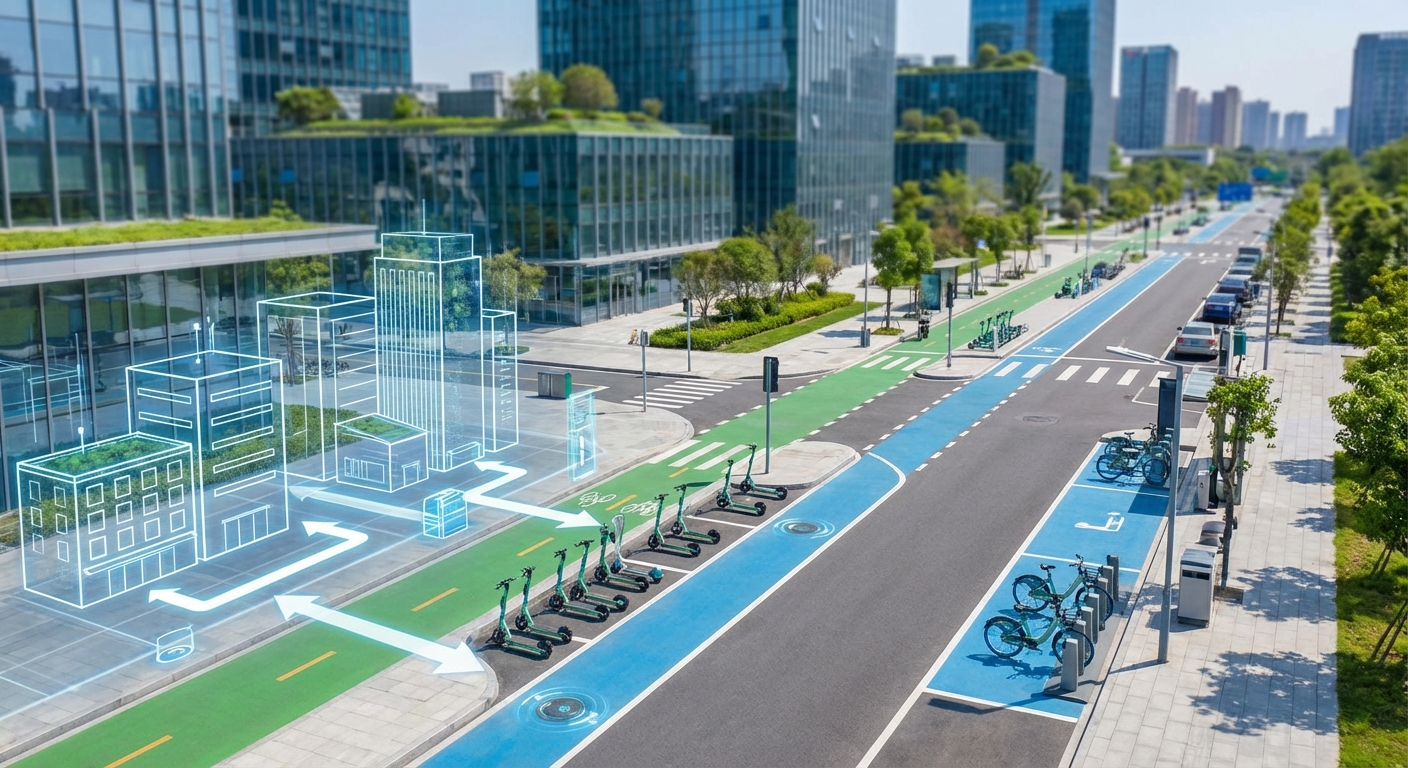
Accompanying services in urban mobility represent a suite of integrated offerings designed to enhance the efficiency, safety, and convenience of vehicle operation within dense city environments. For drivers, these services encompass everything from smart parking reservation systems and real-time traffic flow optimization to automated tolling, EV charging station integration, and last-mile connectivity tools that facilitate seamless multi-modal transit.
As urban infrastructure evolves toward 2026 standards, the landscape of driving has shifted from a solitary act of navigation to a participation in a highly connected ecosystem. Understanding these services is no longer optional for the modern driver; it is essential for maintaining mobility in regulated zones, managing operational costs, and optimizing daily travel times.
Defining the Urban Mobility Ecosystem
To navigate the modern city, a driver must understand that "accompanying services" are not merely add-ons but core infrastructure components. Urban mobility, in this context, refers to the movement of people and goods within a metropolitan area, heavily supported by digital layers that bridge the gap between static roads and dynamic traffic management.
These services generally fall into four distinct categories:
- Logistics and Access Management: Tools that manage entry into restricted zones, congestion charging areas, and low-emission zones (LEZs).
- Resource Allocation: Real-time parking discovery, pre-booking apps, and EV charging network synchronization.
- Safety and Compliance: Integrated vehicle-to-everything (V2X) communication that alerts drivers to road hazards, pedestrian proximity, and changing speed limits.
- Multi-Modal Interfacing: Services that allow a driver to switch from a personal vehicle to public transport or micro-mobility options like e-bikes or scooters with a single unified account.
The Role of Digital Integration for Drivers
For the driver, the interface for these services is usually a combination of the vehicle’s native infotainment system and smartphone-based digital wallets. In 2026, most major automotive manufacturers have integrated "Mobility-as-a-Service" (MaaS) platforms directly into the vehicle’s dashboard.
The primary benefit of this integration is the reduction of cognitive load. Rather than consulting three different apps to find a parking space, pay for a charging session, and check the traffic status for a congestion zone, the vehicle handles these negotiations in the background. Drivers must ensure their vehicle’s software is updated to the latest manufacturer firmware to access these APIs, as outdated systems may fail to handshake with municipal smart-city sensors.
Managing Access: Low-Emission and Congestion Zones
One of the most critical aspects of accompanying services is compliance with urban access regulations. In many European and North American metropolitan areas, access to the city center is managed by license-plate recognition cameras (ANPR).
Drivers need to know the following regarding these services:
- Automatic Registration: Many cities require drivers to register their vehicle’s emissions data in a national or municipal database. Failure to do so, even if the vehicle qualifies for free entry, can result in automated fines.
- Integrated Payment: Modern mobility accounts allow for "frictionless entry." When you cross a geofenced boundary, the service identifies your vehicle, checks your status, and debits the appropriate fee from your linked account without you needing to stop or initiate a payment.
- Compliance Alerts: Advanced navigation systems now provide "Pre-Entry Alerts," warning drivers if their current route will take them into a restricted zone for which they do not have the required permit or if the vehicle’s current emissions status violates local mandates.
Parking and EV Charging Infrastructure
Parking is perhaps the most visible accompanying service. The shift has moved from finding a spot on the street to dynamic, data-driven reservation.
Dynamic Parking Reservation
Parking services now utilize occupancy sensors embedded in the pavement or LiDAR-based monitoring of garages. For drivers, this means you can secure a spot before departing. In 2026, many of these services utilize "Dynamic Pricing," where the cost of a parking spot fluctuates based on demand. Experienced drivers utilize mobile apps to check for "early-bird" or "off-peak" incentives that can reduce costs by as much as 30%.
EV Charging Synchronization
For electric vehicle owners, charging is the most vital accompanying service. The complexity lies in the fragmented nature of networks. Drivers should prioritize services that offer:
- Plug-and-Charge (ISO 15118): This standard allows the car to authenticate itself with the charger, eliminating the need for RFID cards or mobile apps at the pump.
- Occupancy Verification: Avoid "dead" chargers by using apps that verify if the charging station is currently in use or out of service, a frequent point of frustration for urban commuters.
Comparative Overview of Mobility Services
The following table summarizes the typical features drivers should look for when selecting or engaging with urban mobility service providers.
| Service Category | Primary Driver Benefit | Key Requirement |
|---|---|---|
| Congestion Charging | Automated billing, reduced fines | Vehicle registration in municipal database |
| Smart Parking | Guaranteed space, time savings | Active data connection, payment linked |
| EV Charging | Plug-and-charge convenience | ISO 15118 compliant vehicle hardware |
| Multi-modal Transit | Seamless car-to-train/bus transfer | Unified mobility account/digital wallet |
| V2X Safety Alerts | Reduced accident risk | Vehicle-to-Infrastructure hardware |
Safety and Privacy Considerations
With the increase in digital connectivity, drivers must be aware of data privacy. Accompanying services collect granular data on your routes, frequency of travel, and destination habits.
- Data Minimization: Ensure your settings are configured to share only the location data necessary for the service. For example, a parking app does not need your GPS coordinates once you have arrived at the destination.
- Cybersecurity: Always use two-factor authentication (2FA) for accounts linked to your vehicle’s payment systems. As of 2026, mobile-first banking integration is the industry standard for securing these high-frequency, low-value transactions.
- Over-the-Air (OTA) Updates: Keep your vehicle’s security patches current. Hackers can sometimes exploit outdated infotainment modules to gain access to vehicle location data or, in rare cases, vehicle control settings.
Resolving Common Urban Mobility Challenges
Drivers often face "Service Silos," where different providers (parking, tolling, transit) refuse to communicate with one another. To resolve this, look for "Mobility Aggregators." These are platforms that act as a central hub, pulling data from multiple city-provided APIs into one dashboard.
If a service fails, follow this hierarchy of troubleshooting:
- Connectivity Check: Confirm the vehicle’s telematics unit has a signal. Urban "canyons" created by skyscrapers can often lead to intermittent GPS or cellular drops.
- Account Status: Ensure that the funding source for your digital wallet has not expired.
- Sensor Calibration: If parking services are inaccurate, it may be due to the vehicle's onboard sensors needing a recalibration or a dirty camera lens on the exterior of the car.
Future-Proofing Your Urban Driving Experience
Looking toward the remainder of 2026, the trend in urban mobility is toward "predictive routing." Rather than just telling you the fastest way to get from A to B, systems are beginning to incorporate "mobility intelligence." This means your vehicle may suggest a slightly longer route that avoids a predicted spike in congestion, or it may suggest parking at a peripheral lot and taking a public transport link because the city center is currently hosting a high-traffic event.
Drivers who embrace these services find they spend significantly less time idling in traffic and more time utilizing the efficiency of the integrated grid. The key to successful adoption is remaining informed about which services are available in the specific municipality where you operate.
Frequently Asked Questions (FAQ)
What is the primary difference between a navigation app and an urban mobility service?
A navigation app provides route guidance based on traffic. An urban mobility service integrates your vehicle into the city’s infrastructure, enabling automatic payments for parking, tolling, and managing access to restricted zones, effectively turning your vehicle into a participant in the city's operational network.
Are these services standard on all vehicles sold in 2026?
While most new vehicles come with basic connectivity, the level of integration varies by manufacturer. Premium brands often have proprietary, fully integrated ecosystems, while budget-friendly models may rely entirely on smartphone mirroring (Apple CarPlay or Android Auto) to provide the same services.
Will using these services increase my data usage costs?
Most modern vehicles include a limited data plan for telematics services, but high-bandwidth features like live video streaming or heavy map updates may require an additional subscription. It is recommended to check your vehicle's data settings to prioritize essential mobility services over entertainment usage.
How do I know if I am registered for a city's low-emission zone?
Most cities provide a portal where you can enter your Vehicle Identification Number (VIN) or license plate to check your current registration status. It is advisable to perform this check annually, as environmental standards and zone boundaries can change.
Can I opt out of these mobility services?
Yes, you can choose not to activate these features. However, in cities with mandatory congestion charging or automated digital access, opting out may force you to perform manual tasks, such as buying physical permits or stopping to pay at kiosks, which can significantly increase your travel time.
Recommended Next Steps
To get the most out of your urban mobility experience, perform a "Mobility Audit" of your primary driving area:
- Identify the Apps: Determine which specific mobility apps are favored by your city’s transit authority.
- Consolidate Accounts: Link your payment method to one or two master-tier apps to minimize the number of platforms holding your financial data.
- Test the Integration: On your next trip to the city, check your vehicle’s infotainment system to see if it displays real-time parking availability for your destination. If it doesn't, investigate if an OTA update is available for your vehicle's navigation system.
By proactively managing these services, you move from being a reactive driver coping with city chaos to an informed participant in a managed, efficient urban environment.