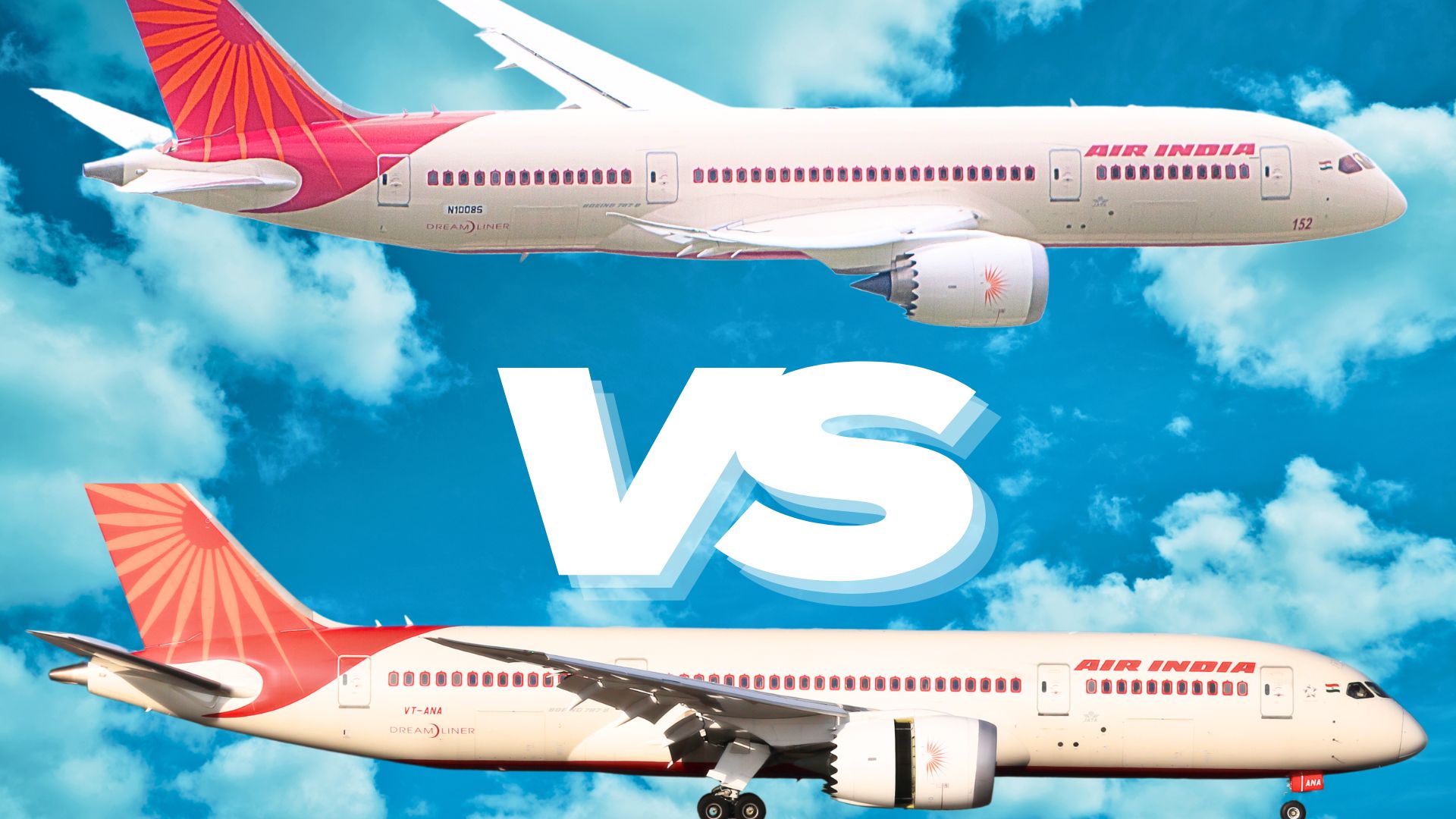
The primary difference between the Boeing 787-8 and 787-10 lies in their optimization: the 787-8 is a smaller, longer-range "route opener" designed for thin, ultra-long-haul flights, while the 787-10 is a stretched, high-capacity variant optimized for maximum efficiency and passenger volume on medium-to-long-haul regional and transcontinental routes.
The Boeing 787 Dreamliner family revolutionized commercial aviation upon its debut, introducing carbon-fiber composite structures, higher cabin humidity, and fuel efficiency that surpassed previous generations of wide-body aircraft. As of 2026, the Dreamliner remains the backbone of many global fleets. However, choosing between the smallest family member, the 787-8, and the largest, the 787-10, involves understanding a complex trade-off between payload capacity and operational range. While they share a type rating and significant parts commonality, their mission profiles are distinct and rarely overlap in an airline's strategic planning.
Structural Evolution and Dimensions
The Boeing 787-8 was the launch version of the Dreamliner family, entering commercial service in 2011. It was designed to replace the Boeing 767 and provide a more efficient alternative to the Airbus A330-200. Measuring approximately 186 feet (57 meters) in length, it is the most compact version of the aircraft. Its size allows it to operate out of smaller airports and makes it easier to fill on routes where passenger demand is not yet high enough to justify a larger wide-body.
In contrast, the 787-10 is a double-stretch of the original -8 design. To create the -10, Boeing added fuselage plugs both forward and aft of the wing, extending the total length to roughly 224 feet (68 meters). This 38-foot difference is substantial, allowing for significantly more floor space for passenger seating and underfloor cargo. Despite this massive increase in length, both aircraft share the same wingspan of 197 feet (60 meters). This wing commonality is a feat of engineering, though it results in different aerodynamic behaviors; the -8 has a surplus of wing area for its weight, contributing to its impressive climb performance and range, while the -10 utilizes the wing to its maximum lifting potential for high-density loads.
Passenger Capacity and Cabin Configuration
Capacity is where the 787-10 dominates the comparison. In a typical two-class seating arrangement, the 787-10 can accommodate approximately 330 to 336 passengers. Some high-density configurations used by regional carriers can push this number toward 440 seats. This makes the -10 a formidable competitor against the Airbus A350-900 and a direct replacement for older Boeing 777-200 models. For airlines operating high-traffic corridors—such as Singapore to Tokyo or London to New York—the -10 provides the lowest seat-mile costs in its class.
The 787-8 is much more intimate, typically configured for 242 to 248 passengers in two classes. While this lower capacity might seem like a disadvantage, it is the -8's greatest strength for "long and skinny" routes. These are routes that cover vast distances but do not have enough daily travelers to fill a 330-seat aircraft. By using the -8, airlines can offer direct flights between secondary cities (e.g., Tokyo to San Jose or London to Nashville) that would be financially unviable with larger, heavier planes.
Range vs. Payload: The Great Trade-off
The most critical technical distinction between these two variants is the relationship between how much they can carry and how far they can fly. The 787-8 is a long-range specialist. With a maximum range of approximately 7,305 nautical miles (13,530 km), it can stay in the air for over 15 hours, connecting almost any two points on the globe. This range is achieved because the aircraft is relatively light compared to the massive amount of fuel it can carry in its wing tanks.
The 787-10, however, faces a "range penalty" due to its size. Because it uses the same fuel tank structure as the smaller variants but carries a much heavier structural and passenger load, it cannot fly as far. Its maximum range is approximately 6,330 nautical miles (11,730 km). While this is still enough to cover most trans-Atlantic and many trans-Pacific routes, it cannot perform the ultra-long-haul missions that the -8 and the mid-sized -9 are famous for. The -10 is optimized for efficiency over distance; it is designed to carry the most people possible over "medium-long" distances with the least amount of fuel burned per seat.
Technical Specifications Comparison
The following table summarizes the key technical differences between the two models based on standard Boeing specifications as of 2026.
| Feature | Boeing 787-8 | Boeing 787-10 |
|---|---|---|
| Length | 186 ft (56.7 m) | 224 ft (68.3 m) |
| Wingspan | 197 ft 3 in (60.1 m) | 197 ft 3 in (60.1 m) |
| Typical 2-Class Seating | 242 - 248 seats | 330 - 336 seats |
| Maximum Range | 7,305 nmi (13,530 km) | 6,330 nmi (11,730 km) |
| Cargo Volume | 4,446 cu ft (126 m³) | 6,187 cu ft (175 m³) |
| Max Takeoff Weight (MTOW) | 502,500 lbs (227,930 kg) | 560,000 lbs (254,011 kg) |
| Engine Options | GEnx-1B / Trent 1000 | GEnx-1B / Trent 1000 |
| Exit Limit (Max Pax) | 381 | 440 |
Cargo Capabilities
For many airlines, the profit from a flight is determined by what is in the "belly" of the plane rather than the seats. The 787-10 offers a massive advantage in cargo volume, providing roughly 40% more space than the -8. This extra volume allows for more LD3 shipping containers and pallets. On routes where belly cargo demand is high—such as industrial hubs in Asia—the -10 acts almost like a mini-freighter while still carrying a full load of passengers.
The 787-8, while having a smaller hold, is often used for high-value, low-volume cargo that needs to move quickly over long distances. Because it operates on routes that larger planes cannot serve, it provides a unique niche for express logistics. However, strictly in terms of tonnage and volume, the -10 is the clear winner for cargo-heavy operations.
Operational Costs and Efficiency
The 787-10 is often cited as having the best economics of any wide-body aircraft currently in service. Its Cost per Available Seat Mile (CASM) is incredibly low because it spreads the fixed costs of a flight (crew, fuel, landing fees) across a much larger number of passengers. According to Boeing’s commercial market analysis, the 787-10 is up to 25% more fuel-efficient per seat than the aircraft it replaces.
The 787-8 has a higher CASM because it carries fewer people. However, its trip costs are lower. If an airline cannot sell 300 tickets for a specific flight, the 787-8 is the more profitable choice because it costs less overall to operate that single flight. This makes the -8 a lower-risk option for new routes where demand is uncertain or for premium-heavy routes where the airline prioritizes higher fares over high volume.
Commonality and Fleet Integration
One of the major selling points for the 787 family is the high degree of commonality. A pilot trained on the 787-8 can fly the 787-10 with minimal differences in handling, though the -10 requires more attention during takeoff and landing due to its length (to avoid a tail strike). For maintenance teams, the engines and most internal systems are identical or very similar.
This commonality allows airlines like United, British Airways, and All Nippon Airways (ANA) to operate a mixed fleet. They can deploy the -8 on a 14-hour flight to a secondary city and the -10 on an 8-hour high-density hop between major hubs, all while using the same pool of pilots and spare parts. This flexibility is a significant advantage over competitors that might require entirely different aircraft families to cover the same mission range.
Takeoff and Landing Performance
The 787-8 is known for its "rocket-like" performance. Because it has the same wing and similar engine thrust options as its larger siblings but weighs much less, it has a high thrust-to-weight ratio. This allows it to take off from shorter runways and perform well in "high and hot" conditions—airports at high altitudes or in very hot climates where air is thin.
The 787-10 is more limited in this regard. Its heavier weight and longer fuselage mean it requires more runway length to reach takeoff speed. Additionally, pilots must be more precise with the pitch angle during rotation to prevent the rear of the aircraft from touching the runway. While modern flight control laws help mitigate these risks, the -10 is generally confined to major airports with primary, long-runway infrastructure.
Frequently Asked Questions
Which Dreamliner is more comfortable for passengers?
Both the 787-8 and 787-10 offer the same core "Dreamliner Effect" features: lower cabin altitude (6,000 feet instead of 8,000 feet), higher humidity to reduce jet lag, and large dimmable windows. However, because the 787-10 is newer, many airlines have installed their latest cabin interiors on this model. Conversely, the 787-8 is sometimes preferred by frequent flyers because the smaller cabin can feel less crowded and boarding/deplaning processes are typically faster.
Why doesn't the 787-10 fly as far as the 787-8?
The 787-10 has the same fuel capacity as the 787-9, but it is physically heavier and carries more payload. This increased weight requires more lift and thrust, which consumes fuel at a faster rate. Because it cannot carry additional fuel to compensate for the extra weight, its total range is reduced. It is essentially "trading" fuel for passengers.
Can the 787-8 still be ordered in 2026?
Yes, while the 787-9 and 787-10 have become the more popular sellers in recent years, the 787-8 remains in production for specific customers who require its unique range and short-field performance capabilities. It is particularly popular with government agencies for VIP transport and airlines operating in challenging geographical regions.
Which model is better for the environment?
Both are significantly better for the environment than previous-generation aircraft. The 787-10 is often considered the "greener" choice per passenger because its high capacity leads to lower emissions per seat. However, the 787-8 enables direct flights that might otherwise require two shorter flights with a connection; since takeoff and landing are the most fuel-intensive parts of a flight, the -8's ability to fly point-to-point can sometimes result in lower total emissions for a traveler's journey.
Is there a difference in engine noise?
The engine technology (General Electric GEnx or Rolls-Royce Trent 1000) is virtually the same across both models. Both feature the iconic "chevron" nacelles (the jagged edges on the back of the engine pods) which are designed to mix hot and cold air more quietly. To a passenger, the noise levels are nearly identical, though seating position relative to the wing will have a greater impact on noise than the aircraft model itself.
Final Recommendation: Mission-Based Selection
Deciding between the 787-8 and the 787-10 depends entirely on the intended mission.
Choose the 787-8 if:
- You are an airline launching a new, ultra-long-distance route between smaller cities.
- You operate out of airports with shorter runways or challenging hot/high conditions.
- Your passenger demand is steady but doesn't frequently exceed 250 seats.
- You prioritize maximum range and flexibility over the lowest possible seat-mile cost.
Choose the 787-10 if:
- You are operating high-traffic routes between major global hubs (e.g., London to Dubai).
- You need to maximize passenger and cargo throughput to achieve the best profit margins per flight.
- Your routes stay within the 6,000-nautical-mile range.
- You are replacing older, less efficient wide-body aircraft like the 777-200 or A330-300 on established corridors.
In the current 2026 aviation landscape, the 787-10 has cemented its role as the "efficiency king" for trunk routes, while the 787-8 continues to serve as a vital tool for global connectivity, reaching corners of the world that larger planes simply cannot serve profitably.