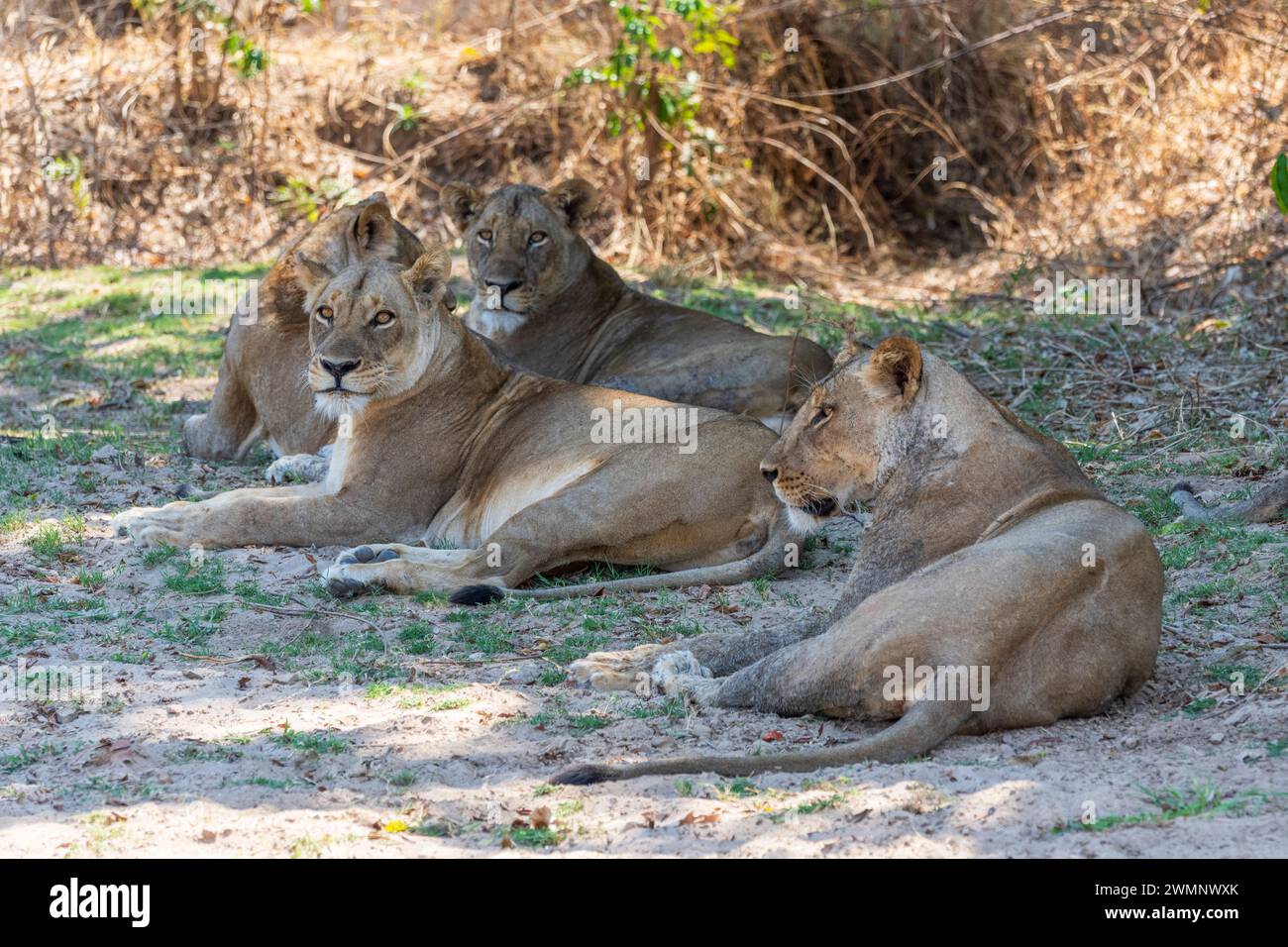
No, there are no native populations of wild lions in South America. While the African lion (Panthera leo) is famous for its iconic status on the African savanna and a small remnant population in India’s Gir Forest, it has never naturally inhabited the South American continent. The confusion often arises because South America is home to other large, powerful felids, such as the jaguar and the puma, which share ecological niches with lions and possess striking physical similarities that frequently lead to mistaken identities among travelers and casual wildlife observers.
Understanding the historical biogeography, modern distribution, and ecological roles of South America's actual apex predators requires looking closely at why lions never evolved on or colonized the continent. Examining the evolutionary pathways of the Felidae family clarifies how modern big cats arrived in the Americas and why the true king of the jungle remains strictly confined to the Old World, while the New World supports its own unique suite of magnificent carnivores.
Evolutionary History and Biogeographical Separation of Felids
The evolutionary history of the cat family (Felidae) provides the primary explanation for why African lions and South American big cats are separated by vast geographical and historical distances. Modern cats originated in Asia millions of years ago and gradually radiated across the globe through successive waves of migration and land bridge crossings. The lineage that includes lions, tigers, leopards, and jaguars diverged from a common ancestor roughly three to four million years ago, establishing distinct continental territories long before human intervention altered global ecosystems.
Lions (Panthera leo) evolved primarily in the open savanna and grassland environments of Africa, later expanding their historical range into parts of Europe, the Middle East, and Asia. Their physical adaptations—such as social pride structures, tawny camouflage suited for dry grasses, and stamina-based endurance running—are finely tuned to open, sun-drenched habitats. Conversely, South America was isolated as an island continent for tens of millions of years during the Cenozoic era, developing an endemic fauna of marsupials and unique ungulates before the formation of the Isthmus of Panama around 3 million years ago.
When the Great American Biotic Interchange occurred, allowing northern mammals to cross into South America, ancestral felines made their way southward. However, these migrants did not include the lineage that would become the modern African lion. Instead, ancestors of the jaguar and the puma successfully crossed the land bridge, colonized South America, and underwent significant evolutionary radiation to fit the continent's dense rainforests, flooded savannas, and rugged mountain chains.
The Real Big Cats of South America: Jaguars and Pumas
Because lions are absent, South American ecosystems are governed by two primary native feline predators: the jaguar (Panthera onca) and the puma (Puma concolor). Mistaking these animals for lions is common, particularly for visitors unfamiliar with the distinct physical characteristics, coloration, and behaviors of New World cats.
The Jaguar: The New World's Largest Cat
The jaguar is the third-largest feline species in the world, following only the tiger and the lion, and it stands undisputed as the largest cat in the Americas. Unlike lions, which favor open plains and live in complex social groups, jaguars are solitary, heavily muscled predators that thrive in dense tropical rainforests, swamps, and seasonal floodplains like the Brazilian Pantanal.
Key biological and behavioral traits of the jaguar include:
- Coat Pattern: Distinctive yellowish-tan coats marked by dark rosettes with spots inside them, providing exceptional camouflage in dappled jungle light.
- Build: Stocky, compact bodies with exceptionally powerful jaws and limbs designed for crushing prey like caimans, capybaras, and peccaries.
- Water Affinity: Unlike many other big cat species, jaguars are exceptional swimmers and frequently hunt aquatic prey in rivers and flooded forests.
The Puma: The Adaptable Mountain Lion
The puma—also widely known across the Americas as the cougar, mountain lion, or panther—is the second-large native cat of South America. Despite its common English moniker "mountain lion," the puma is not closely related to the African lion. Instead, genetic research places the puma in a separate evolutionary lineage closer to domestic cats and cheetahs, though it remains a formidable apex predator.
Pumas boast the widest geographical range of any native terrestrial mammal in the Western Hemisphere, stretching from the Canadian Yukon down to the southern tip of Patagonia. In South America, pumas inhabit the Andes Mountains, arid scrublands, Patagonian steppes, and parts of the Amazon basin. They are slender, highly adaptable ambush predators with plain, tawny coats and unmatched leaping abilities.
Comparing African Lions with South American Apex Predators
To clear up common confusions regarding wild cats, comparing the African lion directly with South America's major felids highlights key differences in taxonomy, habitat preference, social structure, and physical appearance.
| Feature | African Lion (Panthera leo) | Jaguar (Panthera onca) | Puma (Puma concolor) |
|---|---|---|---|
| Native Continent | Africa and localized in India | North, Central, and South America | North and South America |
| Primary Habitat | Savannas, grasslands, scrub forests | Tropical rainforests, wetlands, swamps | Mountains, forests, deserts, pampas |
| Social Structure | Highly social; lives in family groups called prides | Solitary, except during mating or raising cubs | Solitary, except during mating or raising cubs |
| Coat Appearance | Solid tawny/golden; males have prominent mannes | Rosettes with spots; heavily muscled build | Plain reddish-brown to gray; slender and agile |
| Primary Prey | Medium to large ungulates (zebras, wildebeests) | Caimans, tapirs, capybaras, peccaries | Deer, guanacos, smaller mammals |
Historical and Fossil Misconceptions
Adding to the confusion surrounding lions in South America is the fascinating fossil record of the Pleistocene epoch. During the Ice Age, the Americas were home to a rich megafauna that included ancient relatives of modern cats. Among these extinct species was the American lion (Panthera leo atrox), a massive subspecies or sister species to the Eurasian cave lion and distant cousin to the modern African lion.
Fossil evidence indicates that Panthera leo atrox roamed North America and parts of Central America. However, these prehistoric cats did not establish widespread, enduring populations deep within South America during the Pleistocene, and they went extinct alongside mammoths, dire wolves, and saber-toothed cats roughly 11,000 to 12,000 years ago. Therefore, no living lineage of true lions survived the Pleistocene transition in either North or South America.
Frequently Asked Questions
Are there mountain lions in South America?
Yes, pumas are frequently called mountain lions in North America, and their South American populations are widespread. However, despite sharing the common name, they are not true lions (Panthera leo), belonging instead to the genus Puma and lacking the social pride structures and roaring anatomy of true big cats.
Did lions ever live in South America in the past?
True modern lions (Panthera leo) never naturally inhabited South America. While prehistoric American lions lived in North America during the Pleistocene epoch, they did not establish permanent breeding populations on the South American continent before their extinction.
Why do people confuse jaguars with lions?
Travelers or individuals unfamiliar with regional wildlife sometimes mistake jaguars for lions due to their large size and golden-yellow coat coloration. However, jaguars feature distinct dark rosettes across their bodies, whereas African lions feature solid tawny coats without spots as adults.
Are there any lions in South American zoos?
Yes, zoological parks across major South American cities, such as Buenos Aires, São Paulo, and Bogotá, house African lions imported from international captive-breeding programs. These captive populations exist solely for exhibition, education, and conservation breeding and do not represent wild ecosystems.
What is the largest wild cat in South America?
The jaguar (Panthera onca) is the largest wild cat species living in South America. An adult male jaguar can weigh up to 100 kilograms or more, making it the apex mammalian predator of the neotropical realm.
Conclusion and Wildlife Viewing Guidance
Travelers exploring South America's breathtaking natural landscapes—from the Amazon rainforest to the peaks of Patagonia—will encounter a rich diversity of wildlife, but wild lions will not be among them. Spotting native apex predators requires looking for jaguars in protected lowland reserves like the Brazilian Pantanal or tracking pumas across the windy steppes of Torres del Paine National Park in Chile. Respecting these magnificent, authentic New World cats ensures safe and memorable wildlife encounters across the continent.