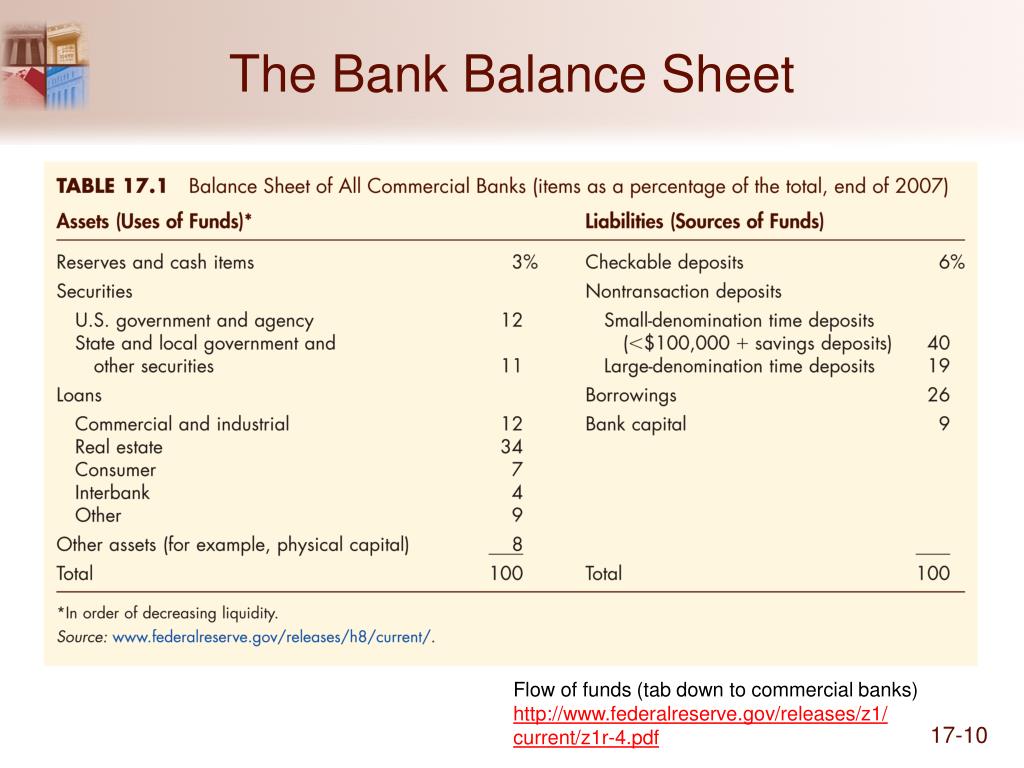
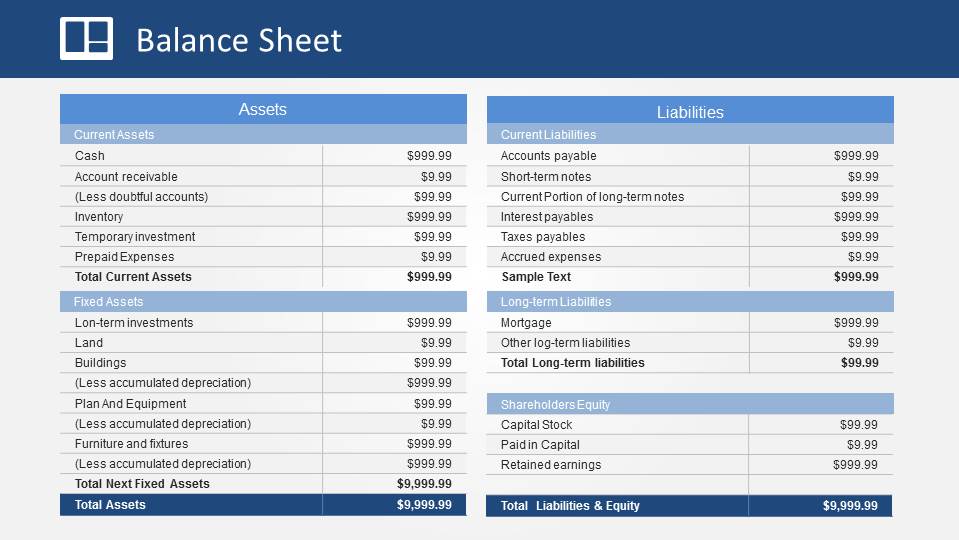
Bank vault cash items are listed as assets, not liabilities, on a commercial bank's balance sheet. As physical currency and coin held on-site to meet customer withdrawals and daily operations, vault cash represents legal tender owned by the bank, contributing to its liquidity and primary reserves.
In the complex world of commercial accounting, the balance sheet of a financial institution often appears "inverted" to those familiar with standard corporate bookkeeping. While a typical business views its cash as its primary liquid resource, the sheer scale and regulatory environment of a bank necessitate a more nuanced understanding of where physical money sits in the ledger. As of 2026, despite the continued transition toward digital-first banking and central bank digital currencies (CBDCs), vault cash remains a fundamental component of a bank’s operational infrastructure and its formal reporting to regulatory bodies.
Defining Vault Cash in Commercial Banking
Vault cash encompasses all physical United States currency and coin held by a bank within its own confines. This includes the money stored in the main high-security vault, the funds distributed to teller drawers, and the cash loaded into the bank’s fleet of Automated Teller Machines (ATMs).
From a technical standpoint, vault cash is the most liquid form of a bank's primary reserves. It is immediately available to satisfy the demands of depositors who wish to convert their electronic balances into physical "hand-to-hand" money. Because this cash is the property of the bank—having been either purchased from the Federal Reserve or received through customer deposits—it satisfies the fundamental accounting definition of an asset: a resource controlled by the entity as a result of past events and from which future economic benefits are expected to flow.
In 2026, while the volume of physical cash in circulation has shifted relative to digital payments, the Federal Financial Institutions Examination Council (FFIEC) still requires rigorous reporting of these holdings. On the Consolidated Reports of Condition and Income, commonly known as the "Call Report," vault cash is aggregated under the line item "Cash and Balances Due from Depository Institutions."
Why Vault Cash is Classified as an Asset
To understand why vault cash is an asset, one must look at the flow of value. When a bank holds physical currency, it possesses an instrument of value that can be used to settle debts, provide change, or be exchanged for a balance at a Federal Reserve Bank.
1. Legal Ownership and Control
When you deposit $1,000 in cash into your checking account, you no longer "own" those specific physical bills. Instead, you own a claim against the bank for $1,000. The bank now takes legal ownership of the physical paper. Because the bank owns and controls that paper, it must list it as an asset.
2. Immediate Liquidity
Assets are categorized by their liquidity—the ease with which they can be converted into a medium of exchange. Vault cash is the definition of liquidity. It does not need to be sold or traded; it is already the medium of exchange. In the hierarchy of a bank's balance sheet, vault cash sits at the very top of the asset column, often grouped with "Cash and Due from Banks."
3. Future Economic Benefit
Vault cash provides a benefit by allowing the bank to function. Without it, the bank could not fulfill withdrawal requests, which would lead to a loss of public confidence and potentially a bank run. Furthermore, this cash can be transported to a Federal Reserve Bank and credited to the bank's reserve account, where it might earn interest (IORB - Interest on Reserve Balances), depending on the prevailing monetary policy of 2026.
The Relationship Between Vault Cash and Liabilities
The confusion regarding whether vault cash is a liability often stems from the dual nature of a banking transaction. When a customer walks into a bank and hands the teller $500, two things happen simultaneously on the balance sheet:
- Asset Increase: The bank's vault cash (Asset) increases by $500.
- Liability Increase: The customer's deposit account (Liability) increases by $500.
While the $500 in physical bills is an asset, the bank's obligation to pay that $500 back to the customer upon request is the liability. The physical money in the vault is the "thing" the bank uses to satisfy its "promise" (the deposit). Therefore, vault cash is the resource used to extinguish a liability, but it is not the liability itself.
Vault Cash and Regulatory Reserve Requirements
Historically, vault cash played a critical role in satisfying "Required Reserves." Central banks, such as the Federal Reserve, mandated that banks hold a certain percentage of their deposits in reserve to ensure stability. Vault cash was allowed to count toward these requirements.
By 2026, the landscape of reserve requirements has evolved. Following the 2020 shift where the Federal Reserve reduced reserve requirement ratios to zero percent, the focus transitioned toward the Liquidity Coverage Ratio (LCR) and the Net Stable Funding Ratio (NSFR) under Basel III and subsequent frameworks.
Even with a 0% reserve requirement, banks must maintain "precautionary reserves." Vault cash serves this purpose. If a bank holds too little vault cash, it risks "stock-out" scenarios at ATMs or branches. If it holds too much, it faces an "opportunity cost," as physical cash in a vault earns zero interest compared to funds held at the Federal Reserve or invested in overnight securities.
Accounting for Vault Cash: The Journal Entries
To see how vault cash functions as an asset, we can examine the standard accounting entries used by commercial banks.
Scenario A: Receiving a Deposit
When a customer deposits $2,000 in cash:
- Debit: Vault Cash (Asset) $2,000
- Credit: Demand Deposits (Liability) $2,000
In accounting, a debit increases an asset account. This clearly demonstrates that the physical cash is moving into the asset column.
Scenario B: A Customer Withdrawal
When a customer withdraws $500 from an ATM:
- Debit: Demand Deposits (Liability) $500
- Credit: Vault Cash (Asset) $500
A credit to an asset account decreases its balance. The bank is reducing its assets to reduce its liabilities.
Comparison of Asset and Liability Categories in Banking
To provide clarity on where vault cash fits within the broader financial structure of a bank in 2026, the following table distinguishes between typical assets and liabilities.
| Category | Item | Classification | Description |
|---|---|---|---|
| Asset | Vault Cash | Primary Reserve | Physical currency/coins held on-site. |
| Asset | Balances at the Fed | Secondary Reserve | Electronic funds held in a central bank account. |
| Asset | Investment Securities | Earning Asset | Government bonds, MBS, and high-grade corporates. |
| Asset | Loans and Leases | Earning Asset | Mortgages, auto loans, and commercial credit. |
| Liability | Demand Deposits | Debt Obligation | Checking and savings accounts owed to customers. |
| Liability | Time Deposits | Debt Obligation | Certificates of Deposit (CDs) with fixed terms. |
| Liability | Fed Funds Purchased | Borrowing | Overnight loans from other banks to meet liquidity. |
| Equity | Retained Earnings | Capital | Accumulated profits not yet distributed to shareholders. |
The Operational Costs of Holding Vault Cash
While vault cash is an asset, it is often referred to as a "non-earning asset." Unlike a loan that generates interest income or a Treasury bond that pays a coupon, a stack of $100 bills sitting in a safe produces no direct revenue.
In 2026, bank treasurers work closely with "Cash Management" departments to optimize vault levels. This involves complex modeling to predict seasonal demand (e.g., higher cash needs during holidays or local festivals) while minimizing the following costs:
- Security and Logistics: The cost of armored car transport (e.g., Brink's or Loomis), armed security, and high-tech surveillance.
- Insurance: Banks must pay premiums for "Bankers Blanket Bonds" that cover the theft or destruction of vault cash.
- Opportunity Cost: Every dollar in the vault is a dollar that isn't being lent out at 7% interest or held at the Fed for the current IORB rate.
- Audit and Compliance: Dual-control requirements (where two employees must be present to access the vault) and frequent "surprise" counts add to the operational overhead.
Digitalization and the Future of Vault Cash in 2026
As we navigate through 2026, the role of vault cash is being challenged by the rise of "Real-Time Payments" (RTP) and the FedNow Service. With the ability to move money instantly and electronically 24/7, the necessity for individuals to carry large amounts of physical cash has diminished.
However, vault cash is not obsolete. It remains a vital "fail-safe" for the economy. In the event of cyber-attacks, power outages, or telecommunications failures, physical currency is the only medium of exchange that functions offline. Consequently, regulators continue to view vault cash as a critical component of a bank's operational resilience strategy. Even "neobanks" or digital-only banks often have arrangements with traditional commercial banks to ensure their customers have access to physical cash networks, indirectly maintaining the relevance of vault cash assets on the collective balance sheet of the banking system.
Technical Reporting: The Call Report (Schedule RC)
For those analyzing a bank's health, vault cash is specifically found on the Schedule RC - Balance Sheet of the FFIEC Call Report.
Line item 1, "Cash and balances due from depository institutions," is divided into two parts:
- 1a: Noninterest-bearing balances and currency and coin.
- 1b: Interest-bearing balances.
Vault cash is strictly reported in 1a. Because it is physical currency, it cannot bear interest. If you see a bank with an unusually high ratio of 1a to total assets, it may suggest a highly retail-focused bank with many branches, or perhaps a bank that is over-provisioned for cash and inefficiently managing its liquidity.
Frequently Asked Questions
Is vault cash considered part of a bank's "Money Supply"?
Vault cash is not included in the M1 or M2 money supply figures. This is because "Money Supply" measures the money available to the public. Since vault cash is held by the bank and not currently in circulation, it is excluded to avoid "double counting"—we count the customer's deposit balance instead.
Can a bank run out of vault cash?
Yes, a bank can physically run out of bills in a specific branch or ATM. This is usually an operational failure rather than a financial one. If a branch runs out of cash, it orders an emergency shipment from the central vault or the Federal Reserve. A bank is only "insolvent" if it lacks the total assets to cover its liabilities, not just because its physical cash is low.
Why do some people think vault cash is a liability?
The confusion usually comes from the perspective of the customer. To you, your cash is an asset. When you give it to the bank, you feel like the bank "owes" you that cash. While the bank does owe you the value, the physical bills themselves are now the bank's property, making them the bank's asset.
Does the Federal Reserve pay interest on vault cash?
No. The Federal Reserve only pays interest on balances held in an electronic account at a Federal Reserve Bank (Interest on Reserve Balances). Physical cash held in a bank's own vault earns nothing, which is why banks try to keep vault cash at the minimum level necessary for operations.
How is vault cash verified during an audit?
Auditors use a process called "Cash Counting." This involves a physical count of all currency and coins. In 2026, many banks use advanced high-speed currency counters that interface directly with the general ledger to ensure the physical count matches the balance sheet's "Vault Cash" asset account.
Practical Recommendation for Financial Analysis
When evaluating a commercial bank's balance sheet in 2026, always categorize vault cash as a Primary Asset. If you are a student or professional performing a ratio analysis, remember that vault cash should be included in the numerator of the Cash Ratio (Cash / Current Liabilities).
However, do not mistake a high vault cash balance for high profitability. Because vault cash is a non-earning asset, a bank with excessive cash in its vaults is likely under-utilizing its resources. The "sweet spot" for a healthy commercial bank is to maintain just enough vault cash to satisfy 99.9% of daily withdrawal fluctuations plus a small safety buffer, while funneling the remainder into interest-bearing reserves or high-quality loans.