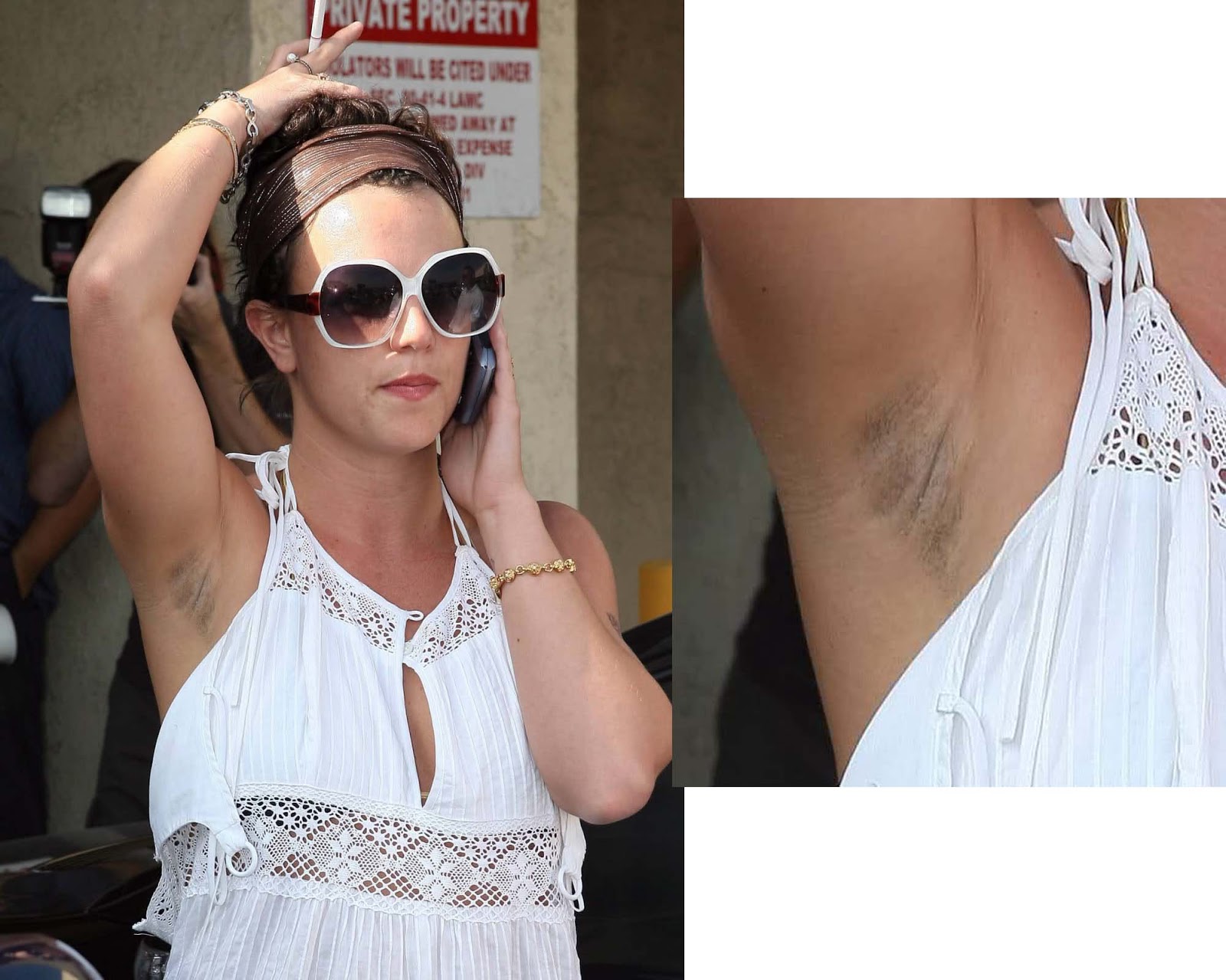
In pop culture, celebrity armpit hair has evolved from a scandalous oversight to a deliberate symbol of body autonomy and feminist defiance. By challenging patriarchal beauty standards, icons ranging from Sophia Loren to Lourdes Leon have utilized their public platforms to normalize natural body hair, sparking global conversations about gender roles and personal expression.
The presence of armpit hair on the red carpet, in high-fashion editorials, and across social media is rarely just a grooming choice; it is a cultural artifact. As we navigate 2026, the "Naturalism 2.0" movement has largely transitioned from provocative activism into a baseline of body neutrality. However, to understand how we reached this point of acceptance, one must examine the decades of controversy, media scrutiny, and intentional rebellion that preceded it.
The Historical Construction of the Shaved Standard
To understand why a celebrity showing armpit hair is considered significant, we must first recognize that the "hairless" ideal is a relatively modern invention in Western culture. Prior to the early 20th century, female body hair was rarely a topic of public discourse because women’s fashion remained largely modest, covering the limbs and torso.
The shift began in 1915 with a marketing campaign by Gillette and the American Museum of Natural History, which introduced the "Milady Décolleté" razor. Advertisements in Harper’s Bazaar informed women that the new sleeveless fashions required the removal of "objectionable" underarm hair. This was not a health requirement but a manufactured aesthetic need designed to sell products. By the mid-20th century, the hairless underarm had become a non-negotiable standard for femininity in the West.
When celebrities began to deviate from this standard, it wasn't just a style choice—it was an accidental or intentional disruption of a billion-dollar grooming industry and a century-old social contract.
The Pioneers: From Sophia Loren to Patti Smith
Long before the viral hashtags of the 2020s, several high-profile women laid the groundwork for body hair visibility.
Sophia Loren’s Mediterranean Authenticity
In the 1950s, Italian film icon Sophia Loren was frequently photographed with visible underarm hair. For Loren, this wasn't necessarily a political statement in the way we define it today; rather, it reflected European beauty standards of the time, which were often less rigid than those in the United States. Her confidence and status as a global sex symbol proved that femininity and natural body hair were not mutually exclusive. However, as Hollywood’s influence expanded, even European stars were eventually pressured to conform to the sanitized, hairless aesthetic of the American studio system.
Patti Smith and the Punk Rebellion
In the 1970s, the punk movement used the body as a site of protest. Patti Smith’s 1975 album cover for Easter featured her with visible armpit hair, captured by photographer Robert Mapplethorpe. This was a deliberate rejection of the "polished" disco and pop aesthetics of the era. Smith used her body to signal that she was an artist first and a "commodity" second, setting a precedent for female musicians to use their natural appearance as a tool for subverting the male gaze.
The 1999 Tipping Point: Julia Roberts at the Notting Hill Premiere
If there is a single most influential moment in the history of "armpit hair celebrity in pop culture," it is Julia Roberts at the London premiere of Notting Hill in 1999. Roberts, then the world’s most famous actress, waved to fans in a red sequined dress, revealing a clear patch of underarm hair.
The media reaction was explosive. Tabloids framed it as a "grooming disaster" or a "fashion faux pas." Roberts later explained in a 2018 interview on Busy Tonight that it wasn't a planned political statement. "I just hadn’t really calculated my sleeve length and the waving, and how those two things would go together and reveal personal things about me," she stated.
Regardless of her intent, the image became a cultural touchstone. It exposed the extreme expectations placed on women’s bodies. If the "America's Sweetheart" could "forget" to shave, it humanized the celebrity experience and highlighted the absurdity of the backlash. For many young women watching, it was the first time they realized that the hairless look was a choice—and one that could be opted out of.
The 2010s: Activism and the "Free Your Pit" Movement
By the 2010s, the conversation shifted from accidental exposure to deliberate activism. This era saw celebrities using their platforms to challenge beauty norms through the lens of intersectional feminism and LGBTQ+ rights.
Miley Cyrus and the Neon Pit
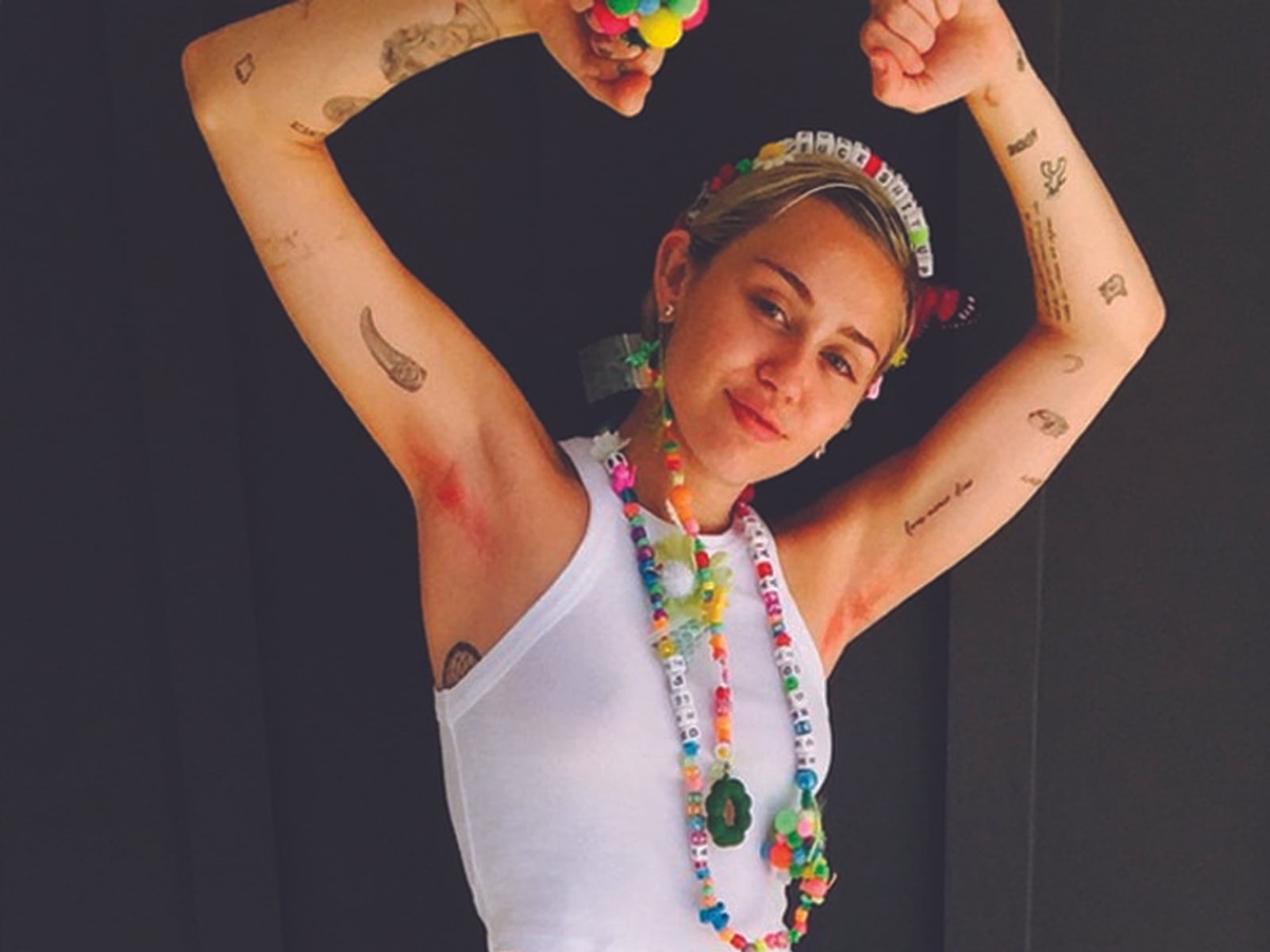
In 2015, Miley Cyrus became the face of the "Free Your Pit" movement. She didn't just grow out her hair; she dyed it neon pink and turquoise, documenting the process on Instagram. This turned body hair into a literal accessory. By dyeing her armpit hair, Cyrus moved the conversation away from "hygiene" (a common bad-faith argument used against natural hair) and toward creative expression. It was a rejection of the idea that women’s bodies must be perpetually "ready" for male consumption.
Jemima Kirke and the Red Carpet Statement
At the 2015 CFDA Fashion Awards, Girls star Jemima Kirke arrived with visible underarm hair, which she proudly displayed for photographers. Unlike Roberts’ accidental reveal, Kirke’s was intentional. She later used Twitter to share images of Sophia Loren, linking her personal choice to a long lineage of women who refused to conform. This helped bridge the gap between "messy" rebellion and high-fashion sophistication.
The 2020s: High Fashion and the Normalization of Choice
As we entered the 2020s, the "shock value" of celebrity armpit hair began to fade, replaced by a more nuanced "Body Neutrality" movement. This era has been defined by figures like Lourdes Leon and Janelle Monáe, who treat body hair as a standard feature of the human form rather than a badge of rebellion.
Lourdes Leon: The Legacy of Madonna
Lourdes Leon, daughter of Madonna (who herself posted "unshaven" selfies in 2014), has become a prominent figure in this space. Appearing in campaigns for Marc Jacobs and walking the Met Gala carpet in 2021 with visible hair, Leon treats the look with a sense of nonchalance. For Leon and many of her Gen Z peers, the goal isn't necessarily to "protest" shaving, but to remove the stigma from not shaving.
Janelle Monáe and Intersectionality
Janelle Monáe’s embrace of natural hair—both on the head and under the arms—adds a layer of intersectional significance. For many Black women, grooming standards have historically been tied to Eurocentric ideals of "neatness" and "professionalism." Monáe’s visibility at high-profile events like the Met Gala 2023 serves as a reclamation of the natural body, asserting that Black joy and beauty do not require the alteration of natural textures or growth patterns.
Comparison of Key Celebrity Armpit Hair Moments
The following table outlines the progression of this cultural phenomenon, showing the shift from accidental to intentional visibility.
| Year | Celebrity | Event/Context | Primary Cultural Impact |
|---|---|---|---|
| 1955 | Sophia Loren | Publicity Stills | Challenged the burgeoning "hairless" Western ideal. |
| 1975 | Patti Smith | Easter Album Cover | Aligned body hair with the punk/anti-establishment movement. |
| 1999 | Julia Roberts | Notting Hill Premiere | Sparked global debate on "perfection" vs. natural grooming. |
| 2015 | Miley Cyrus | Social Media / Instagram | Transformed armpit hair into a form of colorful, queer-coded art. |
| 2017 | Paris Jackson | MTV Video Music Awards | Framed natural hair as part of a "bohemian" and holistic lifestyle. |
| 2021 | Lourdes Leon | Met Gala | Normalized body hair within the context of high-fashion luxury. |
| 2024 | Emma Corrin | Editorial Shoots | Used body hair to explore non-binary and gender-fluid aesthetics. |
The Industry’s Response: Brand Integration
Pop culture is not limited to celebrities; it includes the brands that sponsor them. In the late 2010s and early 2020s, the beauty and shaving industry underwent a radical transformation. Brands like Billie and Joy began featuring women with actual body hair in their commercials—a first for an industry that previously showed razors gliding over already-hairless skin.
Nike’s 2019 campaign featuring Nigerian-American singer Annahstasia Enuke with visible armpit hair was a major turning point. The ad received significant backlash on social media, but Nike stood by the imagery. This signaled to the market that "Naturalism" was no longer a fringe movement; it was a viable demographic. By 2026, many "grooming" brands have pivoted to "body care," offering oils for pubic and armpit hair alongside traditional razors, acknowledging that consumers often choose a mix of both.
The Role of Social Media and the "Filter" Culture
While the red carpet offers a high-stakes stage for body hair visibility, social media is where the daily normalization happens. Platforms like TikTok and Instagram (and their 2026 successors) have allowed celebrities to bypass the "airbrushing" of traditional magazines.
When celebrities like Emma Watson, Halsey, or Bella Thorne post casual photos with natural hair, it strips away the "spectacle." This has led to the rise of Body Neutrality—the idea that our bodies are simply vessels, and whether they are hairy or smooth is a functional detail rather than a moral or aesthetic judgment. This shift is crucial because it moves away from the "look at me" nature of 2015-era activism toward a more sustainable, everyday acceptance.
Psychological and Sociological Perspectives
The obsession with celebrity armpit hair stems from what sociologists call the "disciplinary gaze." Women’s bodies are often subjected to a higher level of surveillance than men’s. For a man, armpit hair is an assumed default; for a woman, its presence is interpreted as a "choice" or a "statement."
By 2026, we see a growing rejection of this double standard. The "Gender-Neutral Grooming" movement has gained traction, where the focus is on personal comfort rather than performing gender for others. Celebrities who identify as non-binary or gender-fluid, such as Emma Corrin or Janelle Monáe, have been instrumental in showing that body hair is not inherently masculine, but human.
Common Misconceptions and Troubleshooting the Backlash
Despite the progress made by 2026, visible armpit hair on celebrities still draws negative commentary. It is important to address the most common critiques:
- "It’s unhygienic": This is a factual error. Hair is not inherently dirty. Hygiene is a matter of washing, not the presence or absence of follicles. In fact, armpit hair serves to reduce friction and wick sweat away from the skin.
- "It’s just for attention": While some celebrities use it as a statement, for many, it is simply their natural state. Labeling it as "attention-seeking" dismisses the effort required to constantly remove it.
- "It’s unfeminine": Femininity is a social construct that changes over time. As shown by Sophia Loren and modern icons, femininity can easily coexist with natural body features.
Frequently Asked Questions
Why do celebrities choose to show armpit hair on the red carpet?
Most celebrities do so to challenge traditional beauty standards and advocate for body autonomy. For some, it is a feminist statement intended to show that a woman’s worth is not tied to her adherence to grooming rituals. For others, it is simply a personal preference for a natural look that they refuse to hide for the sake of formal conventions.
Who was the first celebrity to show armpit hair?
While it is difficult to name a "first," Sophia Loren is one of the most prominent early examples in the 1950s. However, visible armpit hair was common in silent films and early photography before the razor industry’s marketing campaigns successfully stigmatized it in the 1920s.
Is the trend of celebrity armpit hair still popular in 2026?
By 2026, it is less of a "trend" and more of an established "option." While the majority of celebrities on red carpets still opt for a hairless look, the presence of natural hair no longer causes the media "scandal" it did in 1999. It has become a normalized part of the diverse range of human aesthetics.
Does armpit hair affect a celebrity's brand or sponsorships?
In the past, it could have been seen as "unprofessional," but in 2026, many brands actively seek out celebrities who embrace a natural look to appeal to younger, more socially conscious demographics. Modern brand partnerships often value "authenticity" over "perfection."
How did the media reaction change from Julia Roberts to the present?
The reaction shifted from mockery and "shaming" in 1999 to analytical and supportive in the 2020s. In 1999, the focus was on the "mistake"; today, the media focuses on the "message" or simply ignores it as a personal grooming choice, reflecting a broader societal move toward body positivity.
Recommendations for Navigating Body Hair Choices
Whether you are influenced by celebrity culture or making a choice for personal comfort, consider the following approach to body hair:
- Prioritize Skin Health: If you choose to shave or wax, use proper techniques to avoid ingrown hairs and irritation. If you choose to keep it natural, use gentle cleansers to maintain the skin barrier.
- Evaluate Your Motives: Ask yourself if you are grooming for your own comfort or to satisfy the expectations of others.
- Practice Body Neutrality: Try to view body hair—whether on yourself or on celebrities—as a neutral biological fact rather than a signifier of beauty or lack thereof.
- Support Inclusive Brands: Look for companies that represent a diverse range of bodies and grooming choices in their marketing, which helps reinforce these standards globally.
The evolution of celebrity armpit hair is a testament to the power of visibility. As more public figures refuse to hide their natural bodies, they pave the way for a future where personal grooming is a private choice rather than a public requirement.