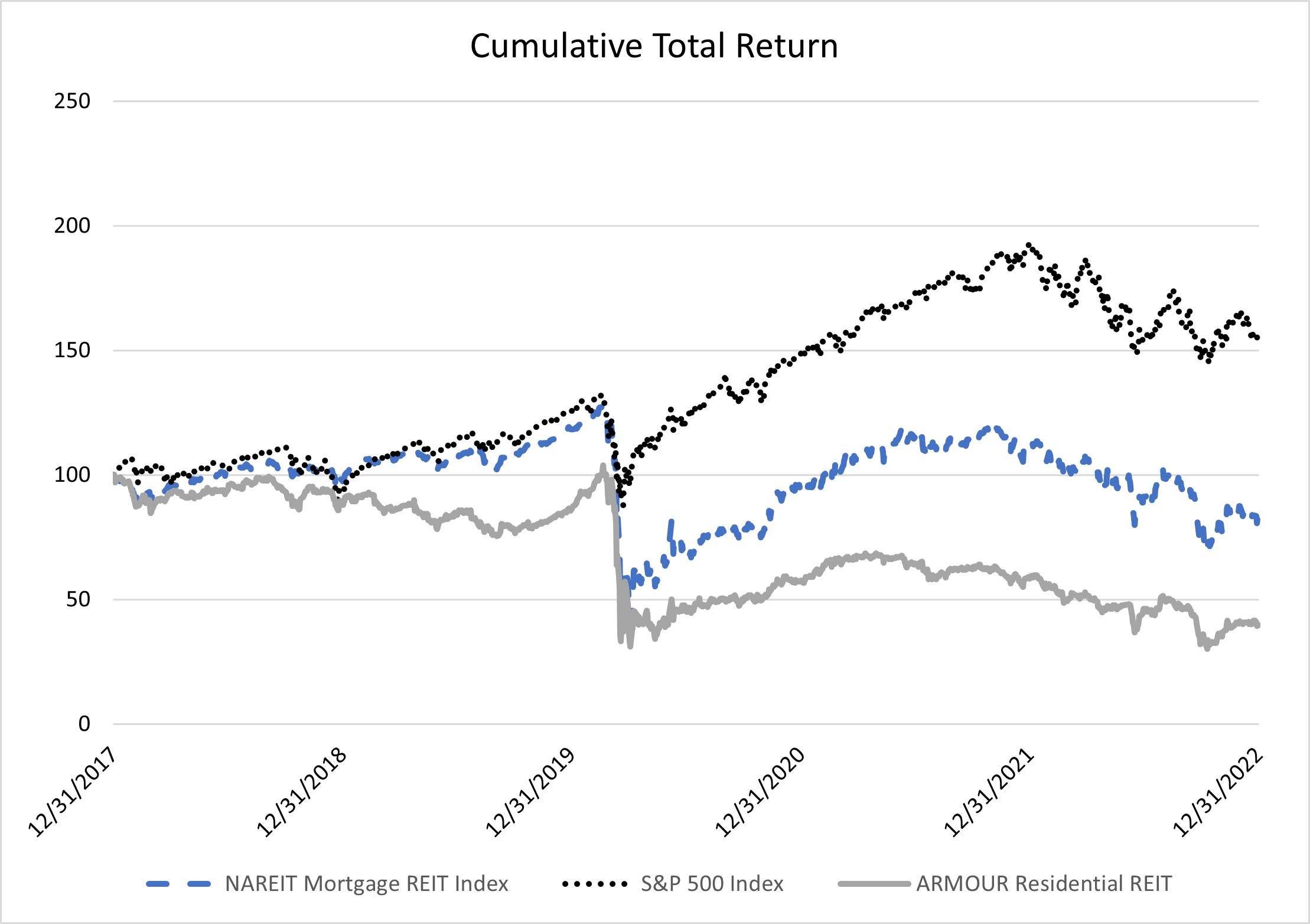
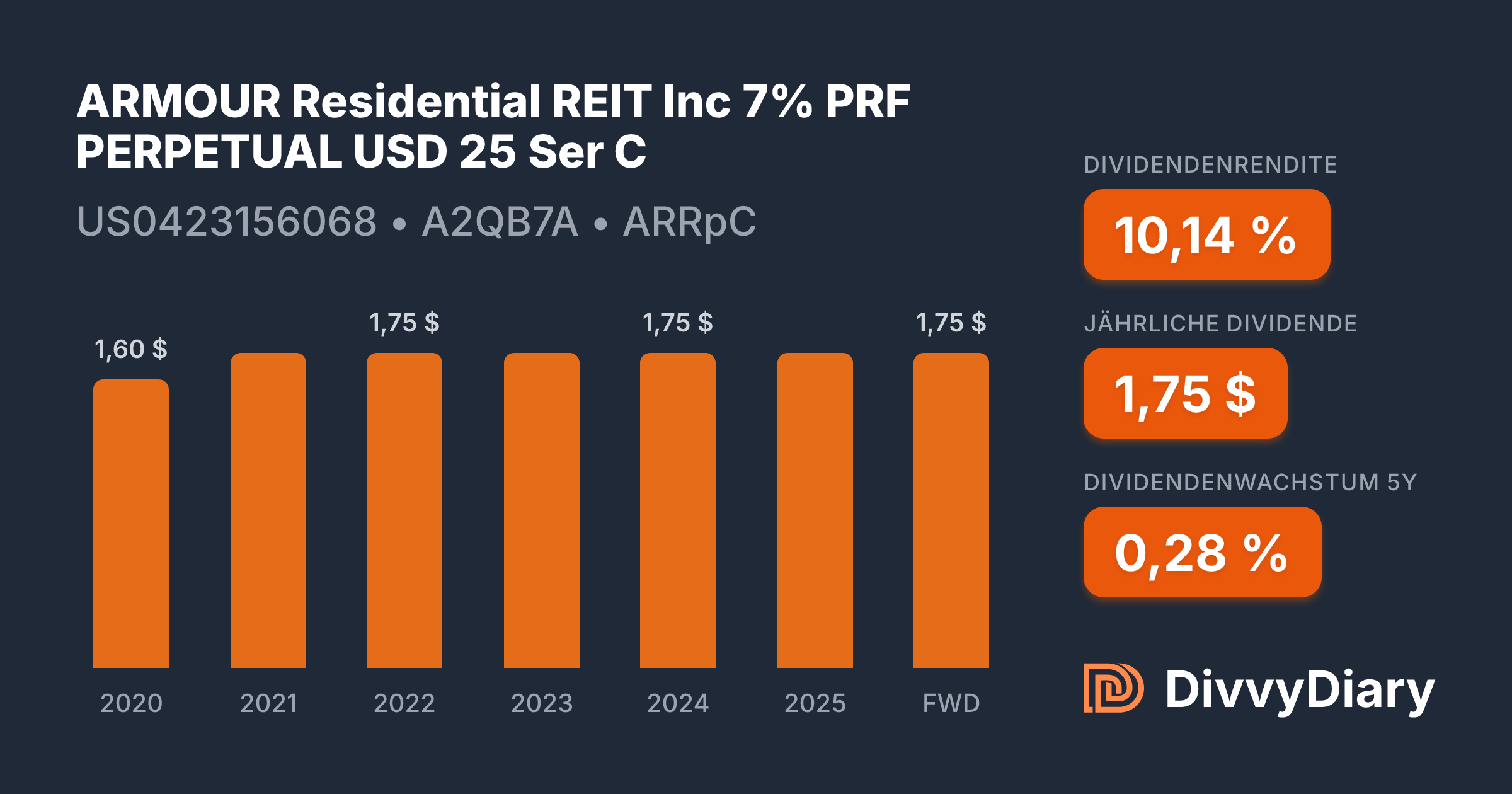
ARMOUR Residential REIT, Inc. (ARR) is a Maryland-based mortgage real estate investment trust that primarily invests in residential mortgage-backed securities (MBS) issued or guaranteed by U.S. Government-sponsored enterprises (GSEs). As of 2026, ARMOUR continues to focus on generating attractive risk-adjusted returns for shareholders through monthly dividends and capital preservation, primarily by leveraging a portfolio of high-credit-quality Agency securities.
Understanding the ARMOUR Residential REIT Business Model
ARMOUR Residential REIT operates within a specialized niche of the financial sector known as mortgage REITs (mREITs). Unlike equity REITs, which own and manage physical properties like apartment buildings or shopping centers, mREITs like ARMOUR do not own real estate. Instead, they provide financing for real estate by purchasing mortgages or mortgage-backed securities.
The primary objective of ARMOUR is to manage a portfolio that provides monthly distributions to its shareholders. The company achieves this by capturing the "spread"—the difference between the interest income earned on its mortgage-backed assets and the cost of borrowing to fund those assets. Because ARMOUR focuses heavily on Agency MBS (securities backed by Fannie Mae, Freddie Mac, or Ginnie Mae), the credit risk—the risk that homeowners will default on their loans—is virtually non-existent, as these securities carry government or quasi-government guarantees.
However, this lack of credit risk is replaced by significant interest rate risk and leverage risk. To generate the high yields that investors expect from ARR, the company uses a substantial amount of debt (leverage) to purchase more securities than its equity alone would allow. In the current 2026 market environment, managing this leverage against fluctuating interest rates remains the central challenge for ARMOUR’s management team.
The Core Investment Strategy: Agency MBS Focus
The cornerstone of ARMOUR’s strategy is its concentration on Agency residential mortgage-backed securities. These assets represent pools of residential mortgages that are "wrapped" with a guarantee of timely payment of principal and interest.
1. Asset Selection and Portfolio Mix
ARMOUR’s portfolio consists almost entirely of fixed-rate Agency MBS. By sticking to fixed-rate products, the company maintains a predictable stream of interest income. While the specific coupon rates of these securities vary depending on when the underlying mortgages were issued, the management team actively rotates the portfolio to optimize for the best available yields relative to the cost of hedging.
2. The Role of Leverage
Since Agency MBS yields are relatively low (often only slightly higher than U.S. Treasury yields), ARMOUR must use leverage to amplify returns. This involves using its MBS as collateral for short-term loans, typically via repurchase agreements (repos). The company borrows money at short-term rates, buys long-term MBS that pay higher rates, and pockets the difference. In 2026, the efficiency of this "carry trade" is the primary driver of the company's Core Net Operating Income.
3. Hedging and Risk Mitigation
Because ARMOUR borrows short-term and lends long-term, it is highly sensitive to changes in the yield curve. If short-term rates rise faster than long-term rates (an inversion or flattening of the curve), the cost of borrowing could exceed the income from the assets. To combat this, ARMOUR employs sophisticated hedging techniques, including:
- Interest Rate Swaps: Contracts that effectively "lock in" borrowing costs for a set period.
- Treasury Futures: Used to offset the price sensitivity of the MBS portfolio to changes in interest rates.
- Interest Rate Swaptions: Options that provide the right, but not the obligation, to enter into a swap, offering protection against extreme rate volatility.
Financial Performance and Key Metrics in 2026
Evaluating an mREIT like ARMOUR requires looking beyond traditional earnings per share (EPS). Investors must monitor specific metrics that reflect the health of the spread-based business model.
Net Interest Margin (NIM)
The NIM represents the difference between the yield on ARMOUR’s assets and the cost of its debt, inclusive of hedging costs. In the 2026 fiscal periods, a healthy NIM for an Agency mREIT generally ranges between 1.5% and 2.5%. A narrowing NIM usually signals that borrowing costs are rising or that the portfolio is being reinvested into lower-yielding assets.
Book Value per Share
Book value is the most critical metric for assessing the valuation of ARR. It represents the net asset value of the company if all assets were liquidated and liabilities paid off. ARMOUR’s stock frequently trades at a discount or premium to its book value. Historical trends show that buying ARR at a significant discount to book value has often been a preferred entry point for value-oriented investors, though deep discounts often reflect market skepticism about dividend sustainability.
Leverage Ratios
As of 2026, ARMOUR typically maintains a debt-to-equity ratio between 6.0x and 9.0x. While this sounds high compared to standard corporations, it is standard practice for Agency mREITs. Higher leverage can increase returns during periods of interest rate stability but can lead to "margin calls" and forced asset sales if the value of the MBS portfolio drops sharply.
| Metric | Estimated 2026 Target Range | Significance |
|---|---|---|
| Dividend Yield | 12% - 15% | Primary attraction for income-seeking investors. |
| Leverage Ratio | 7.0x - 8.5x | Indicates the degree of borrowed funds used to boost returns. |
| Constant Prepayment Rate (CPR) | 5% - 10% | The speed at which homeowners pay off mortgages; high CPR hurts yields. |
| Price-to-Book Ratio | 0.85x - 1.05x | Helps determine if the stock is undervalued or overvalued relative to assets. |
The Dividend Policy: Monthly Income and Sustainability
One of ARMOUR’s most distinctive features is its monthly dividend distribution. Most stocks and REITs pay quarterly, but ARMOUR’s monthly schedule is designed to appeal to retirees and investors seeking consistent cash flow.
Historical Context and Adjustments
Investors should be aware that ARMOUR’s dividend is not fixed. It is a "variable" distribution that management adjusts based on the company's taxable income. Over the past decade leading into 2026, ARMOUR has undergone several dividend "right-sizings." These adjustments usually occur when interest rate volatility makes it more expensive to hedge or when the spread on new MBS investments narrows.
Tax Considerations
Because ARMOUR is a REIT, it does not pay corporate income tax as long as it distributes at least 90% of its taxable income to shareholders. For the investor, these dividends are typically taxed as ordinary income rather than at the lower "qualified dividend" rate. This often makes ARR more suitable for tax-advantaged accounts like IRAs or 401(k)s.
Risks and Challenges Facing ARMOUR
Investing in ARMOUR Residential REIT is not without significant risks. The complexity of the mortgage market means that external factors can quickly impact the company's share price and payout capacity.
1. Interest Rate Volatility
The greatest enemy of an mREIT is volatility. Even if rates don't rise, rapid fluctuations in the bond market can cause the market value of ARMOUR’s MBS to drop faster than its hedges can compensate. This leads to a decline in book value.
2. Prepayment Risk
When interest rates fall, homeowners often refinance their mortgages. This means ARMOUR receives its principal back early, but it must then reinvest that capital into new MBS with lower interest rates. This is known as prepayment risk, and it is measured by the Constant Prepayment Rate (CPR). A spike in CPR is generally negative for ARMOUR’s long-term earnings power.
3. Extension Risk
The opposite of prepayment risk is extension risk. When interest rates rise, homeowners are less likely to move or refinance. This "extends" the life of the low-yield mortgages ARMOUR holds, preventing the company from reinvesting in higher-yielding securities. This can lock the company into a lower-than-market NIM for an extended period.
4. Regulatory and Macroeconomic Shifts
As an entity that relies on the GSEs (Fannie Mae and Freddie Mac), ARMOUR is sensitive to any political or regulatory changes regarding the U.S. housing finance system. While the "implicit" government guarantee of Agency MBS has remained stable through 2026, changes in Fed policy—such as the reduction or expansion of its own MBS holdings (Quantitative Tightening/Easing)—directly influence the prices of the assets ARMOUR buys.
Comparative Analysis: ARR vs. Peers
In the 2026 mREIT landscape, ARMOUR is often compared to larger peers like Annaly Capital Management (NLY) and AGNC Investment Corp. (AGNC).
- Scale: ARMOUR is smaller than NLY or AGNC. This lower market capitalization can sometimes lead to higher stock price volatility and lower liquidity, but it also allows the management team to be more nimble in adjusting the portfolio.
- Expense Ratio: Smaller REITs sometimes struggle with higher management expense ratios as a percentage of equity. ARMOUR’s management works to keep these costs competitive, but investors should compare the "net" return after management fees.
- Strategy Purity: While Annaly has diversified into non-agency and commercial lending, ARMOUR has historically remained more "pure-play" Agency MBS focused, which appeals to investors who want specifically to avoid credit risk.
Suitability: Who Should Invest in ARMOUR?
ARMOUR Residential REIT is a sophisticated financial instrument and is generally not recommended as a "core" holding for conservative investors. Instead, it serves specific roles in a diversified portfolio:
- Income Seekers: Those who require monthly cash flow and are willing to accept fluctuations in principal value.
- Tactical Traders: Investors who understand the relationship between the yield curve and mREIT book values can trade ARR based on interest rate cycles.
- Inflation/Rate Hedgers: Depending on the hedging strategy, some investors use mREITs to gain exposure to specific parts of the bond market.
Professional Advice Limitation: This overview is for informational purposes only and does not constitute financial, legal, or tax advice. REIT investments, particularly leveraged mortgage REITs, carry substantial risk, including the loss of principal. Consult with a qualified financial advisor before making any investment decisions.
Frequently Asked Questions
Why does ARMOUR Residential REIT pay dividends monthly?
ARMOUR utilizes a monthly payment structure to attract retail investors who use the distributions for living expenses or for monthly dividend reinvestment (DRIP) strategies. This frequency allows for faster compounding of shares if the investor chooses to reinvest.
What happened to ARR's share price in the last major rate hike cycle?
Historically, ARMOUR—and the mREIT sector at large—experiences downward pressure on book value and share price during rapid interest rate hikes. As rates rise, the market value of existing fixed-rate MBS falls. However, once rates stabilize, the company can often reinvest at higher yields, potentially leading to a recovery in earnings.
Is the ARR dividend "safe" in 2026?
No dividend in the mREIT sector is guaranteed. The "safety" of ARMOUR’s dividend depends on the stability of the spread between the repo rates and MBS yields. If the Federal Reserve rapidly changes monetary policy, the company may be forced to adjust the dividend to align with its actual taxable income.
How does the reverse stock split history affect the stock today?
ARMOUR has conducted reverse stock splits in the past (notably in 2023 and prior years) to maintain a higher per-share price and remain attractive to institutional investors. While reverse splits change the number of shares and the price per share, they do not change the underlying value of the company or an investor's percentage of ownership.
Does ARMOUR invest in commercial real estate?
ARMOUR’s primary focus is on residential mortgage-backed securities. Unlike some other REITs that may hold office buildings or shopping centers, ARMOUR is concentrated on the U.S. housing market's debt side, specifically Agency-guaranteed residential loans.
Summary and Next Actions
ARMOUR Residential REIT (ARR) remains a high-yielding, Agency-focused mortgage REIT that provides a unique opportunity for monthly income. In 2026, its performance is dictated by the management of interest rate spreads and the effective use of hedging instruments.
Next Actions for Prospective Investors:
- Review the Latest SEC Filings: Look at the most recent 10-K or 10-Q reports for the updated book value and leverage ratios.
- Check the Discount to Book Value: Compare the current share price to the reported book value; a discount of 10% or more has historically been an indicator of potential value, provided the dividend is stable.
- Monitor the Yield Curve: Keep an eye on the spread between 2-year and 10-year Treasury notes, as this often correlates with the profitability environment for mREITs.