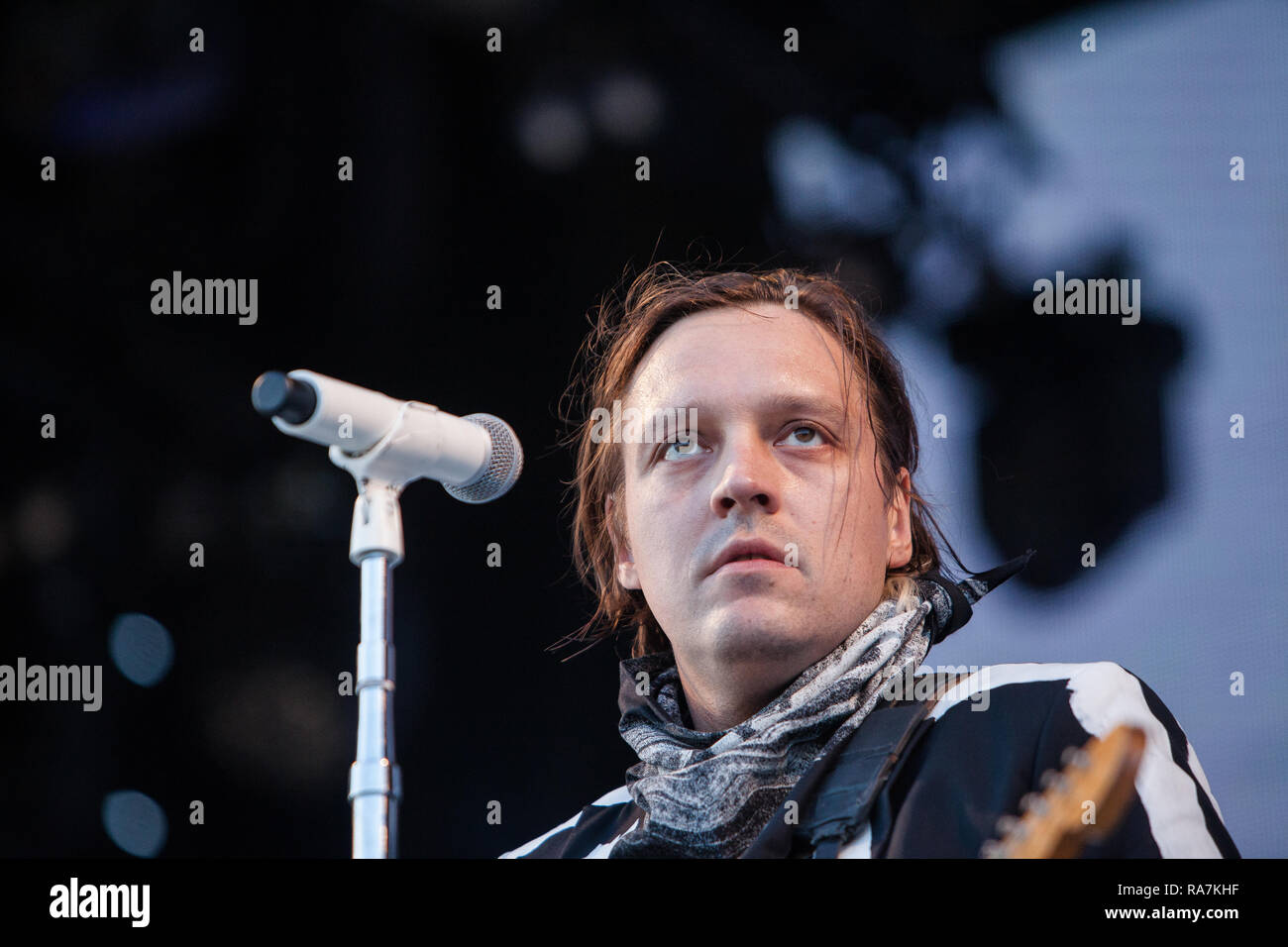
The journey of Arcade Fire’s lead singers, Win Butler and Régine Chassagne, represents a complex evolution from indie-rock outsiders to global icons navigating heritage, fame, and personal accountability. Their artistic identity is defined by a constant tension between Win’s American expatriate introspection and Régine’s deep connection to her Haitian roots and multi-instrumental expression.
Arcade Fire has never been a static entity. Since their debut in the early 2000s, the band’s core—primarily the husband-and-wife duo of Win Butler and Régine Chassagne—has used music as a laboratory for exploring what it means to belong. As of 2026, their body of work serves as a chronological map of modern anxiety, spiritual seeking, and the shifting borders of personal identity. To understand their journey, one must look past the anthemic choruses and into the specific cultural and personal intersections that shaped their creative output.
The Foundations: Geography and Heritage as Identity
For Win Butler and Régine Chassagne, identity was never a singular concept; it was something constructed through movement and memory. Win Butler, born in California and raised in a Mormon household in Texas, moved to Montreal to study at McGill University. This transition from the American South to the francophone heart of Quebec created a "permanent outsider" perspective that permeates much of his lyricism. He is the American looking back at his country with both nostalgia and a searingly critical eye.
Conversely, Régine Chassagne’s identity is rooted in the Haitian diaspora. Her parents fled the Duvalier dictatorship, a history of trauma and displacement that became a cornerstone of Arcade Fire’s thematic world. While Win often provides the narrative structure of the songs, Régine provides the visceral, rhythmic connection to a heritage that is both celebrated and mourned. Her song "Haïti," from their debut album Funeral, remains a definitive statement on how ancestral history dictates modern identity.
The Artistic Evolution Through Album Cycles
The band’s discography acts as a series of chapters in an ongoing philosophical inquiry. Each era represents a shift in how the lead singers view their role in the world and the art they produce.
Funeral and the Identity of Grief
In 2004, Funeral established the band's identity through the lens of collective mourning. The lead singers were dealing with the deaths of several family members during the recording process. This era defined them as practitioners of "baroque pop"—a style that used orchestral swells to mirror the overwhelming nature of loss. Here, their identity was that of the "community healer," leading a rowdy, grief-stricken parade that invited the audience to find joy within sorrow.
Neon Bible and the Critique of the State
By 2007, the focus shifted outward. Neon Bible explored an identity caught in the gears of American consumerism and religious fervor. Butler’s lyrics became more paranoid and observational, reflecting his discomfort with the post-9/11 political climate. The art moved from the internal grief of the individual to the external pressures of the collective, using pipe organs and dark, cinematic arrangements to signal a loss of innocence.
The Suburbs and Nostalgic Displacement
The release of The Suburbs in 2010 marked a pivotal moment where the lead singers confronted their own upbringing. For Butler, it was a return to the "sprawl" of Houston; for the band, it was an exploration of how the environments we grow up in dictate the people we become. This album solidified their identity as "suburban poets," capturing the specific ennui of a generation that felt disconnected from both the city and the country. Winning the Grammy for Album of the Year forced them to reconcile their "indie" identity with their status as mainstream giants.
Spiritual and Secular Conflict in Lyricism
A major component of Win Butler’s artistic journey is his dialogue with faith. Raised in the Church of Jesus Christ of Latter-day Saints, Butler eventually moved away from organized religion, yet his lyrics remain saturated with biblical imagery and spiritual yearning. This "secular spiritualism" is a hallmark of the Arcade Fire identity.
The singers often grapple with the "death of the soul" in a digital age. In albums like Reflektor and Everything Now, they adopted a more satirical, synth-heavy persona to critique the very fame they had acquired. They moved from the earnestness of their early work to a more detached, performative identity. This era was polarizing; fans who fell in love with the raw vulnerability of Funeral were often confused by the disco-ball irony of Everything Now. However, for Butler and Chassagne, this was a necessary evolution—a way to shield their true identities behind a "reflector" of celebrity culture.
Multi-instrumentalism as a Creative Language
Régine Chassagne’s contribution to the band’s identity cannot be overstated. Unlike many lead singers who are confined to a single instrument or vocal role, Chassagne is a polymath. Her use of the accordion, hurdy-gurdy, drums, and synthesizers allows her to shift identities within a single performance.
When Chassagne takes the lead on songs like "Sprawl II (Mountains Beyond Mountains)" or "Electric Blue," the band’s identity pivots from Butler’s masculine, folk-rooted rock to a feminine, avant-garde electronic space. This fluidity is central to their art; they are a band that refuses to be defined by a single genre because their lead singers are not defined by a single musical discipline.
Identity in the Wake of Controversy (2022–2026)
The journey through art and identity took a difficult turn in 2022 following allegations of sexual misconduct against Win Butler. These reports forced a massive re-evaluation of the band’s identity, both for the members themselves and their audience. The "art vs. artist" debate became the central theme of their public narrative.
Butler’s response—acknowledging consensual but "clumsy" encounters while citing struggles with mental health and alcohol—added a layer of darkness to his previous lyrical themes of redemption and morality. As of 2026, the band’s identity is inextricably linked to this period of reckoning. They have continued to perform and record, but the "shimmer" of their early idealism has been replaced by a more sober, complicated reality. The journey now involves navigating the path of accountability and determining whether the art can still serve as a vessel for communal healing when the lead singer’s personal identity is under such intense scrutiny.
Comparison of Artistic Eras and Identity Themes
The following table summarizes the primary shifts in the lead singers' artistic focus and identity throughout their career milestones.
| Era / Album | Primary Identity Focus | Key Instrumentation | Cultural Influence |
|---|---|---|---|
| Funeral (2004) | The Mourner / Communal Leader | Violin, Accordion, Cello | Montreal Indie Scene |
| Neon Bible (2007) | The Dissident / Observer | Pipe Organ, Hurdy-Gurdy | American Political Climate |
| The Suburbs (2010) | The Nostalgic / Adult Child | Guitar, Piano, Strings | Houston Suburbia |
| Reflektor (2013) | The Performer / Masked Icon | Synthesizers, Congas | Haitian Rara / Disco |
| Everything Now (2017) | The Satirist / Product | ABBA-esque Synth, Bass | Global Consumerism |
| WE (2022) | The Introspective / Recovering | Acoustic Guitar, Moog | COVID-19 Isolation |
| Current (2026) | The Complex / Accountable | Hybrid Orchestral-Electronic | Post-Controversy Reckoning |
The Role of Activism in Shaping Identity
For Régine Chassagne, identity is also defined by her philanthropic work. Co-founding the organization Kanpe, which supports underserved communities in Haiti, has integrated her artistic journey with social responsibility. Her identity as a "voice for the voiceless" has often grounded the band when their conceptual experiments threatened to become too abstract.
By bringing Haitian percussionists on tour and incorporating Rara music into their sound, she has ensured that Arcade Fire’s identity remains global rather than just North American. This commitment to Haiti has provided a moral North Star for the group, emphasizing that art is not just for self-expression, but for tangible impact.
Frequently Asked Questions
How did the lead singers meet?
Win Butler and Régine Chassagne met in 2000 while they were both students at McGill University in Montreal. They began playing music together shortly after, which eventually led to the formation of the first iteration of Arcade Fire. Their personal relationship and subsequent marriage have been the bedrock of the band's creative partnership for over two decades.
Who is the primary songwriter in Arcade Fire?
While the entire band is often credited, the primary songwriting duo consists of Win Butler and Régine Chassagne. Butler typically handles the bulk of the lyrical content and core melodic structures, while Chassagne provides rhythmic direction, vocal arrangements, and the "sonic color" through her diverse range of instruments.
How has Win Butler’s identity changed over time?
Butler transitioned from an earnest, almost evangelical figure of indie rock in the mid-2000s to a more cynical, media-savvy persona in the mid-2010s. Following the 2022 allegations, his public identity has become more somber and focused on personal reflection and the complexities of his own flaws.
What is the significance of the "masks" in their art?
Beginning with the Reflektor era, the lead singers frequently used literal and metaphorical masks (including oversized bobblehead versions of themselves). This symbolized their struggle with the "mirrored" nature of fame—how the public sees a reflection of their own desires rather than the actual person behind the art.
Is Arcade Fire still active in 2026?
Yes, Arcade Fire remains active in 2026. While their touring and release schedules have slowed compared to their peak years, they continue to perform at major festivals and record new material, though they operate within a significantly changed cultural and critical landscape following the events of the early 2020s.
Practical Recommendation for Listeners
To truly appreciate the journey of Win Butler and Régine Chassagne, one should listen to their discography chronologically rather than through "best-of" playlists. Start with the track "Haïti" to understand Chassagne’s heritage, then move to "The Suburbs" to grasp Butler’s internal conflict, and finally listen to "Age of Anxiety I" from their later work. This progression reveals the transformation from youthful exuberance to the complex, nuanced reality of their current artistic identity.