The smartphone landscape in 2026 is defined by a fierce arms race between Apple’s iOS ecosystem and a diverse field of high-performance competitors. Brands like Samsung, Google, and emerging foldable-first manufacturers are challenging Apple’s market dominance by prioritizing hardware innovation, advanced artificial intelligence integration, and open-source flexibility. These competitors are forcing a shift in consumer expectations, compelling the industry to move beyond incremental upgrades toward hardware-software convergence and radical form-factor experimentation.
The Evolution of the Competitive Landscape
For over a decade, the smartphone market functioned primarily on a cycle of iterative design. Apple’s iPhone, with its tightly integrated hardware and software, set the industry standard for user interface consistency and long-term support. However, in recent years, competitors have recognized that they cannot out-Apple Apple by copying its walled-garden strategy. Instead, they have pivoted toward distinct technological advantages that cater to users seeking high-performance hardware, specialized camera capabilities, and greater control over their devices.
Samsung remains the primary challenger in terms of scale and R&D investment. By refining the foldable form factor, Samsung has successfully created a premium product category—the Galaxy Z series—that Apple has yet to address directly. This strategy creates a market segmentation where power users who demand more screen real estate for productivity choose Android, while those prioritizing ease of use and ecosystem continuity remain with Apple.
Google, on the other hand, has carved out a niche by leveraging its unparalleled strength in artificial intelligence. The Pixel series functions as a showcase for Google’s software prowess, offering features such as advanced computational photography and real-time voice processing that often beat the iPhone in blind tests. This has forced Apple to accelerate its own investments in on-device AI to remain competitive in the eyes of younger, tech-savvy demographics.
Hardware Innovation and Form Factor Diversification
While the slab-style smartphone remains the industry standard, competitors are aggressively pushing the boundaries of physical design. The rise of foldable and rollable display technology has fundamentally changed the value proposition for high-end smartphones.
The Foldable Advantage
Foldable devices represent the most significant departure from the classic iPhone design. Manufacturers such as Samsung, OnePlus, and Motorola have transitioned these devices from fragile novelties into durable, daily-driver instruments. The ability to carry a device that occupies the footprint of a traditional phone while unfolding into a tablet-sized interface provides a tangible efficiency gain for mobile workflows.
Material Science and Efficiency
Competitors are also experimenting with materials beyond the standard surgical-grade stainless steel or titanium seen in flagship iPhones. Ceramic backs, carbon fiber frames, and advanced heat-dissipation materials are being utilized to make devices lighter and more resilient. By focusing on thermal efficiency, these competitors are unlocking higher sustained performance for mobile gaming and heavy multitasking, areas where internal heat management often throttles the performance of standard glass-and-metal slabs.
Software Ecosystems and AI Integration
The competition has extended deep into the operating system. While iOS is renowned for its stability, competitors are reshaping the market by offering "smart" ecosystems that prioritize customization and context-awareness.
The Rise of On-Device Intelligence
In 2026, the term "smartphone" is becoming synonymous with "AI device." Competitors are emphasizing Neural Processing Units (NPUs) that handle heavy-duty AI tasks locally, ensuring privacy and speed. By integrating generative AI directly into the operating system—allowing for real-time translation, automated content creation, and smart scheduling—competitors are creating a layer of utility that Apple’s more conservative approach to AI has struggled to match in terms of immediate, broad-spectrum utility.
Openness as a Strategic Asset
The Android ecosystem’s inherent flexibility is being marketed as a feature against the perceived rigidity of iOS. For professionals, researchers, and hobbyists, the ability to sideload applications, deeply customize the interface, and access file systems directly provides a level of freedom that Apple restricts. Competitors are leaning into this, positioning their devices as tools for creators rather than just consumption hubs.
Comparative Analysis of Major Competitors
The following table summarizes how leading competitors differentiate their offerings compared to the flagship iPhone experience as of 2026.
| Competitor | Primary Strategic Focus | Key Hardware Differentiation | Core Software Philosophy |
|---|---|---|---|
| Samsung | Market Penetration | Foldable/Flip displays | Integrated ecosystem/DeX |
| AI/Software Intelligence | Custom Tensor processing | Pure Android/AI-first | |
| OnePlus | Performance/Charging | Super-fast wired charging | Highly tunable OxygenOS |
| Xiaomi | Value/Hardware Specs | High-megapixel sensors | Feature-rich MIUI/HyperOS |
| Apple | Ecosystem/Privacy | Tight hardware-software integration | Simplified, secure UX |
Challenges and Future Outlook
Despite the progress of competitors, the battle for smartphone supremacy faces significant obstacles. The most prominent is the "ecosystem lock-in" effect. For many users, moving away from Apple involves abandoning iMessage, iCloud, and the seamless connectivity between Macs, iPads, and iPhones. Competitors have attempted to bridge this gap through cross-platform messaging standards like RCS (Rich Communication Services), which has significantly improved interoperability, yet the brand loyalty generated by Apple’s services remains a potent barrier.
Furthermore, the smartphone market is reaching a plateau regarding standard hardware features. With cameras, processors, and display brightness hitting a point of diminishing returns for the average consumer, future competition will likely move toward service-layer integration and spatial computing. As AR (Augmented Reality) and VR (Virtual Reality) headsets become more prevalent, the smartphone’s role may transition from the primary computing hub to a peripheral device that supports these more immersive experiences.
Addressing Consumer Needs: Practical Considerations
When choosing between an iPhone and its competitors, consumers must evaluate their needs based on how they interact with technology on a daily basis.
- Workflows: If your professional workflow relies heavily on specific macOS integrations or proprietary Apple tools, the cost of switching includes lost productivity and the need for new software licenses.
- Hardware Durability: If you prioritize longevity and a high resale value, Apple’s support cycle and brand perception are difficult to beat. Conversely, if you want the latest hardware technology, such as folding screens, you must look to Android-based competitors.
- Privacy and Security: Apple’s centralized approach to security is generally more consistent for non-technical users. Android competitors offer more granular control, which is better for those who know how to manage their digital footprint but can pose risks to the uninitiated.
Frequently Asked Questions
Is the market share of Apple shrinking due to these competitors?
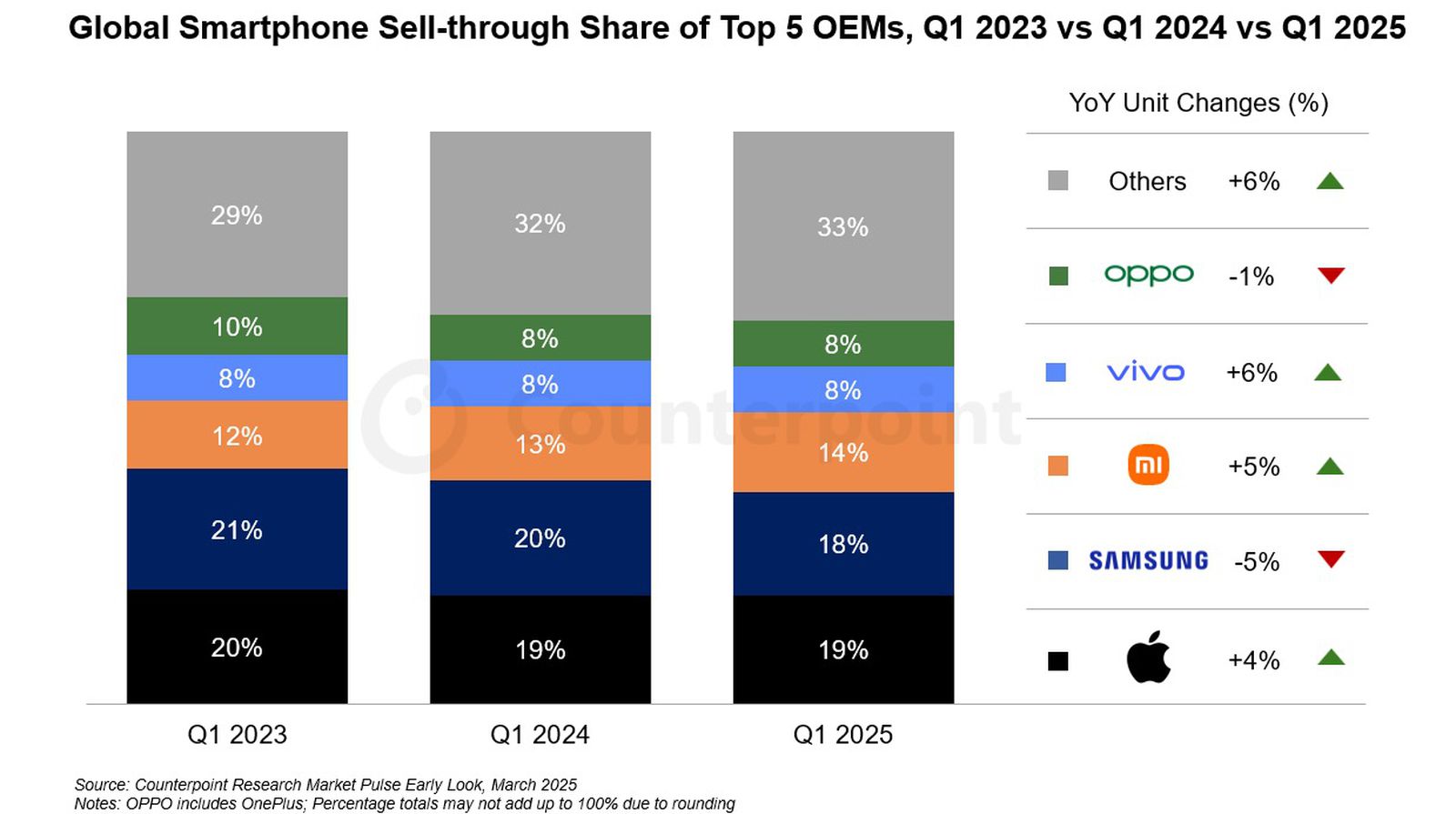
Apple remains a dominant force, but its market share experiences fluctuation as competitors introduce specialized features like foldables or budget-friendly AI-heavy devices. While Apple holds the premium segment, mid-range competitors are capturing growth in emerging markets where price-to-performance ratios are paramount.
Will iPhones eventually adopt foldable technology?
While there has been widespread industry speculation, Apple has historically prioritized polish and reliability over being first to market with new form factors. If they move into foldables, it will likely be to solve a specific user friction point rather than to follow a hardware trend.
How does on-device AI change the smartphone experience?
On-device AI allows your phone to perform complex tasks—like language translation or video editing—without sending your data to the cloud. This improves both privacy and latency, as the device becomes more capable of understanding your personal habits and preferences over time.
Why do competitors offer faster charging than iPhones?
Different manufacturers have different philosophies regarding battery health. Competitors often prioritize speed, using proprietary cooling and charging protocols to reach 100% in minutes. Apple generally favors slower charging speeds to preserve the long-term chemical health of the lithium-ion batteries.
Is the "walled garden" becoming an obstacle for Apple?
Yes. Regulatory bodies in various jurisdictions have begun scrutinizing proprietary ecosystems, forcing companies like Apple to open up certain parts of their infrastructure. This regulatory pressure provides competitors with an opening to offer a more seamless experience for users who move between different brands.
Final Recommendation
To decide which device is right for you, ignore the marketing noise and identify the "anchor" of your digital life. If your life is tethered to Apple’s cloud services, the "best" smartphone is the one that best integrates with that existing infrastructure. However, if you are dissatisfied with your current device’s limitations—whether in form factor, customization, or AI capability—the current crop of competitors, particularly those from Samsung and Google, offers mature, stable, and highly capable alternatives. Evaluate whether you need an appliance that "just works" or a tool that can be molded to your specific operational needs.