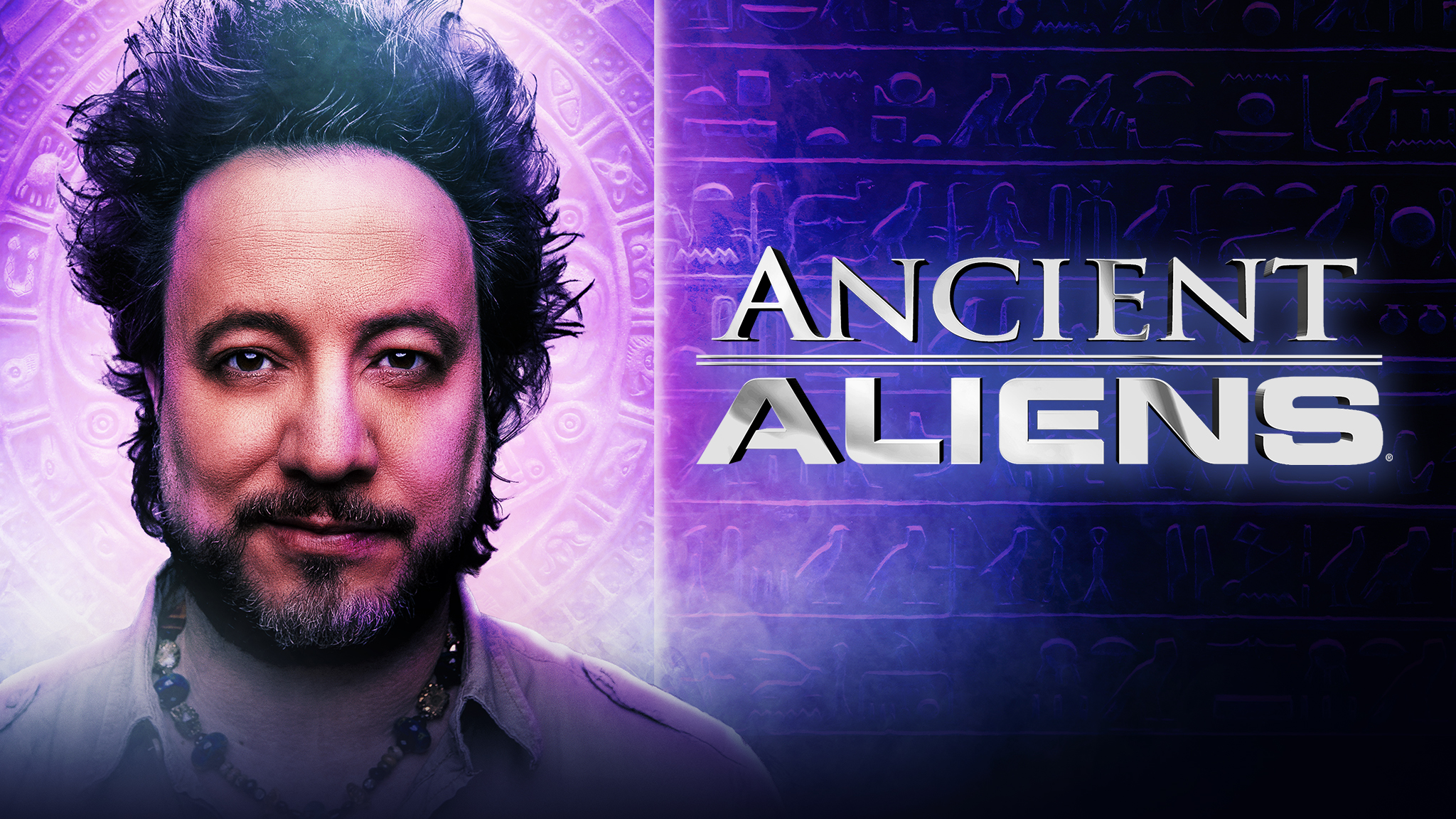
In Ancient Aliens Season 11, Episode 11, titled "Space Station Moon," the series examines the hypothesis that Earth’s natural satellite is not an accidental celestial body, but rather an artificial structure or hollowed-out extraterrestrial craft intentionally positioned in orbit to monitor or guide human development.
Overview of Season 11, Episode 11
"Space Station Moon" originally premiered on the History Channel on September 16, 2016. Spanning a 42-minute broadcast runtime (excluding commercial breaks), the episode synthesizes fringe astronomical theories, Soviet-era speculative essays, Apollo program seismic data, and classical mythology to present a case that Earth's Moon is an engineered spacecraft.
Because syndication schedules, international broadcasts, and streaming platforms (such as Amazon Prime Video, Hulu, and History Vault) occasionally renumber seasons, viewers often encounter alternate listings. Under standard original broadcast metadata and home media releases, "Space Station Moon" serves as Episode 11 of Season 11.
- Season: 11
- Episode Number: 11
- Episode Title: Space Station Moon
- Original Air Date: September 16, 2016
- Network: History Channel
- Primary Subject: The Hollow Moon Hypothesis and Extraterrestrial Lunar Bases
Core Hypotheses Presented in "Space Station Moon"
The episode weaves together several distinct claims to construct its central premise: that the Moon is an artificial construction placed into Earth's orbit by an advanced extraterrestrial civilization.
- "Space Station Moon" Claims
- Hollow Moon Hypothesis
- Apollo Seismic Anomalies
- Ancient Text Proselenes
1. The Spaceship Moon (Vasin-Shcherbakov) Hypothesis
A central pillar of the episode is the theory advanced in 1970 by Soviet scientists Mikhail Vasin and Alexander Shcherbakov. Published in the journal Sputnik, their paper titled "Is the Moon the Creation of Alien Intelligence?" proposed that the Moon is a hollowed-out natural asteroid or small planetoid whose interior was excavated to create living quarters, power plants, and command centers for an alien crew.
The episode highlights Vasin and Shcherbakov’s observation that the Moon’s outer shell appears composed of a tough metallic layer intended to withstand meteoroid impacts, explaining why even broad craters on the lunar surface maintain relatively shallow depths compared to their diameter.
2. Apollo Mission Seismic Data and Lunar "Ringing"
The episode heavily emphasizes the seismic experiments conducted during NASA's Apollo missions. When the Apollo 12 Passive Seismic Experiment recorded the intentional crashing of the Lunar Module's ascent stage onto the lunar surface on November 20, 1969, seismic instruments registered shockwaves that reverberated for over an hour.
Ancient Aliens commentators argue that this long-duration resonance—frequently described by NASA scientists at the time as the Moon "ringing like a bell"—is direct evidence of a hollow metal hull underlying the lunar regolith. Subsequent Apollo missions (including Apollo 13’s S-IVB stage impact) produced similar seismic reverberations lasting up to three hours.
3. Anomalous Orbital Mechanics and Size Ratio
The episode addresses the mathematical relationship between Earth, the Moon, and the Sun. Theorists in the show point out that the Moon’s exact distance from Earth allows it to produce perfect total solar eclipses, where the Moon precisely covers the solar disk.
The probability of a natural satellite possessing both the precise scale (roughly 1/4 the size of Earth) and distance ratio (1/400th the size of the Sun and 1/400th the distance from Earth) to produce this visual match is cited by contributors as evidence of intentional design.
4. Ancient Mythological References: The Proselenes
To support the physical arguments, the episode explores historical texts and folklore. The program discusses ancient references to a time before the Moon existed in the night sky:
- Arcadian Legends: Greek writers such as Aristotle and Apollonius of Rhodes mentioned the Proselenes, ancient inhabitants of Arcadia who claimed their ancestors lived on Earth prior to the Moon's appearance in the heavens.
- Plutarch and Roman Accounts: References in classical literature suggesting that certain pre-Hellenic populations predated the presence of the lunar body.
According to ancient astronaut theorists, these legends represent oral histories handed down from early human ancestors who witnessed the arrival and orbital placement of the alien space station.
Key Featured Experts and Commentators
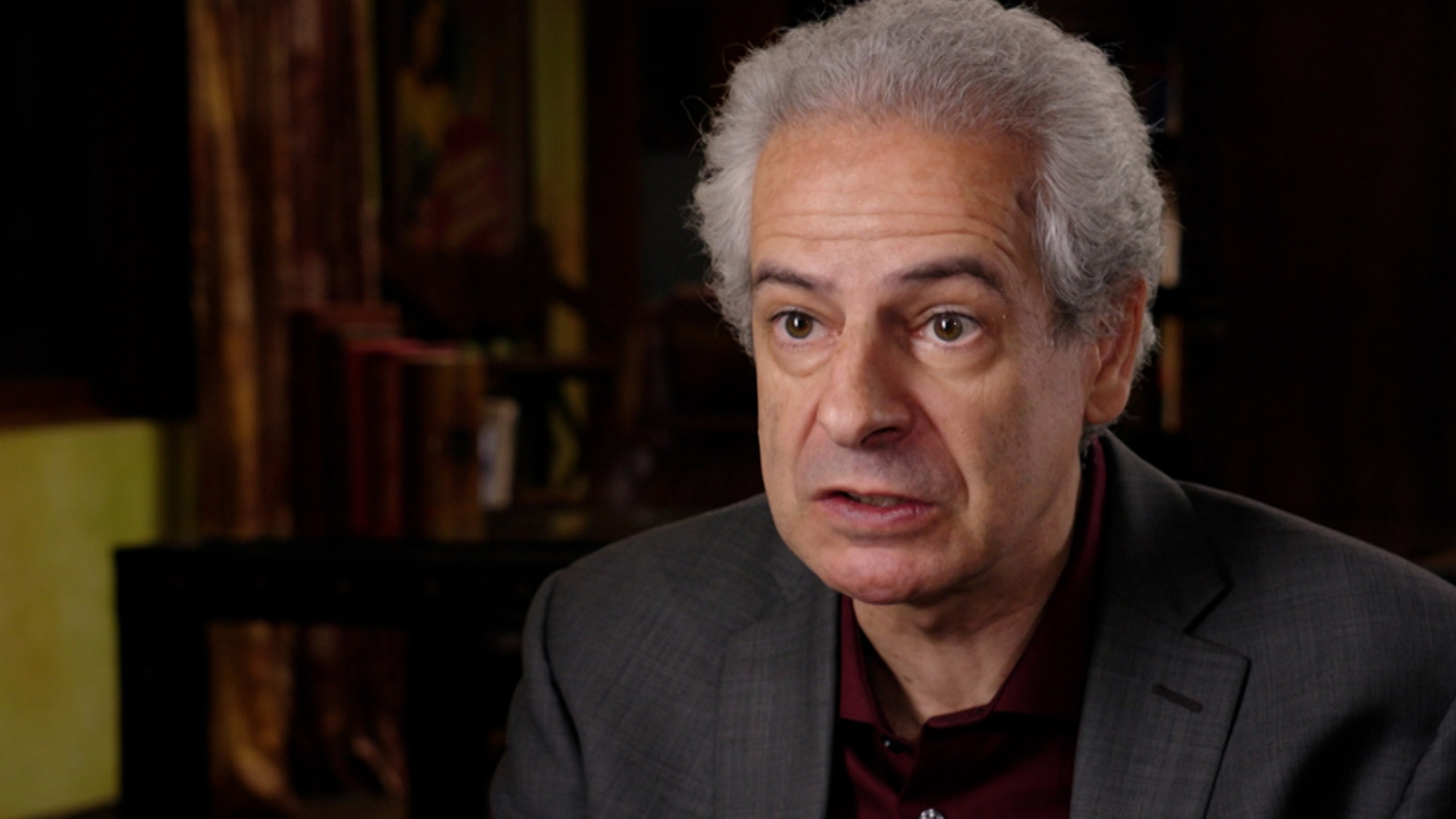
As is standard for Ancient Aliens, Episode 11 features a panel of regular series commentators alongside authors, alternative researchers, and speculative writers:
- Giorgio A. Tsoukalos: Co-founder of Legendary Times magazine and consulting producer, who framing-analyzes the idea that ancient humanity preserved the arrival of an alien space station through oral traditions and religious iconography.
- David Childress: Author and publisher who reviews structural anomalies, lunar transient phenomena, and engineering specifications required to hollow out a rocky celestial body.
- Erich von Däniken: Author of Chariots of the Gods?, who outlines how ancient societies may have perceived an artificial satellite as the home of creator gods.
- Nick Pope: Former UK Ministry of Defence UFO desk investigator, who discusses military perspectives on lunar anomalies and historical interest in potential lunar bases.
- Jason Martell: Alternative researcher presenting mathematical calculations regarding the Earth-Moon-Sun orbital alignment.
Scientific Evaluation vs. Episode Arguments
While Ancient Aliens presents the hollow moon argument as an unresolved mystery, planetary scientists, geologists, and astrophysicists explain these phenomena through natural formation processes and established physics.
| Premise / Episode Claim | "Space Station Moon" Argument | Mainstream Scientific Consensus | Primary Evidence / Counterpoint |
|---|---|---|---|
| Lunar Origin | Constructed artificially or moved into Earth orbit by extraterrestrials. | Formed naturally through a planetary collision (Giant Impact Hypothesis). | Analysis of Apollo rock samples confirms isotope composition identical to Earth's mantle, proving common planetary origin roughly 4.5 billion years ago. |
| Hollow Interior | The Moon is hollow with a protective metallic inner shell. | The Moon has a differentiated interior: solid crust, mantle, and small metallic core. | Gravitational measurements from NASA's GRAIL mission (2012) mapped lunar gravity variations, establishing a continuous internal mass distribution. |
| Seismic "Ringing" | Long reverberations prove a hollow metal hull structure. | Dry, cold, highly fractured lunar rock lacks liquid water to absorb seismic energy. | Earthquakes dissipate quickly due to water-saturated rock; lunar crustal rock is dry and fractured, allowing shockwaves to scatter repeatedly without attenuation. |
| Shallow Craters | Crater depths are limited by an impenetrable subterranean metal plating. | Impact dynamics and rebound mechanisms shape crater depth profile. | Large meteor impacts melt local rock, causing floor uplift and material slump, which flattens crater beds naturally over geological time. |
| Eclipse Symmetry | Perfect alignment of Sun and Moon indicates artificial positioning. | Dynamic coincidental alignment during current epoch; Moon is receding. | Tidal friction causes the Moon to move away from Earth at 3.8 cm per year. Millions of years ago, the Moon was closer and appeared much larger than the Sun. |
Detailed Episode Structure and Content Breakdown
- "Space Station Moon" Episode Breakdown
- Act 1: Apollo - Seismic Ringing
- Act 2: Vasin - Soviet Hypothesis
- Act 3: Ancient - Pre-Lunar Myths
- Act 4: Modern - Structures/Bases
Act I: The Apollo Echoes
The episode begins with archive audio and footage from Apollo missions, focusing on seismic experiments left behind by astronauts. The narrative focuses on Apollo 12 and Apollo 13 lunar impact tests, highlighting quotes from early project scientists who expressed surprise at the unexpected duration of seismic shockwaves.
Act II: The Vasin-Shcherbakov Model
The second segment explores the cold war context of Soviet space research, detailing how Mikhail Vasin and Alexander Shcherbakov synthesized data to form their spaceship hypothesis. The show details the theoretical inner engineering necessary for such a structure, suggesting that natural rocky outer crusts serve as camouflage and radiation shielding.
Act III: Pre-Lunar Mythologies and Literature
Transitioning to classical history, the episode examines pre-Hellenic texts, South American myths, and indigenous traditions that mention a time before the Moon existed. The commentary suggests that the arrival of the Moon altered Earth's tides and climate, forcing human survivors to rebuild civilization while worshipping the newly arrived object.
Act IV: Transient Lunar Phenomena and Structure Anomalies
The final acts review reported observational anomalies, including Lunar Transient Phenomena (LTP)—short-lived lights, flashes, and color shifts recorded by astronomers over centuries. The episode posits that these flashes represent active machinery, vented gases, or artificial power systems operating beneath the lunar surface.
Streaming and Viewing Options (2026 Update)
For viewers looking to watch Ancient Aliens Season 11, Episode 11, the episode remains widely available across digital platforms, subscription services, and cable-on-demand libraries.
1. Official Subscription Platforms
- History Vault: History Channel's dedicated streaming application offers complete access to all seasons of Ancient Aliens, including Season 11.
- Hulu: Standard plan options frequently host curated blocks or full seasons of the show, though availability can vary by licensing period.
- Peacock: Select seasons of History Channel programming air on Peacock under distribution agreements.
2. Digital Purchase & Rental (HD/SD)
Viewers can purchase individual episodes or full season packs on major video-on-demand storefronts:
- Amazon Prime Video: Listed under Ancient Aliens Season 11 or Volume 11 depending on region.
- Apple TV / iTunes: Available as individual episode purchases or complete season bundles.
- Google TV / YouTube: Available for direct digital purchase.
Note on Season Numbering: Some digital platforms group episodes into "Volumes" rather than traditional broadcast seasons. If Episode 11 is not listed under Season 11, search directly by the episode title: "Space Station Moon".
Analytical Context: The Role of Hollow Moon Theories in Modern Lore
"Space Station Moon" reflects a broader cross-section of 20th-century speculative culture. The concept of a hollow celestial body traces its roots back to early scientific hypotheses, such as Edmond Halley's 17th-century hollow Earth model, and later entered popular fiction through works like H.G. Wells’s The First Men in the Moon (1901).
The transformation of hollow earth concepts into hollow moon space station theories gained momentum during the Space Race era of the 1960s and 1970s. As humanity gained its first close-up imagery and physical samples from the Moon, speculative authors utilized gaps in early planetary science data to propose artificial origins.
Ancient Aliens Season 11, Episode 11 synthesizes these historical media narratives into the overarching "ancient astronaut hypothesis," framing modern lunar scientific mysteries through the lens of prehistoric extraterrestrial contact.
Frequently Asked Questions
What is the main theory presented in Ancient Aliens Season 11 Episode 11?
The primary claim in "Space Station Moon" is that Earth’s Moon is an artificial, hollowed-out space station placed into Earth's orbit by advanced extraterrestrial entities in prehistory to monitor human evolution and manipulate Earth's environment.
Did NASA really state that the Moon "rang like a bell"?
Yes, following the intentional impact of the Apollo 12 Lunar Module ascent stage, NASA scientists used the phrase "rang like a bell" to describe the extended duration of seismic vibrations recorded by surface seismometers. However, planetary geologists attribute this to the dry, highly fractured nature of lunar rock, which lacks water to dampen seismic energy, rather than a hollow metallic interior.
Who proposed the Vasin-Shcherbakov theory featured in the episode?
Mikhail Vasin and Alexander Shcherbakov were two members of the Soviet Academy of Sciences who published an article in Sputnik magazine in 1970 titled "Is the Moon the Creation of Alien Intelligence?" They suggested that the Moon was a hollowed-out natural satellite fortified with an inner shell.
Where can I stream Ancient Aliens Season 11 Episode 11 in 2026?
"Space Station Moon" is available to stream on History Vault, Hulu (depending on current distribution windows), and major digital platforms including Amazon Prime Video, Apple TV, and Google TV.
Summary and Key Takeaways
Ancient Aliens Season 11, Episode 11 ("Space Station Moon") remains one of the series' most focused episodes dedicated to lunar conspiracy theories. By combining historical myths of a pre-lunar Earth, Soviet-era speculative essays, Apollo seismic anomalies, and eclipse geometry, the episode argues that the Moon is an engineered extraterrestrial outpost.
While planetary science provides fully natural explanations for all lunar phenomena—including its impact craters, orbital mechanics, isotopic composition, and seismic behavior—"Space Station Moon" serves as a primary example of how alternative history media reinterprets scientific discoveries to support ancient astronaut hypotheses.