An Anchor General auto insurance quote provides drivers—particularly those classified as non-standard or high-risk—with customized liability, collision, comprehensive, and SR-22 coverage options. You can request a quote online through managing general agencies or locally via authorized independent brokers by submitting your driver’s license, vehicle identification number (VIN), driving history, and state filing requirements.
What Is Anchor General Auto Insurance?
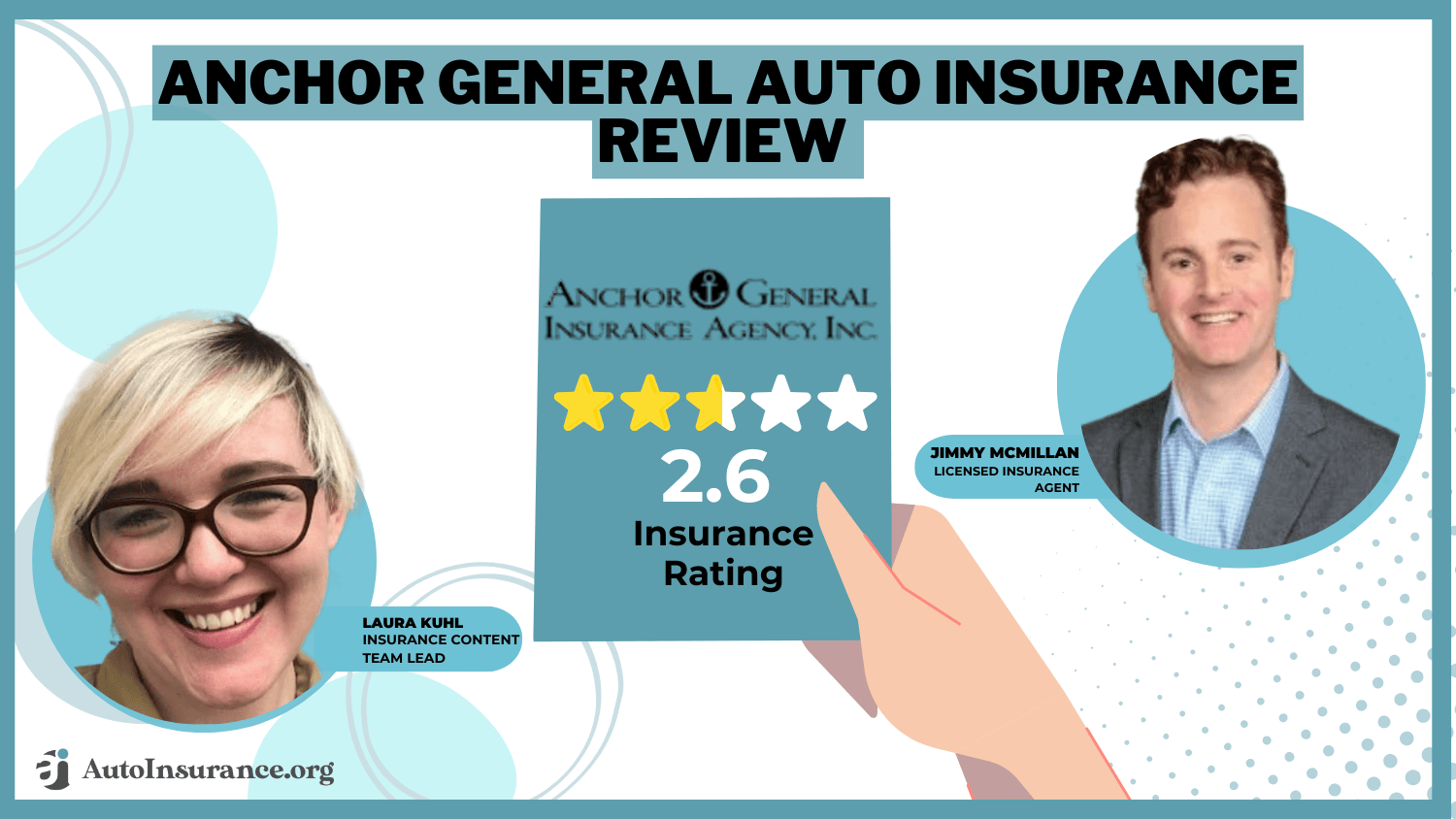
Anchor General Insurance Agency, Inc. is a specialized managing general agency headquartered in San Diego, California. The company specializes in writing and servicing non-standard private passenger automobile insurance. Non-standard auto insurance is tailored for drivers who cannot secure coverage through traditional standard or preferred insurance carriers due to past traffic violations, accidents, lapses in coverage, lack of prior insurance, or requirements for state legal filings such as an SR-22.
Anchor General operates in select U.S. states—historically including California, Arizona, Texas, Washington, and Oregon—by partnering with program carriers and independent insurance agents. Rather than positioning itself as a general carrier for low-risk households, Anchor General fills a specific market niche: providing legally compliant auto insurance to drivers who need rapid coverage, flexible payment plans, and official proof of financial responsibility.
Because non-standard policies cater to higher-risk driver pools, policy structures, exclusions, and rating models differ significantly from standard carriers. Understanding how Anchor General structures its auto insurance quotes helps drivers make informed choices about liability limits, physical damage options, and continuous policy maintenance.
Prerequisites for Requesting an Anchor General Auto Insurance Quote
Before requesting a rate estimate from Anchor General or an authorized independent broker, gather the necessary documentation to ensure accurate pricing. Non-standard auto insurance rates depend heavily on historical driving data and state-level legal compliance status.
- Personal Identifiers: Full legal name, DOB, residential address
- Vehicle Information: VIN, year, make, model, annual mileage
- Driving Records: Driver's license number (or international/matricula)
- Prior History: Insurance lapse dates, prior carrier details
- Legal Mandates: SR-22 requirements, court mandate documents
Essential Information to Prepare
- Driver Identification: Your driver's license number, state of issuance, and current licensing status (active, suspended, or reinstated). Anchor General often accommodates drivers with out-of-state licenses, international driver's permits, or state identification cards depending on local regulations.
- Vehicle Identification Number (VIN): The 17-digit VIN for every vehicle listed on the policy. The VIN allows underwriters to verify the exact trim, safety equipment, passive restraint systems, and anti-theft devices.
- Driving History (3 to 5 Years): Details of any moving violations, moving violations under appeal, at-fault accidents, zero-fault accidents, or comprehensive claims within the past 36 to 60 months.
- Current Insurance Status: Information regarding your current or prior carrier, including policy expiration dates and any gaps or lapses in coverage.
- State Filing Requirements: Clear indication of whether you need an SR-22 financial responsibility filing submitted to your state's Department of Motor Vehicles (DMV) or Department of Licensing.
How to Get an Anchor General Auto Insurance Quote
Securing an auto insurance quote through Anchor General can be accomplished through two primary paths: working directly with an authorized independent insurance agent or using online aggregator portals partnered with Anchor General's distribution network.
- Start Quote Request
- Choose Application Channel
- Independent Agent
- Online Quote Portal
- Enter Driver & Vehicle Info
- Select Limits & Add SR-22
- Review Quote & Down Payment
- Bind Policy & Issue Proof
Option 1: Independent Insurance Brokers
Because Anchor General relies heavily on an independent agency distribution model, visiting or calling a local independent broker is often the most direct method.
- Locate a Partner Agency: Find a licensed insurance broker in your state that represents Anchor General.
- Provide Underwriting Details: Give the agent your license details, vehicle information, and driving record.
- Specify Coverage Needs: Indicate whether you seek state minimum liability only or full coverage (liability plus collision and comprehensive).
- Request State Filings: If your license is suspended or conditional, instruct the broker to add an SR-22 endorsement to the quote.
- Review Payment Terms: Evaluate the initial down payment (binder payment) and monthly installment schedule.
Option 2: Online Quote Generators
Select online insurance comparison platforms allow drivers to input their zip code and driving profile to generate quotes from Anchor General.
- Input ZIP Code: Enter the primary garaging address of the vehicle to pull localized rating tiers.
- Complete Driver Profile: Detail all household drivers and potential regular operators of the vehicle.
- Review Coverage Options: Adjust deductible levels (e.g., $500 vs. $1,000) and bodily injury/property damage liability limits.
- Receive Real-Time Estimate: Review the monthly rate breakdown, down payment obligation, and mandatory agency fees.
Core Coverage Options Offered by Anchor General
When reviewing an Anchor General auto insurance quote, policyholders can select from standard coverages alongside non-standard endorsements designed for high-risk profiles.
| Coverage Type | Description |
|---|---|
| Bodily Injury Liability | Pays for injuries to others when you are at fault |
| Property Damage Liability | Pays for damage to third-party property or vehicles |
| Collision Coverage | Covers your vehicle damage from crashes, regardless of fault (subject to deductible) |
| Comprehensive Coverage | Covers non-collision damage (theft, vandalism, weather) |
| Medical Payments (MedPay) | Covers medical costs for you and your passengers |
| Uninsured Motorist (UM) | Protects you if hit by an uninsured/underinsured driver |
| Roadside & Towing | Offers emergency towing and emergency road services |
1. State Minimum Liability Coverage
Liability insurance is mandatory in nearly every state. It is divided into two primary parts:
- Bodily Injury Liability: Pays for medical expenses, loss of income, and legal defense costs for third parties injured in an accident where you are legally at fault.
- Property Damage Liability: Pays to repair or replace third-party property—such as other vehicles, fences, utility poles, or structures—damaged in an accident you caused.
Non-standard quotes frequently start at state legal minimums (such as 15/30/5 in California or 25/50/25 in Texas), though higher limits are available upon request.
2. Collision Coverage
Collision coverage pays to repair or replace your covered vehicle if it collides with another vehicle, an object (such as a guardrail or tree), or experiences a rollover event. Collision coverage is paid out regardless of who caused the accident, minus your selected deductible (typically ranging from $250 to $1,000).
3. Comprehensive Coverage
Comprehensive (often referred to as "other-than-collision") covers physical damage caused by events outside your control. This includes theft, vandalism, fire, contact with animals, hail, falling objects, and severe weather events.
4. Uninsured and Underinsured Motorist Coverage (UM/UIM)
If an uninsured or underinsured driver hits your vehicle, UM/UIM coverage pays for your bodily injuries and, in states where available, property damage. This coverage is critical for drivers operating in regions with high uninsured driver populations.
5. Supplemental Endorsements
Anchor General policies may offer optional endorsements depending on the state of issuance:
- Medical Payments (MedPay): Covers immediate medical or funeral expenses for you and your passengers after an accident, regardless of fault.
- Roadside Assistance and Towing: Provides reimbursement or direct service for flat tire changes, battery jump-starts, fuel delivery, and emergency towing.
- Rental Car Reimbursement: Helps pay for a rental vehicle while your primary automobile is undergoing covered repairs following an accident.
Detailed Comparison of Anchor General Policy Tiers
The following table breaks down typical coverage options, mandatory rules, and ideal use cases within an Anchor General auto insurance quote.
| Coverage Component | Requirement Status | Common Deductible Range | Ideal Profile / Primary Benefit |
|---|---|---|---|
| Bodily Injury Liability | Mandatory in most states | N/A ($15k/$30k to $100k/$300k limits) | Drivers fulfilling state financial responsibility laws. |
| Property Damage Liability | Mandatory in most states | N/A ($5k to $50k limits) | Protects personal assets against third-party damage claims. |
| Collision Coverage | Optional (Mandatory if vehicle is financed) | $500 – $1,500 | Vehicle owners with newer cars or outstanding auto loans. |
| Comprehensive Coverage | Optional (Mandatory if vehicle is financed) | $250 – $1,000 | Protection against theft, animal strikes, and severe weather. |
| SR-22 Filing Endorsement | Optional / Mandated by court or DMV | One-time or annual filing fee ($25 – $50) | Drivers needing license reinstatement after severe violations. |
| Uninsured Motorist (UM) | Optional (Can be waived in writing in some states) | Varies by state selection | Essential protection against hit-and-run or uninsured drivers. |
Understanding Key Pricing Factors for Anchor General Quotes
Non-standard insurance pricing relies on complex actuarial formulas designed to balance high-risk underwriting with state legal limits. Understanding these pricing factors helps explain why an Anchor General quote may differ from standard insurance market rates.
- Anchor General Premium
- Driving Record
- Violations
- Accidents
- SR-22 status
- Vehicle Profile
- Age/Make/Model
- Safety features
- Repair costs
- Garaging ZIP
- Theft rates
- Traffic density
- Litigation risk
- Policy History
- Lapses/Gaps
- Prior limits
- Continuous tenure
- Driving Record
1. Driving History and Traffic Violations
The single largest factor affecting your quote is your 3-year or 5-year motor vehicle record (MVR). Major infractions—such as Driving Under the Influence (DUI/DWI), reckless driving, driving with a suspended license, or multiple speed violations—result in higher risk surcharges.
2. Prior Coverage Lapses
In standard markets, a gap in coverage can lead to outright rejection. Anchor General accepts drivers with recent coverage lapses, but continuous prior coverage yields lower rates. A history of maintaining an active policy for 6 to 12 months helps lower premiums over time.
3. Garaging Location and Zip Code
Insurance rates vary by zip code due to localized risk metrics. Factors include regional traffic density, historic accident frequencies, vehicle theft rates, vandalism statistics, and local litigation patterns.
4. Vehicle Type and Age
Older vehicles with lower market values cost less to insure for physical damage (collision/comprehensive), though safety features on newer vehicles can help reduce liability premiums. High-performance or luxury vehicles attract higher premiums due to elevated parts and repair expenses.
5. Policy Structuring and Deductibles
Choosing a higher deductible (e.g., increasing from $500 to $1,000) lowers the annual premium for physical damage coverage. Conversely, selecting baseline state liability limits reduces premiums but leaves policyholders exposed to out-of-pocket costs if accident damages exceed insurance limits.
SR-22 Filings with Anchor General
An SR-22 certificate is not an insurance policy itself, but an official endorsement attached to an auto policy. It serves as legal proof filed with the state DMV confirming that a driver maintains the state-mandated minimum auto liability insurance.
- DMV Mandate: State orders driver to submit SR-22 proof
- Quote Request: Driver requests quote with SR-22 endorsement
- Premium Payment: Driver pays down payment + state filing fee
- Electronic Filing: Anchor General submits SR-22 directly to DMV
- License Status: DMV processes filing & updates license status
- Policy Maintenance: Policyholder maintains continuous payments
Who Needs an SR-22?
States typically require an SR-22 filing for drivers involved in specific legal or administrative circumstances:
- DUI or DWI convictions.
- Driving without active auto liability insurance.
- At-fault accidents while uninsured.
- Accumulating excess points on a driving record within a short timeframe.
- Reinstating a suspended or revoked driver’s license.
How Anchor General Handles SR-22 Filings
Anchor General specializes in processing SR-22 filings directly with state licensing authorities. When requesting your quote:
- Select the SR-22 Option: Indicate that an SR-22 filing is required during the initial quote application.
- Pay the Filing Fee: A small state filing fee (usually between $15 and $50) is added to your policy setup costs.
- Electronic Transmission: Anchor General submits the SR-22 electronically to your state's licensing agency, speeding up the clearance needed for license reinstatement.
- Maintaining Continuous Compliance: If an SR-22 policy lapses or cancels for non-payment, Anchor General is legally obligated to file an SR-26 form with the state. The SR-26 alerts the DMV that financial responsibility has lapsed, which typically results in the immediate re-suspension of your driver's license.
Policy Exclusions and Non-Standard Terms
Non-standard auto policies often contain strict exclusions and restrictive policy language that differ from standard insurance contracts. Reviewing these terms during the quote stage helps prevent un-covered claims later.
- Named Driver Exclusions: Non-standard policies may require listing all household members of driving age. Some policies explicitly exclude unlisted household drivers or permit a Named Driver Only Policy endorsement, which voids coverage if anyone other than the specifically named driver operates the vehicle.
- Permissive Use Limits: Unlike standard policies that may extend coverage when a friend occasionally borrows your vehicle ("permissive use"), non-standard policies may limit or completely exclude coverage for non-listed drivers.
- Business or Commercial Use: Anchor General personal auto policies exclude vehicles used for commercial transport, livery, delivery services (e.g., food or package delivery), or rideshare services unless a specific commercial endorsement is attached.
- Intentional Acts and Racing: Damage caused intentionally or occurring during illegal racing or commission of a felony is universally excluded.
Managing Your Anchor General Policy and Claims
Once an Anchor General auto insurance quote is bound into an active policy, managing payments and handling accident claims efficiently ensures uninterrupted coverage.
- Accident Occurs
- Ensure Safety & Call 911
- Exchange Driver Info & Take Scene Photos
- File Claim via Phone or Anchor Online Portal
- Adjuster Inspection & Repair Authorization
Making Payments and Managing Accounts
Anchor General offers multiple payment structures, including full annual/semi-annual payments or monthly installment plans. Because non-standard policies lack lenient grace periods, paying installments on time is critical. Payments can be completed online via the policyholder portal, by phone, or through your local independent broker.
Steps to File an Accident Claim
If you are involved in an accident, follow these steps to file a claim with Anchor General:
- Document the Scene: Take clear photographs of all vehicles involved, property damage, road conditions, and license plates. Exchange names, contact information, insurance policy details, and driver’s license numbers with all parties.
- Obtain a Police Report: Call law enforcement to report the accident and request a police report number.
- Report the Claim Promptly: Contact Anchor General’s claims department directly or initiate the claim through their portal. Provide the exact date, time, location, and circumstances of the incident.
- Work with the Adjuster: An assigned claims adjuster will review the police report, interview involved parties, inspect vehicle damage, and determine fault and repair costs.
Advantages and Disadvantages of Anchor General Auto Insurance
Evaluating the benefits and trade-offs of an Anchor General quote helps you decide if it matches your current driving profile and financial situation.
Advantages
- High Accessibility: Accepts drivers who are declined by standard carriers due to poor driving history, severe infractions, or prior coverage lapses.
- Fast SR-22 Processing: Provides direct electronic SR-22 filing with state DMVs, assisting in rapid driver's license reinstatement.
- Flexible Licensing Terms: Accommodates out-of-state licenses, matricula consular, and international driving permits in eligible markets.
- Low Initial Upfront Costs: Offers entry-level down payment options designed to get drivers legally covered quickly.
Disadvantages
- Higher Overall Premiums: Risk-adjusted rates mean overall costs are higher than standard policies for clean-record drivers.
- Strict Policy Definitions: Features tighter restrictions regarding driver exclusions, permissive use, and payment due dates.
- Limited Customization Options: Offers fewer specialized optional add-ons (such as original equipment manufacturer replacement parts or gap insurance) compared to major standard insurers.
Frequently Asked Questions
How long does it take to get an Anchor General auto insurance quote?
An online or broker-assisted Anchor General auto insurance quote typically takes between 10 and 20 minutes. Once you provide your driver’s license details, VIN, and driving record, the system generates an immediate estimate. If an SR-22 filing is required, the endorsement can often be attached and processed the same day.
Can I get an Anchor General insurance quote with a suspended license?
Yes, Anchor General provides quotes for drivers with suspended or revoked licenses, provided the policy is purchased to fulfill state reinstatement requirements. In these cases, the quote includes an SR-22 endorsement, which Anchor General files with the state DMV to assist you in getting your driving privileges restored.
What happens if I miss a monthly payment on my Anchor General policy?
Non-standard auto insurance policies strictly enforce payment deadlines. Missing a payment deadline can lead to a prompt Notice of Cancellation. If the policy cancels and carries an active SR-22 endorsement, Anchor General is legally required to notify the state DMV via an SR-26 filing, which may trigger a re-suspension of your driver's license.
Does Anchor General offer full coverage options?
Yes. In addition to state-mandated liability insurance, Anchor General offers physical damage coverages, including collision and comprehensive protection with customizable deductibles. This allows drivers who are financing or leasing a vehicle to meet lender coverage requirements.
Can I add additional drivers to my Anchor General quote later?
Yes, policyholders can add or remove drivers by contacting their independent insurance agent or using the policyholder portal. All household members of driving age must be disclosed to ensure claims are covered properly and to avoid invalidating the policy under named-driver restrictions.
Final Recommendation: Steps to Finalize Your Coverage
If you need non-standard auto insurance or an SR-22 filing, an Anchor General auto insurance quote offers a straightforward path back to legal driving status. To get the best results:
- Gather Complete Records: Collect your VIN, driver’s license, and full details of any past violations or coverage gaps before requesting a quote.
- Compare Coverage Terms: Look closely at liability limits, collision/comprehensive deductibles, and driver exclusion clauses.
- Confirm SR-22 Details: If your state requires an SR-22, confirm that the endorsement is checked and that your legal name and license number match state records exactly.
- Set Up Automatic Payments: To avoid unexpected policy cancellations and license suspensions, enroll in automatic monthly payments upon binding your policy.
Disclaimer: Auto insurance underwriting guidelines, state minimum coverage requirements, rates, and filing procedures vary by jurisdiction and individual driver history. Consult a licensed insurance professional or state insurance department for specific legal and financial guidance.