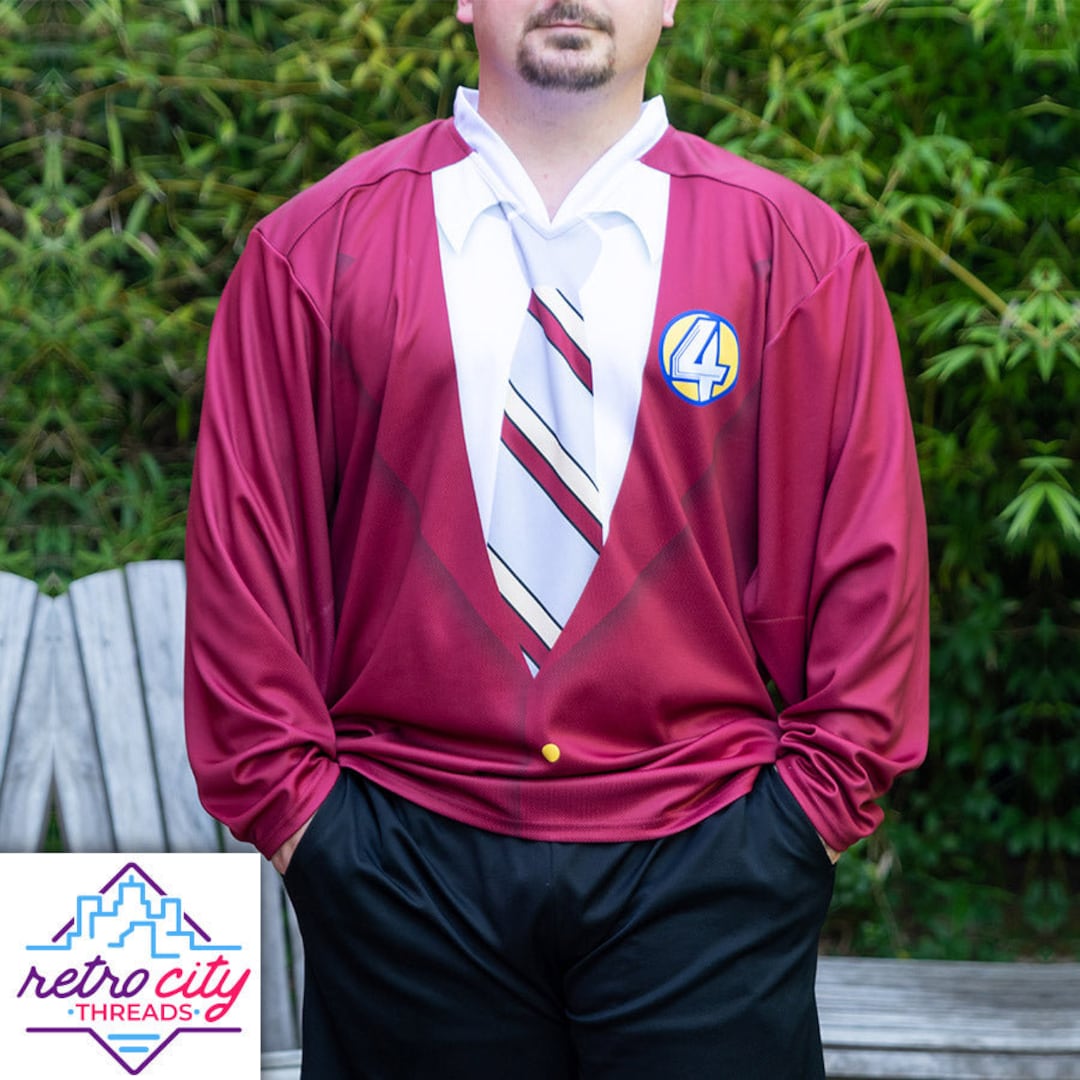
The Channel 4 News Team is the legendary fictional 1970s broadcast news crew featured in the hit comedy film Anchorman: The Legend of Ron Burgundy (2004) and its sequel Anchorman 2: The Legend Continues (2013). Composed of lead anchor Ron Burgundy, field reporter Brian Fantana, sports anchor Champ Kind, chief weatherman Brick Tamland, and later co-anchor Veronica Corningstone, the ensemble satirizes mid-century local television journalism through surreal humor and iconic chemistry.
The Origin and Satirical Concept of the KVWN Channel 4 News Team
Created by comedian Will Ferrell and director Adam McKay, the Channel 4 News Team operates out of the fictional station KVWN-TV in San Diego, California. The concept originated when Ferrell watched a documentary about 1970s local news broadcasts and noted the blatant chauvinism, polished pompadours, and hyper-masculine bravado of male anchors facing the entry of women into the newsroom. During this era, television stations across the United States transitioned to "Action News" and "Eyewitness News" formats. These formats prioritized visual flair, catchy team branding, sensational stories, and dynamic personalities over strict journalistic depth.
The KVWN Channel 4 News Team embodies this broadcast shift. Led by their dominant news anchor, the team rules San Diego local television ratings through sheer charisma, vanity, and slick presentation rather than rigorous investigative reporting. Their station taglines and team-oriented marketing reflect the historical real-world marketing campaigns of local network affiliates during the late 1960s and 1970s.
Behind the scenes, producer Judd Apatow, director Adam McKay, and the cast relied heavily on structured improvisation. While the script established clear narrative beats, the actors generated hundreds of alternative takes, non-sequiturs, and character beats that gave the news team its offbeat tone. This relaxed, collaborative filming environment allowed the dynamic between the four main newsmen to feel naturally bonded, despite the absurdity of their actions.
Breakdown of the Channel 4 News Team Members
Each member of the Channel 4 News Team represents a specific archetype of local television broadcasting, exaggerated for comedic effect. The interactions between these distinct personalities form the core narrative engine of the franchise.
| Member | Role |
|---|---|
| Ron Burgundy | Lead Anchor & Newsroom Director |
| Brian Fantana | Lead Field Reporter & Street Correspondent |
| Champ Kind | Chief Sports Director & Commentator |
| Brick Tamland | Chief Meteorologist & Weather Specialist |
| Veronica Corningstone | Co-Lead Anchor & Investigative Journalist |
Ron Burgundy (Will Ferrell): The Lead Anchor
Ron Burgundy is the central figure of the KVWN Channel 4 News Team. Blessed with a baritone voice, a immaculately groomed mustache, and an unshakeable sense of self-importance, Ron is a top-rated news anchor who genuinely believes his voice is a gift to the city of San Diego. His apartment is famously filled with mahogany furniture and leather-bound books, signaling his surface-level desire for sophistication.
Ron’s primary character flaw is his complete dependence on the teleprompter. He will read literally whatever is written on the screen, a vulnerability that becomes a major plot point when rival colleagues and betrayed partners sabotage his script. Despite his ignorance of real-world issues, Ron possesses a bizarre array of talents, including playing the jazz flute, speaking conversational Spanish (when convenient), and commanding unconditional loyalty from his newsroom peers and his beloved dog, Baxter.
Brian Fantana (Paul Rudd): The Lead Field Reporter
Brian Fantana serves as Channel 4's chief field reporter, responsible for on-the-street interviews and live location coverage. Fantana views himself as a smooth-talking playboy and style icon, spending far more energy on his wardrobe, hairstyles, and extensive cologne collection than on investigative journalism.
Brian's defining characteristic is his overweening romantic confidence, which contrasts sharply with his total lack of actual charm or tact. His most famous moment involves his cologne cabinet, which houses "Sex Panther" by Odeon—a illegal cologne made with bits of real panther that allegedly works "sixty percent of the time, every time." Fantana represents the media industry's shift toward superficial image and trend-focused field reporting.
Champ Kind (David Koechner): The Sports Anchor
Champ Kind is the station's boisterous, hyper-masculine sports anchor. Dressed in a signature Stetson hat and western-style jackets, Champ covers San Diego athletics with relentless enthusiasm, characterized by his loud catchphrase, "Whammy!"
Beneath Champ's aggressive cowboy persona lies an intense, boundary-crossing loyalty to Ron Burgundy. Champ frequently demonstrates aggressive hostility toward anyone who threatens the news team's internal bond, particularly female journalists. His sportscasting style completely lacks technical analysis, relying instead on raw emotion, physical gestures, and loud exclamations.
Brick Tamland (Steve Carell): Chief Meteorologist
Brick Tamland is the team's meteorologist, possessing an alleged IQ of 48 and a severe inability to comprehend basic social interactions or scientific principles. Despite these limitations, Brick handles the station's weather forecasts, frequently pointing at weather maps with childlike wonder or reporting on completely fabricated atmospheric phenomena.
Brick acts as the ultimate comedic wildcard of the team. He routinely utters random non-sequiturs, such as expressing love for random office objects ("I love lamp"), and misinterprets normal human emotions. However, during moments of physical conflict, Brick displays unexpectedly lethal skills, famously wielding a medieval trident during a news team brawl. Steve Carell’s performance elevated Brick into one of the most quoted comedy characters of 2000s cinema.
Veronica Corningstone (Christina Applegate): The Trailblazing Co-Anchor
Veronica Corningstone enters the newsroom as an ambitious journalist determined to break into the male-dominated world of 1970s network news. Unlike her male counterparts, Veronica possesses genuine journalistic talent, intellectual depth, and professional drive.
Her arrival disrupts the fraternity-like atmosphere of Channel 4. Initially dismissed by Ron and his team, Veronica proves her capability by stepping in as lead anchor when Ron is indisposed, immediately winning over San Diego audiences. Her professional rivalry with Ron quickly morphs into a stormy romantic relationship, driving the dramatic arc of the original film as she fights for equal footing behind the news desk.
Detailed Profile and Character Matrix
To better understand how the Channel 4 News Team functions as an ensemble unit, the table below outlines each member's core duties, signature gear, iconic lines, and professional role within KVWN-TV.
| Character Name | Cast Actor | Newsroom Specialty | Key Character Trait | Signature Quote or Moment |
|---|---|---|---|---|
| Ron Burgundy | Will Ferrell | Lead News Desk Anchor | Supreme vanity; total teleprompter reliance | "You stay classy, San Diego." |
| Brian Fantana | Paul Rudd | Field & Street Reporter | Obsessive grooming; questionable suavo | "Sixty percent of the time, it works every time." |
| Champ Kind | David Koechner | Sports Director | Loud bravado; intense team loyalty | "Whammy!" |
| Brick Tamland | Steve Carell | Chief Meteorologist | Low intellect; surreal non-sequiturs | "I love lamp." |
| Veronica Corningstone | Christina Applegate | Co-Anchor & Journalist | High ambition; true journalistic skill | "I want to be an anchor reader." |
Iconic rivalries: The Local News Alleyway Brawls
One of the most famous narrative running gags in the Anchorman franchise is the street fight between competing local news stations. Rather than competing purely through television ratings, the news teams settle broadcast dominance through physical combat in alleyways, adhering to strict, unwritten "news team rules."
- San Diego News Team Conflict
- Channel 4 News (Ron Burgundy)
- Evening News 9 (Wes Mantooth)
- Spanish News (Arturo Mendez)
- Public TV News (Frank Vitchard)
The 1970s San Diego Battle
In the original 2004 film, Channel 4 encounters their primary rival, Channel 9 Evening News—led by Ron’s arch-nemesis Wes Mantooth (Vince Vaughn)—alongside the Spanish Language News team (led by Ben Stiller) and the Public Television News team (led by Luke Wilson).
The scene escalates rapidly from verbal insults about ratings to full-scale warfare utilizing weapons such as chains, nets, horse whips, and Brick’s trident. The battle highlights the absurd tribalism of broadcast media, showing how these polished TV personalities instantly revert to violent gang tactics when off-camera.
The 1980s Cable News Escalation
In Anchorman 2: The Legend Continues, the team relocates to New York City to join GNN (Global News Network), the world’s first 24-hour news network. During the climax, another battle erupts in Central Park, expanding the satire to represent the modern fragmented media landscape.
This expanded fight features rival cable divisions including:
- Entertainment news outlets
- Sports specialty networks
- History and documentary channels
- Canadian news broadcasts
- High-budget international news feeds
The scene features celebrity cameos, fantasy weaponry, ray guns, and minotaurs, fully embracing the surreal, cartoonish logic that defines the franchise’s comedic universe.
Media Satire and Historical Context
While the Channel 4 News Team is undeniably absurd, the writing reflects sharp historical commentary on the evolution of American journalism during the late 20th century.
The Shift from Integrity to Infotainment
In the 1950s and 1960s, American network news was anchored by authoritative figures like Walter Cronkite and Edward R. Murrow, emphasizing serious civic duty and rigorous reporting. By the 1970s, local news stations realized that personality-driven broadcasting generated significantly higher advertising revenue. Stations began hiring anchors based on physical attractiveness, hair styling, and screen chemistry rather than journalistic credentials.
Ron Burgundy and his team embody this transition. They rarely cover local policy, civil rights, or economic crises; instead, they focus on fluff pieces, panda births, local fires, and sensational human-interest stories. The comedy derives from the stark contrast between their majestic presentation and the total triviality of their news content.
Gender Integration in the Workplace
The primary conflict of Anchorman centers on Veronica Corningstone’s arrival in a male-dominated environment. In the early 1970s, female journalists faced immense resistance as they attempted to move from behind-the-scenes research positions to lead anchor desks.
The Channel 4 News Team’s initial reaction to Veronica—a mixture of open confusion, institutional sexism, and pathetic attempts at romance—mirrors the real-world obstacles faced by pioneering female broadcasters like Connie Chung, Jessica Savitch, and Barbara Walters. Veronica’s eventual success highlights the absurdity of the team's fragile male egos.
The Birth of 24-Hour Cable News
Anchorman 2 shifts its satirical lens to 1980 with the birth of round-the-clock news channels, modeling GNN after the real-world launch of CNN. When assigned to the graveyard shift (2:00 AM), Ron Burgundy realizes that viewers do not want serious middle-of-the-night news; they want patriotism, sensationalism, car chases, and live fluff pieces.
Ron introduces patriotic spectacle and sensationalist crime coverage to drive ratings, accidentally inventing modern outrage-driven media. The film critiques how 24-hour news cycles prioritized keeping audiences hooked through continuous emotion and hype rather than providing useful information.
Production History and Improvisation Style
The unique comedic tone of the Channel 4 News Team stems from the creative partnership between Will Ferrell and director Adam McKay, who met during their time at Saturday Night Live.
- Writing: Core script written by Will Ferrell & Adam McKay
- Script Takes: Performers film standard scripted takes on set
- Improv Takes: McKay calls out alternative jokes from behind camera
- Post-Production: Editors compile best jokes from dozens of takes
The Unscripted Process
During filming, McKay and Ferrell utilized a production strategy that allowed actors to alter dialogue freely:
- Standard Take: The actors performed the script exactly as written to ensure narrative continuity.
- Alternative Joke Takes: McKay called out new jokes, bizarre phrases, or alternative lines through a megaphone while the camera kept rolling.
- Pure Improvisation: The actors executed takes entirely unscripted, feeding off each other’s choices.
This process yielded so much alternate material that the production team assembled a completely separate direct-to-video companion film in 2004 titled Wake Up, Ron Burgundy: The Lost Movie. This feature used an abandoned subplot involving a radical group called the Armed Alarmists, constructed entirely out of alternate takes, deleted scenes, and scrapped storylines from the original production.
Casting Dynamics
The chemistry of the Channel 4 News Team was heavily influenced by the cast's shared backgrounds in improv theater institutions like The Groundlings and The Second City.
- Will Ferrell brought high-energy physical commitment and character vanity developed during his years on Saturday Night Live.
- Steve Carell was selected prior to his breakout role in the American version of The Office, bringing quiet, deadpan timing to Brick Tamland.
- Paul Rudd transitioned from dramatic and romantic roles into mainstream comedy, establishing his deadpan, charming comedic style.
- David Koechner leveraged his background at Second City Chicago to supply Champ Kind’s aggressive physical comedy.
Long-Term Legacy and Impact on Popular Culture
Decades after its debut, the Channel 4 News Team remains a cornerstone of 2000s cinematic comedy and internet culture.
| Category | Details |
|---|---|
| Memes & Social Media | "That escalated quickly", "I love lamp" GIFs |
| Marketing Campaigns | Dodge Durango campaign, real-world appearances |
| Spinoff Media | Autography (Let Me Off at the Top!), Podcasts |
| Broadcaster Parodies | Actual TV news crews doing anniversary homages |
Digital Era Memes and Quotability
The Channel 4 News Team was uniquely suited for the internet era. As social media platforms, image boards, and video-sharing sites expanded in the late 2000s and 2010s, scenes featuring Ron Burgundy and Brick Tamland became universal reaction GIFs and memes.
Phrases like "That escalated quickly," "I don't believe you," and "I'm in a glass case of emotion!" transcended the film, entering everyday conversational English.
Real-World Appearances and Marketing
The character of Ron Burgundy crossed over into actual broadcast journalism as part of real-world promotional tours:
- Local News Broadcasts: Will Ferrell appeared in character as Ron Burgundy to co-anchor an actual local newscast on KXMB-TV in Bismarck, North Dakota in 2013.
- Curling Coverage: Ferrell co-hosted coverage of the Canadian Olympic Curling Trials for TSN in full Burgundy attire.
- Advertising: Chrysler run a promotional campaign featuring Ron Burgundy endorsing the Dodge Durango, resulting in measurable real-world sales increases for the vehicle.
- Podcasting: In 2019, Ferrell revived the character for The Ron Burgundy Podcast, featuring interviews with real-world public figures, scientists, and comedians.
Frequently Asked Questions
Is the Channel 4 News Team based on a real broadcast news crew?
No, the KVWN Channel 4 News Team is fictional. However, Will Ferrell based the concept on real 1970s local news broadcasts, specifically inspired by Philadelphia anchor Jim Gardner and Los Angeles news teams of the era that featured slick, heavily styled male anchors adjusting to female co-anchors.
Who played the four core members of the Channel 4 News Team?
The core four newsmen are played by Will Ferrell (lead anchor Ron Burgundy), Paul Rudd (field reporter Brian Fantana), David Koechner (sports anchor Champ Kind), and Steve Carell (meteorologist Brick Tamland).
What is the joke behind Brian Fantana's "Sex Panther" cologne?
"Sex Panther" is a fictional cologne featured in Anchorman. The joke centers on its extreme absurdity: it is made with illegal ingredients (real panther parts), smells terrible ("like a used diaper filled with Indian food"), yet Brian falsely claims it works "sixty percent of the time, every time."
What is the correct viewing order for films featuring the Channel 4 News Team?
To experience the complete storyline of the news team, watch the films in this order:
- Anchorman: The Legend of Ron Burgundy (2004)
- Wake Up, Ron Burgundy: The Lost Movie (2004 - alternate cut/companion film)
- Anchorman 2: The Legend Continues (2013)
How did Veronica Corningstone change the Channel 4 News Team?
Veronica Corningstone introduced true professional journalism to KVWN-TV. Her presence shattered the newsroom's male-only anchor desk tradition, forced the team to confront their systemic vanity, and pushed Ron Burgundy into direct competition for top local broadcast ratings.
Recommended Next Steps for Fans and Researchers
For viewers looking to explore the history and media satire of the Anchorman franchise, consider the following actions:
- Watch the Extended and Alternate Cuts: Compare the theatrical cut of Anchorman: The Legend of Ron Burgundy with Wake Up, Ron Burgundy: The Lost Movie to see how radical editing choices reshaped the entire news team storyline.
- Examine 1970s Media History: Research the emergence of the real-world "Eyewitness News" format from the 1970s to better appreciate how closely the filmmakers parodied actual newsroom dynamics, wardrobe choices, and set designs.
- Listen to The Ron Burgundy Podcast: To hear modern character work from Will Ferrell, explore The Ron Burgundy Podcast, which continues Ron’s surreal post-television career in a modern audio format.