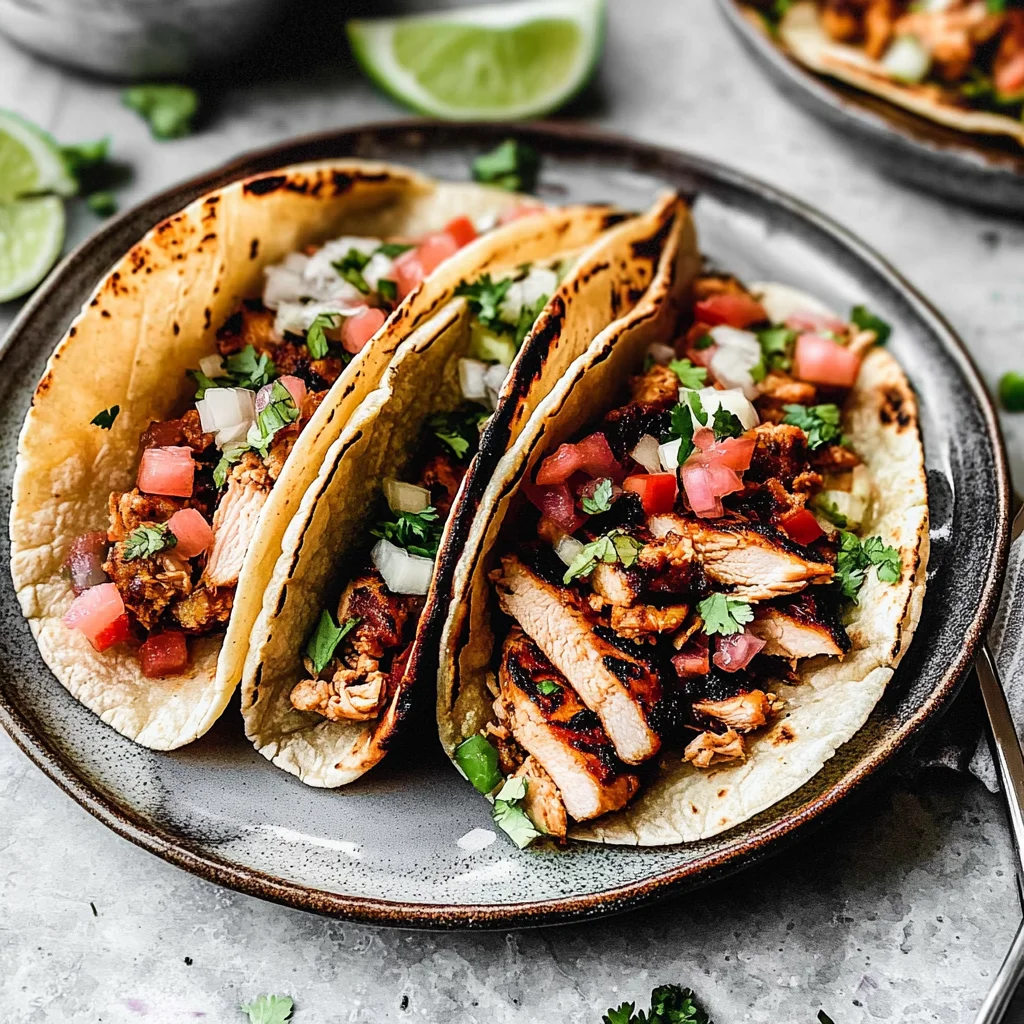
Ancho chicken tacos combine tender, lean chicken marinated in a rich sauce made from dried ancho chiles, warm spices, citrus, and garlic. Delivering approximately 35 to 45 grams of protein per serving, this meal balances deep, smoky flavor with an optimized macronutrient profile suitable for muscle recovery, meal prep, and elevated weeknight dining.
Understanding the Ancho Chile: Flavor Profile and Culinary Role
The foundation of authentic ancho chicken tacos is the ancho chile itself. Ancho chiles are dried poblano peppers (Capsicum annuum). When fresh poblanos undergo dehydration, their vibrant green color turns a deep, dark mahogany, and their chemical composition concentrates natural sugars and aromatic compounds.
Unlike sharp, pungent chiles such as the cayenne or habanero, the ancho chile delivers a complex flavor spectrum characterized by notes of raisin, prune, dark chocolate, and subtle woodsmoke.
Scoville Rating and Spice Level
For cooks mindful of heat tolerance, the ancho chile is remarkably approachable. On the Scoville Heat Scale, which measures capsaicin concentration, ancho chiles rate between 1,000 and 1,500 Scoville Heat Units (SHU).
- Habanero: 100,000 - 350,000 SHU
- Jalapeño: 2,500 - 8,000 SHU
- Ancho Chile: 1,000 - 1,500 SHU (Mild, complex heat)
- Poblano (Fresh): 1,000 - 1,500 SHU
This mild heat means the pepper can be used in significant quantities to build a thick, velvety marinade without overwhelming the palate with capsaicin burn. Instead of sharp heat, the chile provides body, rich color, and a natural sweetness that balances acidic elements like lime juice and cider vinegar.
Flavor Notes: Sweetness, Earthiness, and Smoke
When preparing an ancho-based marinade, understanding the chile's aromatic profile helps you select supporting ingredients:
- Fruitiness: Natural dried-fruit notes pair exceptionally well with citrus juices (orange and lime), which brighten the heavy molasses undertones.
- Earthiness: Deep soil and cocoa undertones align naturally with toasted cumin, Mexican oregano, and fresh garlic.
- Bitterness: The outer skin of dried chiles can introduce astringency if burned during preliminary toasting or if seeds and tough inner ribs are not removed prior to rehydration.
To maximize these flavor notes, whole dried ancho chiles should be split open, deseeded, stems removed, and toasted briefly in a dry skillet for 10 to 15 seconds per side until fragrant. Following this step, rehydrating the chiles in hot water for 15 to 20 minutes softens the flesh so it blends smoothly into a homogeneous marinade paste.
Nutritional Breakdown: Optimizing Tacos for High Protein
Tacos are often miscategorized as indulgence foods heavy in saturated fats and refined carbohydrates. However, by selecting lean poultry cuts, controlling marinade fats, and choosing nutrient-dense tortillas, ancho chicken tacos become a high-protein staple suitable for athletic training, body recomposition, or clean eating goals.
Selecting Lean Cuts: Chicken Breast vs. Thighs
The choice of poultry directly influences the macronutrient profile, moisture retention, and caloric density of the dish.
- Boneless, Skinless Chicken Breast:
- Nutrition: High protein-to-fat ratio. A raw 100-gram serving provides roughly 120 calories, 22.5 grams of protein, and 2.5 grams of fat.
- Culinary Profile: Extremely lean. Requires careful monitoring of cooking temperatures to prevent desiccation. Benefiting significantly from acid-based marinades that tenderize muscle fibers.
- Boneless, Skinless Chicken Thighs:
- Nutrition: Higher caloric and fat content. A raw 100-gram serving provides roughly 170 calories, 20 grams of protein, and 8 to 9 grams of fat.
- Culinary Profile: Rich in myoglobin and intramuscular fat, offering greater leeway against overcooking. Delivers an inherently juicy mouthfeel and deep, savory richness.
For maximum protein density per calorie, chicken breast is the preferred choice. For enhanced moisture retention during high-heat searing or batch meal prepping, a 50/50 mix of breast and thigh meat provides an optimal balance of lean protein and flavor texture.
Protein-to-Fat Ratios and Caloric Efficiency
A standard serving of three ancho chicken tacos made with corn tortillas and lean chicken breast achieves an impressive macronutrient distribution:
- Protein: 38g – 45g (supporting muscle protein synthesis via high leucine content)
- Carbohydrates: 36g – 42g (primarily complex carbohydrates from whole grain corn tortillas)
- Fat: 8g – 12g (derived primarily from minimal healthy oils used in cooking and marinade emulsification)
- Total Energy: Approximately 380 – 480 kcal
This caloric efficiency allows athletes and individuals managing daily macronutrient targets to meet elevated protein goals without consuming excess saturated fats or empty calories.
The Ultimate Ancho Chile Marinade Blueprint
A watery marinade merely coats the surface of the meat; a well-emulsified chile paste adheres to the poultry skin or muscle tissue, creating a caramelized crust upon contact with high heat.
Ingredients and Flavor Enhancers
To construct a balanced marinade, combine ingredients across five functional categories:
- Chile Base: 3 whole dried ancho chiles (stemmed, deseeded, rehydrated in 1/2 cup hot water).
- Acid (Tenderizer): 3 tablespoons fresh lime juice and 2 tablespoons apple cider vinegar. The acids break down surface muscle proteins, allowing aromatic compounds to penetrate deeper.
- Aromatic Solids: 4 cloves peeled garlic and 1/2 small yellow onion.
- Spices: 1 teaspoon toasted ground cumin, 1 teaspoon Mexican oregano, 1/2 teaspoon smoked paprika, 1/2 teaspoon ground coriander, and 1.5 teaspoons fine sea salt.
- Emulsifying Fat: 2 tablespoons extra virgin olive oil or avocado oil. Oil carries fat-soluble flavor compounds from the chiles and garlic, preventing the meat from sticking to cooking surfaces.
Step-by-Step Marinade Emulsification and Application
- Stem and Seed: Cut open the dried ancho chiles using kitchen shears. Remove and discard the stem, inner ribs, and seeds.
- Toast: Heat a dry cast-iron skillet over medium heat. Lay the flat chile pieces on the hot skillet for 10 to 15 seconds until aromatic. Do not allow them to blacken, as scorched chiles turn intensely bitter.
- Rehydrate: Transfer the toasted chiles to a bowl and cover with 1/2 cup of boiling water. Let steep for 15 minutes until soft and pliable. Do not discard the soaking liquid.
- Blend: Transfer the softened chiles, 3 to 4 tablespoons of the steeping liquid, lime juice, vinegar, garlic, onion, spices, sea salt, and oil into a high-speed blender. Process on high for 60 to 90 seconds until a smooth puree forms.
- Coat and Marinate: Place 2 pounds (approx. 900 grams) of trimmed chicken into a glass container or food-grade resealable bag. Pour the ancho marinade over the chicken, ensuring full coverage. Cover and refrigerate for a minimum of 2 hours, or up to 12 hours. Avoid marinating beyond 24 hours, as the citrus acids can degrade the meat tissue, making it mushy.
Cooking Techniques for Maximum Flavor and Juiciness
Cooking ancho chicken requires high heat to brown the sugar and protein networks—known as the Maillard reaction—while protecting the interior from drying out.
Cast-Iron Searing vs. Outdoor Grilling
Both cast-iron frying and outdoor grilling offer distinct advantages for cooking ancho chicken:
| Feature | Cast-Iron Skillet | Outdoor Charcoal/Gas Grill |
|---|---|---|
| Heat Profile | Direct, conductive heat | Radiant heat + live smoke |
| Crust Formation | Superior, continuous pan-sear crust | Distinct char marks, open flame sear |
| Moisture Control | Traps rendered juices in pan | Dripping fat ignites flare-ups |
| Convenience | Year-round, indoor friendly | Requires outdoor setup and heating |
- The Cast-Iron Method: Heat a 12-inch heavy cast-iron pan over medium-high until hot. Add 1 teaspoon of high-smoke-point oil (such as avocado oil). Remove chicken from marinade, shaking off excess heavy paste. Sear for 5 to 6 minutes on the first side without moving the meat, allowing a deep red-brown crust to form. Flip and cook for an additional 4 to 6 minutes until internal temperature targets are reached.
- The Outdoor Grill Method: Set up a two-zone cooking system (direct high heat on one side, indirect low heat on the other). Sear the chicken over direct flame for 3 to 4 minutes per side to capture char. If the pieces are thick, move them to the indirect zone, close the grill lid, and finish cooking gently.
Internal Temperature Control and Resting Time
Using a digital instant-read meat thermometer is critical for achieving tender poultry:
- Target Temperature for Chicken Breast: Pull the meat from the heat source when the internal temperature at the thickest part reads 160°F (71°C). Carryover cooking during the resting phase will push the final internal temperature to the USDA-recommended 165°F (74°C) without drying out the muscle fibers.
- Target Temperature for Chicken Thighs: Cook thighs to 175°F to 180°F (79°C–82°C). Higher temperatures allow the tough collagen in thigh meat to melt into gelatin, resulting in a tender texture.
- Resting Phase: Transfer cooked chicken to a cutting board and let rest undisturbed for 5 to 10 minutes before slicing or dicing. Slicing immediately causes internal juices to drain rapidly onto the board, draining moisture from the finished taco.
Comprehensive Recipe & Assembly Guide
Below is a complete macronutrient profile and step-by-step preparation matrix comparing standard taco configurations based on a fixed 200g cooked portion of ancho chicken.
Nutritional Comparison Matrix per Serving (3 Tacos)
| Component Option | Protein (g) | Carbs (g) | Fat (g) | Calories (kcal) | Dietary Fiber (g) |
|---|---|---|---|---|---|
| Chicken Breast + White Corn Tortillas | 44g | 38g | 7g | 390 kcal | 6g |
| Chicken Breast + Low-Carb High-Fiber Wraps | 48g | 28g (9g Net) | 8g | 340 kcal | 19g |
| Chicken Thigh + Yellow Corn Tortillas | 38g | 40g | 16g | 455 kcal | 6g |
| Chicken Breast + Lettuce Cup Shells (Keto) | 42g | 6g | 6g | 246 kcal | 2g |
Step-by-Step Cooking and Assembly Instructions
Ingredients Required
- Protein: 2 lbs boneless, skinless chicken breasts or thighs.
- Marinade: 1 batch prepared Ancho Chile Marinade (recipe detailed above).
- Tortillas: 12 small (6-inch) corn tortillas.
- Toppings: 1 cup finely diced white onion, 1/2 cup chopped fresh cilantro, 1 avocado (sliced), and fresh lime wedges.
- Step 1: Prep & Marinate
- Step 2: High-Heat Sear
- Step 3: Rest & Dice
- Step 4: Warm Tortillas
- Step 5: Assemble & Serve
Instructions
- Marinate the Chicken: Coat chicken in the prepared ancho paste for at least 2 hours in the refrigerator.
- Cook to Temperature: Sear in a preheated cast-iron skillet or grill to an internal temperature of 160°F (breast) or 175°F (thigh).
- Rest and Dice: Rest for 8 minutes on a clean cutting board. Dice into clean 1/2-inch cubes to ensure uniform distribution inside the tortillas.
- Warm the Tortillas: Never serve corn tortillas straight from the packet; cold corn tortillas break easily. Warm tortillas on an ungreased skillet over high heat for 30 seconds per side until pliable and lightly charred, or wrap a stack of 6 in damp paper towels and microwave on high for 45 seconds.
- Assemble: Double-up warm corn tortillas if desired for structural support. Place 60 to 70 grams of diced ancho chicken into each set of tortillas. Top with diced white onion, fresh cilantro, a thin slice of avocado, and a fresh squeeze of lime juice.
Pairings, Toppings, and Macro-Friendly Substitutions
The toppings selected can either reinforce your macro targets or quietly add unwanted calories. Customizing your taco build keeps the meal versatile and aligned with personal nutrition strategy.
High-Protein Crema and Sauces
Traditional sour cream or mayonnaise-based chipotle sauces add substantial saturated fat without offering significant protein. A simple swap involves using plain, non-fat Greek yogurt or strained Icelandic skyr as a base:
- High-Protein Ancho Lime Crema: Mix 1 cup of 0% fat plain Greek yogurt, 1 tablespoon fresh lime juice, 1 finely minced garlic clove, 1/2 teaspoon ground ancho powder, and a pinch of salt.
- Nutritional Benefit: Swapping 2 tablespoons of commercial sour cream for this yogurt crema cuts fat by roughly 5 grams while adding 3 to 4 grams of protein per taco.
Fresh Salsa and Acid Balance
Acidity cuts through the warm, rich smoke of the ancho chile:
- Pico de Gallo: Combine diced Roma tomatoes, raw white onion, jalapeño, cilantro, lime juice, and salt. Tomatoes provide lycopene and potassium with negligible caloric density.
- Tomatillo Salsa Verde: The sharp, bright acidity of roasted tomatillos balances the rich undertones of dried ancho pepper.
Meal Prep and Storage Guidelines
Ancho chicken is well-suited for high-volume meal prep. Cooked chicken holds its structural integrity and juiciness when stored correctly.
Refrigeration, Freezing, and Reheating Best Practices
- Refrigeration: Store diced, cooked ancho chicken in air-tight glass food containers for up to 4 days. Keep toppings (onion, cilantro, lime, sauces) packaged in separate small containers to prevent the chicken from becoming soggy.
- Freezing: Cooked ancho chicken freezes exceptionally well. Portion cooled, diced chicken into vacuum-seal bags or freezer-safe containers. Label with the date; freeze for up to 3 months. Thaw overnight in the refrigerator before reheating.
- Reheating without Drying Out:
- Stovetop (Preferred): Heat a non-stick pan over medium heat. Add diced chicken along with 1 to 2 tablespoons of low-sodium chicken broth or water. Cover with a lid for 2 to 3 minutes to steam-heat the meat, preserving internal moisture.
- Microwave: Place chicken in a microwave-safe dish, cover with a damp paper towel, and heat on 70% power in 45-second intervals until warm. The damp towel traps moisture, keeping lean breast meat tender.
Frequently Asked Questions
Are ancho chicken tacos spicy?
No, ancho chicken tacos are mild. Ancho chiles score between 1,000 and 1,500 units on the Scoville scale, which is significantly milder than a standard jalapeño (2,500–8,000 SHU). The chile provides deep, smoky flavor, subtle sweetness, and rich color rather than sharp heat.
Can I substitute chili powder for whole dried ancho chiles?
Yes, though whole dried chiles yield superior texture and flavor complexity. If substituting, use 2 tablespoons of pure ground ancho chile powder in place of 3 whole chiles. Avoid generic "chili powder blends," which contain added salt, garlic powder, onion powder, and oregano that alter the intended spice balance.
How do I keep lean chicken breast from drying out during cooking?
To keep chicken breast tender, marinate it with an acidic liquid (such as lime juice or vinegar) for 2 to 6 hours. Use a digital thermometer and remove the chicken from the heat as soon as the internal temperature reaches 160°F (71°C). Allow the meat to rest for 5 to 8 minutes so the juices redistribute before slicing.
Are ancho chicken tacos suitable for low-carb or keto diets?
Yes. To adapt ancho chicken tacos for a ketogenic or low-carb diet, swap traditional corn tortillas for low-carb flour tortilla wraps, crisp cheese shells, or fresh romaine/butter lettuce cups. The ancho chicken itself contains minimal carbohydrates.
What is the difference between an ancho chile and a poblano pepper?
An ancho chile is simply a fresh poblano pepper that has fully ripened to a red color and then been dried. Fresh poblanos are green, crisp, and vegetal, whereas dried ancho chiles are dark mahogany, pliable, smoky, and sweet.
Practical Recommendation
For the best flavor and performance, source whole, pliable dried ancho chiles from a local market rather than using pre-ground powders. Pair 2 pounds of lean chicken breast with the emulsified marinade, sear on a hot cast-iron skillet to an internal temperature of 160°F, and serve on warmed corn tortillas with high-protein Greek yogurt crema. This setup yields a restaurant-quality meal with over 40 grams of protein per serving, fitting effortlessly into a healthy lifestyle.