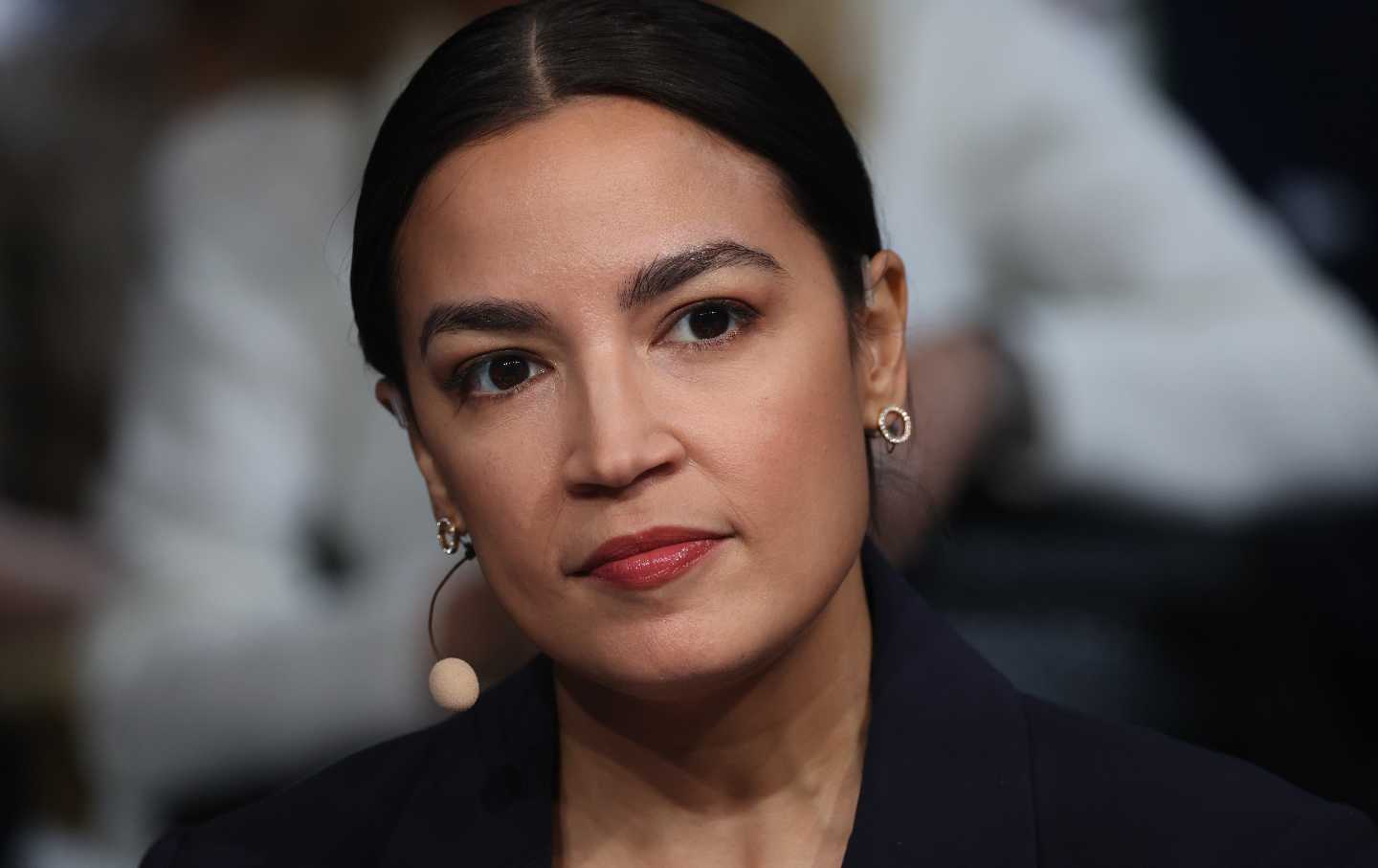
Alexandria Ocasio-Cortez’s stance on Israel reflects a significant shift within the Democratic Party toward a more critical examination of U.S. foreign policy. Her approach combines vocal support for Palestinian human rights with legislative efforts to condition military aid, navigating a complex landscape of constituent demands, party loyalty, and intense national scrutiny.
The relationship between Representative Alexandria Ocasio-Cortez (AOC) and the state of Israel is one of the most scrutinized aspects of modern American politics. Since her historic primary victory in 2018, Ocasio-Cortez has evolved from a newcomer who admitted she was not an expert on Middle Eastern geopolitics to a senior progressive leader whose words and votes shape the debate over the U.S.-Israel relationship. In 2026, looking back over nearly a decade of her tenure, it is clear that her trajectory on this issue is not just a personal political journey, but a mirror reflecting the broader ideological fractures within the United States.
The Early Evolution: From 2018 to the Iron Dome Controversy
When Ocasio-Cortez first arrived in Washington, D.C., her stance on Israel was primarily defined by the general progressive platform of the "Justice Democrats." During a notable 2018 interview on PBS’s "Firing Line," she referred to the "occupation" of Palestinian territories, later clarifying that she was still learning the complexities of the region. This moment of transparency signaled a departure from the traditional, unwavering pro-Israel rhetoric that had dominated both parties for decades.
The first major test of her position came in September 2021, during a vote on a $1 billion supplemental funding bill for Israel’s Iron Dome missile defense system. Initially appearing to vote "no," Ocasio-Cortez changed her vote to "present" at the last minute. The emotional weight of this decision was captured in images of her appearing visibly distressed on the House floor.
This "present" vote was a strategic middle ground that satisfied few. Pro-Israel groups criticized her for not supporting the defensive system, while pro-Palestine activists felt betrayed by her failure to vote "no." In a subsequent letter to her constituents, she explained that the "hushed, rushed" process lacked the transparency necessary for such a significant expenditure. This event established a pattern: Ocasio-Cortez would often seek a path that emphasized human rights and legislative process over reflexive partisan alignment.
The Post-October 7 Landscape and the 2023-2024 Conflict
The events of October 7, 2023, and the subsequent war in Gaza marked a definitive turning point in Ocasio-Cortez’s rhetoric and policy focus. Immediately following the Hamas attacks, she condemned the violence against Israeli civilians in no uncertain terms. However, as the Israeli military response escalated, her focus shifted rapidly toward the humanitarian crisis in Gaza.
Throughout 2024, Ocasio-Cortez became one of the most prominent voices in Congress calling for an immediate and permanent ceasefire. She was among the first high-profile Democrats to use the term "genocide" to describe the situation in Gaza, a move that placed her at odds with the Biden administration’s official stance at the time. Her rhetoric was grounded in international law, frequently citing reports from organizations like Human Rights Watch and Amnesty International.
In early 2024, she famously stated on the House floor that the United States has a "legal and moral obligation" to ensure that the weapons it provides are not used in the commission of war crimes. This stance was not merely rhetorical; it was backed by specific legislative maneuvers intended to enforce existing U.S. laws regarding foreign assistance.
Legislative Context: Conditioning Aid and the Leahy Law
To understand Ocasio-Cortez’s position in context, one must look at the specific laws she invokes. Her primary legislative goal has been the enforcement of the Leahy Law and the Foreign Assistance Act of 1961. These statutes prohibit the U.S. from providing military assistance to foreign security force units that commit "gross violations of human rights" (GVHR) with impunity.
Ocasio-Cortez and her allies in the "Squad" have argued that Israel’s actions in the West Bank and Gaza require the same level of vetting applied to other nations receiving U.S. aid. Her legislative efforts have included:
- Amendments to the National Defense Authorization Act (NDAA): Proposing restrictions on how U.S.-sourced munitions can be used.
- Joint Resolutions of Disapproval (JRD): Attempting to block specific arms sales, such as the sale of Boeing-made Joint Direct Attack Munitions (JDAMs).
- Letters to the State Department: Demanding formal investigations into whether U.S. weapons were used in specific incidents involving civilian casualties.
By 2026, these efforts have moved from the fringe to the center of the Democratic platform, even if they have not always resulted in passed legislation. They have successfully shifted the "Overton Window"—the range of policies acceptable to the mainstream population—making the "conditioning" of aid a standard topic of debate in presidential and congressional elections.
Navigating Domestic Political Pressures
Ocasio-Cortez’s stance is inseparable from the domestic political reality of her district, New York’s 14th. Her constituency is diverse, including significant populations of both Jewish and Muslim voters, as well as a large contingent of young, progressive activists. This demographic makeup requires a balancing act that satisfies the moral urgency of the left without alienating more moderate or traditional pro-Israel elements of the Democratic coalition.
She has also had to contend with the influence of the American Israel Public Affairs Committee (AIPAC). During the 2024 primary cycle, AIPAC’s affiliated Super PAC, United Democracy Project (UDP), spent tens of millions of dollars to unseat other progressive members of the "Squad," such as Jamaal Bowman and Cori Bush. While Ocasio-Cortez herself was not successfully targeted in the same way—largely due to her strong local base and fundraising prowess—the threat of such spending has shaped the political environment in which she operates.
Summary of Key Statements and Legislative Actions
The following table contextualizes Ocasio-Cortez’s primary actions and statements regarding the Israel-Palestine issue from her entry into Congress through the recent legislative sessions leading into 2026.
| Period | Key Action/Statement | Context & Significance |
|---|---|---|
| 2018 | "Occupation" Comment | Her first major foray into the issue; showed early alignment with progressive critiques. |
| 2021 | Iron Dome "Present" Vote | Highlighted the tension between her progressive values and the institutional pressure of the House. |
| 2023 | Condemnation of Oct 7 Attacks | Balanced her criticism of Israel with a clear stance against Hamas’s targeting of civilians. |
| 2024 | Calling for a Ceasefire | Became a leading voice in the "Ceasefire Now" movement, influencing mainstream Democratic discourse. |
| 2024 | Use of "Genocide" Label | A significant escalation in rhetoric that mirrored international legal debates at the ICJ. |
| 2025 | Support for Aid Conditioning | Focused on the Foreign Assistance Act to force transparency in military transfers. |
The Role of International Law and Institutions
A central pillar of Ocasio-Cortez’s approach is her reliance on international institutions. Rather than framing her critiques as purely ideological, she often roots them in the rulings and findings of bodies such as the International Court of Justice (ICJ) and the International Criminal Court (ICC).
When the ICJ issued its provisional measures in early 2024 regarding the case brought by South Africa, Ocasio-Cortez used the ruling to argue that the U.S. must suspend aid to prevent "complicity" in potential violations of the Genocide Convention. By aligning her position with international law, she attempts to shield herself from accusations of personal bias or antisemitism, framing the issue instead as one of global order and the "rules-based international system" that the U.S. claims to lead.
The Internal Democratic Divide
By 2026, the Democratic Party's internal divide over Israel has reached a stalemate of sorts. On one side are the "traditionalists," who view the U.S.-Israel alliance as an unbreakable strategic necessity. On the other are the "progressives," led by Ocasio-Cortez, who view the relationship through the lens of racial justice, decolonization, and human rights.
Ocasio-Cortez has been instrumental in bridging these gaps during critical moments, such as negotiating language in the party platform that includes support for Palestinian statehood and an end to settlement expansion. Her ability to operate both as an "insider" who works with leadership and an "outsider" who rallies the grassroots is a defining characteristic of her political power.
Frequently Asked Questions
Does Alexandria Ocasio-Cortez support a two-state solution?
Yes, Ocasio-Cortez has consistently stated her support for a two-state solution that ensures "peace, security, and dignity" for both Israelis and Palestinians. While she is a frequent critic of the current Israeli government's policies, she has not officially endorsed a "one-state" outcome, which is often viewed as a more radical departure from U.S. policy.
What is her official stance on the Boycott, Divestment, Sanctions (BDS) movement?
Ocasio-Cortez has defended the right of Americans to participate in the BDS movement as a form of protected free speech under the First Amendment. However, she has been careful in how she personally aligns with the movement, often focusing more on legislative conditioning of aid than on broad economic boycotts of the Israeli state.
Why did she vote "present" on Iron Dome funding in 2021?
Her "present" vote was a protest against the process rather than the technology itself. She argued that the $1 billion funding was being rushed through the House without a proper committee hearing or debate, which she viewed as an abdication of congressional oversight over military spending.
Has Ocasio-Cortez been accused of antisemitism?
Critics, including some of her colleagues in Congress and organizations like the Anti-Defamation League (ADL), have occasionally accused her of using rhetoric that they argue crosses the line into antisemitism—specifically regarding her use of terms like "apartheid" or "genocide." Ocasio-Cortez has vehemently denied these claims, asserting that criticizing the policies of the Israeli government is distinct from attacking the Jewish people or the right of Israel to exist.
How does her stance on Israel affect her standing in the Democratic Party?
Her stance makes her a polarizing figure. To the progressive base, she is a hero for speaking truth to power. To the party's donor class and traditional establishment, she is often seen as a liability who risks alienating moderate voters. However, her influence is undeniable, as many of her once-radical positions on aid transparency are now being adopted by mainstream senators and representatives.
Next Actions for Informed Citizens
For those looking to understand or engage with this issue, the following steps are recommended:
- Review the Leahy Law: Familiarize yourself with Section 620M of the Foreign Assistance Act. Understanding the legal threshold for "gross violations of human rights" provides the necessary context for Ocasio-Cortez’s legislative arguments.
- Monitor the Congressional Record: Follow the progress of Joint Resolutions of Disapproval regarding arms sales. These votes are the most direct way to see where members of Congress stand on the actual transfer of weapons.
- Read Primary Source Reports: Look at the latest updates from the International Court of Justice and UN human rights rapporteurs. These are the documents that Ocasio-Cortez and her staff use to build their policy positions.
- Engage with Diverse Perspectives: Balance Ocasio-Cortez’s critiques by reading the positions of the State Department and pro-Israel advocacy groups like the Democratic Majority for Israel (DMFI) to understand the full spectrum of the debate.
By 2026, Alexandria Ocasio-Cortez’s impact on the Israel-Palestine discourse is clear. She has transformed the debate from a binary choice of "pro-Israel" or "anti-Israel" into a complex discussion about human rights, international law, and the responsibilities of a global superpower.