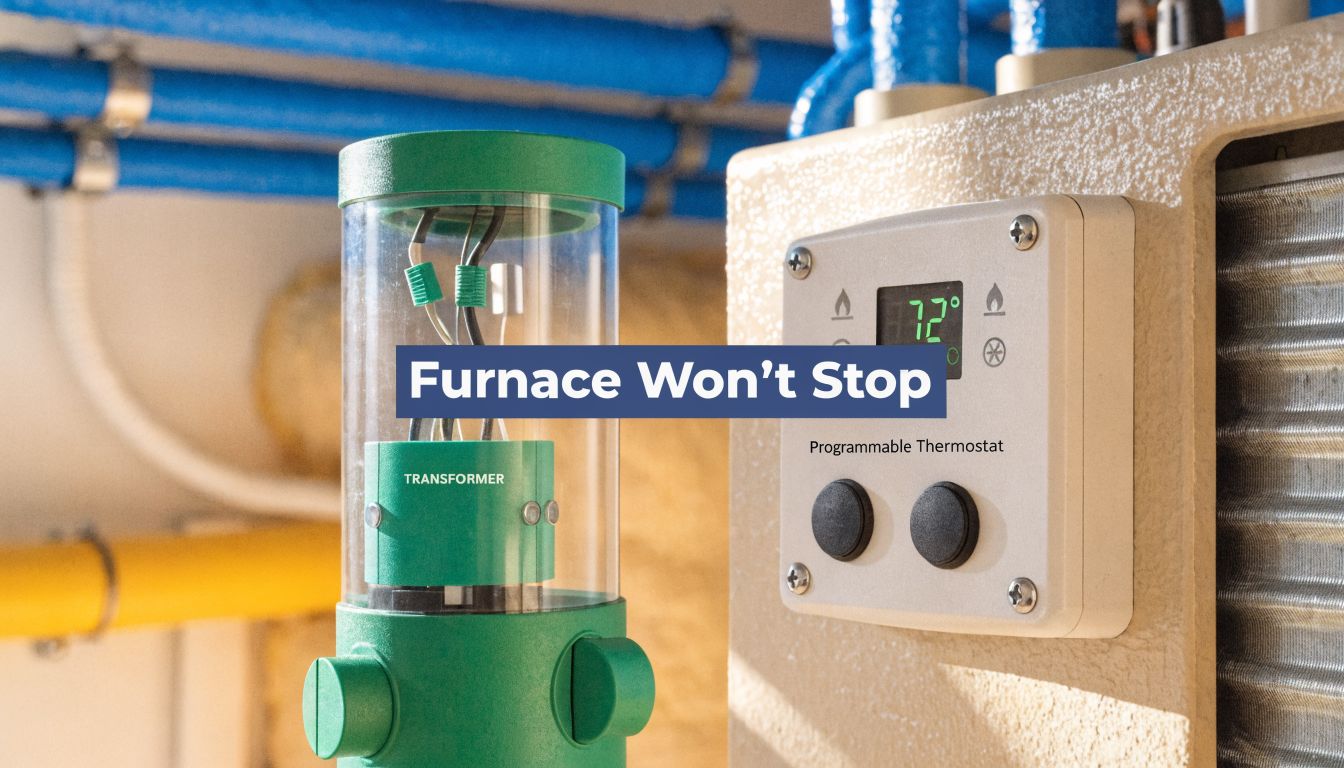
If your AC blower won't turn off, the most common cause is the thermostat being set to the "On" position rather than "Auto." Other frequent culprits include a stuck fan relay on the control board, a short circuit in the thermostat wiring, or a malfunctioning limit switch within the air handler.
An air conditioning system is designed to cycle on and off based on the temperature demands of your home. When the blower motor—the component responsible for pushing air through your ductwork—runs continuously, it can lead to increased energy bills, unnecessary wear on the motor, and potentially uncomfortable humidity levels. In 2026, while HVAC technology has become more efficient and digitally integrated, the mechanical and electrical fundamentals of blower operation remain consistent. Identifying why your fan won’t stop requires a systematic approach to troubleshooting, moving from the simplest user settings to complex internal components.
The Role of the Blower Motor in Your HVAC System
The blower motor is essentially the lungs of your home’s climate control system. Located in the indoor unit (the air handler or furnace), its primary job is to pull air from the return vents, push it across the evaporator coils (to cool it) or heat exchanger (to warm it), and then distribute that conditioned air throughout the house.
Under normal operation in "Auto" mode, the blower only activates when the system is actively cooling or heating. Once the thermostat senses that the target temperature has been reached, it sends a signal to cut power to the blower, usually after a brief delay of 30 to 90 seconds to clear the remaining conditioned air from the ducts. When this cycle breaks, and the air continues to blow regardless of the room temperature, it indicates a communication failure or a mechanical "bridge" that is keeping the electrical circuit closed.
Primary Cause: Thermostat Settings and Configuration
Before assuming there is a mechanical failure, the first step is always to verify the thermostat configuration. This accounts for a significant percentage of service calls where no actual repair is needed.
The "Auto" vs. "On" vs. "Circulate" Settings
Standard thermostats generally have two main settings for the fan:
- Auto: The fan only runs when the compressor is cooling the air or the furnace is heating it. This is the most energy-efficient setting.
- On: The fan runs 24/7, regardless of whether the system is cooling or heating. This is often used by homeowners who want continuous air filtration or to prevent stagnant air.
- Circulate (Common in 2026 Models): Many modern smart thermostats feature a "Circulate" mode. This programmed setting runs the fan for a specific number of minutes per hour (e.g., 20 minutes) to keep air moving without running it constantly. If you recently upgraded your thermostat, you might have inadvertently enabled this feature.
Smart Thermostat Glitches
In 2026, the prevalence of smart, Wi-Fi-connected thermostats introduces the possibility of software-related issues. A firmware update that didn't install correctly or a "stuck" command from a mobile app can keep the fan signal active. If your thermostat is set to "Auto" but the fan is running, try pulling the thermostat off its wall plate. If the fan stops within a minute of removing the thermostat, the problem lies within the thermostat itself or its programming.
Identifying Mechanical and Electrical Failures
If the fan continues to run even after the thermostat is removed from the wall, the issue is located within the wiring or the indoor unit's internal components.
Stuck Fan Relay
The fan relay is a small electronic switch located on the furnace or air handler's control board. When the thermostat calls for air, it sends a 24-volt signal to the relay, which then closes a high-voltage circuit to power the blower motor. Over time, the internal contacts of the relay can "weld" or stick together due to electrical arcing. When this happens, the relay stays closed even after the thermostat stops sending the signal, keeping the motor powered indefinitely.
Shorted Thermostat Wiring
The wiring that connects your thermostat to your HVAC unit consists of several color-coded strands. The green wire (G-terminal) is typically responsible for the fan. If the insulation on the wires has been damaged—perhaps by a rogue nail, a rodent, or simple age—the G-wire might be touching the red power wire (R-terminal). This creates a "permanent" signal for the fan to stay on, bypassing the thermostat’s control entirely.
Faulty Integrated Furnace Control (IFC) Board
The control board is the brain of the indoor unit. It manages the timing of the fan, the ignition of the burners (in heating mode), and the communication with the outdoor compressor. If the logic circuits on this board fail, they may default to a "fail-safe" mode where the fan runs continuously to prevent the system from overheating. This is particularly common if the board detects a sensor error it cannot resolve.
Troubleshooting Comparison: Symptoms and Likely Causes
| Symptom | Primary Suspect | Difficulty Level | Estimated Repair Cost (2026) |
|---|---|---|---|
| Fan stops when thermostat is set to "Auto" | Incorrect User Setting | Very Easy | $0 |
| Fan stops when thermostat is removed from wall | Faulty Thermostat | Easy | $150 – $350 |
| Fan runs even when thermostat is removed | Stuck Fan Relay or Control Board | Moderate/Professional | $250 – $600 |
| Fan runs only after a heating cycle and won't stop | Limit Switch Failure | Moderate | $100 – $250 |
| Fan runs and air feels unusually humid | Fan set to "On" (Inhibit Dehumidification) | Easy | $0 |
The Impact of a Continuous Blower on Indoor Air Quality
While some homeowners prefer to leave the fan "On" for better filtration, there are significant trade-offs, particularly in humid climates. When the AC compressor shuts off but the blower keeps running, it blows air over a wet evaporator coil. The moisture that was just removed from your home's air is then evaporated back into the air stream and redistributed. This can lead to indoor humidity levels rising rapidly after each cooling cycle, making the home feel "clammy" despite the cool temperature.
Furthermore, running the blower 24/7 means your air filter will clog much faster. In 2026, where high-MERV (Minimum Efficiency Reporting Value) filters are standard for improving indoor air quality, a clogged filter can significantly strain the blower motor, eventually leading to a complete motor burnout.
Advanced Diagnostic Steps: The Multimeter Test
For those comfortable with electrical testing, a multimeter can help isolate a relay or board issue. Safety Warning: HVAC systems use high-voltage electricity (120V or 240V) which can be fatal. Always turn off the circuit breaker before opening the air handler.
- Check the G-Terminal: Locate the terminal strip on the control board where the thermostat wires connect. With the thermostat removed, use the multimeter to check for 24V AC between the "G" and "C" (Common) terminals. If there is voltage present without the thermostat attached, there is a short in the wiring.
- Test the Relay Output: If there is no voltage at the G-terminal but the fan is still spinning, the relay is likely stuck in the closed position. You can verify this by checking for line voltage at the motor's power leads while the low-voltage control signals are disconnected.
- Inspect the Limit Switch: In systems that combine heating and cooling, a "fan limit switch" monitors the temperature of the heat exchanger. If this switch fails "open," it tells the fan to run to cool down the components, thinking the system is overheating when it actually isn't.
When to Call a Professional
While checking a thermostat is a simple DIY task, many of the internal components require professional handling. You should contact a licensed HVAC technician if:
- You smell burning plastic or ozone (indicating a short or motor failure).
- The blower motor is making a loud humming or grinding noise.
- You have ruled out the thermostat and wiring but the fan persists.
- Your system is still under warranty (DIY repairs may void the manufacturer’s coverage).
In 2026, most HVAC systems are highly sensitive to voltage fluctuations. A technician will not only replace the failed part but will also investigate why it failed—checking for underlying issues like power surges, poor duct design, or improper static pressure that may have caused the relay or board to fail prematurely.
Maintenance to Prevent Future Failures
To prevent blower issues, regular maintenance is essential. Ensure that your air filters are changed every 30 to 90 days, depending on usage and household pets. During an annual tune-up, a technician will typically clean the blower wheel. A dirty blower wheel is heavier and harder to turn, which causes the motor to run hotter and increases the likelihood of the fan relay sticking or the motor winding failing.
Additionally, consider installing a high-quality surge protector specifically for your HVAC unit. As control boards become more sophisticated and expensive in 2026, protecting them from electrical "noise" and spikes can save you from the high cost of a total board replacement.
FAQ
Can I leave my AC blower running until a technician arrives? Yes, generally it is safe to leave the fan running for a few days. However, you should be aware that your electricity usage will increase, and if you live in a humid area, your indoor humidity levels will likely rise. If the fan is making unusual noises, it is better to turn the power off at the breaker to prevent the motor from seizing or catching fire.
Why did my AC fan start running constantly after a power outage? Power outages are often accompanied by voltage surges. A surge can "fry" the logic on a control board or cause the fan relay to weld shut. If a simple reset (turning the breaker off for 5 minutes and then back on) doesn't fix it, the board likely suffered electrical damage.
Will a smart thermostat fix my blower that won't turn off? If the problem is a mechanical failure in the furnace (like a stuck relay), a new thermostat will not solve the issue. However, if the old thermostat was the source of the "stuck" signal, then an upgrade will fix the problem. Always perform the "remove from wall" test before buying a new thermostat.
Does a "stuck" fan mean I need a whole new AC system? No. A blower that won't turn off is usually a localized electrical or component issue. Even a total control board replacement is significantly cheaper than a full system replacement. Most parts involved in this specific problem are replaceable.
Why is my AC blower running but the outdoor unit is off? This is exactly what happens when the fan is set to "On" or when there is a stuck fan relay. The fan circuit is independent of the cooling circuit. The blower is simply circulating room-temperature air because the compressor (the part that actually cools the air) has cycled off.
Final Recommendation
If you have confirmed your thermostat is set to "Auto" and the fan continues to blow, the next logical step is to shut off the power to your HVAC unit at the circuit breaker and inspect the thermostat wiring for any visible damage. If no wiring issues are apparent, the fault most likely lies in the control board or a stuck relay. Due to the high-voltage risks and the complexity of modern 2026 control systems, contacting a professional for a diagnostic test is the safest and most reliable way to restore proper operation to your climate control system.