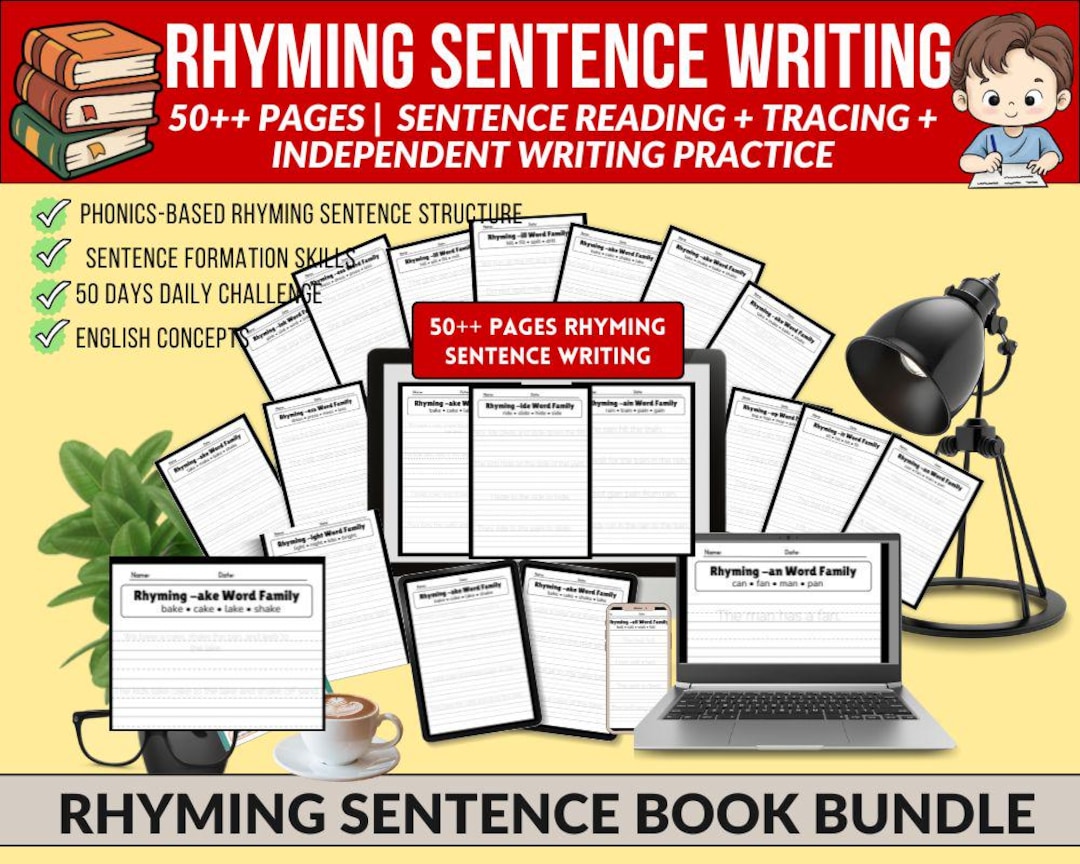
A rhyming sentence is a linguistic construction where words or syllables at specific intervals—typically at the end of phrases or clauses—share identical or similar phonetic endings. By aligning stressed vowels and trailing consonants, these sentences create a rhythmic, mnemonic quality that aids in memorization, adds stylistic emphasis, and facilitates creative expression across poetry, advertising, and casual communication.
Understanding the Mechanics of Rhyme
To construct a rhyming sentence effectively, one must move beyond simple rhyming dictionaries and understand the phonetic structure of language. A rhyme is primarily governed by the "rime," which consists of the vowel and any subsequent consonants in a stressed syllable. For example, in the words "cat" and "hat," the rime is "-at."
When building a sentence, the rhyme must feel organic rather than forced. If the syntactic structure is contorted solely to force a rhyme, the sentence loses its clarity and purpose. A well-crafted rhyming sentence balances prosody (the rhythm of speech) with syntax (the grammatical arrangement of words).
Types of Rhyme Used in Sentences
- Perfect Rhyme: The ultimate goal for most writers, where both the vowel and the following consonant sounds match exactly (e.g., "The bright light faded from the sight").
- Slant Rhyme (Near Rhyme): The sounds are similar but not identical, often sharing the same vowel or consonant sound but not both (e.g., "The broken gate stood near the state"). This is frequently used in modern writing to feel more conversational.
- Internal Rhyme: A technique where the rhyming occurs within the sentence itself rather than just at the end (e.g., "The fast cat ran past the mat"). This adds a higher density of sound, which can be particularly effective in persuasive or catchy writing.
The Utility of Rhyme in Communication
Beyond mere aesthetic pleasure, rhyming sentences serve several functional purposes. Cognitive science has long recognized the "rhyme-as-reason" effect, a phenomenon where statements that rhyme are perceived as more truthful, accurate, and easier to remember than identical statements that do not rhyme.
In 2026, the use of rhyming structures remains a cornerstone of effective communication, particularly in:
- Mnemonic Devices: Helping audiences remember critical safety information or brand taglines.
- Rhetorical Emphasis: Drawing attention to a specific point by providing auditory closure.
- Creative Writing: Establishing a tone that is whimsical, authoritative, or dramatic depending on the choice of rhyme and meter.
Structural Prerequisites for Success
Before attempting to write a rhyming sentence, it is necessary to identify the "anchor" word. This is the word that concludes your first clause and dictates the phonetics for the subsequent rhyme.
- Identify the Focal Point: What is the most important concept in your sentence?
- Determine the Meter: Are you aiming for a bouncy, trochaic rhythm or a more steady, iambic flow? The rhythm determines how well the rhyme lands.
- Check for Syntactic Integrity: Read the sentence aloud. If you find yourself pausing awkwardly to accommodate the rhyme, the sentence structure requires adjustment.
- Verify Phonetic Matching: Ensure that the rhyming sounds are placed on stressed syllables. Rhyming on an unstressed syllable often feels weak or "tacky."
Comparative Analysis of Rhyme Integration
| Rhyme Type | Complexity | Best Use Case | Impact Level |
|---|---|---|---|
| Perfect Rhyme | High | Marketing, Poetry, Slogans | High (Catchy) |
| Slant Rhyme | Medium | Prose, Narrative, Lyrics | Subtle (Natural) |
| Internal Rhyme | Very High | Creative Writing, Rhetoric | High (Intensive) |
| Rich Rhyme | High | Specialized Verse | Sophisticated |
Practical Steps to Draft a Rhyming Sentence
To create a high-quality rhyming sentence, follow this methodical process:
Step 1: Establish the Semantic Goal
Do not start by hunting for rhymes. Define the message you wish to convey first. If you try to find a rhyme before knowing what you want to say, you will inevitably produce a sentence that sounds nonsensical.
Step 2: Choose the Anchor Word
Once you have your message, identify the final word of the first segment. This word should ideally be common enough to have multiple rhymes but specific enough to convey meaning. Avoid words with few or no rhymes, such as "orange" or "month," unless you are intentionally seeking a challenge.
Step 3: Map Potential Rhymes
List potential rhyming candidates. If your anchor is "clear," your list might include "near," "fear," "steer," "appear," or "severe." Evaluate these based on how well they fit into the second half of your sentence.
Step 4: Refine the Meter
Read the sentence to check the "beat." A rhyming sentence feels most satisfying when the two halves have a similar syllable count or a similar pattern of stressed and unstressed syllables.
Step 5: Iteration and Removal
If the sentence sounds contrived, change the phrasing of the first half. Often, the best rhymes are achieved not by changing the second word, but by adjusting the preceding words in the first clause to better "lead into" the rhyme.
Common Mistakes to Avoid
- Forced Syntax: Placing adjectives or verbs in unnatural positions just to secure a rhyme. If the sentence makes the reader stumble, the rhyme is a failure.
- Over-Rhyming: Using too many rhymes in a paragraph can make the writing feel like a children's nursery rhyme, which may undermine the credibility of your message if the context is formal.
- Ignoring the Context: Using a "bouncy" rhyme for a serious or somber topic. The phonetic quality of the rhyme should match the emotional weight of the content.
- The "Dictionary Trap": Relying solely on rhyming dictionaries. These tools provide word lists, but they cannot tell you if the word makes sense in the context of your specific sentence.
Troubleshooting Rhyming Challenges
If you find that your sentence is failing to land, consider these diagnostic questions:
- Are the syllables stressed correctly? Rhymes function best when the stress falls on the rhyming syllable. If you are rhyming "táble" with "cáble," it works because the stress is on the same syllable.
- Is there too much distance? If the rhyming words are separated by too many syllables, the listener may forget the first word by the time they reach the second. Keep the rhyming words relatively close in the sentence structure.
- Is the rhyme too obvious? Common rhymes like "cat/hat" or "love/above" can feel cliché. Consider using near-rhymes or "slant" rhymes to add a layer of sophistication that keeps the reader engaged.
Frequently Asked Questions
Why does a rhyming sentence help with memory? Rhyming sentences provide a phonetic "hook." The brain is wired to recognize patterns; by creating a rhythmic repetition, you lower the cognitive load required to recall the information. This is why many medical, safety, and commercial guidelines use rhyming structures.
Can a rhyming sentence be professional? Yes, provided the rhyme is subtle and does not detract from the clarity of the message. Slant rhymes are particularly effective in professional settings because they provide the acoustic benefit of a rhyme without sounding like a playground rhyme.
How many syllables should be between rhymes? There is no fixed rule, but the most effective rhyming sentences typically group the rhyme within a single clause or two closely related clauses. Aim for a balanced meter—usually between 6 and 12 syllables per phrase—to ensure the rhyme is perceived clearly.
What is the best way to practice writing in rhyme? Start by taking a plain, non-rhyming sentence and attempting to paraphrase it while maintaining the original meaning. This forces you to think about word choice, synonyms, and sentence structure, which are the fundamental building blocks of rhyming verse.
Is it ever better to avoid a rhyming sentence? Yes. In highly technical, legal, or medical contexts where ambiguity must be zero, rhyming should be avoided. The poetic nature of a rhyme can sometimes lead to misinterpretation, as the focus shifts from the literal meaning of the words to the sound of the delivery.
Final Recommendation
To master the rhyming sentence, begin by focusing on the "near-rhyme" or slant rhyme. It is far more versatile and less likely to sound artificial than a perfect, forced rhyme. Aim for clarity first, and use the rhyme as a subtle tool to provide rhythmic cadence rather than as the primary goal of your sentence. Always read your work aloud; if it doesn't flow naturally as speech, the rhyme is working against your message rather than for it.