In New York’s complex legal landscape, a divorce attorney is typically worth the cost for cases involving significant assets, children, or contested issues. While expensive, they prevent costly errors in equitable distribution and maintenance calculations that often far exceed the legal fees themselves for unrepresented litigants in the 2026 judicial system.
Deciding whether to hire a divorce attorney in New York is a significant financial decision. As of 2026, the cost of legal representation in the Empire State remains among the highest in the country, particularly within the New York City metropolitan area. However, the "worth" of an attorney is not merely a question of the hourly rate but a calculation of risk mitigation, asset protection, and long-term financial stability. In a state where "equitable distribution" governs the division of property, the difference between a self-represented settlement and a professionally negotiated one can amount to hundreds of thousands of dollars.
Understanding the New York Legal Landscape in 2026
New York law regarding matrimonial actions is notoriously intricate. While the state adopted no-fault divorce years ago, the procedural requirements for filing and the substantive laws governing the "equitable" division of property remain dense. In 2026, the New York State Unified Court System continues to emphasize streamlined processing, yet the backlog of cases often means that errors in filing can result in months of delays.
A divorce attorney’s value begins with their role as a procedural guide. The "DIY" divorce might seem attractive for a fee-averse couple, but New York’s Domestic Relations Law (DRL) § 236 imposes strict requirements on financial disclosure. Failing to properly disclose assets or income can lead to a judgment being vacated years later, creating a "legal time bomb" that costs far more to defuse than the initial attorney’s fee.
The Cost of Legal Representation in 2026
In 2026, hourly rates for experienced matrimonial attorneys in Manhattan and Brooklyn range from $500 to $900, while rates in Upstate New York—such as Albany, Rochester, or Buffalo—typically fall between $300 and $500. Retainers often start at $5,000 for uncontested matters and can exceed $25,000 for high-conflict cases involving business valuations or international custody disputes.
While these numbers are daunting, they must be viewed against the backdrop of what is at stake. For most New Yorkers, the marital home, retirement accounts, and professional licenses or business interests represent the bulk of their life's work. A lawyer's primary job is to ensure that these are not unfairly surrendered.
The Financial Value of Equitable Distribution
One of the most common misconceptions in New York is that "equitable" means "equal." Under New York law, the court is tasked with dividing marital property in a way that is fair, but not necessarily a 50/50 split.
Protecting Separate Property
A critical area where an attorney proves their worth is in the "tracing" of separate property. If you entered the marriage with $100,000 and used it toward the down payment of a marital home, that $100,000 may still be considered your separate property—provided you can prove the source of the funds and that they weren't "commingled" beyond recognition. Without a lawyer to perform this tracing and argue the legal nuances, many individuals inadvertently gift their pre-marital wealth to their spouse during the distribution process.
Business Valuations and Professional Practices
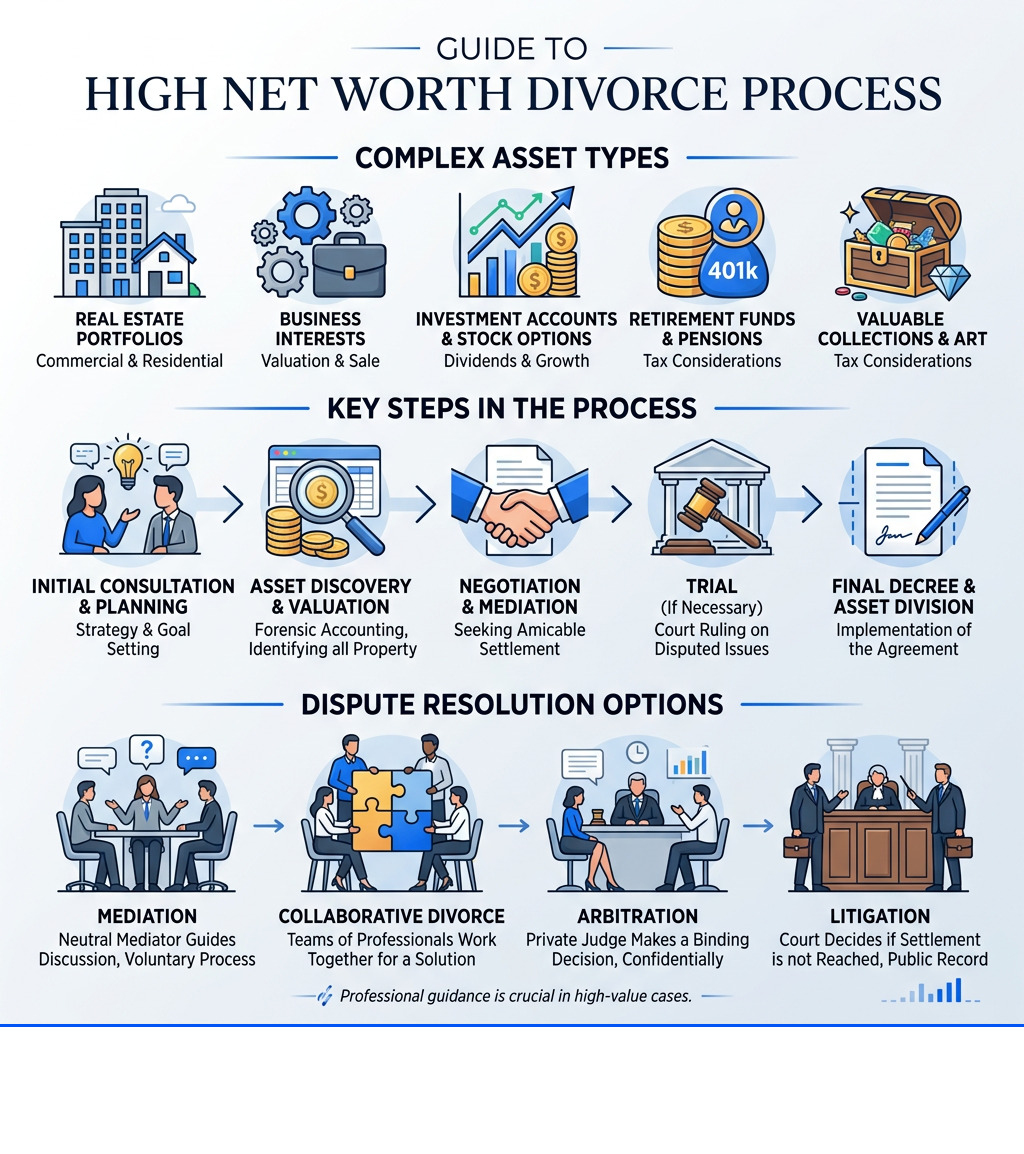
In 2026, the valuation of closely held businesses remains a focal point of New York divorce litigation. If you or your spouse owns a business, the value of that entity must be determined for the purposes of distribution. Divorce attorneys work with forensic accountants to ensure that the business is valued correctly—neither undervalued by a spouse trying to hide assets nor overvalued by a spouse seeking a larger payout. The cost of the attorney and the expert is often a fraction of the difference between a high and low valuation.
Spousal Maintenance and Child Support Calculations
New York uses specific formulas to calculate child support and spousal maintenance (alimony). However, these formulas have "caps" and "deviations" that require sophisticated legal arguments.
Spousal Maintenance (Alimony)
As of 2026, the income cap for the statutory maintenance formula is adjusted regularly. An attorney’s value lies in arguing for deviations from the formula based on factors such as the "standard of living established during the marriage" or the "reduced or lost lifetime earning capacity" of the payee spouse. For a high-earning spouse, an attorney can successfully argue for a downward deviation; for a lower-earning spouse, they can secure the support necessary to transition to post-divorce life.
The Child Support Standards Act (CSSA)
While child support might seem like a simple math problem based on the Child Support Standards Act, the calculation of "add-on" expenses—such as private school tuition, extracurricular activities, and unreimbursed medical expenses—is where many unrepresented parents lose out. A lawyer ensures that the final "Judgment of Divorce" clearly outlines who pays for what, preventing years of future litigation in Family Court over ambiguous terms.
Comparing Legal Paths: Value vs. Expenditure
Not every divorce requires a high-priced litigator. In 2026, New Yorkers have several paths to choose from. The following table compares the typical costs and values associated with different levels of legal involvement.
| Method | Estimated Cost (2026) | Best For | Risk Level | Value Proposition |
|---|---|---|---|---|
| Pro Se (DIY) | $350 - $1,000 | No kids, no assets, short marriage | High | Lowest cost; maximum risk of filing errors and lost rights. |
| Mediation | $5,000 - $15,000 | Amicable couples with moderate assets | Medium | Collaborative; saves money but requires independent legal review. |
| Collaborative Law | $15,000 - $40,000 | Couples prioritizing privacy and family health | Low | Avoids court; holistic approach with financial and mental health experts. |
| Full Representation | $20,000 - $100,000+ | Contested issues, high assets, or power imbalance | Very Low | Maximum protection of rights; necessary for complex financial or custody disputes. |
The Non-Financial Worth: Conflict Management and Emotional ROI
The value of an attorney is not solely found in the balance sheet. Divorce is an emotionally volatile experience. In 2026, "divorce coaching" and "legal project management" have become integrated into many New York law firms.
Buffering Conflict
An attorney serves as a vital buffer between you and your spouse. Direct communication during a divorce often leads to emotional outbursts that can be used against you in court. By funneling all communication through counsel, you maintain a level of professional distance that facilitates better decision-making.
Paperwork and Deadlines
The New York "Statement of Net Worth" is a 20+ page document requiring detailed proof of every expense and asset. An error here is made under penalty of perjury. Attorneys and their paralegals ensure that these documents are not only accurate but also strategically presented. The "worth" here is found in the peace of mind that you will not be penalized for a clerical error or a missed deadline that could result in your "Pleadings" being dismissed.
When an Attorney is Absolutely Necessary
There are certain scenarios where the cost of a New York divorce attorney is not just "worth it" but essential for survival.
- Domestic Violence or Power Imbalances: If there is a history of abuse or if one spouse has always controlled the finances, the other spouse is at a severe disadvantage. An attorney provides the necessary protection and advocacy to ensure a fair outcome.
- Complex Assets: This includes 401(k)s, pensions, stock options, and restricted stock units (RSUs). Dividing a pension requires a Qualified Domestic Relations Order (QDRO), a complex legal document that most laypeople cannot draft correctly.
- Contested Custody: Nothing is more valuable than your relationship with your children. In 2026, custody disputes involve sophisticated evaluations by "Attorney for the Child" (AFC) and forensic psychologists. You need an advocate who knows how to navigate these reports.
- Relocation: If one parent wants to move out of New York with the children, the legal burden of proof is high. These cases almost always require a trial.
Strategies to Make an Attorney "Worth the Cost"
If you decide to hire an attorney, you can maximize their value by being an efficient client.
- Organize Your Documents: Do not pay an attorney $500 an hour to organize your bank statements. Provide a clean, digital folder of all financial records.
- Be Decisive: Indecision leads to multiple phone calls and emails, all of which are billable.
- Use Limited Scope Representation: Some New York firms in 2026 offer "unbundled" legal services. You might hire an attorney just to review your settlement agreement or to draft the QDRO, while you handle the administrative filings yourself.
- Focus on the Big Picture: Avoid "litigating on principle." Spending $10,000 in legal fees to win a $2,000 sofa is a poor investment. A good attorney will tell you when to walk away from a fight that doesn't make financial sense.
Frequently Asked Questions
Can I make my spouse pay for my attorney fees in New York?
Yes, under DRL § 237, New York law creates a presumption that the "monied spouse" should pay the legal fees of the "non-monied spouse." This is designed to ensure that both parties have equal access to competent representation. Your attorney can file a motion for "pendente lite" counsel fees early in the case.
What happens if I make a mistake in a DIY divorce?
Common mistakes include failing to waive a spouse’s interest in a pension, improper service of papers (which leads to the case being dismissed), or failing to include mandatory language regarding health insurance or child support. Correcting these errors later often requires a "Motion to Vacate" or an "Order to Show Cause," which can be significantly more expensive than hiring a lawyer from the start.
How long does a divorce take in NY in 2026?
An uncontested divorce can take 4 to 9 months depending on the county’s backlog. A contested divorce involving a trial can take 18 months to 3 years. Attorneys often speed up the process by knowing which forms the court requires and how to negotiate a settlement that avoids a lengthy trial.
Is mediation a viable alternative to an attorney?
Mediation is a great tool for couples who are communicative and transparent. However, a mediator is a neutral third party and cannot give legal advice to either side. Even in mediation, it is highly recommended that each party has a "consulting attorney" to review the final agreement before it is signed.
Are "flat-fee" divorce lawyers reputable?
Flat-fee arrangements are common for uncontested divorces where the workload is predictable. In 2026, many reputable firms offer these for simple cases. However, be wary of flat fees for contested cases, as they may lead to a lawyer doing the bare minimum to avoid losing money on the deal.
Recommendation for Next Actions
To determine if an attorney is worth the cost for your specific situation, begin by gathering your last two years of tax returns and a list of all assets (homes, cars, accounts) and debts. Book a consultation with a matrimonial attorney—many offer a fixed-fee initial meeting. During this meeting, ask for a "candid assessment of the range of outcomes." If the difference between the lawyer’s predicted outcome and your spouse’s current offer is significantly larger than the estimated legal fees, the investment is justified.
For those with limited means, the New York Courts' Volunteer Lawyer Programs or local legal aid societies can provide essential guidance at little to no cost, ensuring that "worth" is measured by justice, not just the ability to pay.