Depression in athletes is a complex psychological condition where high-performance expectations, physical exhaustion, injury, and identity loss intersect with biological and environmental risk factors. Although physical activity protects mental health, elite and collegiate athletes experience depression at rates comparable to or higher than the general population, often presenting unique behavioral and somatic symptoms.
Disclaimer: This article is for informational purposes only and does not substitute for professional clinical advice, diagnosis, or treatment. Athletes experiencing severe psychological distress should consult a licensed mental health professional or sports psychiatrist.
Prevalence and Unique Dynamics of Depression in Sports
For decades, sports culture operated under the myth that physical fitness and mental resilience immunized athletes against psychiatric illness. Research published in sports medicine journals, such as the British Journal of Sports Medicine (BJSM), demonstrates that between 20% and 35% of elite and collegiate athletes meet the clinical criteria for significant depressive symptoms.
The environment of competitive sports introduces distinct psychological stressors. While non-athletes often use exercise as an intervention to alleviate stress, competitive athletes experience exercise as a high-stakes, evaluated work environment. When athletic performance becomes directly linked to personal worth, financial security, educational opportunities, or public status, the psychological protective factors normally conferred by physical exercise can erode.
Furthermore, athlete depression often goes undiagnosed due to systemic masking. Athletes are conditioned to internalize pain, display emotional toughness, and view emotional vulnerability as a sign of weakness. Consequently, depressive symptoms frequently manifest not as overt sadness, but as somatic complaints, unexplained performance slumps, irritability, or chronic fatigue.
Key Risk Factors for Athlete Depression
The etiology of depression in athletes involves a combination of bio-psychosocial factors. While standard genetic and social predispositions apply, several domain-specific triggers are unique to athletic environments.
| Domain | Triggers |
|---|---|
| Biological & Physiological | - Overtraining Syndrome- Concussions / TBIs- Neuroendocrine Imbalance |
| Psychological & Identity | - Athletic Identity Foreclosure- Fear of Failure & Scrutiny- Loss of Autonomy & Control |
| Environmental & Situational | - Severe Injury / Surgery- Abusive Coaching Dynamics |
| Career Transitions | - Retirement & De-selection- Loss of Support System |
1. Athletic Identity and Identity Foreclosure
Athletic identity refers to the degree to which an individual identifies with the role of an athlete. When an individual experiences "identity foreclosure"—committing to the athlete identity exclusively without exploring other personal roles or skills—their self-esteem becomes tied entirely to performance metrics, victory, and athletic status.
When performance drops, or when an athlete faces benching, injury, or retirement, the loss of the athletic role leads to psychological disorientation, grief, and severe depressive episodes.
2. Involuntary Inactivity, Severe Injury, and Concussions
Physical injury disrupts an athlete’s daily routine, social support network, and physical coping mechanisms. The sudden removal from team environments induces isolation and anxiety regarding career longevity.
Concussions and mild traumatic brain injuries (mTBIs) carry a distinct biological risk. Neurological damage from mTBIs can disrupt neurochemical pathways, causing post-concussion syndrome, executive dysfunction, emotional lability, and clinical depression. The National Institutes of Health document clear correlations between recurrent head impacts and long-term mood disorders.
3. Overtraining Syndrome (OTS) and Neuroendocrine Dysregulation
Overtraining Syndrome occurs when an athlete undergoes excessive physical training without adequate physical and psychological recovery. OTS is characterized by systemic inflammation, autonomic nervous system imbalance, and disruptions in the hypothalamic-pituitary-adrenal (HPA) axis.
The physiological profile of OTS closely mirrors clinical depression: chronic elevations in cortisol, diminished serotonin synthesis, elevated pro-inflammatory cytokines, altered sleep architecture, and persistent fatigue. In many cases, prolonged physical overtraining acts as the direct biological catalyst for a major depressive episode.
4. Career Transition, De-selection, and Retirement
The transition out of sports—whether planned (retirement) or abrupt (de-selection, career-ending injury)—represents one of the most vulnerable periods in an athlete's life. The abrupt removal of structured schedules, public recognition, high-intensity training, and peer camaraderie often results in severe existential crisis, loss of purpose, and clinical depression.
Recognizing Symptoms: General vs. Athlete-Specific Presentation
Because athletes are trained to push through physical discomfort and hide psychological vulnerabilities, clinical depression in sports environments rarely mirrors classic clinical presentations. Instead of verbalizing hopelessness, athletes often exhibit behavioral and physical changes.
| Symptom Domain | General Population Presentation | Athlete-Specific Presentation |
|---|---|---|
| Mood & Emotion | Sadness, tearfulness, overt expression of hopelessness. | Irritability, anger outbursts, emotional numbness, rationalizing pain. |
| Performance & Drive | Loss of interest in hobbies, reduced workplace productivity. | Unexplained performance drops, over-investing in training despite injury, loss of competitive edge. |
| Somatic Signs | Insomnia, hypersomnia, appetite changes, low energy. | Persistent muscle soreness, chronic overuse injuries, gastrointestinal distress, inability to hit target heart rates. |
| Behavioral Manifestations | Social withdrawal, neglect of personal responsibilities. | Isolating from teammates, excessive substance use during off-days, risk-taking, perfectionist over-training. |
| Cognitive Patterns | Difficulty concentrating, indecisiveness, suicidal ideation. | Executive dysfunction on the field/court, hyper-fixation on mistakes, fear of losing athletic standing. |
Diagnostic Screening and Assessment Tools
Accurate diagnosis requires clinical tools designed to penetrate the defensive masking common among competitive athletes. Standard diagnostic tools, such as the Patient Health Questionnaire-9 (PHQ-9), remain functional but can produce false negatives if an athlete interprets psychological questions strictly through a physical lens (e.g., attributing fatigue entirely to a heavy workout load rather than depression).
To address this, sports psychologists and medical staff utilize specialized assessment batteries:
- Athlete Psychological Strain Questionnaire (APSQ): A validated screening tool designed to capture athlete-specific markers of distress, including performance pressure, self-judgment, team dynamic conflicts, and athletic career anxiety.
- Sport Mental Health Assessment Tool 1 (SMHAT-1): Developed by the International Olympic Committee (IOC), this protocol provides sports medicine professionals with a standardized workflow to screen, assess, and manage mental health disorders in competitive athletes.
- Profile of Mood States (POMS): Frequently used in sports science to monitor mood disturbances and track changes in emotional states related to overtraining and competitive stress.
Diagnostic protocols must differentiate between standard athletic fatigue, acute psychological burnout, Overtraining Syndrome, and Major Depressive Disorder (MDD). Multi-disciplinary assessment involving sports physicians, clinical psychologists, and athletic trainers ensures that biological triggers (e.g., thyroid dysfunction, iron deficiency, concussions) are ruled out alongside psychological evaluation.
Evidence-Based Treatment Protocols for Athletes
Effective treatment for athlete depression requires a integrated approach that respects the unique physiological, environmental, and cultural context of sports.
| Domain | Description / Intervention |
|---|---|
| 1. Psychotherapy | Cognitive Behavioral Therapy (CBT)Acceptance & Commitment Therapy (ACT) |
| 2. Pharmacotherapy | Anti-doping compliant medicationsMonitored for side-effect profile |
| 3. Workload Modification | Reduced training volume & intensityActive, structured rest protocols |
| 4. Environmental Support | Coach education & team environmentDual-career & identity expansion |
Psychotherapy Modalities
Psychotherapy is the frontline intervention for mild-to-moderate depression in athletes.
- Cognitive Behavioral Therapy (CBT): Helps athletes identify and reframe cognitive distortions, such as all-or-nothing thinking (e.g., "If I don't win, I am completely worthless") and perfectionistic self-talk. CBT equips athletes with structured problem-solving skills and adaptive coping strategies.
- Acceptance and Commitment Therapy (ACT): Highly effective in athletic populations, ACT teaches athletes to acknowledge uncomfortable thoughts, emotions, and physical sensations without judgement, focusing instead on action aligned with core personal values beyond sport.
- Psychodynamic and Identity-Oriented Therapy: Helps athletes process unresolved grief related to injury or career transitions, while actively expanding their self-concept beyond athletic achievement.
Pharmacotherapy and Anti-Doping Compliance
When clinical depression is moderate to severe, or when psychotherapy alone yields insufficient progress, pharmacotherapy may be indicated. Prescribing medication to athletes requires careful management by a sports psychiatrist:
- Anti-Doping Regulations: All prescribed medications must adhere to rules set by the World Anti-Doping Agency (WADA) and national governing bodies (such as USADA). While selective serotonin reuptake inhibitors (SSRIs) are generally permitted, certain stimulants or adjunct medications sometimes used in psychiatric settings may be prohibited or require a Therapeutic Use Exemption (TUE).
- Performance Side Effects: Medications must be chosen to minimize adverse impacts on athletic capability. For example, drugs causing sedation, weight gain, orthostatic hypotension, or cardiac QT prolongation can compromise motor control, heat tolerance, and cardiovascular capacity. SSRIs like escitalopram or sertraline are commonly utilized due to their safety profiles, though individual response varies.
Workload and Environmental Adjustments
Clinical interventions fail if the athletic environment remains toxic or physically damaging. Treatment plans must include direct collaboration with the athlete's support team—with the athlete's explicit consent and within privacy limits:
- Modifying Training Loads: Temporarily reducing physical volume and intensity allows the autonomic nervous system to recover from overtraining-induced dysregulation.
- Structured Rehabilitation: For injured athletes, mental health interventions must be integrated directly into physical therapy routines.
- Stakeholder Alignment: Educating coaches, athletic directors, and support staff to ensure the athlete is supported rather than penalized for seeking care.
Prevention Strategies and Institutional Responsibilities
Addressing depression in sports requires systemic changes within schools, universities, professional franchises, and sports federations. Reliance on individual athlete resilience is insufficient without organizational support structures.
Systemic Mental Health Framework
- Policy & Environment
- Mandatory Mental Health Screening Protocols
- Anti-Stigma Campaigns & Psychological Safety
- Staff & Coach Training
- Identifying Mental Health Warning Signs
- De-linking Self-Worth from Performance
- Athlete Skill Development
- Dual-Career Planning & Identity Expansion
- Stress Management & Coping Strategies
1. Universal Pre-Season Mental Health Screenings
Sports organizations should integrate mental health screenings—using validated instruments like the APSQ or SMHAT-1—into standard pre-participation physical evaluations (PPE). Early baseline testing enables medical teams to detect subtle shifts in psychological well-being over the course of a competitive season.
2. Developing Dual-Career and Identity Programs
Athletes who cultivate life interests outside of competitive sport display greater psychological resilience when facing injuries or performance slumps. Universities and professional leagues must fund dual-career development initiatives, vocational training, and non-sport educational programs to prevent identity foreclosure.
3. Education for Coaching and Support Staff
Coaches heavily influence the psychological environment of a team. Organizations must train coaching staff to recognize signs of mental distress, avoid abusive motivational tactics that exacerbate anxiety and shame, and understand referral pathways to licensed mental health professionals.
4. Establishing Safe Harbor Policies
Athletes often refrain from disclosing mental health struggles due to fear of losing playing time, scholarships, contracts, or selection opportunities. Sports bodies must implement clear, transparent mental health policies that protect an athlete’s standing while they receive medical care.
Frequently Asked Questions
Does exercise protect athletes from developing depression?
While regular physical activity promotes neuroplasticity and mood regulation, high-performance competitive athletics introduces unique stressors—such as extreme performance anxiety, overtraining, physical trauma, and identity foreclosure—that can outweigh the mental health benefits of standard exercise.
How does overtraining syndrome differ from major depressive disorder?
Overtraining Syndrome (OTS) is primarily driven by physical training-recovery imbalances, manifesting as systemic physiological fatigue, performance decline, and mood disturbances. Major Depressive Disorder (MDD) is a formal psychiatric diagnosis characterized by persistent depressed mood, anhedonia, and cognitive disruptions across all domains of life. However, OTS and MDD share neuroendocrine mechanisms, and unaddressed OTS frequently leads to MDD.
What are the main warning signs of depression in an athlete?
Key signs include unexplained drops in athletic performance, persistent fatigue despite rest, increased irritability or anger, withdrawal from team activities, excessive fixation on errors, physical complaints without clear medical cause, and changes in sleep or eating habits.
Can an athlete continue competing while receiving treatment for depression?
Yes, in many cases. Depending on the severity of the depression and physical health status, athletes can safely train and compete while engaging in psychotherapy or managing medication regimens. The decision should be made collaboratively by the athlete, their treating clinical psychologist or psychiatrist, and sports medicine personnel.
Are certain sports associated with higher rates of athlete depression?
Research suggests that individual-sport athletes (e.g., track and field, swimming, gymnastics) often report higher levels of psychological distress and depressive symptoms than team-sport athletes. Individual athletes frequently lack the shared responsibility and peer-support dynamics intrinsic to team environments, leading to higher personal internal pressures.
Actionable Recommendations for Athletes, Coaches, and Families
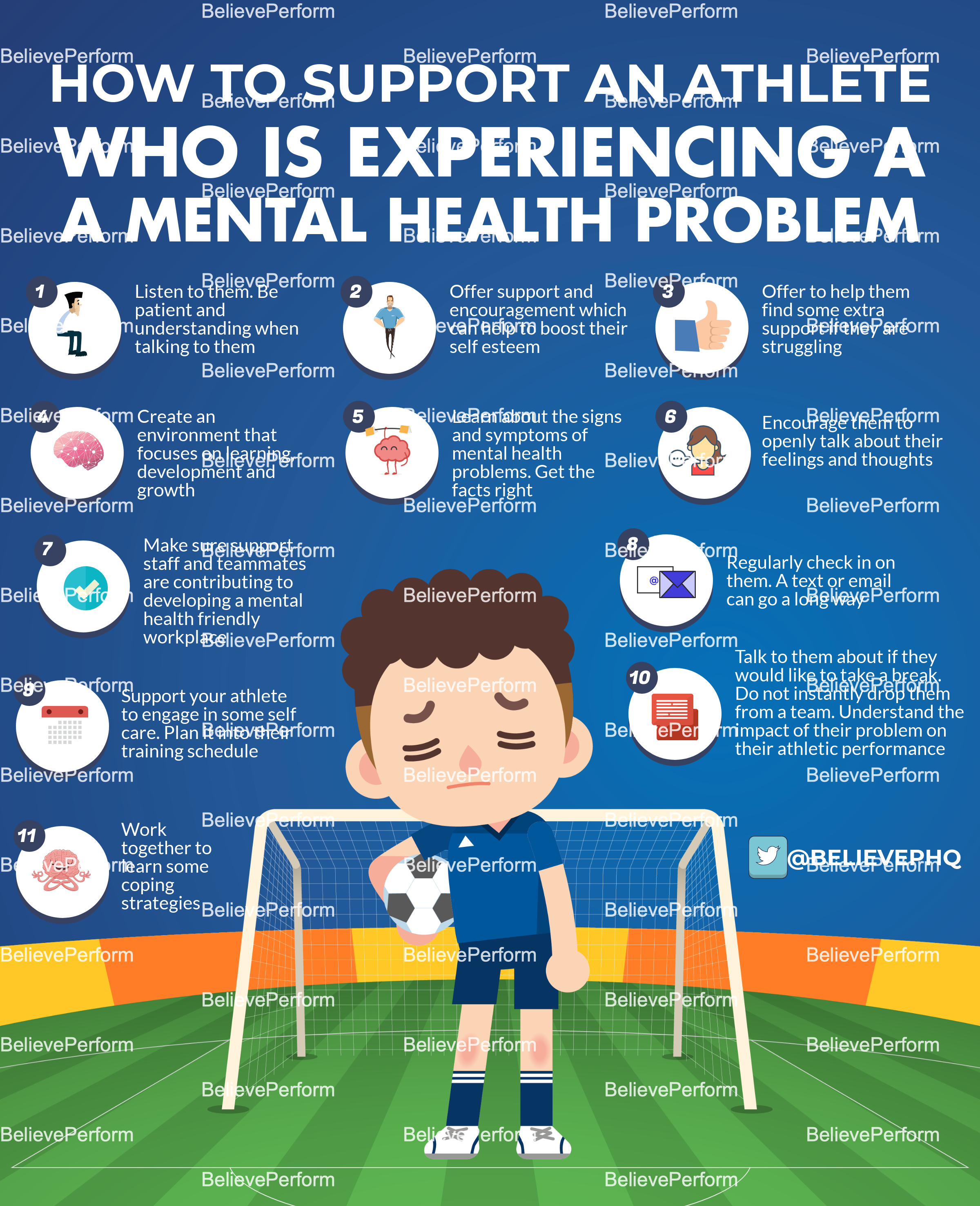
To effectively manage and mitigate depression in athletic environments, key stakeholders must take intentional, coordinated action:
- For Athletes:
- Separate your self-worth as a human being from your performance, statistics, and athletic outcomes.
- Build personal interests, academic pursuits, or creative hobbies outside your sport to maintain identity balance.
- Report psychological distress, persistent fatigue, or changes in mood to a sports medicine doctor, counselor, or clinical psychologist early.
- For Coaches and Trainers:
- Monitor athletes for behavioral shifts, chronic soreness, or unexpected drops in performance, treating these as potential signs of psychological strain rather than lack of effort.
- Establish clear referral pathways to licensed mental health professionals and assure athletes that seeking help will not result in punitive actions regarding playing time.
- Foster a team culture that values physical and mental recovery alongside intensive physical preparation.
- For Parents and Families:
- Praise effort, character, and personal development rather than focusing exclusively on athletic victories, rankings, or performance statistics.
- Encourage young athletes to explore diverse non-athletic hobbies, friendships, and academic pursuits.
- Recognize signs of burnout and support your athlete if they require time off for physical and psychological recovery.