The average athletic coach salary in 2026 ranges from $45,000 to $95,000 for most full-time positions in schools and local organizations. However, earnings vary drastically based on the level of competition, with elite professional and collegiate head coaches earning millions, while part-time youth coaches may receive small seasonal stipends.
The landscape of athletic coaching has undergone significant shifts as we move through 2026. While the fundamental passion for player development remains the same, the financial structures supporting these roles have evolved. Increased media rights deals at the collegiate level and the continued professionalization of youth sports academies have created a broader spectrum of earning potential than ever before. Understanding where you fit within this spectrum requires a deep dive into the variables of geography, experience, and the specific tier of the sporting world in which you operate.
Primary Factors Influencing Athletic Coach Salaries
Several core variables dictate the earning potential of an athletic coach. It is rarely a "one size fits all" figure, as the responsibilities of a coach can range from basic physical education to managing a multi-million dollar athletic brand.
Level of Competition
This is the most significant determinant of salary. A head coach for an NFL or NBA team is essentially a CEO of a high-revenue enterprise, whereas a high school coach is often a teacher first and a coach second.
- Professional Leagues: Coaches in the "Big Four" (NFL, NBA, MLB, NHL) command the highest salaries, often exceeding $5 million annually for head coaches.
- Collegiate Level: NCAA Division I coaches, particularly in football and basketball, often earn seven-figure salaries. Division II and III coaches usually earn salaries comparable to faculty members, often between $50,000 and $90,000.
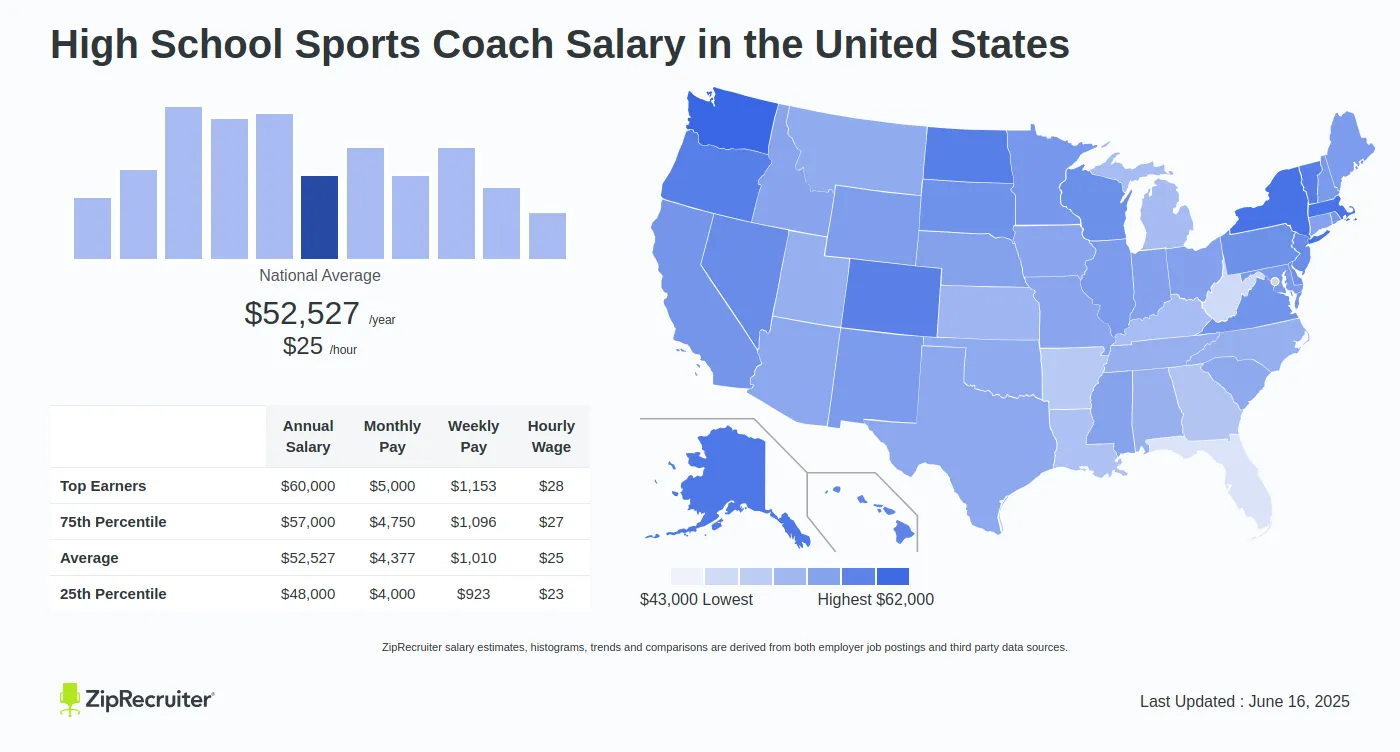
- Secondary Schools: Most high school coaches receive a stipend on top of their teaching salary, typically ranging from $3,000 to $12,000 per season.
Geographic Location and Cost of Living
Where you coach matters as much as who you coach. States with high costs of living, such as California, New York, and Massachusetts, typically offer higher base salaries for school-based coaches to remain competitive. Conversely, in "sports-centric" states like Texas, Florida, or Georgia, the demand for high-quality coaching in sports like football can drive salaries higher even in areas with a lower cost of living.
Years of Experience and Proven Track Record
In the coaching world, your "record" is your resume. A coach with a history of winning championships, improving player statistics, or successfully rebuilding struggling programs can negotiate significantly higher compensation. Entry-level coaches often start as graduate assistants or volunteer assistants, earning very little until they prove their tactical and leadership value.
Professional Coaching Salaries: The Elite Tier
At the professional level, salaries are driven by the massive revenues generated by broadcasting rights and global sponsorships. In 2026, the ceiling for professional head coaches has continued to rise.
Head Coaches in Major Leagues
Head coaches in the NFL and NBA are among the highest-paid individuals in the sports industry. By 2026, top-tier head coaches often see contracts in the $10 million to $15 million per year range. These contracts are usually guaranteed, providing a level of financial security that is rare in other coaching tiers. Assistant coaches at this level also earn substantial incomes, with coordinators in the NFL often earning between $1 million and $3 million annually.
The Rise of Specialized Coaching
The professional level has seen a surge in "micro-coaching" roles. In 2026, teams employ specialized coaches for skills such as "shot mechanics" in basketball, "edge rushing" in football, or "mental performance" across all sports. These specialized roles typically pay between $150,000 and $400,000, depending on the coach's specific expertise and the team's budget.
Collegiate Coaching: The Great Divide
The financial landscape of collegiate coaching is characterized by a massive gap between high-revenue programs and smaller institutions.
NCAA Division I (FBS)
For major programs, the athletic coach salary is often the highest expense on the university's payroll. With the 2026 landscape including expanded playoffs and massive conference realignment, the pressure to win has pushed head coach salaries for football and men's basketball into the $4 million to $12 million range at "Power Four" schools. Even "Group of Five" head coaches now frequently earn between $600,000 and $1.5 million.
Division II, Division III, and NAIA
Outside of the high-revenue spotlight, coaching is a stable but more modest profession. Coaches at these levels are often expected to perform multiple roles, such as acting as the Assistant Athletic Director or a faculty member. Salaries here generally track with standard academic pay scales. A head coach at a DIII school in 2026 can expect to earn between $45,000 and $75,000, though elite programs at this level may pay upwards of $100,000.
High School and Youth Sports Coaching
For the vast majority of coaches, the "athletic coach salary" is not a primary living wage but a supplemental one.
The Stipend Model
Most high schools operate on a stipend model. A teacher who also coaches the varsity basketball team will receive their standard teaching salary (averaging $60,000 to $85,000 depending on the state) plus a coaching stipend. In 2026, these stipends have seen moderate inflation-based increases.
| Coaching Level | Typical Annual Salary/Stipend Range (2026) | Primary Responsibility |
|---|---|---|
| Professional Head Coach | $5,000,000 - $15,000,000+ | Team Management & Strategy |
| D1 College Head Coach | $500,000 - $10,000,000+ | Recruiting & Program Building |
| D3 College Head Coach | $45,000 - $85,000 | Player Development & Admin |
| High School Varsity Head | $3,500 - $15,000 (Stipend) | Skill Building & Education |
| Private Academy Coach | $50,000 - $120,000 | Specialized Talent Development |
| Youth Club/Travel Coach | $2,000 - $8,000 (Per Season) | Foundational Fundamentals |
Private Sports Academies
A growing sector in 2026 is the private sports academy. These institutions, which focus entirely on developing elite youth talent for collegiate or pro scouting, hire full-time coaches. Because these are often year-round positions, the salaries are higher than traditional high school roles, typically ranging from $55,000 to $110,000.
Beyond the Base Pay: Bonuses and Benefits
When evaluating an athletic coach salary, the base number often only tells half the story. Total compensation packages frequently include performance-based incentives and lifestyle perks.
Performance Bonuses
At the collegiate and professional levels, contracts are heavily incentivized. Common bonus triggers include:
- Winning Percentages: Reaching a certain number of wins in a season.
- Post-Season Appearance: Bonuses for making playoffs, bowl games, or the NCAA tournament.
- Academic Performance: In college sports, coaches often receive bonuses if their team maintains a high Graduation Success Rate (GSR) or Academic Progress Rate (APR).
- Championships: Significant one-time payments for winning conference or national titles.
Perks and Indirect Compensation
High-level coaching roles often come with perks that significantly reduce personal expenses. These can include:
- Courtesy Cars: Local dealerships often provide vehicles for coaches to use.
- Country Club Memberships: Used for recruiting and fundraising purposes.
- Housing Allowances: Particularly common for coaches moving to high-cost university towns.
- Apparel Contracts: Personal endorsement deals with brands like Nike, Adidas, or Under Armour.
Education and Certification Requirements
Increasing your earning potential as an athletic coach usually requires specific credentials. While "who you know" matters in sports, "what you know" (and can prove) is what justifies a higher salary.
- Bachelor’s Degree: Most full-time coaching positions at the high school level and above require at least a bachelor’s degree, often in sports management, kinesiology, or physical education.
- Teaching Certification: For those coaching in the public school system, a valid teaching license is frequently mandatory.
- Sport-Specific Licenses: Organizations like the U.S. Soccer Federation (USSF) or the National Professional Coaches Association offer tiered licensing. Higher-tier licenses (e.g., USSF "A" License) are often prerequisites for higher-paying club or professional roles.
- First Aid and CPR Certification: This is a non-negotiable safety requirement for almost every coaching role in 2026.
The Impact of Gender and Sport Type on Pay
While progress has been made, disparities still exist in athletic coach salaries based on the sport and the gender of the athletes coached.
Revenue vs. Non-Revenue Sports
In the collegiate world, "revenue sports" (typically football and men’s basketball) command significantly higher coaching salaries. Coaches of "Olympic sports" like swimming, track and field, or volleyball often earn considerably less, even if they are nationally successful. This is primarily due to the funding models of athletic departments which prioritize sports that generate television and ticket revenue.
The Gender Pay Gap
In 2026, the gap between coaches of men's teams and women's teams remains a point of contention. While salaries for coaches of women's professional and collegiate teams have risen—driven by increased viewership and investment—they still generally trail behind their counterparts in men's sports. However, top-tier coaches in women's college basketball now regularly see salaries exceeding $1 million, a milestone that was rare a decade ago.
Frequently Asked Questions
What is the average starting salary for a college coach?
In 2026, a starting assistant coach at a smaller college can expect to earn between $35,000 and $45,000. Many begin as "Graduate Assistants" where the primary compensation is free tuition and a small monthly stipend for living expenses.
Do high school coaches get paid more if they win a championship?
In most public school districts, the stipend is fixed by a collective bargaining agreement or district policy and does not increase based on performance. However, some private schools may offer performance bonuses, and a championship often allows a coach to negotiate a higher stipend at their next school or move into a higher-paying collegiate role.
How much do private, one-on-one athletic coaches charge?
Private coaching has become a lucrative niche. In 2026, specialized skill coaches (such as QB trainers or hitting coaches) often charge between $75 and $200 per hour. Highly successful private coaches in affluent areas can earn over $100,000 annually if they maintain a consistent client base.
Is coaching a stable career path in 2026?
Coaching is famously volatile. While the salary can be high, job security is often tied to team performance. At the professional and D1 levels, "buyout" clauses in contracts provide a financial safety net if a coach is fired before their contract expires, often paying out a significant portion of the remaining salary.
Does a master's degree increase an athletic coach's salary?
Yes, particularly at the collegiate and high school levels. In many school districts, a master’s degree moves a teacher (and thus the teacher-coach) into a higher pay bracket. In college athletics, a master’s degree in Sports Administration or a related field is often preferred for head coaching and administrative roles.
Practical Recommendations for Aspiring Coaches
If you are looking to maximize your earning potential in the coaching field, consider the following actions:
- Diversify Your Skill Set: Don't just learn the X's and O's. Gain proficiency in video analysis software, data analytics, and sports psychology. These technical skills are highly valued in 2026.
- Network Strategically: Coaching is an industry built on relationships. Attend national conventions (like the AFCA for football or the NABC for basketball) to meet athletic directors and head coaches.
- Obtain National Certifications: Beyond your degree, earn the highest level of certification offered by your sport’s national governing body.
- Consider Administrative Roles: If you hit a salary ceiling in coaching, moving into an Athletic Director or Director of Operations role can often provide a higher base salary and more long-term stability.