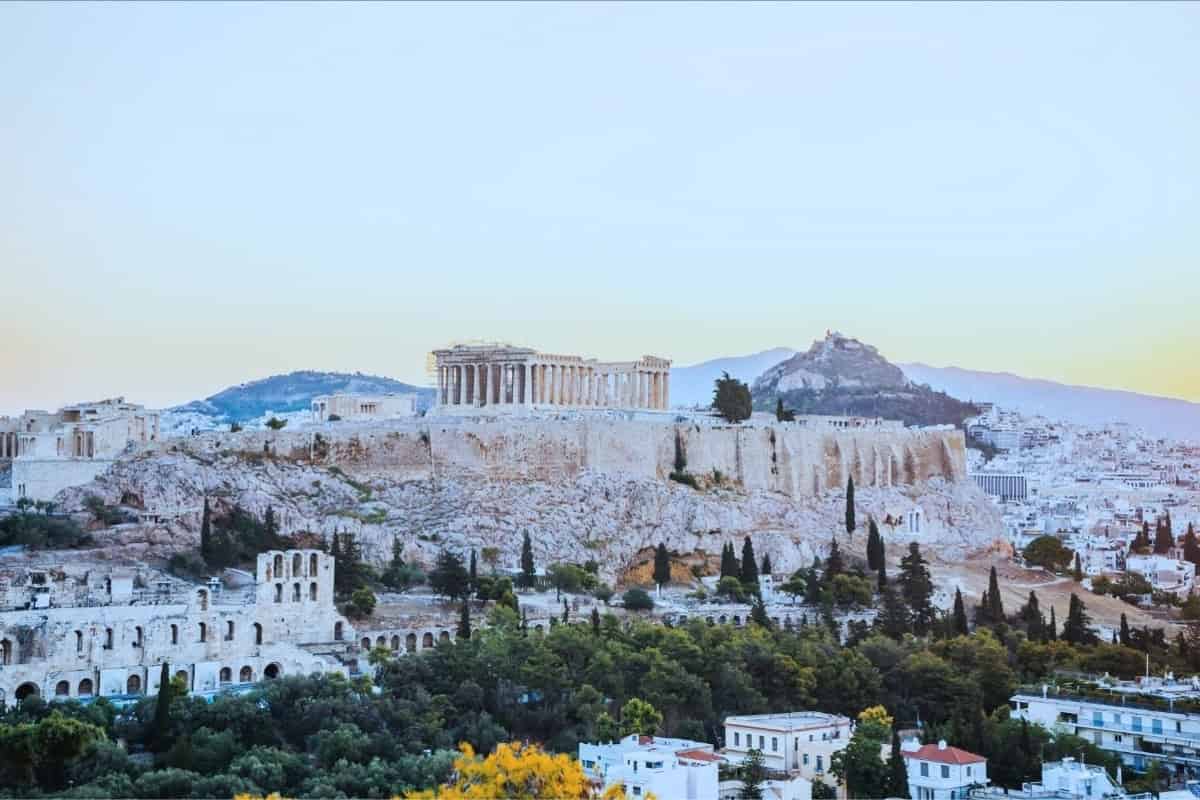
Athens is the capital city of the sovereign nation of Greece; it is not an independent country. While ancient history often highlights Athens as a powerful, self-governing city-state, in the modern geopolitical landscape of 2026, it serves as the administrative, economic, and cultural heart of the Hellenic Republic.
To understand why the distinction between a city and a country is so vital in the case of Athens, one must look at the evolution of governance from the classical "polis" to the modern nation-state. This confusion often stems from the city's historical legacy, where for centuries, "Athens" was indeed a primary political actor on the global stage, independent of a larger national entity. However, today, Athens is one of many municipalities within Greece, governed by national laws and international treaties signed by the Greek government.
The Geopolitical Status of Athens in 2026
As of 2026, Athens remains the preeminent urban center of the Mediterranean, but its status is strictly that of a capital city. Sovereignty—the power of a state to govern itself and others—rests with the Hellenic Republic. Athens is the seat of the Greek Parliament (the Vouli), the residence of the President, and the base for all governmental ministries.
The distinction is more than just a matter of terminology; it defines how the world interacts with the region. When international leaders visit the Parthenon or meet at the Maximos Mansion, they are engaging with the Greek state. Athens does not issue its own passports, maintain its own separate military, or hold a seat at the United Nations. These are all functions of Greece, the country.
Defining the Hellenic Republic
Greece, officially known as the Hellenic Republic, is a member of the European Union, NATO, and the United Nations. It is a parliamentary republic located at the crossroads of Europe, Asia, and Africa. The country is divided into several administrative regions, with Athens located in the Attica region.
The city acts as the "metropolis," but it is subject to the constitutional framework of the Greek state. This means that while the Mayor of Athens manages local urban issues—such as waste management, local parks, and city infrastructure—national issues like defense, foreign policy, and healthcare funding are managed by the national government based within the city.
Historical Context: Why the Confusion Persists
The primary reason people occasionally ask if Athens is a country is rooted in the "Polis" system of Ancient Greece. In the 5th century BC, the concept of a unified "Greece" as a single country did not exist in the modern sense. Instead, the Greek world was a collection of independent city-states, or poleis.
The Ancient City-State (Polis)
Ancient Athens was a sovereign entity. It had its own coinage, its own navy, its own foreign policy, and its own unique form of government (notably the birth of democracy). In that era, calling Athens a "country" would have been functionally accurate. It fought wars against other city-states like Sparta and formed alliances like the Delian League.
The legacy of these independent city-states is so profound in Western education that many people inadvertently carry that historical framework into the present. However, the era of the independent Greek city-state effectively ended with the rise of Macedon under Philip II and Alexander the Great, and was further dissolved through the Roman, Byzantine, and Ottoman periods.
The Birth of the Modern Greek State
The modern nation-state of Greece was established in the 19th century following the Greek War of Independence against the Ottoman Empire. Initially, the capital was not Athens but Nafplio. Athens was selected as the capital in 1834, largely due to its historical prestige and symbolic connection to the classical era. Since that moment, Athens has functioned as the capital of a unified country rather than an independent entity.
Administrative Structure of Athens vs. Greece
In 2026, the administrative landscape of the region is complex. "Athens" can refer to three distinct things:
- The Municipality of Athens: This is the core city center, governed by the Mayor of Athens. It has a population of approximately 640,000 people.
- Athens Urban Area: This includes the municipality and the surrounding suburbs that have physically merged into one continuous urban sprawl.
- The Attica Region: This is the larger administrative "periphery" that includes the entire metropolitan area, the port of Piraeus, and surrounding rural zones.
| Feature | Athens (City) | Greece (Country) |
|---|---|---|
| Sovereign Status | Municipality / Capital | Sovereign Nation-State |
| Head of State | Mayor of Athens | President of the Hellenic Republic |
| Legislative Body | City Council | Hellenic Parliament (Vouli) |
| UN Membership | No | Yes (Since 1945) |
| Currency | Euro (via Greece) | Euro |
| Military | None (National Police only) | Hellenic Armed Forces |
| Passport Issuance | No | Yes |
| Capital | N/A (Is the capital) | Athens |
Modern Governance and International Recognition
In international law, only "states" (countries) are recognized as having the capacity to enter into treaties. If a person says they are "going to the country of Athens," they are making a geographical and political error.
Diplomatic Missions
All foreign embassies are located in Athens, but they are accredited to the Hellenic Republic. For example, the United States Embassy in Athens represents the U.S. government's interests in the country of Greece. If Athens were a country, these embassies would be accredited to the "State of Athens," which is not the case.
Economic Integration
Athens is the economic engine of Greece, contributing nearly half of the national GDP. However, it operates under the fiscal policies of the Greek Ministry of Finance and the monetary policies of the European Central Bank (ECB). The city does not set its own interest rates or manage its own national debt; these are national and eurozone-level functions.
Cities That Are Actually Countries: The Exception
The confusion regarding Athens is often exacerbated by the existence of actual "city-states" in the modern world. There are a few entities that function as both a city and a country, which may lead people to wonder if Athens belongs in this category.
- Singapore: A fully sovereign island nation that is also a city.
- Vatican City: An independent city-state enclaved within Rome, Italy. It is the smallest sovereign state in the world.
- Monaco: A sovereign city-state on the French Riviera.
Athens is fundamentally different from these examples because it is legally and constitutionally integrated into the larger territory of Greece. Unlike Singapore, Athens does not have its own seat at the UN; unlike the Vatican, it does not have its own diplomatic corps separate from the national government.
The Role of Athens in 2026
In the current year of 2026, Athens has reinforced its position as a global hub for technology, shipping, and tourism within the European framework. The city has seen significant infrastructure upgrades, including the expansion of the Athens Metro and the revitalization of the Ellinikon area, which is one of the largest urban redevelopment projects in Europe.
Despite these advancements and its massive influence, the city's identity is inextricably linked to the Greek state. The "Athens" brand is often used interchangeably with "Greece" in cultural contexts—much like "Paris" is often used to represent "France"—but this is a metonymy (using a part to represent the whole) rather than a statement of political independence.
Tourism and Travel Requirements
For travelers in 2026, understanding that Athens is not a country is practically important for visa and entry requirements.
- Schengen Area: Because Athens is part of Greece, it is part of the Schengen Area. Entry requirements for Athens are determined by Greek law and EU regulations (such as the ETIAS system).
- Currency: You use the Euro in Athens because it is the national currency of Greece.
- Laws: While in Athens, you are subject to the national laws of the Hellenic Republic.
Common Misconceptions and Troubleshooting Confusion
Often, the question "Is Athens a country?" arises in academic settings or competitive trivia. It is a common "trick" question because of the historical prominence of the Athenian city-state.
Why do search engines show "Athens is a country" queries?
- Educational Gaps: Students studying ancient history may not yet have learned about the transition to modern nation-states.
- Naming Overlap: There are dozens of cities named "Athens" around the world (notably in Georgia, Ohio, and Texas, USA). While none of these are countries either, the sheer number of "Athens" locations can cause geographic confusion.
- Historical Romanticism: Popular media often portrays Athens as a standalone power (e.g., in movies like 300 or games like Assassin's Creed Odyssey), reinforcing the image of the city as a sovereign power.
Frequently Asked Questions
Is Athens the same as Greece?
No, Athens is the capital city of Greece. Greece is the country, and Athens is its largest city and administrative center. While most of the country's political and economic activity happens in Athens, Greece also includes thousands of islands and a large mainland area with other major cities like Thessaloniki and Patras.
Was Athens ever a country?
Technically, yes, in the form of a "city-state" during antiquity. During the Classical period, Athens was a sovereign entity that governed itself, minted its own money, and engaged in international diplomacy independently. However, the modern concept of a "country" is different from an ancient city-state.
What is the capital of Athens?
Athens does not have a capital because it is a city. Rather, Athens is the capital of the country of Greece.
Do I need a different visa to visit Athens than the rest of Greece?
No. Because Athens is part of the sovereign territory of Greece, a Greek visa (or Schengen visa) grants you access to Athens and all other parts of the country. There are no internal borders or separate visa requirements for the city.
Can Athens become a country again?
There is no modern political movement or legal basis for Athens to secede from Greece and become an independent city-state. The city is deeply integrated into the Greek national identity, economy, and legal system.
Summary of Key Facts
- Country: Greece (Hellenic Republic)
- Status of Athens: Capital City
- Region: Attica
- Established as Modern Capital: 1834
- Governance: Municipality within a Republic
Recommendation for Researchers and Travelers
When referencing Athens in professional, academic, or travel contexts in 2026, always identify it as "Athens, Greece." This clarifies the relationship between the city and its sovereign state. If you are researching laws, taxes, or immigration, look to the official portals of the Hellenic Republic, as the municipality of Athens does not have the jurisdiction to set these national-level policies. For those interested in the historical aspect of Athens as a "country," focusing on the Classical period (5th–4th century BC) will provide the most accurate context for its era of true sovereignty.