To qualify for a specific career path, or "rating," in the United States Navy, you must achieve specific composite scores on the Armed Services Vocational Aptitude Battery (ASVAB). While your overall AFQT score determines enlistment eligibility, individual line scores in categories like mathematics, science, and mechanics dictate which specific technical roles you are qualified to perform.
Understanding the ASVAB and Navy Career Placement
As we move through 2026, the Navy remains one of the most technologically advanced branches of the military. Consequently, the ASVAB is not merely a pass/fail entrance exam; it is a sophisticated diagnostic tool used to predict your success in various technical training programs, known as "A-Schools." Every job in the Navy is called a rating, and every rating has a unique set of academic requirements based on the skills needed for that role.
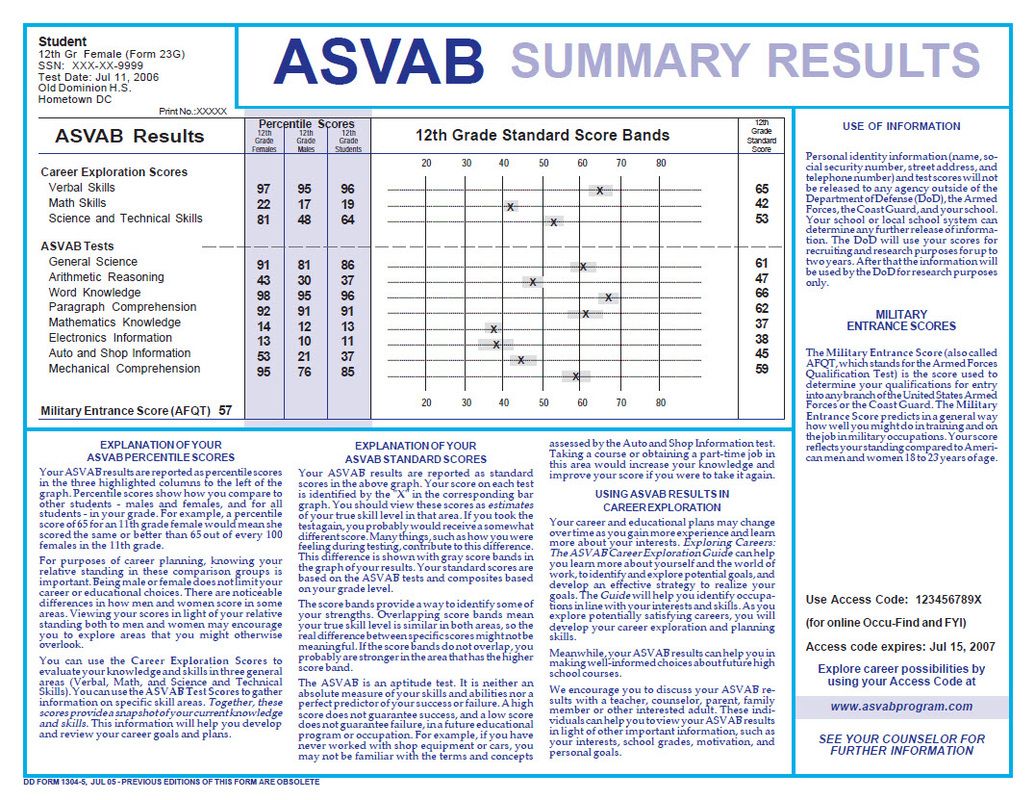
When you take the ASVAB, you receive several different types of scores. The most well-known is the Armed Forces Qualification Test (AFQT) score. This is a percentile score ranging from 1 to 99, which compares your performance to a reference group of test-takers. To enlist in the Navy as a high school graduate, you generally need a minimum AFQT of 31. However, the AFQT is only used for enlistment eligibility; it does not determine what job you will do.
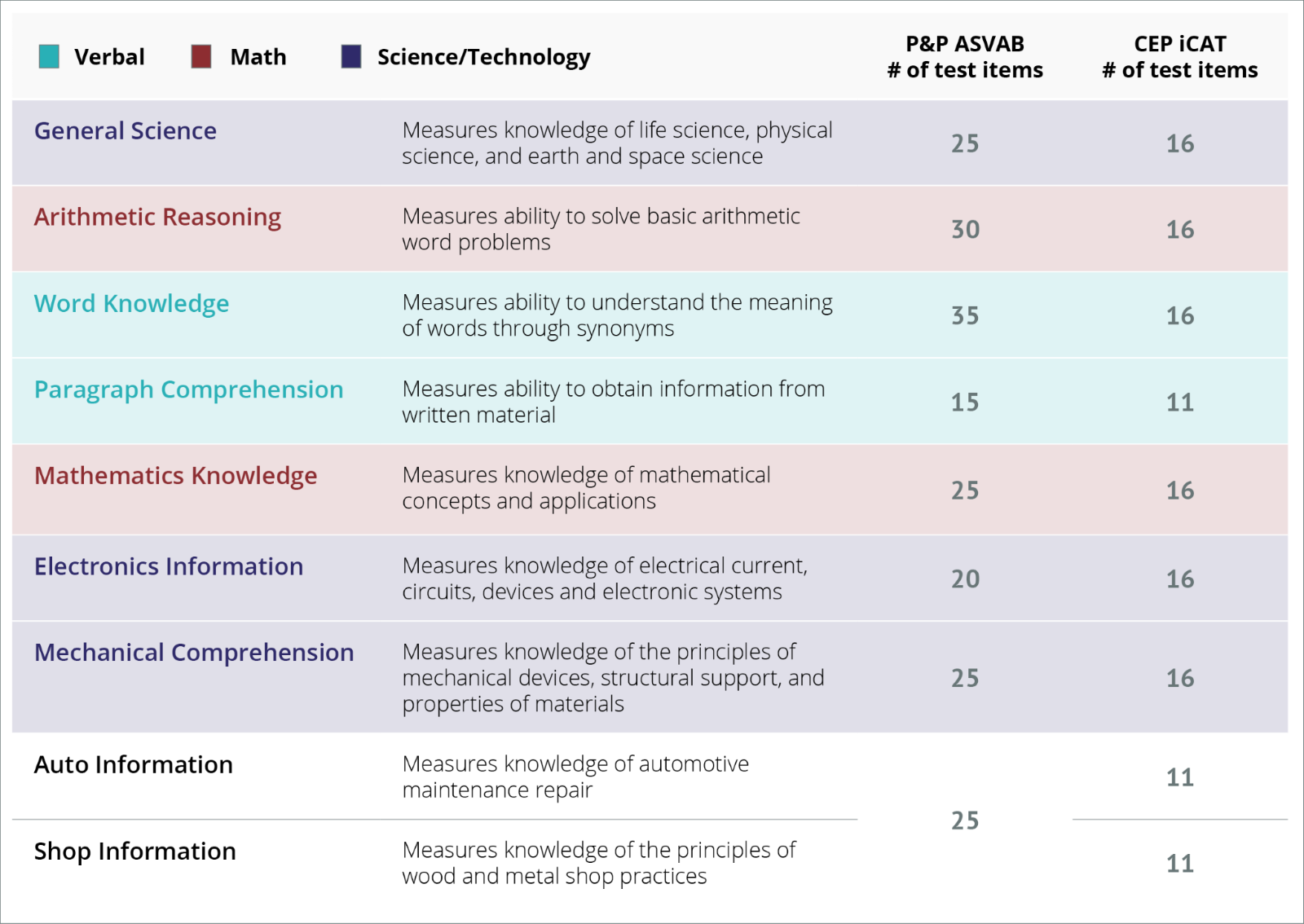
For job placement, the Navy looks at Line Scores. These are individual scores from the ten subtests that make up the ASVAB:
- General Science (GS): Knowledge of physical and biological sciences.
- Arithmetic Reasoning (AR): Ability to solve basic arithmetic word problems.
- Word Knowledge (WK): Ability to understand the meaning of words through synonyms.
- Paragraph Comprehension (PC): Ability to obtain information from written passages.
- Mathematics Knowledge (MK): Knowledge of mathematical concepts and applications.
- Electronics Information (EI): Knowledge of electricity and electronics.
- Auto and Shop Information (AS): Knowledge of automotive maintenance and shop tools.
- Mechanical Comprehension (MC): Knowledge of mechanical and physical principles.
- Assembling Objects (AO): Ability to determine how an object will look when put together.
- Verbal Expression (VE): A scaled score derived from the sum of Word Knowledge and Paragraph Comprehension.
How the Navy Calculates Composite Scores
The Navy combines these individual subtest scores into formulas to determine if you are qualified for a specific rating. For example, if you want to be an Information Systems Technician (IT), the Navy doesn't just look at your science score; they look at a combination of your verbal, math, and electronics scores.
Most Navy ratings offer two or three different "paths" (formulas) to qualify. If you meet the requirement for any one of those formulas, you are technically eligible for that job. It is important to note that these scores are subject to change based on the Navy’s current personnel needs and the difficulty of the training curriculum.
The Significance of the VE (Verbal Expression) Score
In almost every Navy score formula, you will see the "VE" score. This is one of the most critical components of the ASVAB. The Navy calculates VE by adding your Word Knowledge (WK) and Paragraph Comprehension (PC) raw scores and then converting that sum to a standard score. Because communication and manual comprehension are vital for safety and operations at sea, a high VE score is a prerequisite for nearly every highly technical rating.
ASVAB Score Requirements for Popular Navy Ratings
The following list breaks down the 2026 requirements for some of the most sought-after ratings in the fleet. These are categorized by the general nature of the work.
Medical and Administrative Ratings
These roles focus on healthcare, personnel management, and logistics. They typically require high scores in verbal expression and general science.
- Hospital Corpsman (HM): One of the most popular ratings, HMs provide medical care to Sailors and Marines.
- Requirement: GS + MK + VE = 156.
- Personnel Specialist (PS): These individuals manage Navy pay, records, and benefits.
- Requirement: MK + VE = 103 or CS (Cipher Speed) + MK + VE = 154.
- Logistics Specialist (LS): Responsible for the Navy’s massive supply chain.
- Requirement: VE + AR = 103 or VE + MK + AO = 154.
Engineering and Applied Technology
For those who enjoy working with their hands and understanding how machines function, these ratings focus on the mechanical "heart" of the ship.
- Machinist’s Mate (MM): MMs operate and maintain steam turbines and propulsion machinery.
- Requirement: VE + AR + MK + AS = 210 or VE + AR + MK + MC = 210.
- Hull Maintenance Technician (HT): The Navy’s welders and metalworkers.
- Requirement: VE + AR + MK + AS = 205.
- Gas Turbine Systems Technician (GS): Responsible for the jet-engine-like turbines that power many modern surface ships.
- Requirement: VE + AR + MK + EI = 210 or VE + AR + MK + MC = 210.
Intelligence, Cyber, and Electronics
As the Navy focuses more on "Information Warfare" in 2026, these ratings have become extremely competitive, often requiring high scores in math and electronics.
- Cryptologic Technician Networks (CTN): Now often referred to as Cyber Warfare Technicians, they focus on offensive and defensive cyber operations.
- Requirement: AR + MK + EI + VE = 235 or AR + MK + CT (Cyber Test) = (Varies by year).
- Information Systems Technician (IT): They manage the Navy’s networks and communication systems.
- Requirement: AR + MK + EI + VE = 222 or VE + AR + MK + MC = 222.
- Electronics Technician (ET): They maintain everything from radar systems to navigation equipment.
- Requirement: AR + MK + EI + GS = 218.
Aviation Ratings
Aviation ratings are highly technical and require a strong understanding of physics and mechanical principles.
- Aviation Machinist’s Mate (AD): They maintain the engines of Navy aircraft.
- Requirement: VE + AR + MK + AS = 210 or VE + AR + MK + MC = 210.
- Aviation Electronics Technician (AT): They troubleshoot the complex computer systems on aircraft.
- Requirement: AR + MK + EI + GS = 218.
Master Table of Navy ASVAB Requirements (2026)
| Rating (Job) | Abbreviation | Common Score Formula | Minimum Required |
|---|---|---|---|
| Air Traffic Controller | AC | VE + AR + MK + MC | 220 |
| Aviation Boatswain's Mate | AB | VE + AR + MK + AS | 185 |
| Cryptologic Technician (Collection) | CTR | VE + AR + MK | 162 |
| Damage Controlman | DC | VE + AR + MK + AS | 200 |
| Electrician's Mate | EM | VE + AR + MK + EI | 210 |
| Intelligence Specialist | IS | VE + AR + MK + GS | 215 |
| Master-at-Arms (Police) | MA | VE + AR = 100 | 100 |
| Navy Diver | ND | GS + MC + EI = 165 | 165 |
| Sonar Technician (Surface) | STG | AR + MK + EI + GS | 218 |
| Special Warfare Operator (SEAL) | SO | GS + MC + EI = 170 | 170 (plus PST) |
| Yeoman | YN | VE + MK = 105 | 105 |
Note: Formulas and scores can change based on Department of Defense (DoD) directives. Always verify with an official Navy recruiter.
The Navy Nuclear Field (NUC): The Highest Standards
The Navy’s Nuclear Power Program remains the most academically demanding enlisted program in the U.S. military. Nuclear-trained Sailors operate the reactors on aircraft carriers and submarines. Because of the extreme difficulty of the training at the Nuclear Power School in Charleston, SC, the entrance requirements are exceptionally high.
To qualify for the Nuclear Field (NUC), candidates typically need:
- High ASVAB Scores: Usually a combination of AR + MK + EI + GS + VE that exceeds 235 or 252 depending on the specific track.
- The NAPT: If a candidate's ASVAB scores are close but not quite at the "Nuclear Standard," they may be required to take the Navy Advanced Programs Test (NAPT). This is a specialized exam focusing heavily on physics and advanced mathematics.
Candidates for the Nuclear field must also be U.S. citizens and eligible for a Secret security clearance. The Navy often provides substantial enlistment bonuses for this rating due to the high score requirements and the intensity of the work.
What Happens if Your Scores are Too Low?
If you take the ASVAB and find that you do not qualify for your dream rating, you have several options. In 2026, the Navy is focused on "Whole Person" assessment, but the line scores remain the primary gatekeeper.
ASVAB Retesting
You can retake the ASVAB, but there are strict rules regarding the timeframe. After your first attempt, you must wait 30 days to retake the test. If you need a third attempt, you must wait another 30 days. After the third attempt, you must wait six calendar months. It is important to note that your most recent score is the one that counts, not necessarily your highest score. If you retake the test and score lower, you must use that lower score.
Academic Waivers
In some instances, if you are only one or two points shy of a requirement for a specific rating, a recruiter may request a "line score waiver." This is more common if the Navy is currently experiencing a shortage in that particular rating. However, waivers are rarely granted for highly technical fields like Nuclear, Intelligence, or Special Warfare.
Navy ASVAB Prep Programs
By 2026, the Navy has expanded programs like the Future Sailor Preparatory Course. These are designed for applicants who meet the minimum AFQT requirements but need a boost in specific line scores to qualify for more technical ratings. These programs provide intensive academic tutoring before the recruit heads to basic training.
Strategies to Improve Your Line Scores
If you are aiming for a rating like Intelligence Specialist (IS) or Cyber Warfare Technician (CWT), you cannot afford to leave your scores to chance. Since the formulas rely on specific categories, you should focus your study efforts on the subtests that matter most for your desired job.
- Identify the Formulas: Use the table above to find the formula for your target rating. If the rating requires AR + MK + GS, spend 70% of your study time on math and science.
- Focus on "VE": Since Word Knowledge and Paragraph Comprehension are part of almost every formula, improving your vocabulary and reading speed is the fastest way to raise your scores across the board.
- Use Official Resources: Utilize the official ASVAB site and reputable study guides updated for the 2026 testing environment.
- Take Practice Tests: The ASVAB is a timed test. Taking practice exams under timed conditions helps reduce anxiety and improves your "pacing," which is often why qualified candidates score lower than expected.
FAQs About Navy ASVAB Scores
Can I change my rating later if I improve my scores?
Yes. This is known as "cross-rating." Once you are in the Navy, you can retake the ASVAB (usually the AFCT, which is the version for active-duty members) to qualify for a different job. However, cross-rating depends on whether your current rating is overstaffed and the new rating has openings.
Does the Navy care about my AFQT or just my line scores?
Both matter, but for different reasons. The AFQT (the percentile score) determines if you can join the Navy at all. Once you are "in the door," the line scores are the only thing the Navy classifier uses to see which jobs you are eligible to sign for at MEPS (Military Entrance Processing Station).
Are ASVAB scores different for the Navy Reserve?
No. The ASVAB requirements for specific ratings are the same for both Active Duty and Navy Reserve components. The training (A-School) is identical for both, so the academic requirements remain the same.
Is the "Cyber Test" part of the ASVAB?
The Cyber Test (ICTL) is an additional assessment often given alongside the ASVAB at MEPS. For ratings like CTN (CWT) and IT, your performance on the Cyber Test can sometimes be used in conjunction with your ASVAB scores to qualify you for the field even if your standard electronics scores are slightly lower.
Do I need a high score to join the SEALs?
Yes. While Special Warfare (SEAL, SWCC, EOD) is physically demanding, it is also technically rigorous. You need a combined score of GS + MC + EI = 170 or VE + AR + MK + MC = 220. You cannot "muscle your way" into these jobs if you don't have the requisite ASVAB scores.
Final Recommendation for Future Sailors
If you are preparing to head to MEPS in 2026, your most important tool is information. Do not go to the processing station without a clear understanding of the scores required for the jobs you want. Use the formulas provided here to set "target scores" for your practice exams. If you find that your current scores don't align with your career goals, take the time to study and retake the test before you sign a contract. Your rating will define your daily life, your promotion speed, and your career opportunities after the Navy—ensure you qualify for the path that best suits your long-term ambitions.