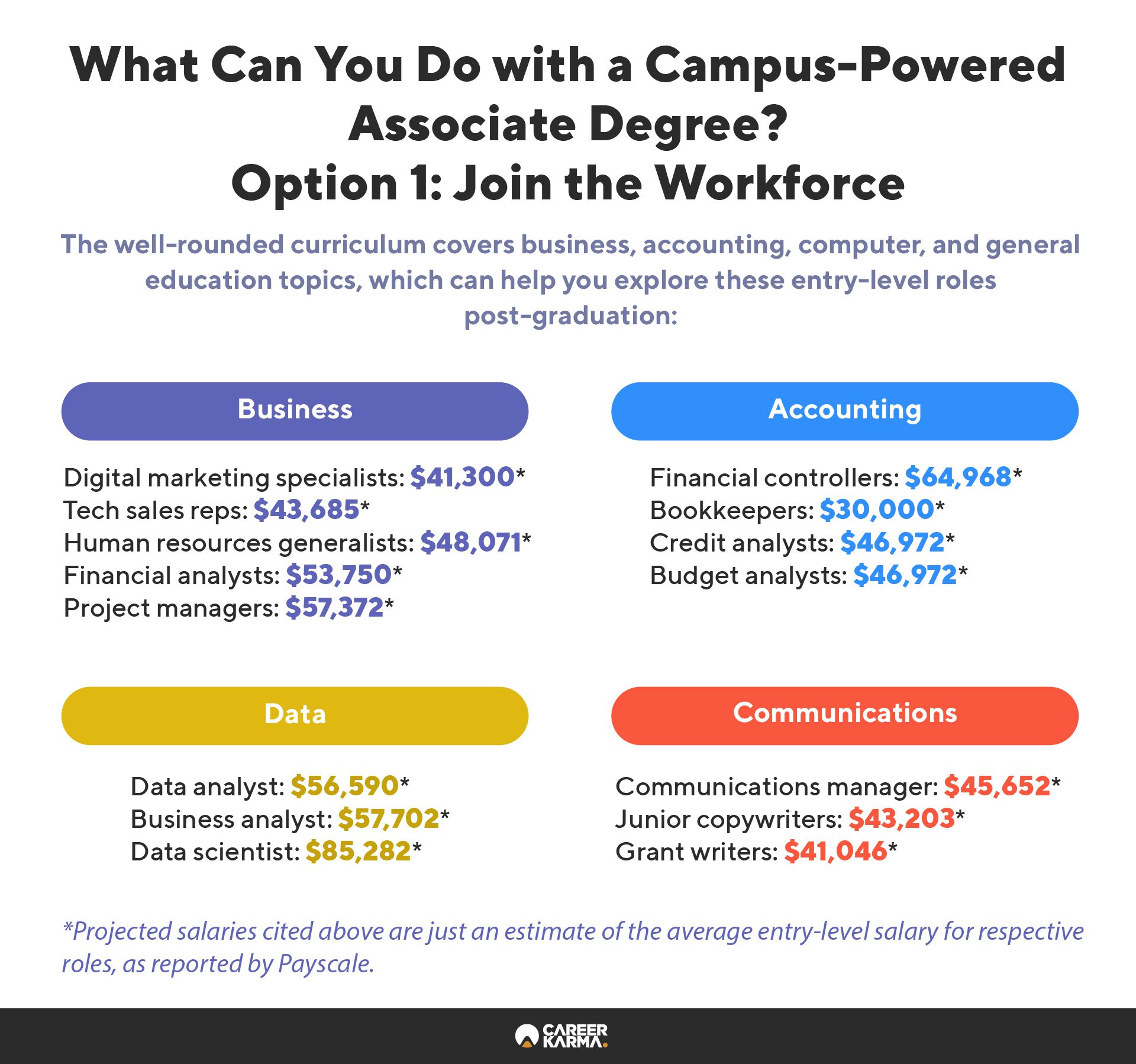
An associate degree in business administration typically qualifies graduates for entry-level positions such as administrative assistant, bookkeeper, customer service manager, and retail supervisor, with average salaries generally ranging from $35,000 to over $55,000 per year depending on experience, geographic location, and specific industry.
Choosing to pursue higher education is a significant personal and financial investment, and for many individuals, an associate degree in business administration serves as a practical, fast-track gateway to the professional world. In a competitive job market, this two-year undergraduate program provides a foundational understanding of core commercial principles, operational management, financial accounting, and organizational behavior. Understanding the career pathways and financial returns associated with this credential helps prospective students align their academic efforts with realistic employment goals. This comprehensive guide explores the specific roles available to graduates, salary expectations, factors influencing earning potential, and actionable strategies for maximizing career advancement.
Understanding the Value of a Business Administration Associate Degree
A business administration associate degree—typically earned through a community college, technical school, or online university—bridges the gap between high school education and a four-year bachelor's degree. The curriculum is designed to impart versatile competencies that apply across multiple sectors, including retail, healthcare administration, banking, logistics, and human resources.
Unlike specialized technical degrees that train individuals for a single trade, business administration teaches broad, transferable concepts. Students take courses in microeconomics, macroeconomics, business law, financial accounting, marketing principles, and business communication. This broad exposure ensures that graduates are not pigeonholed into a single narrow function. Instead, they develop critical thinking, problem-solving, and communication proficiencies that employers value in entry-level administrative and operational staff. Furthermore, for those planning to continue their education later, an associate degree often serves as a stepping stone, as most or all credits can transfer into a Bachelor of Business Administration (BBA) program.
Top Entry-Level Jobs for Associate Degree Graduates
Graduates with an associate degree in business administration are equipped to step directly into support, coordination, and front-line supervisory roles. Employers across virtually all industries require organized, business-literate professionals to keep daily operations running smoothly. Below are the most common job titles pursued by graduates, along with their primary responsibilities.
Administrative Assistant and Office Manager
Administrative assistants and office managers are the backbone of corporate, medical, and educational environments. They manage internal communications, coordinate schedules, organize corporate travel, oversee office supplies, and maintain filing systems. With a business foundation, these professionals often take on higher-level responsibilities such as drafting correspondence, preparing financial reports, and supervising clerical support staff.
Bookkeeper and Accounting Clerk
Accounting clerks and bookkeepers handle the day-to-day financial ledger entries for businesses. Responsibilities include recording financial transactions, updating statements, processing accounts payable and receivable, and reconciling bank statements. An associate degree provides the necessary grounding in accounting principles to ensure accuracy and compliance with basic financial standards.
Customer Service Manager and Supervisor
Customer service operations require structured leadership to resolve client grievances, train support representatives, and monitor service metrics. Graduates often enter these fields as team leads or assistant managers, utilizing their coursework in organizational communication and consumer behavior to improve client retention and operational efficiency.
Human Resources Assistant
Human resources assistants support the personnel department by scheduling interviews, maintaining employee records, processing onboarding paperwork, and assisting with benefits administration. This role offers a direct entry point into the human resources sector, where professionals can pursue advanced certifications over time.
Retail or Sales Supervisor
Retail and wholesale environments rely on business graduates to supervise floor staff, manage inventory levels, execute visual merchandising strategies, and handle customer escalations. Sales supervisors bridge the gap between upper management and sales associates, driving daily revenue targets.
Salary Expectations and Earning Potential
Compensation for graduates with an associate degree varies widely based on industry, geographic region, prior work history, and job responsibilities. According to data compiled by agencies such as the U.S. Bureau of Labor Statistics (BLS), median annual earnings for administrative and support roles generally sit between $35,000 and $60,000.
| Job Title | Estimated Median Annual Salary | Primary Responsibilities |
|---|---|---|
| Administrative Assistant | $43,000 - $52,000 | Managing schedules, correspondence, and office coordination. |
| Bookkeeper / Accounting Clerk | $45,000 - $55,000 | Recording financial transactions and managing ledgers. |
| Customer Service Supervisor | $40,000 - $58,000 | Overseeing support staff and resolving escalated client issues. |
| Human Resources Assistant | $42,000 - $50,000 | Managing onboarding, employee records, and HR paperwork. |
| Retail Store Manager | $48,000 - $65,000 | Directing store operations, inventory, and sales teams. |
While these figures represent national medians, individual earnings can be significantly higher in metropolitan areas with a high cost of living or within specialized industries such as finance, technology, and healthcare administration.
Key Factors Influencing Salary and Career Growth
Securing an associate degree is only the first step; several external variables dictate how quickly a professional’s salary will increase over time.
Industry Sector
The industry in which a graduate chooses to work plays a monumental role in compensation. For instance, an administrative assistant working in a local non-profit organization may earn a modest starting salary, whereas an administrative coordinator working in corporate finance, legal services, or pharmaceuticals often commands a higher wage due to the specialized nature of the business and higher profit margins.
Geographic Location
Location remains one of the most reliable predictors of salary variance. Major commercial hubs—such as New York, San Francisco, Chicago, and Los Angeles—tend to offer higher salaries to offset the elevated cost of living. Conversely, rural or economically depressed regions may feature lower starting brackets, though remote work opportunities have begun to normalize compensation for digital administrative and customer support positions.
Professional Experience and Soft Skills
Employers frequently reward demonstrated reliability, institutional knowledge, and strong interpersonal communication. Workers who develop advanced proficiency in software suites (such as enterprise resource planning tools, advanced spreadsheets, and customer relationship management software) position themselves for rapid promotion into senior administrative or supervisory roles.
Comparing Associate Degrees with High School Diplomas and Bachelor's Degrees
Evaluating the return on investment requires comparing career outcomes across different educational tiers.
- [High School Diploma]
- Limited entry-level clerical work
- Lower median earnings
- [Associate Degree]
- Specialized administrative / supervisory roles
- Moderate earnings ($35k - $60k)
- [Bachelor's Degree]
- Professional management, analysis, and leadership
- Higher earnings ($60k+)
While a high school diploma restricts candidates to basic clerical or manual labor roles with limited upward mobility, an associate degree unlocks intermediate positions with structured career ladders. On the other hand, a four-year bachelor's degree opens doors to mid-level management, financial analysis, and corporate leadership roles. However, an associate degree offers a balanced compromise: it requires significantly less time and financial debt than a bachelor's degree while yielding an immediate boost in earning potential.
Strategies for Maximizing Career Advancement
Professionals entering the workforce with an associate degree can employ several tactical approaches to accelerate their career trajectory and increase their earning potential:
- Earn Industry-Specific Certifications: Supplementing an academic degree with credentials such as Certified Administrative Professional (CAP) or basic project management certifications signals dedication and specialized expertise to employers.
- Leverage Tuition Assistance Programs: Many mid-to-large corporations offer tuition reimbursement. Employees can utilize these benefits to complete their bachelor's degree while gaining valuable full-time work experience.
- Master Modern Software Tools: Proficiency in modern business intelligence, database management, and cloud collaboration tools makes a candidate indispensable to office operations.
- Build a Professional Network: Engaging with local chambers of business, alumni associations, and professional networking platforms opens doors to unadvertised job openings and mentorship opportunities.
Frequently Asked Questions
Can I get a management job with an associate degree in business administration?
Yes, though typically at the entry-to-mid supervisory level. Positions such as shift supervisor, office manager, assistant retail manager, and customer service team lead are readily accessible. Executive-level management positions usually require a bachelor's or master's degree alongside extensive experience.
Is an online associate degree in business administration respected by employers?
Employers increasingly view accredited online degrees on par with traditional campus-based programs. The critical factor is ensuring that the institution holds proper regional or national accreditation recognized by the Department of Education.
How long does it take to complete an associate degree in business administration?
A traditional full-time student can complete the program in two years. However, many institutions offer accelerated courses, summer terms, or part-time tracks, allowing working adults to finish in 18 months or spread their coursework over a longer timeframe.
What are the highest-paying industries for business associate graduates?
Finance, insurance, corporate headquarters, healthcare administration, and manufacturing generally offer the highest compensation packages for administrative and operational support staff compared to retail, hospitality, and non-profit sectors.
Can credits from an associate degree transfer to a four-year university?
Most accredited community colleges and universities maintain articulation agreements that allow seamless transfer of general education and core business credits directly into a bachelor’s degree program, saving students substantial tuition costs.
Next Actions and Conclusion
Securing an associate degree in business administration provides a versatile foundation for a stable, rewarding career in the corporate world. To capitalize on this credential, begin by auditing your current technical and interpersonal skills, identifying high-paying industries within your geographic area or remote market, and tailoring your resume to highlight administrative efficiency, financial literacy, and leadership potential. Whether you choose to enter the workforce immediately or use the degree as a stepping stone toward a four-year program, proactive career planning ensures maximum return on your educational investment.