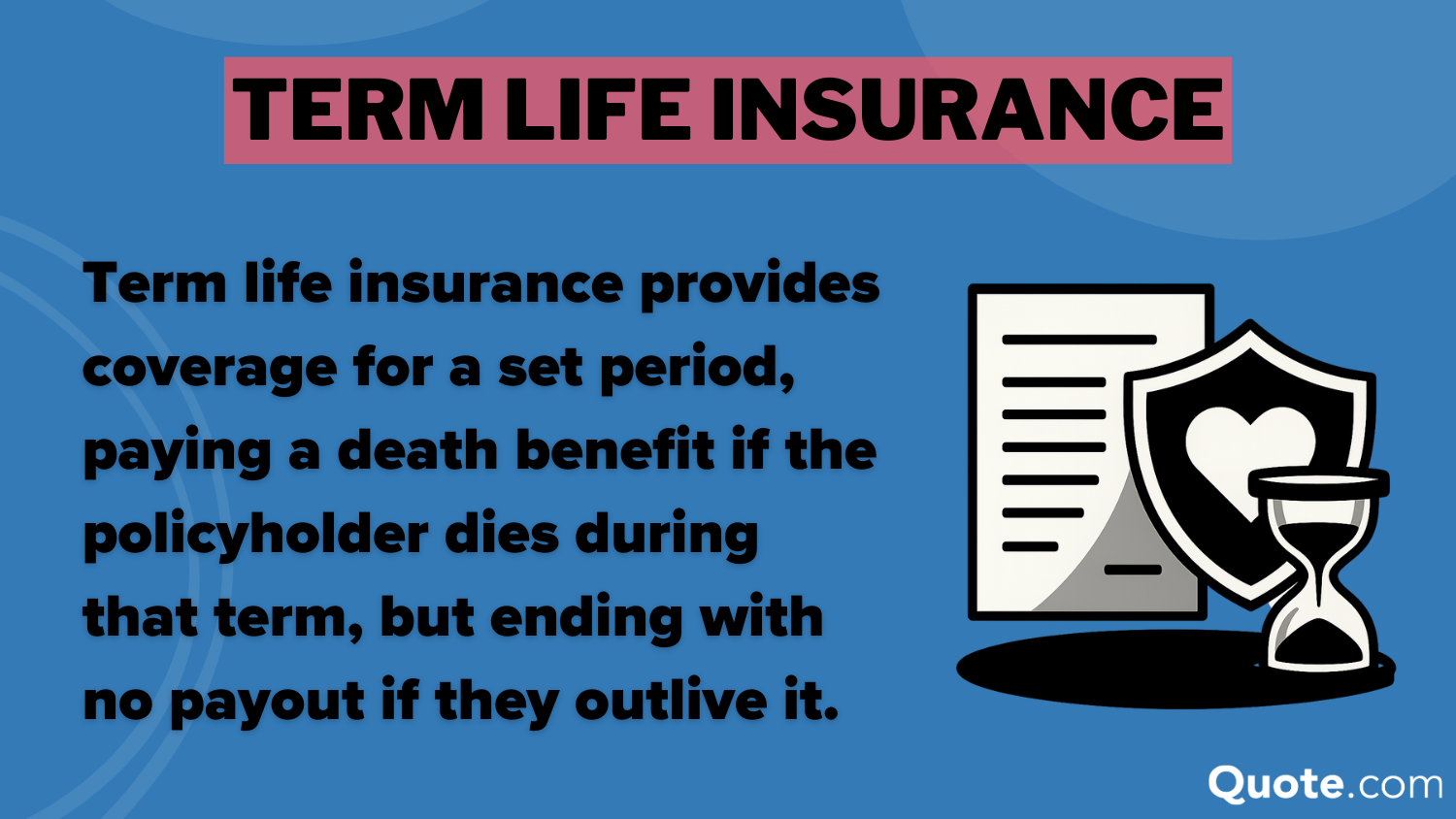
Yes, life insurance policies usually cover death by suicide, but only if the policy has been active past the contract's suicide exclusion clause period, which typically lasts two years. If suicide occurs within this initial exclusion window, the insurer will deny the death benefit claim but generally refund all premiums paid during that time.
Immediate Crisis Support If you or someone you know is struggling with distress or thoughts of self-harm, please know that help is available. In the United States, you can call or text 988 to reach the 988 Suicide & Crisis Lifeline, available 24 hours a day, 7 days a week. Services are free and confidential. International readers can find localized support resources through the International Association for Suicide Prevention (IASP).
Understanding the Life Insurance Suicide Exclusion Clause
Life insurance contracts are legal agreements designed to provide financial security to designated beneficiaries upon the insured individual's death. However, virtually every individual term and permanent life insurance policy includes specific policy provisions governing self-inflicted harm. The primary mechanism insurers use to manage risk in these situations is the suicide exclusion clause.
The purpose of a suicide clause is to prevent individuals from purchasing a large life insurance policy with the immediate intention of ending their life to secure a financial payout for family members. Insurance companies operate on actuarial risk modeling, and standard premiums do not cover deliberate, immediate financial anti-selection.
The Standard Two-Year Exclusion Window
In most jurisdictions across North America, Europe, and Asia-Pacific, the standard suicide exclusion clause remains active for two years from the official effective date of the policy (or the date of policy reinstatement).
During this designated exclusion window:
- Death by suicide is excluded from coverage: If the policyholder dies by suicide within 730 days (two full years) of the policy's effective date, the insurance carrier will not pay out the face value (death benefit) of the policy.
- Coverage begins automatically after expiration: Once the two-year period passes, the suicide exclusion clause expires entirely. After this milestone, if the insured dies by suicide, the policy treats the claim like any other covered cause of death, such as illness or an accident, provided all premium payments are current and no fraud occurred during application.
What Happens If Death Occurs During the Exclusion Period?
When a policyholder dies by suicide while the exclusion clause is still active, the beneficiary does not receive the full death benefit. However, the insurer does not simply retain the money collected. Under standard statutory insurance codes and contract law:
- Refund of Premiums Paid: The insurance company is contractually obligated to refund all premiums paid by the policyholder from the policy inception date up to the date of death.
- Deductions: Any outstanding policy loans, unpaid fees, or withdrawals taken against the policy's cash value will be deducted from the total refunded premium amount.
- Payout Recipient: The refunded premium amount is paid directly to the designated beneficiary or to the estate of the deceased if no primary or contingent beneficiary is named.
Exceptions and State-Specific Regulations
Insurance regulations are governed at state or national administrative levels, resulting in minor regional variations in how suicide clauses operate:
- One-Year Exclusion States: In some jurisdictions, statutory provisions cap the maximum suicide exclusion period at one year. For example, under Missouri state law (RSMo § 376.620), insurers operating in Missouri cannot contest a claim based on suicide after the policy has been in force for one year, unless the insurer can prove the policyholder contemplated suicide at the exact time of applying for the policy.
- Policy Reinstatement Rules: If a policy lapses due to non-payment of premiums and the policyholder subsequently reinstates it, the two-year suicide exclusion clock usually restarts on the official date of reinstatement.
- Policy Coverage Increases: If a policyholder increases their coverage amount (for instance, raising a term policy from $250,000 to $1,000,000), a new two-year exclusion period typically applies specifically to the additional $750,000 of coverage, while the original $250,000 remains covered under the original timeline.
The Difference Between the Suicide Clause and the Contestability Period
It is common to confuse the suicide clause with the incontestability clause (or contestability period), as both typically last two years from the policy start date. However, they serve distinct legal functions under insurance law.
| Feature / Provision | Initial Two-Year Window | After Two Years Elapse |
|---|---|---|
| Suicide Clause | Excludes self-inflicted death; refunds premiums paid. | EXPIRED — Death benefit paid in full for covered deaths. |
| Contestability Period | Allows insurer to review application for material misrep. | EXPIRED — Claims cannot be denied for honest mistakes. |
How the Contestability Period Operates
The contestability period gives the insurance company the legal right to review, investigate, and contest the validity of a claim if the insured dies within the first two years of policy issuance. During this window, the insurer examines whether the applicant provided false, inaccurate, or incomplete information on their initial medical questionnaire or application.
If an insured dies by suicide during the contestability period, the insurer will evaluate the claim under both provisions:
- Application Verification: Did the applicant conceal key medical information during underwriting?
- Suicide Verification: Did the death occur within the suicide exclusion timeframe?
Material Misrepresentation on Applications
A critical issue arises when an applicant omits significant mental health history on their initial underwriting application. Life insurance applications routinely ask detailed questions regarding:
- Diagnoses of major depressive disorder, bipolar disorder, anxiety, or schizophrenia.
- Prior hospitalizations or outpatient treatments for mental health conditions.
- History of suicide attempts or self-harm.
- Current or past prescriptions for psychiatric medications.
If an applicant intentionally conceals a history of severe mental illness or prior suicide attempts, the insurer may classify this as material misrepresentation.
If the insured dies after the two-year suicide clause has expired, but the insurer discovers that the applicant committed fraud or material misrepresentation during underwriting, the carrier may attempt to rescind the policy entirely. While the contestability period usually ends after two years, intentional fraudulent misrepresentation in some jurisdictions allows insurers to challenge a claim even after two years have elapsed.
Group Life Insurance vs. Individual Life Insurance Policies
The rules governing death by suicide differ significantly depending on whether the coverage is an individual policy or a group life insurance plan provided through an employer or professional association.
| Feature | Individual Life Insurance | Basic Group Life Insurance (Work) |
|---|---|---|
| Suicide Clause Length | Typically 2 Years | Often Waived / 0 Days |
| Medical Underwriting | Full Underwriting Required | Guaranteed Issue (No Medical Exam) |
| Supplemental Coverage | N/A (Stand-alone contract) | May Subject Extra Coverage to 2 Yrs |
| Policy Portability | Remains Active Anywhere | Terminates Upon Job Separation |
Employer-Provided Basic Group Life Insurance
Basic group life insurance is commonly offered as an employee benefit. Employer-paid basic group plans generally have no suicide exclusion clause.
Because group policies cover a large pool of employees without individual medical underwriting (known as guaranteed issue up to a certain dollar threshold), the insurer spreads the risk across the entire employee population. As a result:
- If an employee covered under a basic group policy dies by suicide—even during their first week or month of employment—the policy typically pays out the full death benefit to the designated beneficiary.
- No medical questions are answered upon enrollment, eliminating issues related to material misrepresentation of mental health history.
Supplemental Voluntary Group Life Insurance
While basic group life coverage rarely excludes suicide, supplemental group life insurance—additional coverage purchased by the employee beyond the employer-paid baseline—often contains a standard two-year suicide exclusion clause.
If an employee buys supplemental coverage (e.g., adding $500,000 on top of a basic $50,000 benefit), the original basic $50,000 benefit will pay out immediately, but the extra $50,000–$500,000 supplemental portion will remain subject to the two-year suicide exclusion clause from the date the additional election took effect.
Portability and Conversion Rules
When an employee leaves a job, they may have the right to convert their group life policy into an individual policy without providing evidence of insurability.
Under standard policy provisions:
- If the group coverage was active for more than two years prior to conversion, the new individual policy usually carries over that tenure, meaning the suicide clause remains expired.
- If the group coverage was active for less than two years, the remaining time of the exclusion period carries over to the converted policy.
Accidental Death and Dismemberment (AD&D) and Supplemental Riders
Many individuals hold Accidental Death and Dismemberment (AD&D) insurance, either as a stand-alone policy or as an optional rider attached to a primary life insurance policy. Understanding the distinct limitations of AD&D coverage is essential.
Why AD&D Policies Exclude Death by Suicide
AD&D policies pay benefits exclusively when a death is caused strictly by an unforeseen, sudden, external accident (such as a motor vehicle collision, fall, or accidental drowning).
Unlike standard term or permanent life insurance policies—which cover death from natural causes, illnesses, and suicide (after two years)—AD&D policies strictly exclude self-inflicted injuries and suicide under all circumstances, regardless of how long the policy has been in force.
Key distinctions include:
- No Expiration on Exclusion: An AD&D policy will never pay out for death by suicide, whether the policy has been active for two months or twenty years.
- Toxicology and Intent: If an accidental overdose occurs, insurers examine medical examiner reports. If toxicology reports and law enforcement findings classify the death as an intentional overdose rather than an accidental toxicity event, the AD&D claim will be denied.
Guaranteed Issue Life Insurance Considerations
Guaranteed issue life insurance policies require no medical examination and ask no health questions. These policies are often marketed to seniors or individuals with severe pre-existing medical conditions.
While guaranteed issue policies accept all applicants regardless of health status, they feature strict payout rules:
- Graded Death Benefits: Most guaranteed issue policies enforce a two-year graded benefit period for all deaths non-accidental in nature.
- Suicide Coverage: Death by suicide during the first two years of a guaranteed issue policy results in a refund of premiums paid plus interest, rather than the full face amount. Full coverage begins only after the initial two-year graded period expires.
Step-by-Step Claims Process for Beneficiaries
When a policyholder dies, the beneficiary must initiate the claims process with the insurance company. When the cause of death listed on official records is suicide, the insurance carrier follows a structured review procedure.
- Step 1: File Notice of Claim
- Step 2: Submit Death Certificate & Documentation
- Step 3: Timeline & Policy Verification
- Within 2 Years
- Claim Investigation
- Refund Premiums
- Pay Benefit
- Claim Investigation
- After 2 Years
- Standard Claim Review
- Pay Full Benefit
- Standard Claim Review
- Within 2 Years
1. Document Collection and Initial Filing
The beneficiary must contact the life insurance company's claims department to submit a Notice of Claim along with the following required documentation:
- The original or certified copy of the Death Certificate.
- The completed claimant statement form.
- The original policy document (if available).
2. Death Certificate Manner of Death Verification
Insurance companies rely heavily on the official classification recorded by the medical examiner or coroner on the death certificate. The death certificate lists both the cause of death (e.g., asphyxiation, drug toxicity) and the manner of death (e.g., Natural, Accidental, Suicide, Homicide, Undetermined).
If the manner of death is classified as Suicide:
- The insurer checks the policy's effective date against the date of death.
- If the date of death occurred after the two-year exclusion period, the claim moves directly to final processing for full payout.
- If the date of death occurred within the two-year window, the insurer routes the claim to its specialized contestability department.
3. Claims Investigation for Deaths Within the Exclusion Period
When a claim occurs within two years of policy issuance, the insurer conducts an investigation. The claims adjuster will request access to:
- Complete medical records from primary care physicians and specialists.
- Autopsy and toxicology reports produced by the medical examiner.
- Police investigation reports, notes, or digital evidence collected at the scene.
The goal of this investigation is to confirm whether the manner of death was accurately ruled as self-inflicted and whether any material misrepresentations were made on the initial application.
4. Resolution and Payout Options
Once the investigation concludes:
- If within two years: The carrier issues a formal written decision denying the full death benefit and enclosing a check for the total refunded premiums paid over the life of the policy.
- If after two years: The carrier releases the full lump-sum death benefit to the beneficiary, alongside any applicable interest accrued from the date of death to the date of settlement.
If a beneficiary believes a claim was wrongfully denied—for instance, if the coroner listed "suicide" without clear evidence when the death was actually accidental—the beneficiary has the legal right to challenge the medical examiner's ruling or appeal the insurer's denial through formal administrative or judicial channels.
Summary of Life Insurance Payout Rules by Policy Scenario
The following table details how different policy types, timelines, and circumstances impact whether a life insurance benefit or premium refund is paid to beneficiaries.
| Scenario / Policy Type | Time Elapsed Since Policy Effective Date | Cause / Manner of Death Ruling | Death Benefit Paid? | Premium Refunded? | Key Considerations |
|---|---|---|---|---|---|
| Individual Term / Whole Life | Less than 2 Years | Suicide | No | Yes (100%) | Full face amount is denied; all premiums paid are refunded to beneficiary. |
| Individual Term / Whole Life | Greater than 2 Years | Suicide | Yes | N/A (Benefit Paid) | Paid in full, provided premiums were current and application was non-fraudulent. |
| Basic Group Life (Employer) | Day 1 Onward | Suicide | Yes | N/A (Benefit Paid) | Basic employer coverage generally waives suicide exclusions entirely. |
| Supplemental Group Life | Less than 2 Years | Suicide | No | Yes | Supplemental voluntary portion denied; basic portion still pays out. |
| Accidental Death (AD&D) | Any Timeframe | Suicide | No | No | AD&D explicitly excludes intentional self-inflicted injuries permanently. |
| Policy Reinstated | Less than 2 Years since reinstatement | Suicide | No | Yes (Post-reinstatement) | Reinstatement resets the two-year suicide clause clock. |
| Missouri State Resident Policy | Greater than 1 Year | Suicide | Yes | N/A (Benefit Paid) | Missouri state statute limits suicide exclusion to 1 year under most conditions. |
Common Misconceptions About Suicide and Life Insurance
Misconception 1: Life Insurance Never Pays Out for Suicide
This is the most widespread misunderstanding regarding life insurance contracts. Many people believe that suicide permanently voids a policy under all circumstances. In reality, modern commercial life insurance policies only restrict suicide during the initial two-year exclusion period. Once that timeframe has elapsed, suicide is covered in the same manner as any illness or natural death.
Misconception 2: Renewing a Policy Restarts the Suicide Exclusion Clock
If you hold a 10-year, 20-year, or 30-year term life insurance policy that automatically renews at the end of its term, or if your term policy converts into a permanent whole life policy with the same carrier, the suicide clause does not restart. The two-year window applies exclusively to the original policy inception date.
The clock only restarts if:
- You allow the policy to lapse completely due to non-payment and subsequently apply for policy reinstatement.
- You cancel your policy and apply for a brand-new policy with a completely different insurance company.
- You purchase an additional voluntary increase in coverage amount.
Misconception 3: Insurers Can Keep All Premiums if Suicide Occurs Early
Insurance contracts are bound by strict legal regulations enforced by state insurance commissions, such as the National Association of Insurance Commissioners (NAIC). Standard contract law dictates that if an insurer denies a death benefit claim based on an exclusion clause within the initial two years, the insurer cannot retain both the risk coverage and the premiums. The policy contract requires the company to refund all premiums paid to the beneficiary.
Frequently Asked Questions
Does life insurance cover suicide after 2 years?
Yes. Virtually all individual life insurance policies cover suicide after the initial two-year suicide exclusion period has passed. As long as the policy was kept active through regular premium payments and the original application contained no fraudulent misrepresentations, the insurer will pay the full death benefit to the designated beneficiaries.
What happens to paid premiums if a life insurance claim is denied due to suicide?
If a claim is denied because the insured died by suicide within the two-year exclusion window, the insurance company will refund 100% of the premiums paid from the policy's effective date up to the date of death. This refund is issued directly to the designated beneficiary or the insured's estate, minus any outstanding policy loans or cash value withdrawals.
Does group life insurance through an employer cover suicide?
Basic group life insurance policies provided by an employer typically cover death by suicide from the very first day of coverage, with no exclusion period. However, if an employee purchases voluntary supplemental life insurance above the basic limit, that supplemental portion usually carries a standard two-year suicide exclusion period.
Can an insurer deny a claim if mental health conditions were omitted on the application?
Yes. If an applicant intentionally omits a documented history of severe mental health conditions, psychiatric hospitalizations, or previous suicide attempts on their underwriting application, the insurer may investigate the claim for material misrepresentation. If material misrepresentation is proven during the contestability period, the insurer can rescind the policy and deny the claim, regardless of the cause of death.
How does a death certificate marked as "Undetermined" affect a claim?
If a death certificate lists the manner of death as "Undetermined" or "Pending Investigation," the insurance company will delay processing the claim until the official coroner's report or law enforcement investigation is completed. If the official cause of death remains inconclusive, insurers cannot automatically assume suicide occurred; they must pay the claim unless clear evidence proves self-inflicted intent within the exclusion window.
Practical Recommendations for Policyholders and Beneficiaries
Navigating life insurance contracts requires clear attention to policy language, timelines, and legal rights.
For Policyholders:
- Maintain Accurate Records: Always retain physical or digital copies of your policy schedule, showing the exact policy effective date and contract terms.
- Be Fully Transparent During Underwriting: Never omit mental health history, therapy, or prescriptions on an insurance application. Full disclosure ensures that once the two-year contestability and suicide exclusion windows pass, your beneficiaries are protected against claim denials based on misrepresentation.
- Avoid Policy Lapses: If you struggle to pay premiums, contact your insurer immediately. Allowing a policy to lapse and then reinstating it restarts the two-year suicide clause clock, whereas keeping the policy active preserves your tenure.
For Beneficiaries Filing a Claim:
- Verify the Policy Start Date: Before making assumptions about coverage, check the policy's official effective date against the date of death to determine whether the two-year exclusion period had expired.
- Obtain Certified Death Certificates: Request multiple certified copies of the death certificate from the vital statistics office or funeral director, as insurers require official documentation to process any death claim.
- Consult State Insurance Regulators: If an insurer delays a claim unnecessarily or denies a benefit outside the exclusion window, contact your state's Department of Insurance or an insurance law attorney to review the contract's terms and state-specific statutory protections.