An Answer to Complaint PDF is a standardized legal form or fillable document used by a defendant to formally respond to a civil lawsuit. It enables you to admit, deny, or state a lack of knowledge regarding each specific allegation, assert legal affirmative defenses, and prevent a default judgment within strict court deadlines.
Disclaimer: This article provides general educational information regarding civil legal procedure and document formatting. It does not constitute legal advice. Court rules and procedural requirements vary significantly by jurisdiction. If you have been served with a lawsuit, consult a qualified attorney or a local legal aid organization immediately.
What Is an Answer to Complaint PDF?
When a plaintiff initiates a civil lawsuit, they file two core documents with the court clerk and serve them upon the defendant: a Summons and a Complaint. The Summons acts as formal notice of the lawsuit and specifies the deadline for responding. The Complaint lays out the factual allegations, legal claims (causes of action), and requested relief (such as monetary damages or an injunction).
An Answer to Complaint PDF serves as the defendant’s primary responsive pleading in civil litigation. In both federal and state court systems, filing a written Answer is the mandatory mechanism for contesting the claims made against you. The PDF format has become the standard digital medium for judicial systems because it preserves precise formatting, margins, signature fields, and security features required by electronic filing (e-filing) portals.
CIVIL LAWSUIT FLOW:
- Plaintiff files Summons & Complaint
- Defendant served with documents
- Filing Deadline Clock Begins (e.g., 21 days in Federal Court)
- Defendant downloads/fills Answer to Complaint PDF
- Defendant asserts Admissions/Denials & Affirmative Defenses
- Defendant files Answer with Court & serves Plaintiff
Filing an Answer ensures that your voice is heard in court. If a defendant fails to file a formal Answer or alternative responsive motion within the statutory time window, the court may enter a default judgment. A default judgment grants the plaintiff the remedies requested in the Complaint without the defendant ever having the opportunity to present a defense or dispute the alleged facts.
Key Components of a Standard Answer Form
While specific court templates vary across federal district courts and state judicial branches, every legally sound Answer to Complaint PDF contains six essential sections. Understanding these core elements ensures that your responsive document complies with pleading rules such as Rule 8 of the Federal Rules of Civil Procedure.
1. The Court Caption
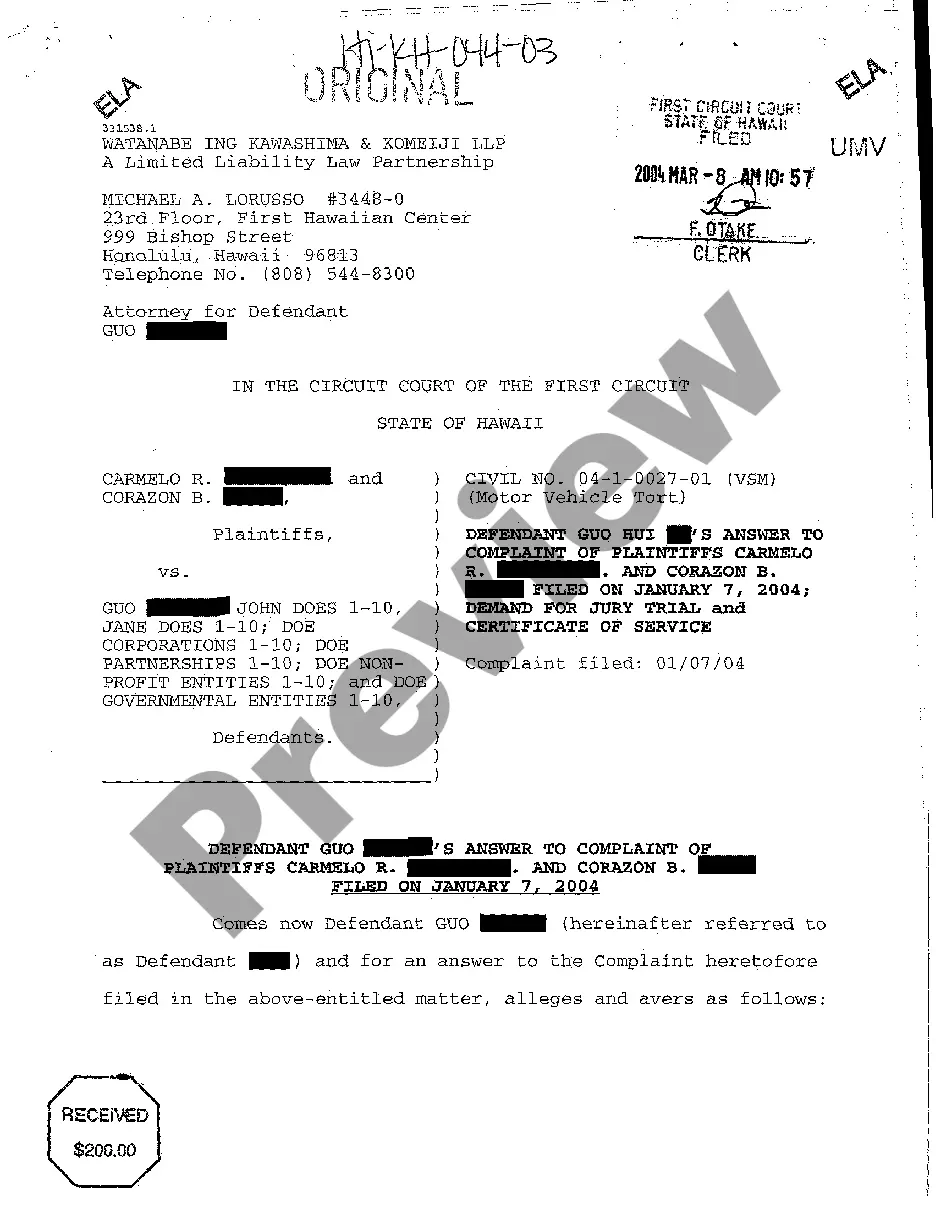
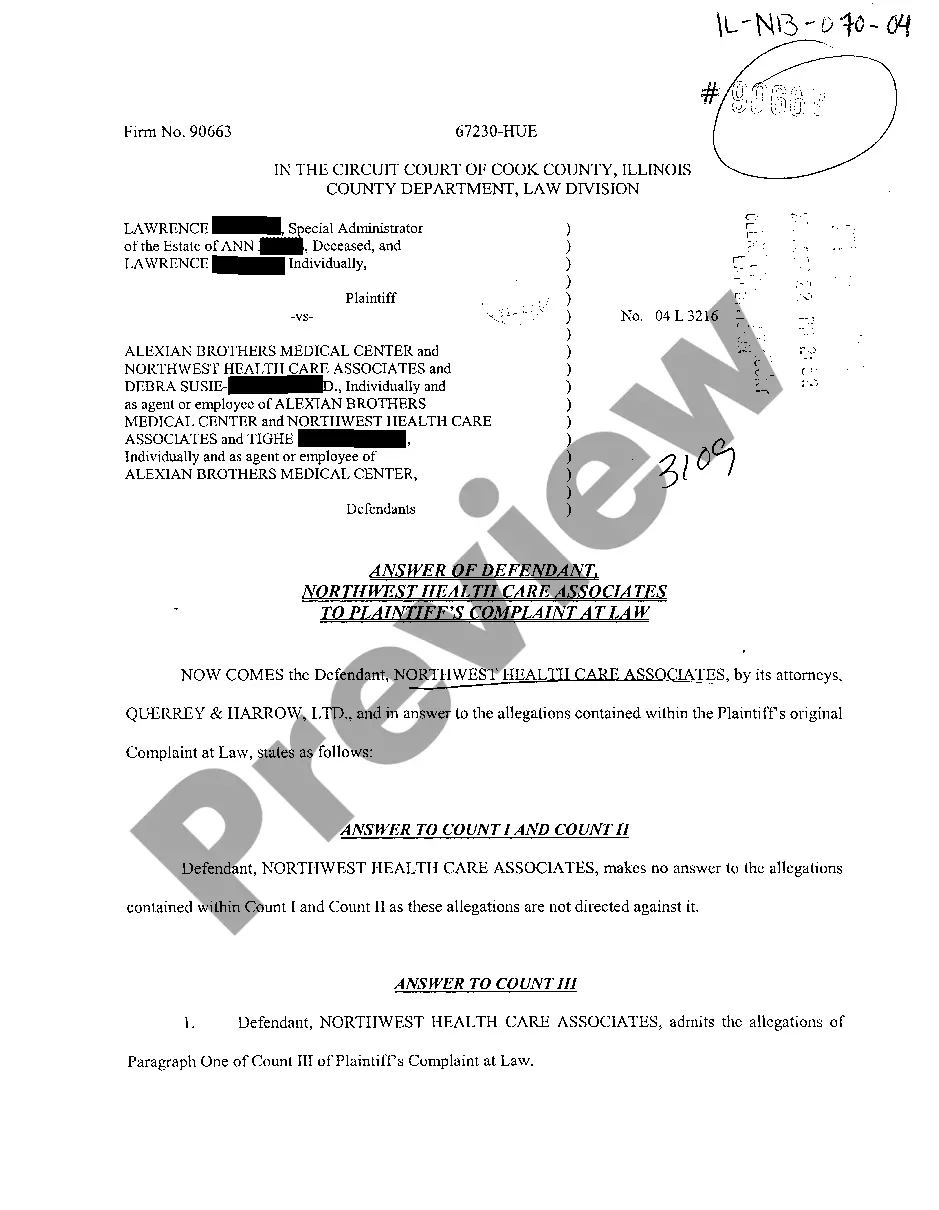
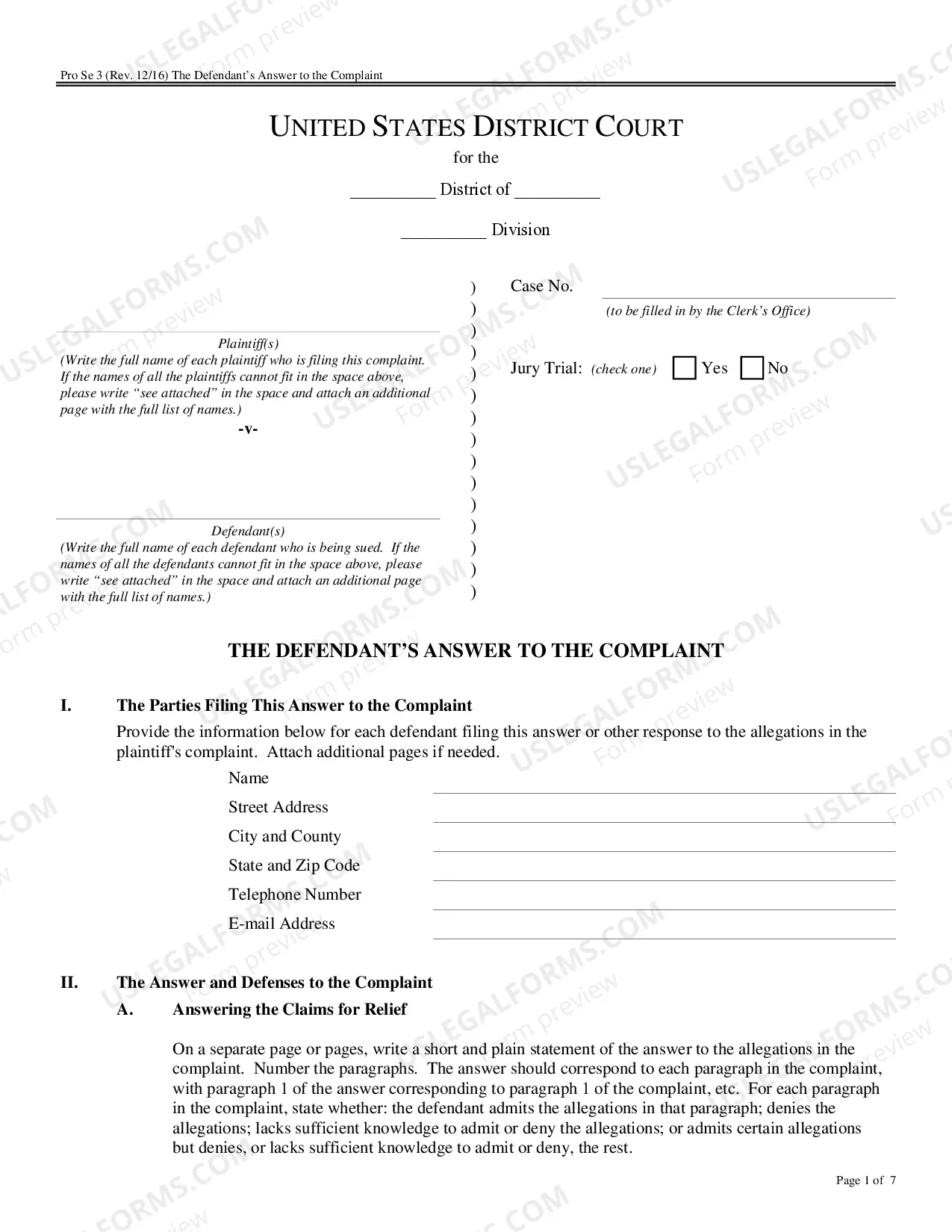
The top section of the first page is known as the court caption or heading. It establishes court authority and identifies the case for judicial records. The caption must match the formatting of the original Complaint exactly and includes:
- Court Name: The specific court handling the dispute (e.g., In the United States District Court for the Southern District of New York or In the Circuit Court of Cook County, Illinois).
- Parties: The full names of all named Plaintiffs and Defendants.
- Case/Docket Number: The unique alphanumeric identifier assigned to the case by the court clerk.
- Judge/Division: The specific judicial officer or court division assigned to the matter.
2. Paragraph-by-Paragraph Responses
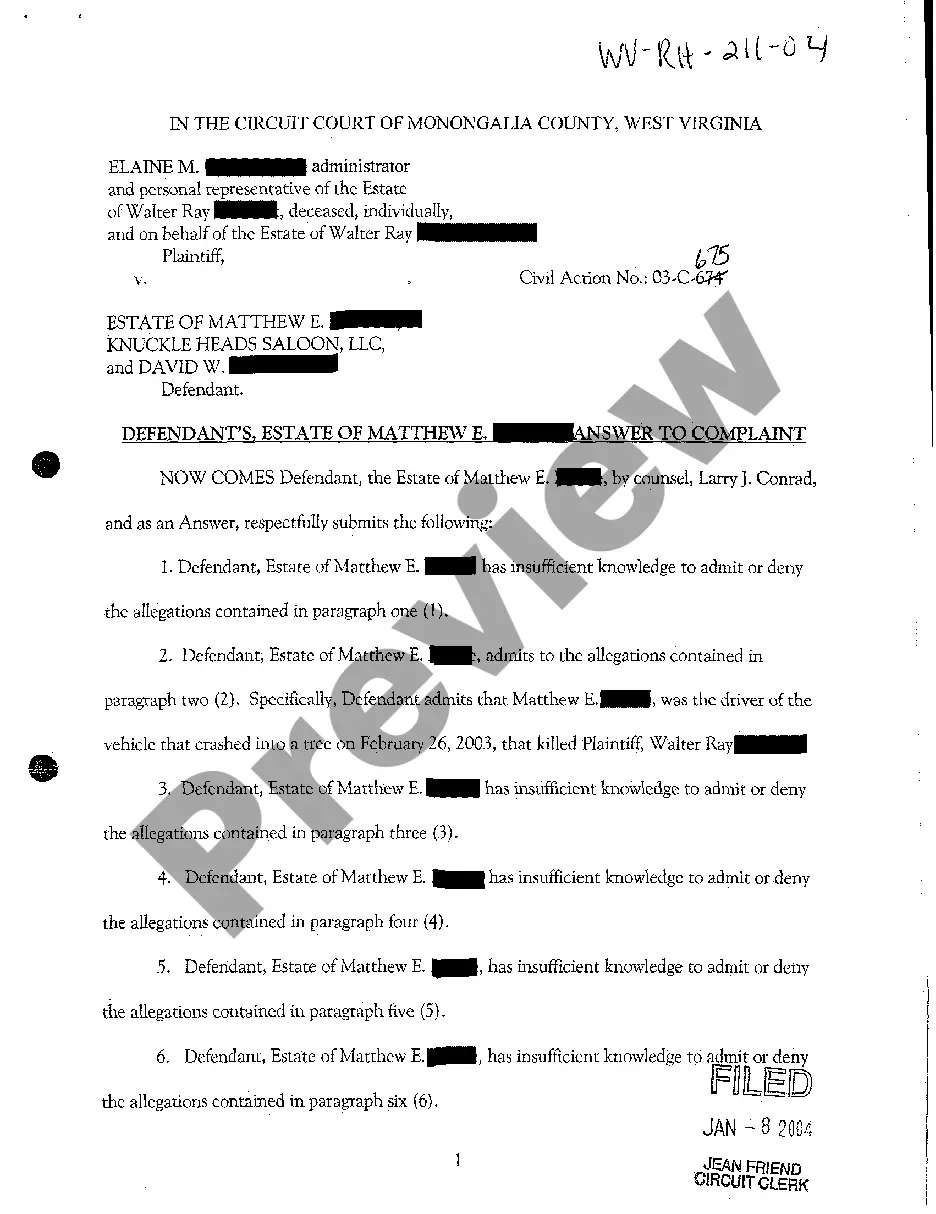
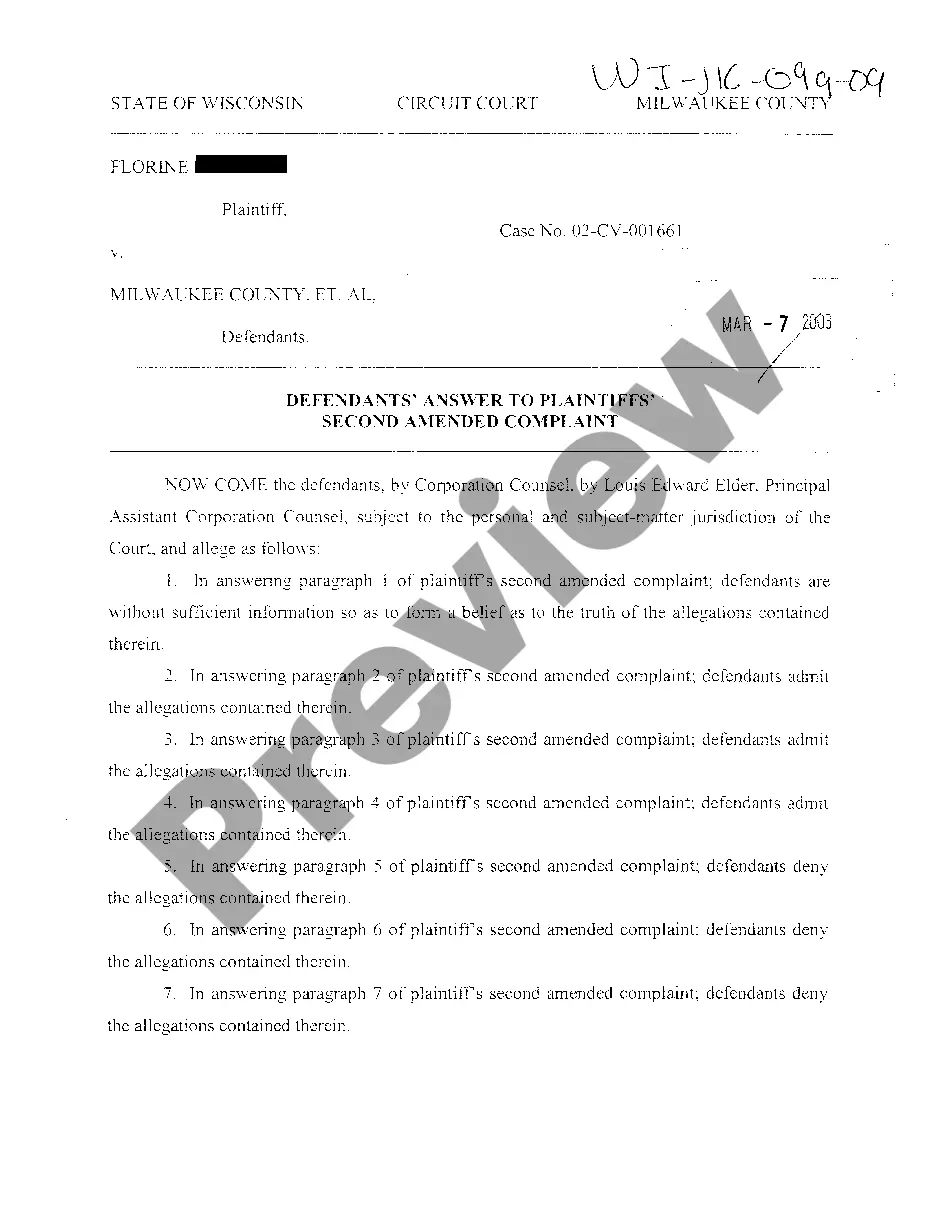
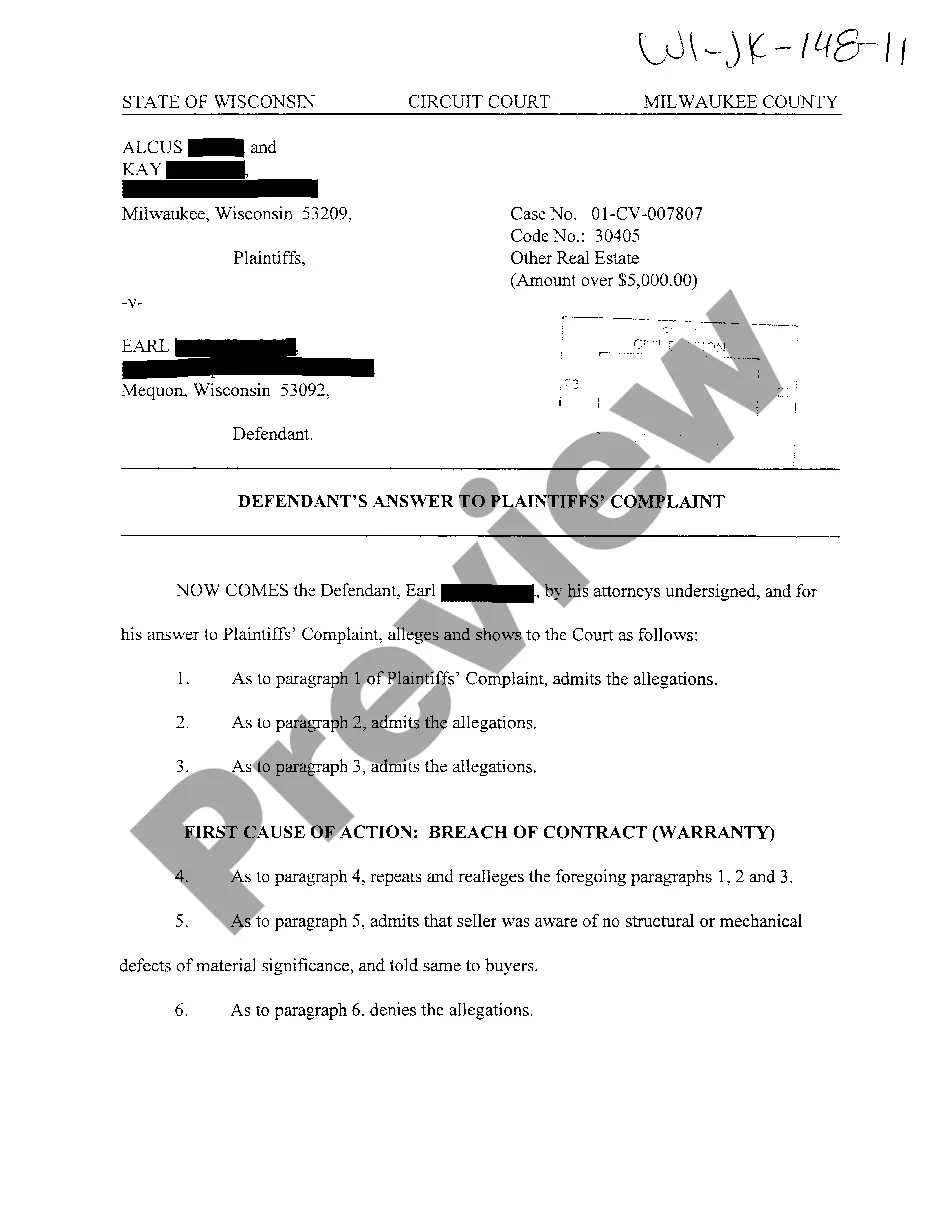
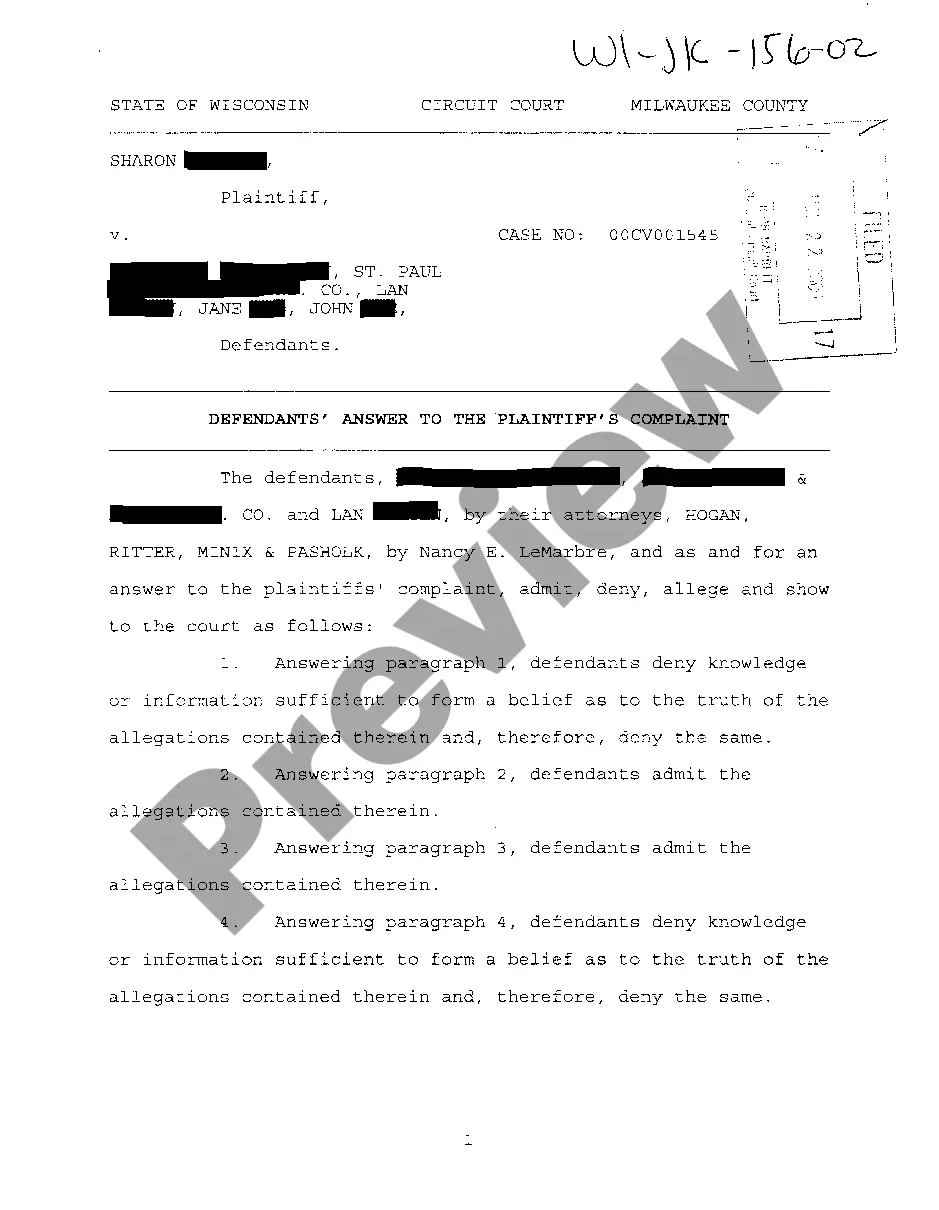
The body of the Complaint is divided into numbered paragraphs detailing the factual basis of the lawsuit. In your Answer PDF, you must address every numbered paragraph in numerical order. Under standard civil procedure rules, you have three primary options for responding to each allegation:
- Admitted: You confirm that the factual statement in that specific paragraph is true. Only admit facts that you know for certain to be true (e.g., confirming your legal residence or execution of a contract).
- Denied: You dispute the factual statement made in that paragraph. Denying an allegation puts the burden of proof on the plaintiff to prove that factual claim during litigation.
- Lack of Knowledge or Information: You state that you lack sufficient knowledge or information to form a belief as to the truth of the allegation. Under civil procedure rules, this statement operates as a formal denial.
SAMPLE PARAGRAPH RESPONSE STRUCTURE:
- Defendant ADMITS the allegations contained in Paragraph 1 of the Complaint.
- Defendant DENIES the allegations contained in Paragraph 2 of the Complaint.
- Defendant is WITHOUT KNOWLEDGE OR INFORMATION sufficient to form a belief as to the truth of the allegations in Paragraph 3, and therefore DENIES the same.
3. Affirmative Defenses
An affirmative defense is a legal argument that, if proven, defeats or mitigates the plaintiff’s claim—even if the underlying factual allegations in the Complaint are true. Affirmative defenses must be explicitly raised in your initial Answer PDF; under most court procedural rules, failing to raise an affirmative defense at this stage permanently waives your right to assert it later in the litigation.
Common affirmative defenses include:
- Statute of Limitations: The plaintiff waited too long to file the lawsuit under state or federal statutory deadlines.
- Lack of Personal or Subject-Matter Jurisdiction: The court lacks the legal authority to rule on the parties or the subject matter of the suit.
- Failure to State a Claim: The allegations in the Complaint, even if taken as true, fail to establish a recognized legal basis for liability.
- Payment or Release: The alleged debt or obligation has already been satisfied, settled, or formally released.
- Comparative/Contributory Negligence: The plaintiff's own negligence contributed to or caused their alleged damages.
4. Counterclaims and Crossclaims (Optional)
Depending on the circumstances of the case, a defendant may include claims of their own within the same Answer document:
- Counterclaim: A claim asserted by the defendant directly against the plaintiff (e.g., alleging that the plaintiff breached the contract first).
- Crossclaim: A claim asserted by one defendant against a co-defendant named in the same lawsuit.
5. Prayer for Relief (Demand for Judgment)
Following the defenses, the defendant includes a concluding statement requesting specific judicial action. Typically, the defendant requests that the court dismiss the plaintiff's Complaint with prejudice, deny all relief sought by the plaintiff, and award the defendant court costs and reasonable attorney's fees where permitted by law.
6. Signature Block and Verification
The Answer must end with a formal signature block. If represented by an attorney, the attorney signs under their bar licensing information. If acting pro se (self-represented), the defendant must sign the document personally and provide their mailing address, phone number, and email address.
Certain jurisdictions require a verified Answer, which includes a signed declaration under penalty of perjury asserting that the factual statements in the Answer are true and correct.
7. Certificate of Service
Every document filed with a court must include a Certificate of Service (or Proof of Service). This section certifies to the court that a copy of the completed Answer PDF was served on the plaintiff or the plaintiff's attorney of record, detailing the date, method of service (e.g., electronic filing system, certified mail, or process server), and delivery address.
Step-by-Step: How to Complete and File an Answer PDF
Filing an Answer to a Civil Complaint requires strict adherence to procedural protocols. Following a structured process helps preserve your legal rights and avoids procedural dismissal.
ANSWER PDF COMPLETION STEPS:
- Step 1: Review Summons & Identify Statutory Filing Deadline
- Step 2: Download Official PDF Form (Federal Court / State Judicial Portal)
- Step 3: Match Court Caption Exactly to Original Complaint
- Step 4: Complete Admissions, Denials & Lack of Knowledge Paragraphs
- Step 5: Research & Articulate Relevant Affirmative Defenses
- Step 6: Complete Certificate of Service & Sign (Digital or Physical)
- Step 7: File via E-Filing System / Court Clerk & Serve Opposing Counsel
Step 1: Analyze the Summons and Calculate Your Deadline
Read the Summons immediately upon receipt. The Summons states the exact statutory timeframe for filing your response.
- In United States Federal District Courts, Rule 12 of the Federal Rules of Civil Procedure generally grants 21 calendar days from the date of service to file an Answer (or 60 days if service was formally waived under Rule 4(d)).
- In State Courts, deadlines vary by jurisdiction—commonly ranging between 20 and 30 calendar days.
Calculate the deadline carefully. Day one is the day after you receive service. If the deadline falls on a weekend or court holiday, the due date usually rolls over to the next business day.
Step 2: Obtain the Correct Official PDF Template
Avoid unverified generic templates found on open web forums. Always obtain an official standard form published directly by the administrative office of the relevant court system:
- For federal lawsuits, access official civil response templates on the United States Courts Forms Directory.
- For state lawsuits, visit the official judicial branch website of your state or local county court administration (such as California Courts, New York State Unified Court System, or Texas Judicial Branch). Many legal assistance portals, such as LawHelp.org, provide court-approved PDF form generators for pro se litigants.
Step 3: Complete the Form Fields
Open the downloaded PDF using standard desktop software such as Adobe Acrobat Reader or a compatible browser PDF engine. Complete each section accurately:
- Copy the party names, court location, and docket number into the caption fields.
- Go through the Complaint paragraph by paragraph. Mark the appropriate response box (Admitted, Denied, or Lack of Information) or type your detailed response if using a blank lines template.
- List your Affirmative Defenses in separate, clearly numbered paragraphs.
- Complete the Prayer for Relief requesting dismissal of the claims.
Step 4: Finalize, Sign, and Format for E-Filing
Once filled out, review every paragraph to ensure no claim was left unanswered. Unanswered paragraphs in a Complaint are frequently deemed "admitted" by default under court rules.
Save the document as a flattened PDF file (a static PDF where form fields are converted into permanent text to prevent alteration). Sign the document using a compliant digital signature method (such as an /s/ First Name Last Name electronic signature where permitted by e-filing rules) or print the form, physically sign it in ink, and scan it back into a high-resolution PDF format.
Step 5: File with the Court Clerk and Serve the Plaintiff
Courts accept filings through specific authorized channels:
- Electronic Filing (E-Filing): Most federal courts use the CM/ECF (Case Management/Electronic Case Files) system. State courts frequently utilize centralized platforms such as Tyler Technologies E-File or state-specific portals.
- In-Person / Mail Filing: Self-represented litigants in some state courts may hand-deliver physical signed copies of the Answer PDF to the court clerk's office or send them via certified mail with proof of delivery.
Simultaneously, deliver a copy of the filed Answer to the plaintiff’s attorney (or directly to the plaintiff if they are unrepresented) in accordance with service rules. Complete the Certificate of Service included at the end of the PDF to record how and when service was completed.
Response Options Comparison Table
When served with a Complaint, filing an Answer PDF is one of several potential legal responses. The table below compares common responsive strategies in civil procedure:
| Action / Motion | Core Purpose | Statutory Deadline Window | Primary Advantage | Major Risk / Disadvantage |
|---|---|---|---|---|
| Answer to Complaint PDF | Formally admits/denies factual allegations and asserts affirmative defenses. | Typically 20–30 days from service (21 days in US Federal Court). | Prevents default judgment; preserves all factual and legal defenses for trial. | Requires answering all allegations; waives unpled affirmative defenses. |
| Motion to Dismiss (FRCP 12(b)) | Requests court to throw out the case before answering due to legal or procedural defects. | Must be filed before or in lieu of filing an Answer (within same initial deadline). | Can end the lawsuit immediately without entering factual discovery. | If denied by the judge, you must still prepare and file an Answer PDF shortly after. |
| Motion for More Definite Statement (FRCP 12(e)) | Challenges a Complaint that is so vague or ambiguous that the defendant cannot frame a response. | Must be filed prior to filing an Answer. | Forces the plaintiff to clarify vague claims before you respond. | Rare in practice; courts prefer granting leave to amend over outright dismissals. |
| Settlement Agreement / Stipulation | Out-of-court negotiation to resolve disputes voluntarily. | Concurrent with response deadline (requires deadline extension request). | Saves litigation costs and avoids court trials. | Negotiating without securing a formal court extension risks default judgment. |
| Failure to Respond (Default) | Defendant takes no legal action within the response window. | Expires upon conclusion of statutory response period. | None. | Court enters default judgment; plaintiff wins automatically and can garnish assets. |
Common Mistakes When Filling Out an Answer PDF
Handling legal pleadings without legal representation carries procedural risks. Avoid these common errors when completing an Answer to Complaint PDF:
1. Missing the Statutory Deadline
The most critical error in civil procedure is failing to track the filing window. Asking opposing counsel or the court clerk for a formal, written extension of time (often called a Stipulation for Extension of Time) before your deadline expires is necessary if you need extra time to secure legal representation or gather documents. Never assume an oral agreement halts the court clock.
2. Using Blanket Denials Impractically
While it may be tempting to deny every single line in a Complaint, standard pleading standards (such as Federal Rule of Civil Procedure 11) require responses to be made in good faith. Denying basic, indisputable facts—such as your own legal name, business entity status, or state of residence—can damage your credibility with the judge and lead to court sanctions.
DENIAL BEST PRACTICES:
- PROPER: Admit identity and venue facts; Deny liability allegations.
- IMPROPER: Blanket denial of basic jurisdiction and uncontested identity.
3. Waiving Affirmative Defenses
If an affirmative defense (such as the statute of limitations or failure to mitigate damages) is not listed in your initial Answer PDF, court rules generally treat that defense as permanently waived. Review common affirmative defenses relevant to your legal subject matter (contract law, torts, property disputes) before submitting your document.
4. Forgetting the Certificate of Service
Courts will often reject or flag pleadings that lack a completed Certificate of Service. You must formally document how, when, and to whom a copy of your Answer PDF was delivered.
Frequently Asked Questions
Can I edit a fillable Answer to Complaint PDF directly in my web browser?
While modern web browsers (such as Google Chrome or Microsoft Edge) allow you to type text into interactive PDF form fields, saving directly inside a browser can sometimes cause lost field data or formatting errors. It is best to download the PDF to your local device and open it using dedicated PDF reader software before entering information and saving the file.
What happens if I make a mistake on my filed Answer PDF?
If you realize you made a mistake or omitted an affirmative defense after filing, you may be able to file an Amended Answer. Under Federal Rule of Civil Procedure 15, a party may amend its pleading once as a matter of course within 21 days after serving it. In state courts, rules vary; you may need to file a motion requesting leave of court to amend if the window has passed or if the opposing party does not consent.
Is an Answer to Complaint PDF the same as a Counterclaim?
No. An Answer is a defensive document responding to the plaintiff’s claims. A Counterclaim is an offensive claim filed by the defendant asserting that the plaintiff committed a legal wrong and owes the defendant monetary damages or other relief. However, counterclaims are frequently embedded directly within the same physical Answer PDF document under a distinct section header titled "Counterclaims."
Do I need a notary public to sign an Answer to Complaint PDF?
In most jurisdictions, standard Answers in civil cases do not require notarization unless local rules require a "Verified Answer." A verified answer includes a sworn statement signed under penalty of perjury. Check the specific caption and signature instructions on your local court form to determine if a notarized signature or unsworn declaration under penalty of perjury is mandatory.
What is the fee for filing an Answer to Complaint PDF?
Filing fees for an Answer depend entirely on the jurisdiction. In federal courts, there is typically no fee for a defendant filing an initial Answer. In many state or county courts, however, defendants must pay a first-appearance or response fee ranging from $50 to several hundred dollars unless they apply for and receive an indigent fee waiver (In Forma Pauperis).
Summary and Practical Next Steps
Filing a timely, properly formatted Answer to Complaint PDF protects your rights when facing a civil lawsuit. By addressing each allegation, pleading appropriate affirmative defenses, and following local court filing protocols, you prevent a default judgment and force the plaintiff to prove their claims.
Immediate Action Plan:
- Locate the Service Date: Note the exact date you were served with the Summons and Complaint.
- Calculate your Deadline: Identify whether federal rules (21 days) or local state rules govern your filing window.
- Download an Official Form: Access an verified PDF template from the relevant federal district court or state court portal.
- Draft Paragraph Responses: Carefully complete the admissions, denials, and affirmative defenses sections.
- Execute and Serve: Sign the document, attach the Certificate of Service, file the PDF through your court’s approved submission system, and serve a copy on opposing counsel.
For complex disputes involving significant monetary damages or complicated legal claims, consult a licensed attorney to review your draft Answer PDF before submission.