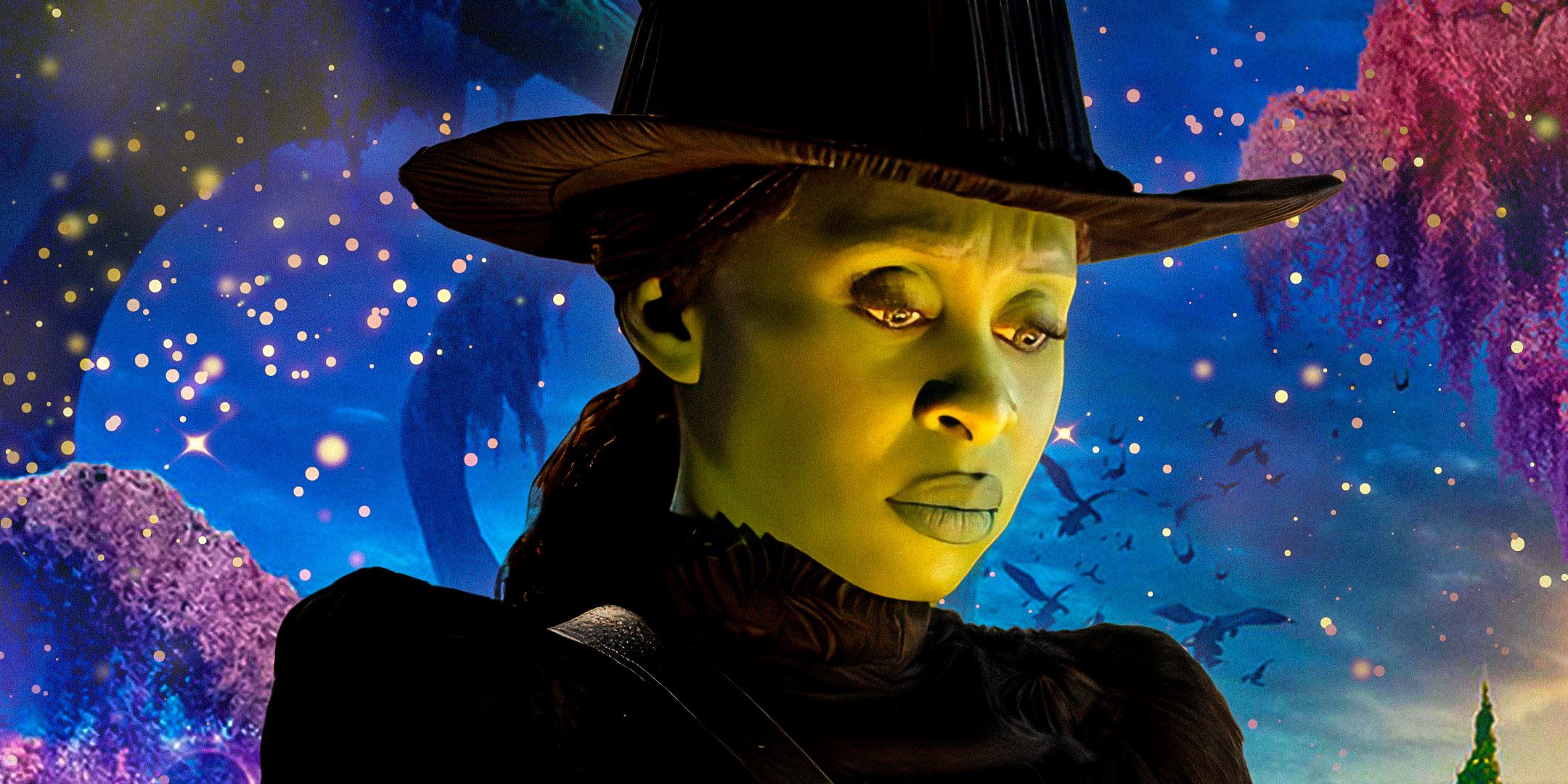
The Wicked feature film adaptation is not identical to the Broadway stage musical, though it directly adapts the beloved theater show rather than resetting to Gregory Maguire’s 1995 source novel. Directed by Jon M. Chu with a screenplay by original book writer Winnie Holzman and composer Stephen Schwartz, the film expands the stage production into a epic two-part cinematic experience while adding new scenes, deeper character backstories, and updated musical arrangements.
While theatre lovers will recognize the iconic songs, characters, and overarching narrative of Elphaba and Glinda, translating a two-act stage show to the big screen required structural changes. Understanding these differences highlights how the filmmakers preserved the heart of the Broadway phenomenon while reimagining the land of Oz for modern cinematic storytelling.
Adaptational Overview: Stage vs. Screen
The primary distinction between the stage musical and the film adaptation lies in medium and scope. When Wicked premiered on Broadway in 2003 at the Gershwin Theatre, it was designed within the physical and temporal constraints of live theatrical performance. A standard Broadway show relies on audience imagination, theatrical illusions, selective stage lighting, and a tight two-act structure separated by a single 15-minute intermission.
WICKED ADAPTATION LINEAGE
- 1995 Novel: "Wicked: The Life and Times of the Wicked Witch of the West" by Gregory Maguire
- 2003 Stage Musical: Music/Lyrics by Stephen Schwartz, Book by Winnie Holzman (2-Act Stage Show)
- Feature Films: Directed by Jon M. Chu, Screenplay by Holzman & Schwartz (Split into Part One & Part Two)
In contrast, the film adaptation approaches the story with cinematic realism and expansive visual storytelling. Cinema allows the director to zoom in on delicate character beats, build massive practical sets, and visually depict locations that were merely described in dialogue on stage.
The Direct Lineage: Novel, Stage, and Film
To understand the movie, it helps to understand its three distinct iterations:
- The 1995 Novel: Written by Gregory Maguire, Wicked: The Life and Times of the Wicked Witch of the West is a dark, political, and complex adult fantasy novel. It focuses heavily on the socio-political corruption of Oz, systemic oppression of talking Animals, religious satire, and moral ambiguity.
- The 2003 Broadway Musical: Produced by Marc Platt and Universal Pictures, the musical streamlined Maguire's sprawling text. It refocused the story into a high-energy, emotionally resonant female friendship narrative featuring a pop-infused musical theatre score by Stephen Schwartz.
- The Feature Film Adaptation: The film bridges the gap between the two previous versions. While it remains a faithful adaptation of the stage musical's music and plot lines, the film reintroduced selective world-building elements, political subtexts, and background details from Maguire's original novel that had to be cut for time on Broadway.
The Two-Part Format vs. Two-Act Stage Structure
The most significant structural divergence is the decision to split the narrative across two separate feature films. On stage, Act I runs approximately 1 hour and 30 minutes, culminating in the anthem "Defying Gravity." Act II runs roughly 1 hour and 5 minutes, resolving the fallout of Elphaba’s rebellion and the events leading up to Dorothy Gale's arrival from Kansas.
Rather than compressing the entire story into a single three-hour film—which would force the cutting of major songs or character arcs—the creative team chose to split the material. Wicked: Part One focuses exclusively on the events of the stage show's Act I, while Wicked: Part Two covers the darker, higher-stakes events of Act II. This format gives each act the room to breathe as an individual narrative arc.
Major Structural and Narrative Differences
Expanding a 90-minute theatrical first act into a full-length feature film requires adding narrative depth, visually demonstrating character relationships, and resolving theatrical shortcuts.
- STAGE ACT I (90 Mins)
- Quick intro to Shiz
- Fast-paced rivalries
- Key stage numbers
- "Defying Gravity"
- FILM PART ONE (Full Feature)
- Extended Childhood Backstory
- Physical Shiz Campus Exploration
- Deepened Animal Suppression
- Expanded "Defying Gravity"
Act One Expansion in Part One
In the stage musical, Elphaba’s arrival at Shiz University happens within minutes of the opening curtain. The audience receives a brief explanation of her green skin through the prologue number "No One Mourns the Wicked," followed immediately by her arrival on campus with her father and sister, Nessarose.
The film adaptation significantly expands this timeline:
- Childhood Lore: The camera follows Elphaba’s childhood experiences, illustrating the psychological impact of being an outcast due to her skin color long before she arrives at Shiz.
- The Dynamics of Shiz University: The film dedicates substantial time to showing campus life, student cultures, and the social stratification between prestigious students like Galinda (later Glinda) Upland and marginalized figures like Elphaba Thropp.
- The Animal Rights Subplot: On stage, the persecution of Oz's talking Animals is primarily conveyed through Doctor Dillamond’s classroom lectures and a brief scene in a cage. The film visualizes the systemic disenfranchisement across Oz, showing how propaganda posters, legislative changes, and social attitudes shift as the Wizard consolidates power.
Incorporating Elements from Gregory Maguire’s Novel
While the stage musical simplified complex plot points to keep the romantic and friendship storylines front and center, the movie reincorporates lore from Maguire's book:
- Ozian Geography and Politics: The film visually maps out the lands of Munchkinland, Gillikin, the Quadling Country, and the Emerald City, giving political context to why Nessarose's family holds power in Munchkinland.
- Sorcery and Crafting: The mechanics of magic in Oz receive clearer rules. On stage, Elphaba's powers manifest spontaneously when she is angry or distressed. The movie explores the ancient origins of the Grimmerie (the spellbook) and details how genuine magic differs from the theatrical illusions created by the Wizard.
Character Arc and Backstory Deep Dives
Each supporting character gains additional screen time and motivation in the film adaptation:
- Glinda (Galinda): Her transition from self-absorbed aristocrat to genuine friend is paced more gradually. The film explores her inner desire for academic validation from Madame Morrible, making her choice to remain within the Wizard’s political system more tragic.
- Fiyero: The Winkie prince's introductory philosophy ("Dancing Through Life") is given greater spatial room. His initial carelessness is contrasted against growing awareness of the Wizard's totalitarian shift.
- Nessarose and Boq: The tragic co-dependency between Elphaba’s sister and the Munchkin Boq receives clearer romantic and political setup, establishing the foundation for their tragic transformations in Part Two.
Musical Changes: Songs, Arrangements, and Score
Music is the soul of Wicked, and translating Stephen Schwartz's score from an orchestral pit to a cinematic surround-sound environment required both technical updates and musical additions.
MUSICAL ADAPTATION FEATURES
- LIVE ON-SET SINGING: Preserves theatrical vocal intimacy
- EXPANDED ORCHESTRA: Adds cinematic scope & dynamic range
- NEW COMPOSITIONS: Written specifically to bridge film cuts
- RE-ORDERED CUES: Enhances visual storytelling & pacing
Musical Numbers in Stage vs. Film
The stage musical's score is famous for its seamless transitions between dialogue and song. For the film, these songs were adapted to fit widescreen visual storytelling:
- "The Wizard and I": Visually expanded from a single spotlight performance on a static stage to a sweeping vocal performance across the fields and waters surrounding Shiz University.
- "Popular": Preserves the comedic timing of the original stage choreography while utilizing the full geometry of Glinda's bedroom suite, incorporating physical comedy made possible by set design and camera angles.
- "Dancing Through Life": Transformed from an ensemble dance routine on a rotating stage belt into an elaborate sequence set inside the massive, multi-tiered Ozdust Ballroom and the Shiz university library.
- "Defying Gravity": Operates as the climax of Part One. On stage, Elphaba is lifted into the air on a mechanical cherry-picker crane hidden by lighting and smoke. The film uses practical stunt rigging combined with digital effects to create a dynamic aerial sequence set against the backdrop of the Emerald City.
New Compositions by Stephen Schwartz
To justify splitting the story into two full-length films and to solve specific pacing challenges, Stephen Schwartz composed new music for the cinematic version.
These new pieces serve distinct purposes:
- Pacing and Transitions: New musical motifs bridge extended cinematic sequences that lack dialogue.
- Character Soliloquies: Additional song sections provide deeper internal monologues for characters like Elphaba and Glinda during critical emotional shifts.
- Closing/Opening Numbers: Because Part One ends at the original intermission point, new musical arrangements were crafted to provide a definitive cinematic resolution for the first movie while teasing the stakes of Part Two.
Vocal Performances and Audio Production
A standard film musical often relies on pre-recorded studio vocals that actors lip-sync to while filming on set. For the Wicked movie adaptation, director Jon M. Chu opted to record direct live vocal performances on set for primary cast members Cynthia Erivo (Elphaba) and Ariana Grande (Glinda).
This production choice bridges the gap between live theatre and film. The live recording captures micro-inflections, emotional gasps, and dynamic vocal changes that mirror the real-time energy of a Broadway stage, backed by a massive full-sized studio orchestra.
Visual World-Building: The Physicality of Oz
Stage design relies on symbolism, lighting, and selective props. A theatrical production of Wicked uses a towering clockwork mechanism (the Clock of the Time Dragon) surrounding the proscenium arch to remind audiences that they are watching an unfolding tale of fate.
The movie translates these stage metaphors into physical environments.
VISUAL DESIGN APPROACH
| STAGE PRODUCTION | FILM ADAPTATION |
|---|---|
| Proscenium Clockwork Arch | Fully realized Ozian cities |
| Stylized Lighting Effects | Millions of real flowers planted |
| Mechanical Cherry-Pickers | Physical practical sets |
| Minimalist prop shifts | CGI-enhanced landscapes |
Shiz University and Munchkinland Sets
Instead of relying entirely on green-screen digital backgrounds, the film production constructed massive, practical physical sets:
- Munchkinland: Constructed as a real, tangible village featuring curved architecture, vibrant agricultural fields, and intricate detail inspired by early Oz illustrations.
- Tulip Fields: The production planted millions of real tulips to create the natural landscapes surrounding Shiz University.
- Shiz University: Designed as a physical academic campus drawing on nautical, gothic, and Art Nouveau architectural styles, allowing actors to move continuously through classrooms, hallways, and dormitories.
CGI Enhancements vs. Practical Stage Magic
On stage, magic is accomplished using classic theatrical tricks: quick-change costumes, trapdoors, hidden wires, and dramatic lighting changes. The film combines practical illusions with high-end visual effects:
- Flying Monkeys: On stage, actors wear winged costumes and are suspended on wires or low-profile harnesses. In the film, the monkeys are rendered with digital realism, emphasizing their tragic transformation from innocent creatures into imprisoned guards.
- The Wizard's Mechanical Head: The iconic giant puppet head used by the Wizard on stage to intimidate visitors is rendered in the film as a colossal, retro-futuristic mechanical apparatus that feels integrated into the Emerald City's power grid.
Side-by-Side Comparison: Stage Musical vs. Film Adaptation
| Feature / Element | Broadway Stage Musical | Feature Film Adaptation |
|---|---|---|
| Structure | Single two-act show with one 15-minute intermission | Two full-length cinematic releases (Part One & Part Two) |
| Runtime | Approx. 2 hours, 45 minutes (total) | Extended overall runtime across both feature films |
| Primary Focus | Central relationship between Elphaba and Glinda | Friendship narrative plus expanded Ozian political lore |
| Source Material Influence | Primarily adapted from Winnie Holzman's streamlined stage book | Combines the stage musical book with elements of Gregory Maguire's novel |
| Vocal Delivery | Live, unamplified stage acoustic acoustics to theater mics | Recorded live on set mixed with full cinematic orchestrations |
| New Songs | Standard 19-song score by Stephen Schwartz | Original score plus new songs/cues composed for film |
| Set Design | Abstract clockwork frame, symbolic shifting lighting | Massive practical sets, real locations, and digital effects |
| Elphaba’s Flight ("Defying Gravity") | Mechanical lift system with lighting/smoke | Dynamic aerial practical stunt rigging enhanced by digital visual effects |
Why Was Wicked Split Into Two Movies?
The decision to split the film adaptation into two parts was initially met with debate among fans and critics. However, director Jon M. Chu and composer Stephen Schwartz clarified that attempting to compress the entire story into a single feature film damaged the narrative integrity of the second act.
WHY A TWO-PART FILM WAS NECESSARY
"Defying Gravity" Problem: No song can follow it immediately without a major narrative reset.
Act II Pacing: The stage show's second act moves extremely fast; a second film gives space for proper character resolution.
Musical Preservation: Cuts were unnecessary; every song could be preserved alongside original dialogue expansions.
The "Defying Gravity" Emotional Peak: In the theatre, "Defying Gravity" is an explosive finale that leaves the audience breathless right before house lights turn on for intermission. Placing another 60 minutes of movie immediately after that song without a break flattens the emotional impact of Elphaba's transformation.
Pacing Issues in Act II: The second act of the stage musical moves at a breakneck pace. Major character developments—such as Fiyero’s transformation into the Scarecrow, Boq becoming the Tin Man, and Nessarose becoming the Wicked Witch of the East—happen rapidly. Splitting the film allows Part Two to fully develop these tragic transformations without feeling rushed.
Song Preservation: A single two-hour movie would have required cutting iconic songs like "Sentimental Man," "A Sentimental Man (Reprise)," or "Something Bad." Splitting the narrative preserved every single song from the Broadway score.
Frequently Asked Questions
Is the Wicked movie based on the book or the musical?
The movie is a direct adaptation of the 2003 Broadway musical by Stephen Schwartz and Winnie Holzman. However, the film reincorporates world-building details, character backstories, and political context from Gregory Maguire's 1995 novel that were omitted from the stage version.
Are all the original songs in the Wicked movie?
Yes. All of the core musical numbers from Act I of the Broadway show appear in Wicked: Part One, and the Act II songs appear in Wicked: Part Two. Additionally, composer Stephen Schwartz wrote new original music specifically for the cinematic release.
Did the actors sing live while filming the Wicked movie?
Yes. Cynthia Erivo (Elphaba) and Ariana Grande (Glinda) sang their vocal tracks live on set during filming rather than relying entirely on pre-recorded studio tracks. The live audio was captured by sound engineers and blended with full orchestral accompaniment.
Why is the Wicked movie divided into two parts?
Filmmakers split the movie because fitting the entire story into a single film would have required cutting major songs or rushing character arcs. Ending Part One with "Defying Gravity" preserves the natural emotional climax of the stage show's intermission.
Is Dorothy in the Wicked movie?
Dorothy Gale's presence is felt primarily during the events of Part Two, which run parallel to the classic events of The Wizard of Oz. As in the stage musical, the narrative remains focused on Elphaba and Glinda's perspectives rather than Dorothy's journey down the Yellow Brick Road.
How different is Elphaba and Glinda’s relationship in the film?
The core friendship remains the emotional foundation of the story. However, the film provides more screen time to develop their initial rivalry at Shiz University, making their eventual bond—and the ideological rift that separates them—more emotionally resonant.
Which Version Should You Experience First?
Whether you are a lifelong broadway fan or a newcomer to the land of Oz, both versions of Wicked offer distinct artistic strengths:
- See the Stage Musical First if you want to experience the legendary theatrical pacing, raw live acoustic energy, and historical stagecraft that made the show a global pop-culture phenomenon.
- Watch the Feature Film Adaptation if you prefer cinematic visual storytelling, fully realized practical environments, deeper character backstories, and close-up dramatic performances.
For the ultimate experience, viewing the stage show and the two-part film adaptation offers a fascinating look at how master storytellers can translate the same iconic narrative across different media.