Ansley Parker is an American broadcast meteorologist known for her work at 13WMAZ (WMAZ-TV), the CBS affiliate serving Macon and the broader Central Georgia region. Trained in atmospheric sciences at the University of Georgia, Parker delivered daily weather forecasts, severe weather tracking, and community reporting for viewers across Middle Georgia.
Profile and Academic Background in Atmospheric Science
Broadcast meteorology requires a synthesis of rigorous atmospheric physics, computer model interpretation, and effective science communication. Ansley Parker developed a strong passion for weather early in life, which led her to pursue higher education in meteorology and geography within the state of Georgia.
Parker attended the University of Georgia (UGA) in Athens, Georgia, where she earned her degree in Atmospheric Sciences and Geography. UGA’s atmospheric sciences program is recognized for providing students with a deep grounding in thermodynamic principles, fluid dynamics, synoptic meteorology, and mesoscale weather phenomena.
- University of Georgia
- BS Atmospheric Sciences / Geography
- Technical Meteorological Skills
- Thermodynamic Profile Analysis (Skew-T Soundings)
- Radar & Satellite Data Interpretation (Level II/III)
- Numerical Weather Prediction (HRRR, NAM, GFS)
- Broadcast Operations at 13WMAZ
- Daily Multi-Platform Forecasting (TV, Digital, App)
- Live Severe Weather Tracking (Wall-to-Wall Coverage)
- Community & Educational Outreach across Middle Georgia
During her collegiate studies, Parker focused on understanding the complex weather patterns that impact the Southeastern United States. Her academic training covered essential technical domains:
- Thermodynamics and Dynamics: Analyzing atmospheric stability indices, soundings (Skew-T log-P diagrams), Convective Available Potential Energy (CAPE), and wind shear to assess severe storm potential.
- Synoptic and Mesoscale Meteorology: Evaluating frontal systems, low-pressure troughs, jet stream dynamics, and local microclimates characteristic of the Gulf Coast and Atlantic regions.
- Remote Sensing and Technology: Utilizing dual-polarization Doppler radar, geostationary satellite imagery (GOES-East), and numerical weather prediction (NWP) modeling suites.
- Communication Techniques: Developing the ability to translate complex mathematical forecasts into clear, actionable advice for non-technical television audiences.
This academic foundation prepared Parker to transition directly into professional broadcast news, where rapid data analysis under live television deadlines is essential.
The Role of Ansley Parker at 13WMAZ
WMAZ-TV, operating as 13WMAZ, is the dominant legacy news station in Macon, Georgia, serving over a dozen counties in the Middle Georgia designated market area (DMA). As part of the 13WMAZ weather team, Ansley Parker took on multifaceted responsibilities that went beyond on-air weather presentations.
On-Air Forecasting and Telecasts
At 13WMAZ, Parker presented daily forecasts during morning, weekend, and evening news segments. Delivering an effective television weather broadcast involves several steps:
- Data Synthesis: Reviewing morning computer model runs (such as the High-Resolution Rapid Refresh [HRRR], North American Mesoscale [NAM], and Global Forecast System [GFS]) to build a baseline 7-day forecast.
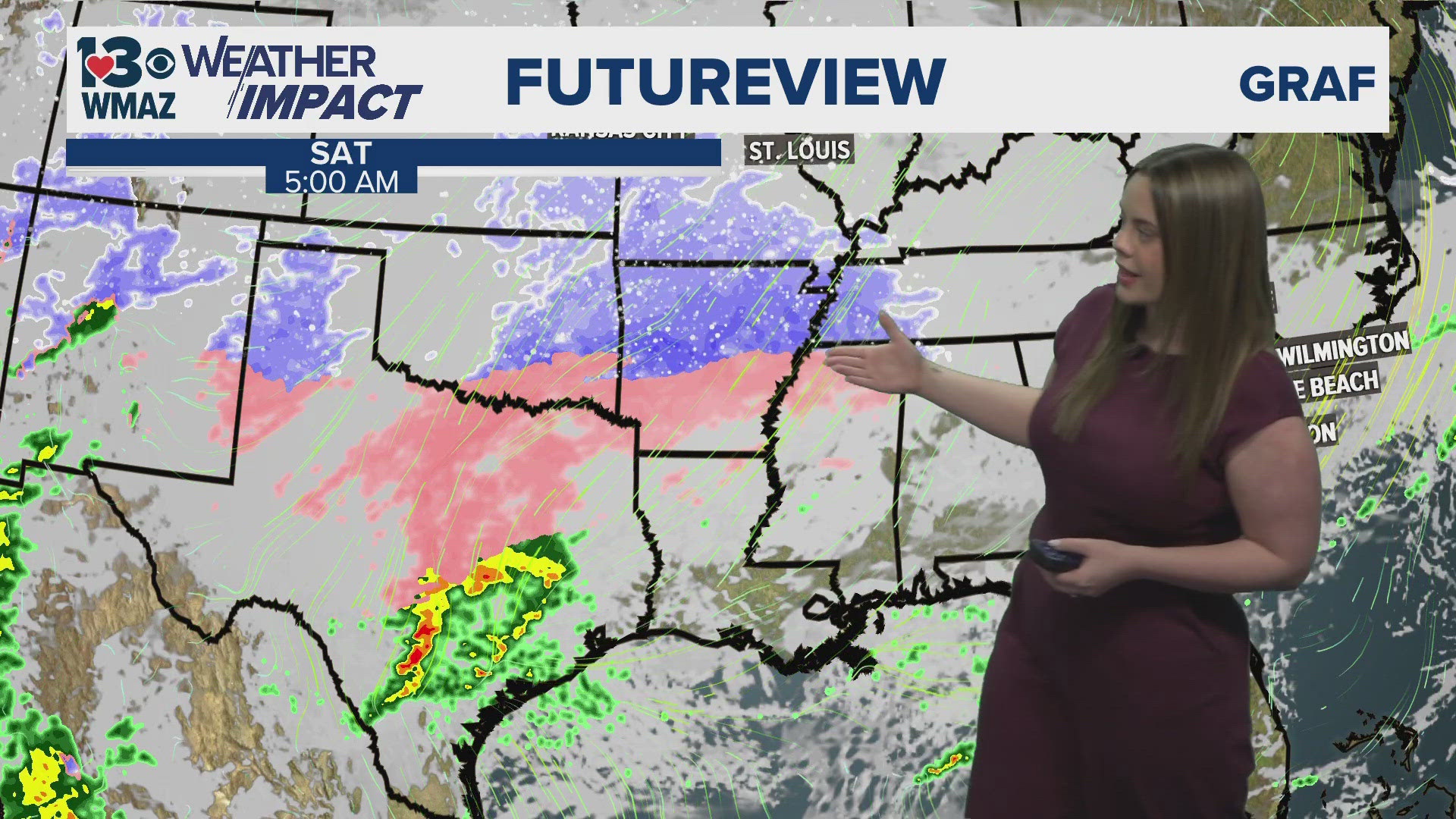
- Graphics Creation: Designing visual graphics using specialized broadcast weather workstations (such as the Max Weather system by The Weather Company/WSI) to display temperature maps, radar loops, and severe weather threat meters.
- Unscripted Delivery: Presenting live forecasts in front of a chroma key green screen without a teleprompter, requiring immediate recall of meteorological metrics, local geography, and timeline details.
Live Severe Weather Coverage
Middle Georgia experiences a wide variety of severe weather hazards, including spring tornado outbreaks, summer microbursts, flash flooding, and tropical storm impacts. When severe weather threatens the 13WMAZ viewing area, meteorologists enter continuous, wall-to-wall coverage mode.
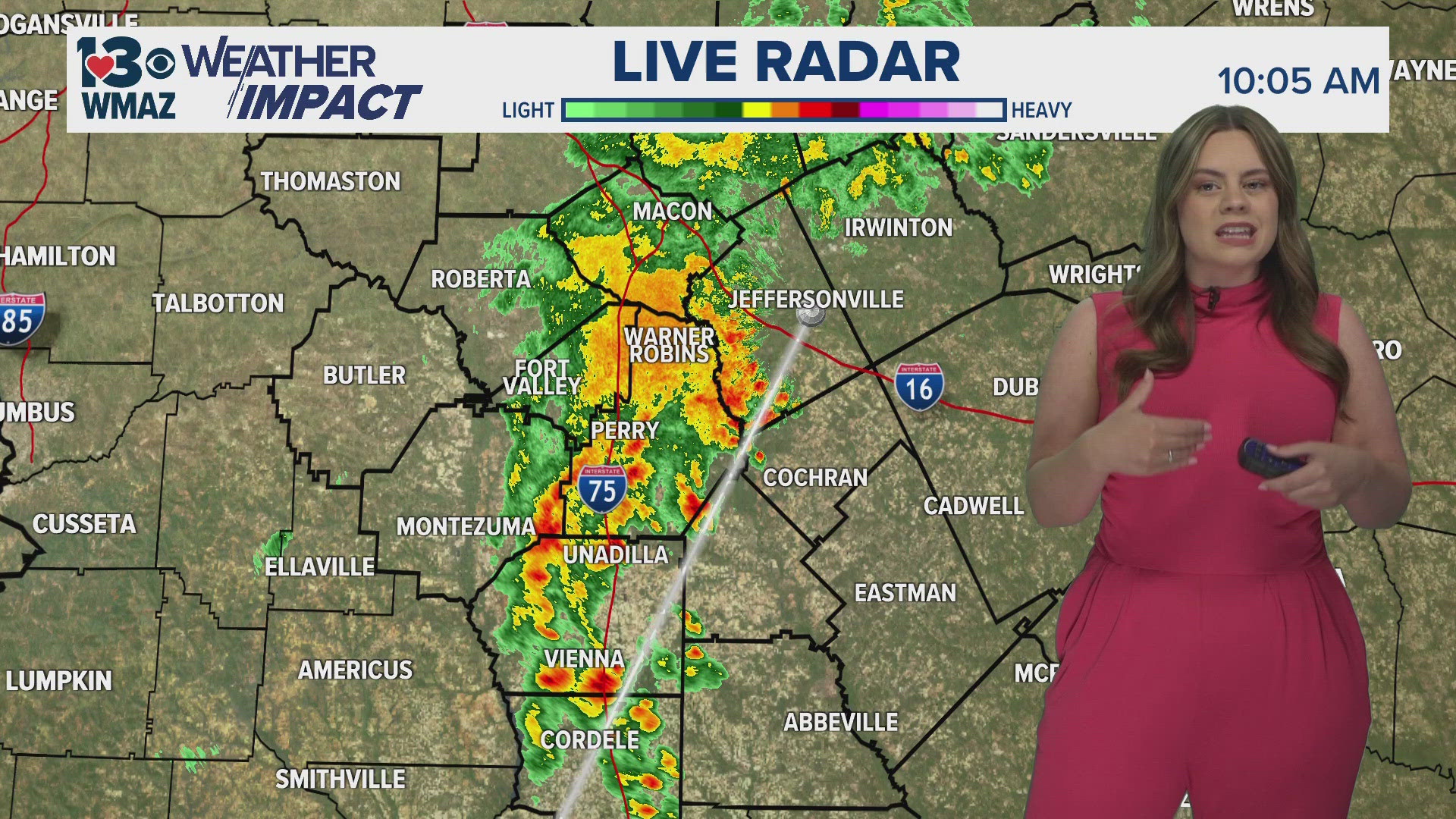
During these critical moments, Parker worked alongside the station's weather team to track active storms using Doppler radar data. Responsibilities during severe weather events include:
- Identifying rotational velocity signatures on velocity radar scans to detect potential tornadoes.
- Monitoring reflectivity scans for severe hail cores and strong straight-line wind signatures (such as bow echoes).
- Issuing real-time location-based warnings down to the neighborhood level, providing viewers with exact timelines for when hazardous weather will arrive.
- Communicating vital safety instructions, urging residents in affected counties to take shelter immediately.
Digital Reporting and Field Journalism
Modern local journalism requires coverage across multiple distribution platforms. In addition to studio broadcasting, Parker contributed field reporting on environmental stories, community events, and post-storm damage evaluations. She engaged regularly with local communities through 13WMAZ’s digital platforms, publishing weather updates on WMAZ.com, social media channels, and the mobile weather application.
Meteorological Dynamics of Central Georgia
To appreciate the work of a meteorologist at 13WMAZ, it is helpful to understand the unique climate challenges of Central Georgia. Middle Georgia lies along the transition zone between the Piedmont region to the north and the Coastal Plain to the south, marked geographically by the Fall Line.
- Central Georgia Meteorological Features
- Northern Piedmont Zone
- Hilly Terrain & Elevation Drop
- Cold Air Damming (Wedge Events)
- Winter/Spring Freezing Rain Bounds
- Coastal Plain Zone
- Sandy Soils & Flat Terrain
- Gulf & Atlantic Moisture Advection
- Elevated Dew Points & Summer Convective Air
- The Fall Line Boundary
- Focus Area for Local Mesoscale Instability
- Sharp Microclimate Thermal Gradients
- Heightened Convergence & Storm Formation
- Northern Piedmont Zone
Severe Convective Storms and Tornadoes
Central Georgia sits at the eastern end of Dixie Alley, a region prone to severe weather outbreaks during spring and late autumn. Unlike the Great Plains, severe weather in the Southeast often occurs in high-shear, low-CAPE environments, frequently shrouded by heavy rain or occurring overnight. Broadcast meteorologists in Macon must track:
- Supercell Thunderstorms: Isolated, rotating storms capable of producing severe hail and tornadoes.
- Quasi-Linear Convective Systems (QLCS): Fast-moving squall lines that can produce widespread straight-line wind damage and quick-forming embedded tornadoes.
- Pulse Thunderstorms: Summer atmospheric heating creates pulse storms that produce severe microbursts and intense localized flooding despite lacking strong synoptic forcing.
Tropical Storm Impacts
Due to Macon's inland location in Central Georgia, hurricane and tropical storm systems moving up from the Gulf of Mexico or inward from the Atlantic Coast frequently cross the viewing area. These systems bring torrential rainfall, flash flooding, and tropical tornadoes embedded within outer rainbands. Meteorologists at 13WMAZ track tropical low-pressure centers to give residents early warnings on rain totals and tropical-storm-force wind gusts.
Winter Weather and Cold Air Damming
Winter forecasting in Central Georgia presents distinct technical hurdles. The area occasionally experiences Cold Air Damming (CAD), often referred to as "the wedge." Cold, high-pressure air driven southward east of the Appalachian Mountains gets trapped against the higher terrain, forcing cold air into North and Middle Georgia while warmer, moisture-laden air streams overhead from the Gulf. This setup can lead to wintry precipitation transitions—changing rain to freezing rain, sleet, or snow—over very short geographical distances.
Technical Tools and Broadcast Workflows
Broadcast meteorologists rely on a sophisticated suite of technological tools to deliver accurate, timely forecasts. The operational workflow at a station like 13WMAZ combines software engineering, radar systems, and digital graphic suites.
| Workflow Stage | Primary Technology & Tools | Key Operational Objective |
|---|---|---|
| Model Analysis | HRRR, NAM, GFS, ECMWF, Sounding Models | Analyze atmospheric stability, dew points, shear, and thermal profiles. |
| Radar Interrogation | WMAZ Radar, NWS NEXRAD Dual-Pol (KFFC / KVAX) | Identify reflectivity structure, differential reflectivity ($Z_{DR}$), and velocity couplets. |
| Graphic Production | WSI/The Weather Company Max Weather System | Build visual display maps, 7-day outlooks, and localized timeline graphics. |
| Live Broadcast | Chroma Key Studio, Master Control Integration | Present real-time forecast analysis without script assistance during telecasts. |
| Multi-Platform Push | Mobile App CMS, Social Media, Web Publishing | Instantly distribute warnings, live streams, and written blog updates to digital channels. |
Radar Technology in Local Weather
Modern meteorology relies heavily on Dual-Polarization (Dual-Pol) Doppler Radar. Traditional radar transmitted horizontal microwave pulses, measuring horizontal storm dimensions. Dual-pol radar sends both horizontal and vertical pulses, allowing meteorologists to evaluate the size, shape, and type of precipitation particles.
For a meteorologist at 13WMAZ, dual-pol data provides crucial operational benefits:
- Correlation Coefficient ($CC$): Helps identify non-meteorological targets. A sudden drop in $CC$ co-located with strong rotation indicates a Tornado Debris Signature (TDS), confirming that a tornado is actively causing ground damage.
- Specific Differential Phase ($K_{DP}$): Assists in distinguishing heavy rain areas from hail, improving flash flood warning accuracy.
- Hydrometeor Classification: Automatically categorizes radar returns into rain, hail, snow, sleet, or biological clutter (birds/insects).
Public Safety and Community Outreach
A key function of a local broadcast meteorologist is serving as a public safety officer during weather emergencies. Viewers rely on broadcast teams not only for daily planning but also to make safety decisions when severe weather threatens homes and families.
Severe Weather Awareness and Preparedness
In addition to live storm tracking, meteorologists at 13WMAZ participate in seasonal weather awareness campaigns, such as Georgia Severe Weather Preparedness Week. These efforts educate the public on:
- The difference between a Severe Weather Watch (conditions are favorable for dangerous weather) and a Severe Weather Warning (dangerous weather has been spotted or indicated by radar).
- Creating family emergency kits, establishing safe interior shelter spaces, and configuring NOAA Weather Radios.
- Understanding the risks of driving through flooded roadways ("Turn Around, Don't Drown").
STEM Education and Community Engagement
Local broadcast meteorologists frequently visit elementary, middle, and high schools throughout Middle Georgia to speak about science, technology, engineering, and mathematics (STEM). By sharing real-world weather tools, cloud types, and storm safety tips, meteorologists like Ansley Parker help spark student interest in scientific careers while reinforcing severe weather awareness in the community.
Career Trajectory and Industry Standards
Broadcast meteorology is a demanding field that requires continuous professional growth. Meteorologists often advance by building strong expertise in local forecasting, earning professional credentials, and expanding their roles in local media.
Professional Credentials
Many professional television meteorologists pursue certifications from major meteorological organizations:
- Certified Broadcast Meteorologist (CBM): Awarded by the American Meteorological Society (AMS), this designation requires a degree in meteorology or atmospheric science, passing a comprehensive exam, and meeting high standards for technical visual presentations.
- NWA Seal of Approval: Issued by the National Weather Association (NWA), evaluating a forecaster’s technical knowledge, visual communication skills, and operational performance.
Evolving Digital Landscape
The broadcast journalism industry has shifted significantly toward digital-first strategies. Broadcast meteorologists today are digital content creators as well as television presenters. They produce standalone digital video updates, host weather podcasts, write analytical blogs, and interact directly with viewers through real-time comment sections during storm events.
Ansley Parker’s work at 13WMAZ represents this modern blend of academic meteorological science, digital media production, and dedicated local community service.
Frequently Asked Questions
Who is Ansley Parker?
Ansley Parker is a professional broadcast meteorologist who worked at 13WMAZ (WMAZ-TV) in Macon, Georgia. She holds a degree in Atmospheric Sciences and Geography from the University of Georgia and specializes in local weather forecasting, severe weather coverage, and digital reporting.
What news station is associated with Ansley Parker in Georgia?
Ansley Parker worked at 13WMAZ (WMAZ-TV), the CBS affiliate station located in Macon, Georgia, serving viewers across Central and Middle Georgia counties.
What degree does Ansley Parker hold?
She earned a Bachelor of Science degree in Atmospheric Sciences and Geography from the University of Georgia (UGA), where she studied atmospheric dynamics, thermodynamic principles, and Doppler radar analysis.
What types of severe weather impact Middle Georgia?
Middle Georgia experiences spring and autumn severe thunderstorm outbreaks, tornadoes, summer microbursts, localized flash flooding, tropical storm remnants from Gulf and Atlantic systems, and winter freezing rain caused by Cold Air Damming ("the wedge").
How do meteorologists at 13WMAZ track active tornadoes?
13WMAZ meteorologists use dual-polarization Doppler radar to analyze storm rotation via velocity couplets and monitor the Correlation Coefficient ($CC$) for Tornado Debris Signatures (TDS). This data allows them to provide precise location warnings to viewers in real time.
Summary and Practical Viewer Guidance
Following local meteorologists like Ansley Parker and the 13WMAZ weather team ensures access to verified weather intelligence tailored to Central Georgia. For optimal severe weather readiness, residents across Middle Georgia should follow these practical steps:
- Maintain Multiple Warning Sources: Never rely on a single alert method. Use a combination of a NOAA Weather Radio, local news weather mobile apps, and smartphone emergency alerts.
- Know Your County and Local Geography: Severe weather warnings are issued on a polygon basis for specific areas. Knowing your county, nearby highways, and neighboring towns helps you quickly evaluate your risk during live radar coverage.
- Establish a Safe Shelter Area: Identify an interior room on the lowest floor of your home, away from exterior windows—such as a hallway, closet, or bathroom—and keep protective equipment like helmets and sturdy shoes accessible during severe weather watches.
- Follow Trusted Local Outlets: Local broadcast meteorologists provide real-time context that automated phone alerts cannot match, making live broadcasts an essential tool during rapidly changing weather conditions.