AMD’s processor lineup in 2026 spans a diverse ecosystem from budget-friendly consumer chips to massive server-grade hardware. The current landscape is dominated by the Zen 5 and Zen 6 architectures, categorized into four primary brands: Ryzen for mainstream consumers, Ryzen Mobile for laptops, Threadripper for high-end workstations, and EPYC for data center environments.
Understanding AMD’s portfolio requires looking at the progression of the "Zen" architecture, which since 2017 has moved the industry from monolithic designs to "chiplet" architectures. In 2026, the focus has shifted heavily toward power efficiency, PCIe Gen 5.0 integration, and the widespread inclusion of dedicated AI NPU (Neural Processing Units) under the Ryzen AI banner. Whether you are building a gaming rig, upgrading a professional workstation, or managing a server rack, this overview details the specifications, sockets, and performance tiers of the entire modern AMD CPU catalog.
The Evolution of Zen Architecture (2017–2026)
The foundation of every modern AMD CPU is the Zen microarchitecture. To understand where the processors stand today, one must recognize the iterative leaps that defined the brand.
The Legacy of Zen 1 through Zen 3
The original Zen architecture (Ryzen 1000 series) broke Intel’s decade-long quad-core stagnation by introducing affordable 8-core processors for the masses. Zen 2 (Ryzen 3000) introduced the chiplet design, separating the compute cores from the I/O controller, which allowed AMD to scale core counts efficiently. Zen 3 (Ryzen 5000) was the final high-water mark for the AM4 socket, providing a unified 8-core complex that significantly reduced latency, making AMD a leader in gaming performance.
The Era of Zen 4 and Zen 5
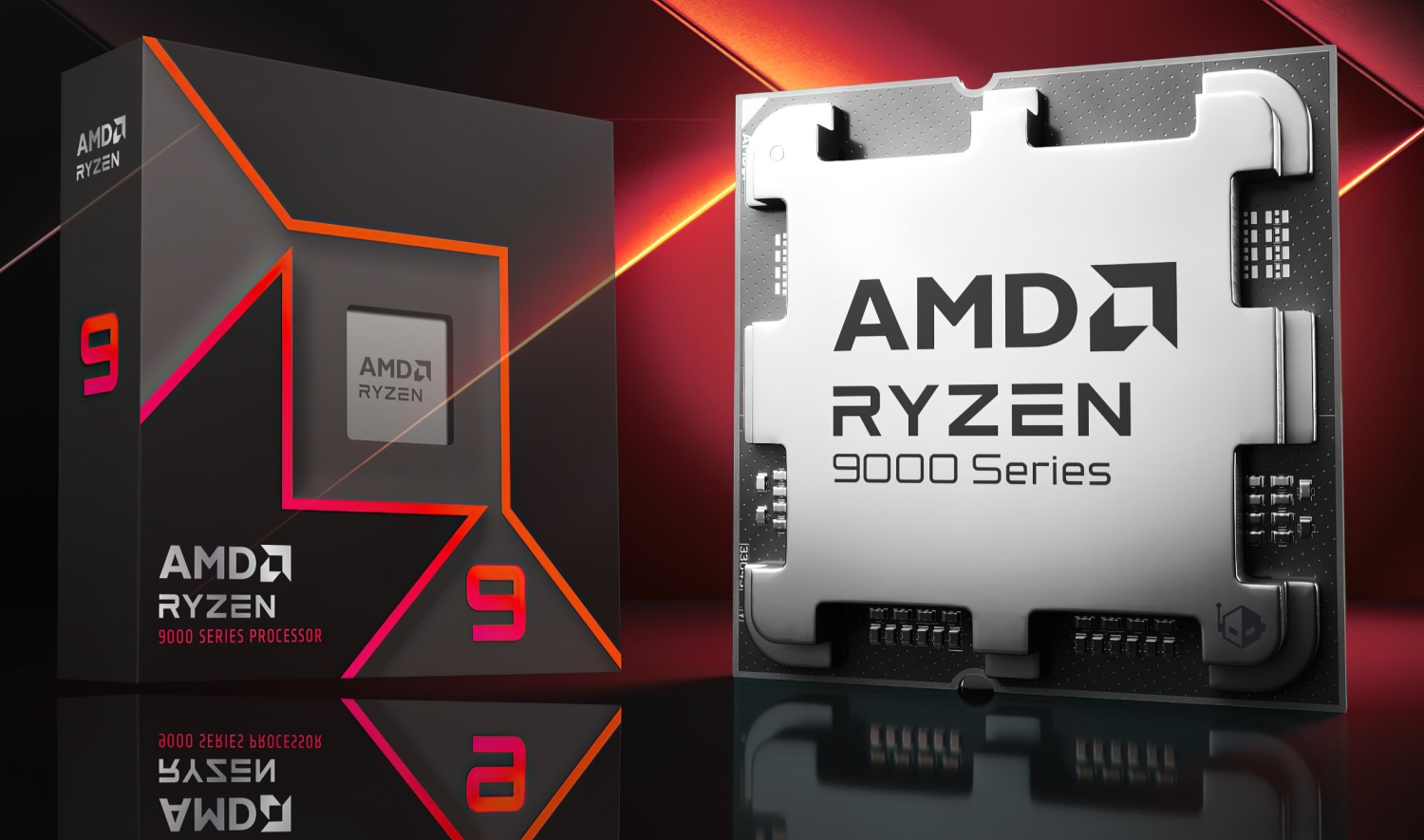
Released as the bridge to the modern era, Zen 4 (Ryzen 7000) introduced the AM5 socket, requiring DDR5 memory and supporting PCIe 5.0. It pushed clock speeds past the 5.0 GHz barrier for the first time. Zen 5 (Ryzen 9000), which matured through 2025 and remains a staple in 2026, focused on IPC (Instructions Per Clock) improvements and significantly higher efficiency, utilizing 4nm and 3nm process nodes.
Zen 6: The 2026 Frontier
As of 2026, Zen 6 has begun its rollout, focusing on "Venice" for the server market and "Medusa" for the consumer market. These chips feature a redesigned interconnect to speed up communication between chiplets and an even heavier emphasis on XDNA architecture—the specialized silicon used for local AI acceleration.
Ryzen Desktop Processors: Mainstream and Gaming
The Ryzen brand is divided into tiers: Ryzen 3, 5, 7, and 9. Each corresponds to a specific use case and performance expectation.
Ryzen 9: The Performance Enthusiast
Ryzen 9 processors are designed for users who balance heavy productivity (video editing, 3D rendering) with high-end gaming.
- Core Counts: Typically 12 to 16 cores (24 to 32 threads).
- Latest Models: Ryzen 9 9950X and the newer 10950X (Zen 6) variants.
- Best For: Multitasking and professional creative workflows.
Ryzen 7: The Gaming Sweet Spot
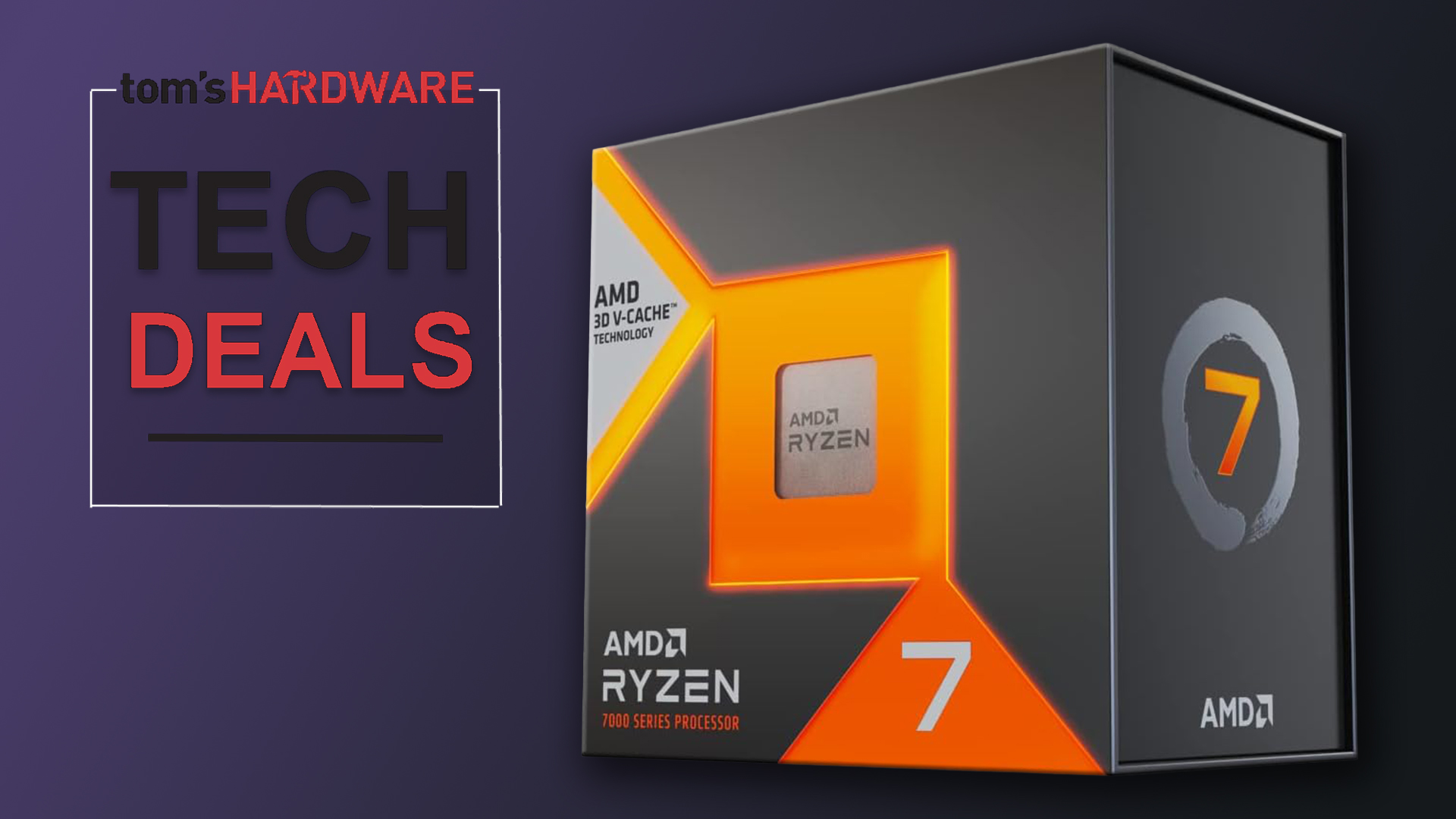
Ryzen 7 is arguably the most popular segment, particularly the X3D variants. These chips utilize AMD’s 3D V-Cache technology, which stacks additional L3 cache on top of the compute die to drastically improve gaming frame rates.
- Core Counts: 8 cores (16 threads).
- Key Model: Ryzen 7 9800X3D remains the gold standard for gaming in 2026.
- Best For: Dedicated gaming rigs and balanced streaming setups.
Ryzen 5: The Mid-Range Standard
The Ryzen 5 series provides the best value for the average user. It handles modern gaming and daily productivity without the premium price of the Ryzen 9.
- Core Counts: 6 cores (12 threads).
- Best For: Budget gaming and home office use.
Ryzen 3: The Entry-Level
Primarily found in pre-built systems or ultra-budget builds, Ryzen 3 offers 4 cores. In 2026, these are increasingly rare as 6-core processors have become the baseline for modern software.
Summary Table: AMD CPU Segments and Specifications (2026 Status)
| Brand | Target Market | Current Socket | Max Cores | Memory Support |
|---|---|---|---|---|
| Ryzen 9 | Enthusiast/Creator | AM5 | 16 | DDR5-6000+ |
| Ryzen 7 (X3D) | Hardcore Gaming | AM5 | 8 | DDR5-6000+ |
| Ryzen 5 | Mainstream User | AM5 | 6 | DDR5-5200+ |
| Threadripper | Workstation | sTR5 / sTRX5 | 96 | 4/8-Channel DDR5 |
| EPYC | Server/Data Center | SP5 / SP6 | 128 - 192 | 12-Channel DDR5 |
| Ryzen Mobile | Laptops/Handhelds | FP7/FP8 (Solder) | 8 - 16 | LPDDR5x |
Ryzen Mobile: Processors for Laptops and Handhelds
AMD’s mobile lineup uses a specific naming convention that identifies the year of release and the architecture. By 2026, the Strix Point and Fire Range architectures are the dominant forces in high-end portables.
The 4-Digit Naming Scheme
To understand "all" AMD mobile CPUs, you must decode the numbers (e.g., Ryzen 7 8840U):
- First Digit: The year of release (8 = 2024, 9 = 2025, 10 = 2026).
- Second Digit: The market segment (7 or 8 = Ryzen 7).
- Third Digit: The architecture (4 = Zen 4, 5 = Zen 5).
- Fourth Digit: Feature differentiation (0 = base, 5 = refreshed/faster).
H-Series vs. U-Series
- HX/H-Series: High-wattage (45W-55W+) chips found in gaming laptops. These are often desktop silicon adapted for mobile use.
- U-Series: Low-wattage (15W-28W) chips for thin-and-light ultrabooks, focusing on battery life and integrated graphics performance.
- Ryzen AI: In 2026, almost all mobile Ryzen chips include an NPU capable of 40-50+ TOPS (Tera Operations Per Second) to handle Windows Copilot+ features locally.
High-End Desktop (HEDT): Ryzen Threadripper
Threadripper exists for users whose needs exceed the 16-core limit of the mainstream AM5 platform. These CPUs are divided into the standard Threadripper (for enthusiasts) and Threadripper Pro (for enterprise workstations).
Capabilities and Connectivity
The 7000 and 9000-series Threadripper CPUs offer up to 96 cores based on the Zen 5 architecture. Their primary advantage is not just core count, but PCIe lanes. While a standard Ryzen CPU provides about 24-28 lanes, a Threadripper Pro system can provide up to 128 PCIe 5.0 lanes. This allows for massive multi-GPU arrays, multiple high-speed NVMe storage cards, and high-bandwidth networking cards.
Memory Channels
Unlike consumer CPUs that use dual-channel memory, Threadripper supports quad-channel and Threadripper Pro supports octa-channel (8-channel) memory. This bandwidth is crucial for simulation software, large-scale compiling, and scientific computing.
EPYC: The Backbone of the Data Center
The AMD EPYC line is responsible for the company’s massive growth in the server market. In 2026, the lineup is categorized by specific workload optimizations:
- Genoa (Standard): High-performance Zen 4/5 cores for general-purpose server workloads.
- Bergamo (Cloud Native): Uses "Zen 4c" or "Zen 5c" cores. These are physically smaller cores that are more power-efficient, allowing for up to 128 or 192 cores in a single socket to maximize thread density for cloud providers.
- Genoa-X (Technical Computing): Features 3D V-Cache for computational fluid dynamics (CFD) and finite element analysis (FEA).
- Siena (Edge/Telco): Optimized for lower power consumption and smaller form factors, ideal for edge computing and telecommunications infrastructure.
Key Technologies Explained
AM5 Socket Longevity
One of the most important aspects of the AMD overview is the Socket AM5 platform. Launched in 2022, AMD committed to supporting this socket through at least 2027. This means that a motherboard purchased today for a Zen 5 chip will likely support a future Zen 6 or Zen 6+ upgrade, providing a significantly better total cost of ownership compared to platforms that change sockets every two years.
Precision Boost Overdrive (PBO) and EXPO
- PBO: An automated overclocking technology that pushes the CPU to its maximum thermal and electrical limits to gain extra performance without manual voltage tuning.
- AMD EXPO: Similar to Intel's XMP, this is a one-click memory overclocking profile designed specifically for DDR5 on AMD platforms to ensure stability and low latency.
Chiplet Design (MCM)
AMD uses a Multi-Chip Module (MCM) approach. Instead of one large piece of silicon, they use multiple "Core Complex Dies" (CCD) and a separate "I/O Die" (IOD). This allows AMD to mix and match different process nodes—for example, using a cutting-edge 3nm node for the cores and a more mature 6nm node for the I/O—to keep costs down while maintaining performance.
Frequently Asked Questions
What is the difference between "Zen" and "Ryzen"?
Zen is the name of the microarchitecture (the internal design of the silicon), while Ryzen is the brand name of the consumer products. For example, a Ryzen 9 9950X processor is built using the Zen 5 architecture.
Can I use a Zen 5 CPU on an old AM4 motherboard?
No. Zen 4, Zen 5, and Zen 6 CPUs require the AM5 socket, which uses a Land Grid Array (LGA) design where the pins are on the motherboard rather than the CPU. AM4 is a Pin Grid Array (PGA) and is not physically or electrically compatible with newer chips.
What does the "G" suffix mean in Ryzen CPUs?
The "G" suffix (e.g., Ryzen 5 8600G) indicates that the processor is an APU (Accelerated Processing Unit). These chips feature significantly more powerful integrated graphics than the standard "X" or non-suffix models, allowing for entry-level gaming without a dedicated graphics card.
Is 3D V-Cache (X3D) worth it for non-gamers?
Generally, no. While the extra cache is revolutionary for gaming, many productivity applications (like video rendering or file compression) prefer higher clock speeds or more cores over raw cache size. Standard "X" series chips usually have higher base/boost clocks than their X3D counterparts.
What is "Ryzen AI" and do I need it?
Ryzen AI refers to the integrated NPU (Neural Processing Unit). In 2026, this is used for features like live background blur in video calls, real-time language translation, and local AI image generation. While not "required" for basic computing, it will become increasingly necessary as Windows and other operating systems integrate more AI-driven background tasks.
Practical Recommendation for 2026
If you are looking for the best performance-to-price ratio in 2026, the Ryzen 7 9000-series X3D models remain the top choice for gamers, while the Ryzen 9 9900X offers the best balance for professional creators. For those on a strict budget, the AM4 platform (Ryzen 5000 series) still offers viable "new-old-stock" or used value, but for any new build, the AM5 platform is the only recommended path to ensure future-proofing and support for DDR5 and PCIe 5.0 standards.