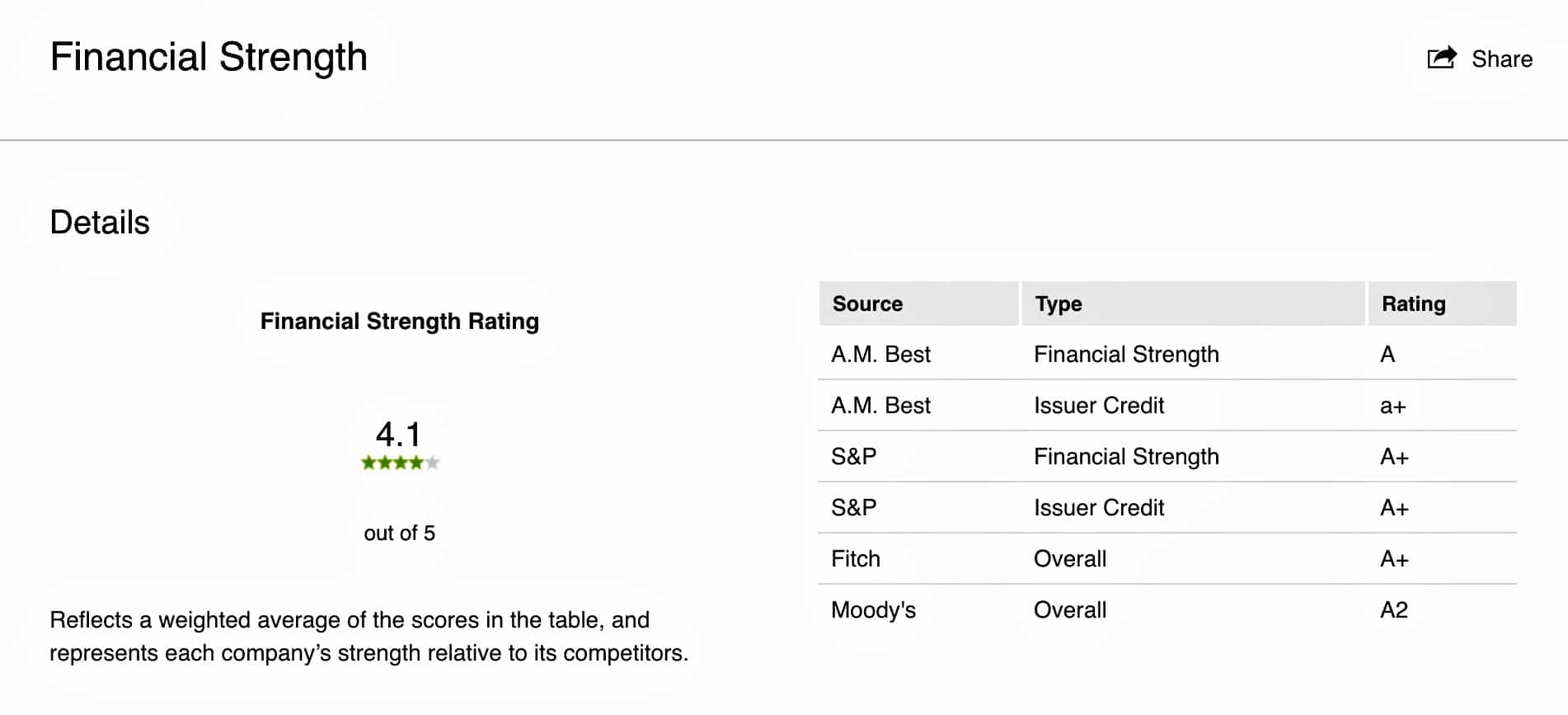
The AM Best rating for American General Life Insurance Company (AGL) is a critical indicator of the firm’s financial strength and its long-term ability to meet contractual obligations to policyholders. As of 2026, these ratings serve as an independent assessment of the insurer's balance sheet, operating performance, and business profile, providing consumers with a standardized metric for evaluating the stability of their life insurance provider before committing to long-term premiums.
Understanding the Role of AM Best in Insurance Evaluation
AM Best is the oldest and most widely recognized credit rating agency dedicated exclusively to the insurance industry. Unlike general credit rating agencies that assess a broad spectrum of corporations, AM Best focuses its methodology on the specific nuances of insurance risk, including actuarial reserve adequacy, liquidity, and exposure to market volatility.
When an insurance company receives a rating from AM Best, it is not merely a score of "good" or "bad." It is an opinion regarding the company's financial strength and creditworthiness. For policyholders, this rating is essential because life insurance is a multi-decade commitment. If a policyholder pays premiums for twenty or thirty years, they need assurance that the company will have sufficient capital reserves to pay out the death benefit when the time comes.
The AM Best rating system uses a specific scale ranging from A++ (Superior) to D (Poor). These ratings are periodically reviewed, and companies may be placed under review if significant events—such as major acquisitions, shifts in economic conditions, or changes in regulatory environment—impact their financial standing.
Decoding the Financial Strength Rating (FSR)
The Financial Strength Rating (FSR) is the primary metric consumers should focus on when researching American General Life Insurance Company. The FSR represents AM Best’s opinion of an insurance company’s ability to meet its ongoing insurance policy and contract obligations.
The scale is divided into two broad categories: Secure and Vulnerable.
- Secure Categories (A++, A+, A, A-): These ratings indicate that the company has a superior or excellent ability to meet its ongoing obligations.
- Vulnerable Categories (B+, B, B-, C++, C+, C, C-, D, E, F): These indicate varying degrees of weakness, ranging from fair to poor, suggesting that the company may struggle to meet its obligations under adverse conditions.
When analysts at AM Best evaluate American General, they look at several "building blocks" of financial health. This includes the strength of the balance sheet, the consistency of operating performance, the effectiveness of the business profile, and the level of enterprise risk management. If a company operates in a volatile market or has a high concentration of specific, risky assets, those factors will be weighed heavily in the final determination.
Why the AGL Rating Matters to Policyholders
For a consumer in 2026, the AM Best rating functions as a form of "due diligence" performed on your behalf. While it is possible to look at a company's public financial statements, interpreting those documents requires advanced accounting knowledge. AM Best distills the complex financial reality of a company like American General into a single, understandable grade.
A high rating suggests that the company is effectively managed and maintains sufficient capital buffers to survive economic downturns. In the life insurance industry, this is particularly important because insurers often manage long-term assets to cover long-term liabilities. If the company’s investment strategy is too aggressive or its reserves are underfunded, a downgrade in an AM Best rating acts as a leading indicator of potential future issues.
It is important to note that while AM Best ratings are highly respected, they are not guarantees. They are opinions based on available data. Furthermore, these ratings do not measure the "customer experience" or the speed at which a company pays out claims, but rather the underlying financial capacity to pay.
Components of the AM Best Analysis for AGL
The analysis performed by AM Best on American General Life Insurance Company—which is part of the Corebridge Financial group—involves a deep dive into several interconnected financial areas. Understanding these components explains why the rating may change over time.
Balance Sheet Strength
AM Best examines the quality of the company’s assets, the adequacy of its loss reserves, and its capitalization levels. They utilize the Best’s Capital Adequacy Ratio (BCAR) to determine if the company has enough "cushion" to withstand a significant, unexpected event, such as a localized catastrophe or a prolonged period of interest rate volatility.
Operating Performance
This assesses whether the company generates consistent earnings. An insurer that relies too heavily on investment income rather than traditional insurance underwriting profit might be flagged for higher risk. AM Best looks at the stability of the company’s revenue streams and its ability to maintain profitability even when market conditions are suboptimal.
Business Profile
This block evaluates the company’s market position, distribution channels, and diversification. An insurer that is heavily concentrated in one geographic region or one type of insurance product is generally considered riskier than a highly diversified firm with national or global reach. American General’s standing within the broader Corebridge Financial organization is a major factor here, as the strength of the parent company often influences the rating of the subsidiary.
Enterprise Risk Management (ERM)
Modern insurance regulation requires robust risk management. AM Best assesses how well American General identifies, measures, and manages risks, including market risk, credit risk, and operational risk. A company with a mature ERM framework is typically viewed more favorably.
Comparative Table of Financial Strength Ratings
The following table provides context for how the ratings are categorized. While specific ratings for American General are updated periodically on the AM Best website, this scale remains the standard for interpretation in 2026.
| Category | Rating | Description |
|---|---|---|
| Superior | A++, A+ | Exceptional financial strength and stable outlook. |
| Excellent | A, A- | Strong financial health; highly stable. |
| Good | B++, B+ | Good financial strength, but more vulnerable to change. |
| Fair | B, B- | Financial strength is adequate but susceptible to economic stress. |
| Marginal | C++, C+ | Weakened strength; high sensitivity to market conditions. |
| Weak | C, C- | Significant vulnerability to volatility. |
| Poor | D | Below the minimum standard for financial strength. |
Limitations and Nuances of Ratings
While AM Best ratings are an essential tool, they should not be the only factor in your decision-making process. Consumers often focus exclusively on the rating while neglecting other critical aspects of selecting a life insurance company.
Ratings are Lagging Indicators
Credit ratings are often reactive rather than proactive. While agencies monitor companies constantly, a rating change often follows a significant shift in financial performance. By the time a rating is downgraded, the underlying problem may have already persisted for several reporting cycles.
The "Parent-Subsidiary" Relationship
American General is a subsidiary. When checking ratings, it is crucial to understand if the rating assigned is for the specific subsidiary (AGL) or the holding company (Corebridge Financial). While they are often linked, there can be differences in the capitalization levels of individual legal entities. Always ensure you are looking at the FSR for the specific company writing your policy.
Service and Claims Experience
An insurer can have an "A" rating but provide a difficult, slow, or impersonal claims experience. Financial strength is a measure of capacity to pay, but it does not mandate the ease of the claims process. Many consumers find value in checking consumer satisfaction surveys or state insurance department complaint indices alongside the financial ratings.
How to Verify Current Ratings in 2026
If you are currently evaluating a policy or considering a purchase, you should always verify the latest information directly through authoritative sources.
- Visit the Official AM Best Website: The agency provides a searchable database where you can enter the legal name of the insurer to find the most recent rating action, the date of the report, and the outlook (e.g., Stable, Positive, or Negative).
- Check the Insurer's "Financials" Page: Most large insurance companies maintain a page on their corporate website dedicated to "Investor Relations" or "Financial Strength." They are required by state regulators to report their ratings transparently.
- Consult Your State Insurance Commissioner: Every state has a Department of Insurance. These offices track the financial health of the companies licensed to do business in their jurisdiction. They can confirm if the company is in good standing and has no pending regulatory actions.
Frequently Asked Questions
Does a lower AM Best rating mean the company is going to fail?
No. A lower rating does not signify immediate failure. It simply indicates that the agency views the company as having a lower threshold of capital relative to its risks. Even companies with lower ratings remain licensed and regulated by state authorities to ensure they maintain sufficient reserves to cover their liabilities.
Can an insurance company ask to have its rating removed?
Yes. An insurer can choose to be "non-rated" if they do not wish to participate in the AM Best rating process. However, for a major company like American General, maintaining a high-quality, transparent rating is a standard industry practice to signal stability to brokers and potential policyholders.
What is the difference between an FSR and an ICR?
The Financial Strength Rating (FSR) is specifically for the insurer’s ability to pay claims to policyholders. The Issuer Credit Rating (ICR) measures the company's ability to meet its senior unsecured financial obligations (debt). While related, they measure different things. For a life insurance policy, focus on the FSR.
How often are American General's ratings updated?
AM Best reviews ratings annually as part of a formal cycle, but they can be updated at any time if significant material information emerges. If the outlook changes to "Negative," it suggests a potential downgrade could occur in the future unless the company addresses the identified concerns.
If a company is rated "A," is it safer than an "A-"?
Yes, mathematically and according to the rating agency's methodology, "A" is superior to "A-." However, both fall within the "Excellent" category. The difference between adjacent rating categories is often subtle, whereas the difference between "A" and "B" is significant.
Do insurance regulators use these ratings?
Regulators perform their own rigorous financial examinations, but they do acknowledge independent ratings as part of the broader market oversight. The primary protection for consumers, however, remains the state-level guaranty associations, which act as a safety net in the rare event of an insurer's insolvency.
Practical Next Steps for Policyholders
If you are researching American General Life Insurance Company, you have already taken the right first step by prioritizing financial stability. To complete your assessment, consider the following actions:
- Request a Financial Summary: If you are working with an independent insurance agent, ask them to provide the current financial strength ratings from multiple agencies (such as Moody’s or Standard & Poor’s, in addition to AM Best) to get a more comprehensive view.
- Review Your Policy Objectives: If you are purchasing a term life insurance policy, the financial strength of the company is vital, but the length of the term matters. For a 10-year term, the company’s current stability is paramount. For a 30-year policy, you need to be comfortable with the company’s long-term corporate governance.
- Evaluate the Whole Package: Consider the premium costs, the underwriting requirements, and the specific riders or benefits included in your policy. A strong financial rating is the foundation, but the value of the policy is found in how well it meets your specific coverage needs.
By using the AM Best rating as one piece of a broader, well-researched decision-making process, you ensure that you are protecting your future with a company that possesses the financial bedrock required for long-term reliability.