During the 1990s, Alexandra Grant underwent a profound period of intellectual and artistic development, transitioning from a rigorous undergraduate education at Swarthmore College to the start of her graduate studies at the California College of the Arts. This decade served as the laboratory where she synthesized her multilingual upbringing in Mexico, France, and Spain with a deep academic interest in history, linguistics, and the visual arts, ultimately establishing the "text-as-image" philosophy that defines her career today.
The Academic Foundation: Swarthmore College (1990–1994)
Alexandra Grant’s journey through the 1990s began in the intense intellectual environment of Swarthmore College in Pennsylvania. Enrolling at the start of the decade, Grant pursued a Bachelor of Arts with a double major in History and Studio Art. This duality is critical to understanding her work; she was never interested in aesthetics alone, but rather in how visual markers represent historical and personal narratives.
The Influence of Liberal Arts
At Swarthmore, the 1990s were a time of significant discourse regarding postmodernism and the deconstruction of traditional narratives. Grant’s immersion in history provided her with a framework for understanding how "truth" is constructed through language and records. Meanwhile, her studio art practice allowed her to experiment with the physical manifestation of these ideas.
For many artists, the early 90s were a time of choosing between the conceptual and the technical. Grant chose both. Her education emphasized that an artist must be a "public intellectual," a role she would later fulfill through her various philanthropic and collaborative endeavors. By the time she graduated in 1994, she had developed a specialized interest in how the written word could be translated into a visual medium without losing its semantic weight.
The Post-Graduation Transition (1994–1998)
Following her graduation from Swarthmore, the mid-90s represented a period of professional and geographical transition for Grant. While this era of her life is less documented by major gallery catalogues, it was a time of "lived experience" that informed her later work. Having grown up in an itinerant fashion—living in Mexico City, Paris, and Madrid—Grant spent the mid-90s navigating the international art world and refining her linguistic skills.
Her fluency in English, Spanish, and French became more than just a tool for communication; it became a core subject of her art. During these years, she began to view language as a "sculptural" object—something that could be viewed from different angles, translated, and even "broken" to reveal new meanings.
The Move to California and Graduate Studies (1998–2000)
By the late 1990s, Grant relocated to the West Coast, a move that would prove pivotal for her career trajectory. She enrolled in the Master of Fine Arts (MFA) program at the California College of the Arts (CCA) in San Francisco and Oakland.
Developing the "Grantian" Style
At CCA, Grant began to move away from traditional figurative or abstract painting and toward the complex, text-heavy installations she is known for today. The late 90s art scene in San Francisco was vibrant, characterized by a mix of "Mission School" aesthetics and high-concept academic art. Grant found her niche in the latter, focusing on drawing and painting as ways to map out philosophical inquiries.
It was during these final years of the 1990s that she began exploring the works of writers who would become long-term collaborators or influences, such as the philosopher Hélène Cixous. Grant’s work began to resemble "maps" of thought, where lines and colors traced the movement of a sentence or the resonance of a specific word.
Technical Evolution in Drawing and Painting
Technically, Grant’s work in the late 90s moved toward a high degree of layering. She began using wax, intricate pencil work, and large-scale canvases to create "palimpsests"—surfaces where new writing or drawing is superimposed over partially erased older work. This mirrored her interest in history: the idea that the present is always written over the past.
| Milestone Year | Location | Major Achievement/Activity | Primary Focus |
|---|---|---|---|
| 1990–1991 | Swarthmore, PA | Commenced Undergraduate Studies | Integration of History and Art |
| 1994 | Swarthmore, PA | Earned B.A. in History and Art | Graduation and initial portfolio development |
| 1995–1997 | International/US | Professional Exploration | Linguistic immersion and early independent work |
| 1998 | San Francisco, CA | Entered CCA MFA Program | Transition to West Coast art movements |
| 1999 | San Francisco, CA | Advanced MFA Residency | Exploration of large-scale textual installations |
Linguistic Context and the 90s Art Movement
To understand Alexandra Grant in the 90s, one must understand the broader art historical context of the decade. This was the era of "Identity Politics" in art and the rise of the "Young British Artists" (YBAs) across the Atlantic. While much of the art world was focused on shock value or the body, Grant’s 90s trajectory was more aligned with the Conceptualists of the 1970s, updated for a new, globalized era.
Text as a Visual Medium
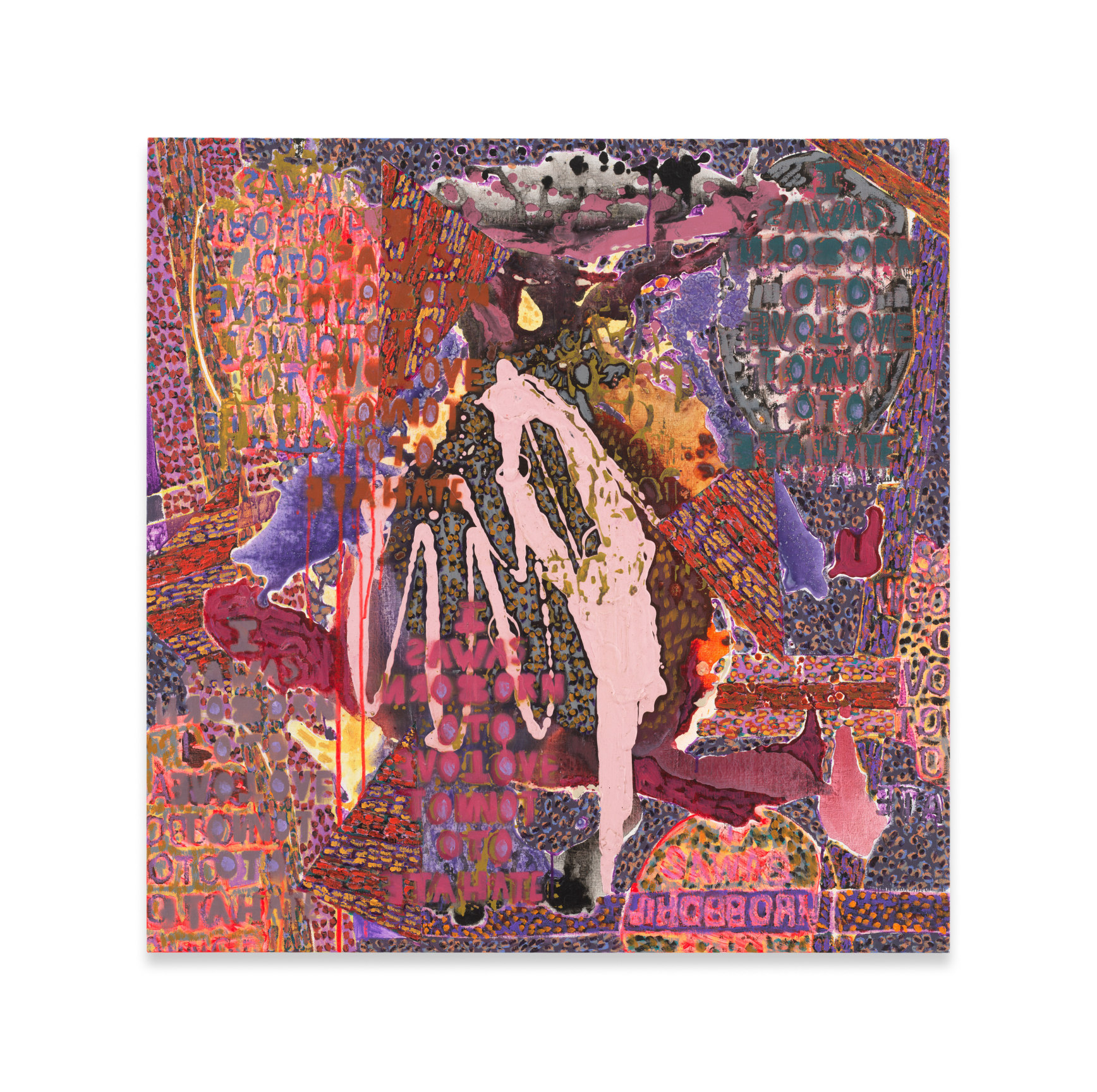
Grant’s use of text was distinct from the bold, political slogans of artists like Barbara Kruger or Jenny Holzer. Instead, Grant’s 90s work was more "lyrical." She treated text as a malleable substance. If Holzer used text to command, Grant used text to invite. Her 1990s sketches often featured handwritten excerpts from poetry or philosophy, which she would then distort or reflect (using "mirror writing") to force the viewer to slow down and truly "read" the image.
The Role of Mirror Writing
A technique Grant developed and refined during this period was mirror writing. By writing backward, she engaged the right hemisphere of the brain, creating a visual rhythm that decoupled the word from its immediate literal meaning. This technique, which became a hallmark of her 2000s exhibitions, had its roots in her 90s notebooks and student experiments. It served as a metaphor for the difficulty of communication and the beauty of "mis-translation."
The Impact of a Multilingual Upbringing
Grant's 1990s experience cannot be separated from her childhood. Because she spent her formative years in various countries, she did not view any one language as "native" in a restrictive sense. In the 90s, as she entered her 20s, this polyglot identity allowed her to navigate different social and academic circles with ease.
- Mexico (Childhood Influence): The vibrant colors and muralist traditions influenced her sense of scale.
- France (Adolescent Influence): The rigorous philosophical traditions of French structuralism and post-structuralism (Derrida, Cixous) provided the theoretical backbone for her MFA work.
- Spain (Linguistic Influence): The rhythmic nature of the Spanish language contributed to the "flow" of her textual drawings.
By the end of the 1990s, Grant had synthesized these influences into a cohesive artistic voice. She wasn't just an American artist; she was a global artist whose work reflected a world that was becoming increasingly interconnected and digital, even as she remained committed to the tactile, analog processes of painting and drawing.
Career Prerequisite: The Late 90s Networking
While Grant is now a globally recognized figure, the late 90s were about building the foundational relationships within the Los Angeles and San Francisco art communities. Her time at CCA allowed her to interact with mentors and peers who valued the intersection of literature and art.
This period was also characterized by her work in educational settings. Grant has frequently emphasized the importance of the exchange of ideas, and her late 90s experience included teaching assistantships and community engagement that would eventually lead to her founding the grantLOVE project. Though the project itself was founded later, the 90s provided the template for her belief that art should serve a community purpose and facilitate dialogue between different disciplines.
Comparison: Early 90s vs. Late 90s Style
| Feature | Early 90s (Undergrad) | Late 90s (Graduate) |
|---|---|---|
| Media | Traditional oil, charcoal, historical research | Mixed media, wax, large-scale paper, text |
| Theme | Historical narratives, literal representation | Semiotics, translation, mirror writing |
| Scale | Desktop and easel-sized works | Room-sized installations and tall scrolls |
| Philosophy | Learning the "rules" of art and history | Deconstructing language and visual perception |
Common Misconceptions About Grant’s 90s Period
When looking back from 2026, many fans of contemporary art assume Grant’s career began with her high-profile collaborations in the 2010s. However, her 1990s output reveals a disciplined artist who was deeply committed to her craft long before she became a household name.
One common misconception is that her work with text was a reaction to the digital age. In reality, her 90s work shows that her interest in language was born from the physical act of writing and the scholarly act of reading. It was a "slow art" movement of one, standing in contrast to the rapid-fire media culture of the late 1990s.
Frequently Asked Questions
Where did Alexandra Grant go to college in the 90s?
Grant attended Swarthmore College in Pennsylvania from 1990 to 1994, where she earned a BA in History and Studio Art. She later attended the California College of the Arts starting in 1998 for her MFA.
What kind of art was Alexandra Grant making in the 1990s?
During the 1990s, her work evolved from historical and figurative studies into conceptual "text-as-image" pieces. She began experimenting with mirror writing, large-scale drawings, and the use of linguistic theory as a visual framework.
Did Alexandra Grant live abroad in the 90s?
While she was primarily based in the United States for her education during the 90s, she traveled extensively and utilized the multilingual skills she had acquired while living in Mexico, France, and Spain during her childhood and adolescence.
Was Alexandra Grant famous in the 90s?
In the 1990s, Grant was an "emerging artist." She was well-respected within academic and local art circles in Philadelphia and San Francisco but had not yet reached the international fame that would come with her major solo exhibitions in the 2000s and 2010s.
How did the 90s influence her current work?
The 90s were the foundational years where she established her core themes: the relationship between language and identity, the use of mirror writing, and the importance of collaborative, multidisciplinary inquiry.
Practical Recommendation for Art Historians and Fans
For those looking to understand the depth of Alexandra Grant’s work, it is essential to look beyond the surface of her recent "Antigone" or "Century of the Self" series. Studying her 90s trajectory—specifically her time at Swarthmore—provides the necessary "decoder ring" for her contemporary pieces.
If you are a student or a collector, seeking out her early 1990s sketches or her MFA thesis work (where available in archives) reveals a meticulous attention to the weight of history. The best next action is to explore the California College of the Arts alumni archives or Swarthmore’s library records to see the early intersections of her historical research and visual output. Understanding the "History" major side of her degree is just as important as the "Art" major side for a full appreciation of her contribution to 21st-century conceptualism.