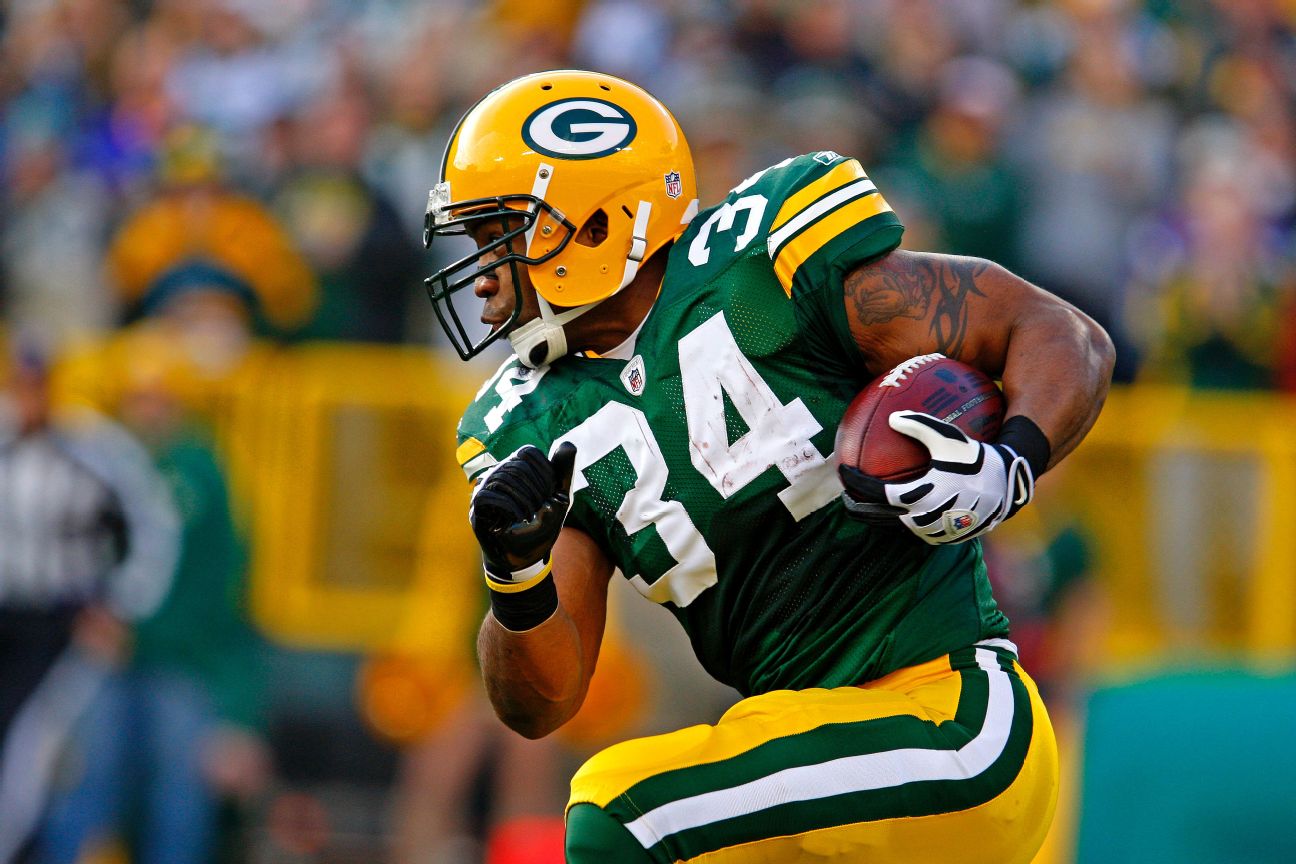
Ahman Green remains one of the most prolific running backs in the history of the Green Bay Packers, serving as a cornerstone of the franchise’s offense during the early 2000s. Acquired in a 2000 trade, Green redefined the team's rushing attack, blending speed, power, and versatility to shatter long-standing records. His tenure in Green Bay represents a significant transitional era for the organization as it evolved from the Brett Favre-led dominance of the 1990s into a more balanced offensive juggernaut.
The Origins of a Trade: Coming to Green Bay
Before he became a household name in Wisconsin, Ahman Green spent his initial professional years with the Seattle Seahawks. Drafted in the third round of the 1998 NFL Draft out of the University of Nebraska, Green struggled to find consistent footing in a crowded backfield. The Packers, seeking to rejuvenate their ground game, identified Green’s unique combination of size and breakaway speed as an ideal fit for Mike Holmgren’s successor systems.
In February 2000, the Packers traded cornerback Fred Vinson and a draft pick to the Seahawks in exchange for Green. While trades for running backs often carry significant risk, this acquisition is widely considered one of the most lopsidedly successful trades in Packers history. Green immediately seized the starting role, signaling the start of a seven-year run that would see him become the primary engine of the Packers' offensive scheme.
Breaking Records: The Statistical Dominance
Ahman Green’s statistical production between 2000 and 2006 established him as one of the most consistent workhorses in the National Football League. His breakout 2003 season remains the gold standard for Packers running backs. During that campaign, he rushed for 1,883 yards and 15 touchdowns, while adding another 367 yards receiving. This performance surpassed the legendary Jim Taylor for the single-season rushing record in franchise history, a benchmark that stood for over two decades.
His ability to contribute in the passing game distinguished him from many traditional "bruiser" backs of that era. Because Green was comfortable running routes out of the backfield or lining up in the slot, he forced opposing defensive coordinators to adjust their packages on every down. This versatility helped keep the Packers' high-powered passing attack balanced, preventing defenses from selling out to stop Brett Favre.
Key Milestones and Achievements
- Pro Bowl Selections: Green earned four consecutive Pro Bowl honors from 2001 through 2004, cementing his status as an elite NFL performer.
- All-Pro Honors: He was named to the Associated Press All-Pro team in 2001 and 2003.
- Franchise Records: During his time in Green Bay, he set the team record for the longest run from scrimmage (98 yards against the Denver Broncos in 2003).
Tactical Impact: The Evolution of the Offense
The presence of Ahman Green forced a shift in how the Packers approached the red zone and third-down situations. In the mid-to-late 90s, the Packers were synonymous with explosive passing plays. By the early 2000s, with Green in the backfield, the team possessed a "safe" option that could wear down opposing defensive lines.
When Green was at his peak, the Packers utilized a mix of power-zone blocking schemes that played to his patience and burst. He was particularly adept at reading the blocks of center Mike Flanagan and the interior offensive line, waiting for the gap to develop before accelerating through the secondary. This synergy between the offensive line and the running back allowed the team to control the clock and shorten games, a crucial component during the cold-weather games at Lambeau Field.
The Comparison: Contextualizing Performance
To understand where Green stands in the broader history of the Green Bay Packers, it is helpful to look at his production compared to other notable franchise backs.
| Player | Years with Packers | Primary Contribution |
|---|---|---|
| Jim Taylor | 1958–1966 | Power running and goal-line reliability |
| Ahman Green | 2000–2006, 2009 | Explosive speed and all-purpose versatility |
| Dorsey Levens | 1994–2001 | Receiving ability and situational grit |
| Eddie Lacy | 2013–2016 | Short-term physical impact and power |
While Jim Taylor remains the face of the Lombardi-era running game, Ahman Green effectively bridged the gap to the modern passing era. His durability, despite his aggressive running style, allowed the team to rely on him for 300+ touches per season during his prime.
Challenges and Physical Attrition
Professional running backs inherently face a shortened shelf life due to the physical nature of the position. By 2005, injuries began to slow Green’s progress. A significant quadriceps injury hampered his ability to hit the edge with his usual velocity, and as his efficiency dipped, the team’s offensive strategy began to drift back toward a pass-heavy approach.
The reliance on Green was a double-edged sword. While his high volume of carries made the team successful, it accelerated the physical wear and tear on his body. By the time he left for the Houston Texans in 2007, the "Ahman Green era" had effectively closed, leaving behind a team that was forced to undergo a major personnel shift, eventually leading to the transition from Brett Favre to Aaron Rodgers.
Legacy and Later Career
After a brief stint in Houston and a return to the Packers in 2009 for a final farewell, Green retired as the leading rusher in Packers history. While some of his records were eventually targeted by newer generations of players, his legacy as the most productive running back of the modern era remains secure.
Beyond his on-field performance, Green became a cultural fixture in Wisconsin. His personality and connection with the local fanbase helped him remain a staple of the Green Bay community long after his playing days ended. Today, he is frequently cited by fans and analysts alike as the player who brought legitimacy to the Green Bay rushing attack during a period when the league was rapidly changing.
Frequently Asked Questions
What is Ahman Green’s all-time rushing record for the Green Bay Packers? Ahman Green holds the franchise record for career rushing yards with 8,322 yards accumulated during his tenure. He also holds the team record for the most rushing yards in a single game (218 yards against the Detroit Lions in 2003).
How many Pro Bowls did Ahman Green make with the Packers? Green earned four consecutive Pro Bowl selections during his first stint with the Packers, spanning the 2001, 2002, 2003, and 2004 seasons.
Did Ahman Green play for any other teams besides the Packers? Yes, Green played for the Seattle Seahawks (1998–1999), the Houston Texans (2007–2008), and returned briefly to the Packers in 2009. He also briefly signed with the Montreal Alouettes of the CFL in 2010.
Why was the 2000 trade for Ahman Green considered so impactful? The trade was impactful because it provided the Packers with a high-caliber starter at a low acquisition cost. At the time, the Packers lacked a dominant feature back, and Green provided the explosive playmaking ability necessary to keep the offense balanced while Favre continued his prolific passing career.
Is Ahman Green in the Green Bay Packers Hall of Fame? Yes, Ahman Green was inducted into the Green Bay Packers Hall of Fame in 2014, recognizing his immense contributions and his standing as one of the most productive offensive players in team history.
Strategic Considerations for Fans and Historians
For those looking to analyze the Packers' history or appreciate the evolution of the running back position, studying Green’s 2003 season is a masterclass in peak performance. His success was not just a product of individual talent but also the result of a specific offensive philosophy that prioritized a mobile, multi-threat back.
If you are researching the team’s history for a project or general interest, focus on the transition in the early 2000s. The shift from a pass-first mentality to a balanced attack allowed the Packers to remain competitive during a period of transition in the NFC North. Understanding the "Ahman Green factor" is essential to grasping how the team navigated the post-Holmgren, pre-McCarthy era effectively.