If your Aflac life insurance policy has lapsed due to non-payment or other administrative oversights, you can typically initiate a recovery process by submitting a reinstatement request. This process usually requires completing specific documentation, known as reinstatement forms, which provide Aflac with updated information to determine if the policy can be returned to active status without requiring a brand-new application.
Understanding the Reinstatement Process
Life insurance policies provide financial security, but maintaining that security requires consistent premium payments. When a payment is missed, a grace period typically kicks in—a window of time (often 30 or 31 days) where your coverage remains active despite the late payment. If the payment remains unpaid beyond this grace period, the policy enters a lapsed state. Reinstatement is the formal process of restoring a lapsed policy to good standing, allowing you to avoid the complexities of applying for a new policy, which might be more expensive due to your current age or potential changes in health.
Reinstatement is not guaranteed. It is a contractual privilege granted by the insurer based on specific conditions. When you seek to reinstate an Aflac policy, the company must verify that you still meet the underwriting criteria that were in place when the policy was first issued. This is why the paperwork is critical; it serves as a self-declaration of your health and an agreement to settle outstanding financial obligations.
Identifying the Correct Documentation
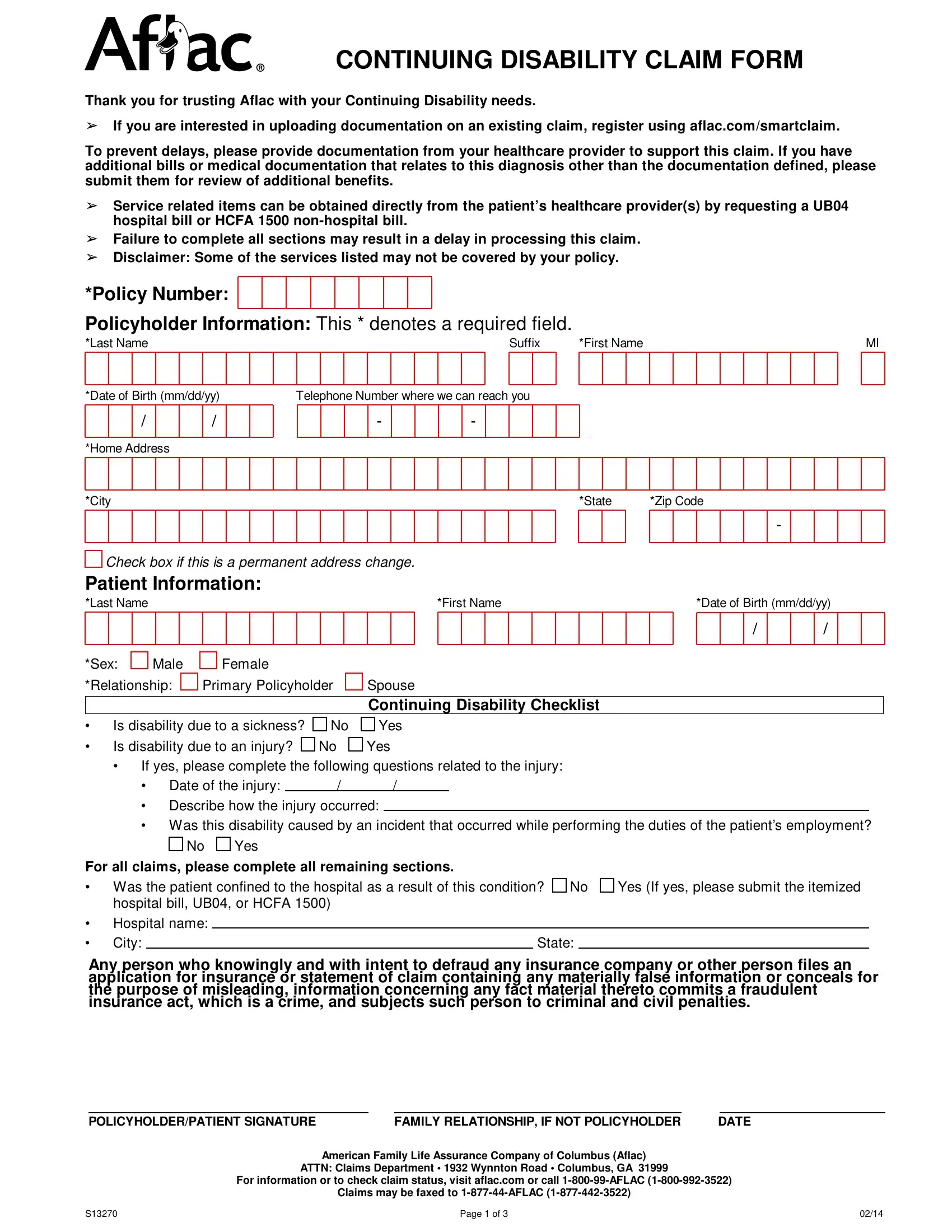
Aflac utilizes specific forms for reinstatement to maintain internal compliance and ensure that the risk assessment remains accurate. These forms are not always publicly listed as downloadable PDFs because the requirements can vary significantly based on:
- The length of the lapse: A policy that expired last week has different documentation needs than one that has been inactive for several months.
- The policy type: Term life, whole life, and supplemental policies often have distinct internal tracking systems.
- The state of residence: Insurance regulations are governed at the state level. Each state insurance commissioner may require specific language or disclosures on reinstatement forms.
Because of this variability, the most reliable source for your specific form is your personalized account portal or your local Aflac benefits coordinator. Attempting to use a generic form found on a third-party website can lead to processing delays or outright rejection.
Steps to Initiate Reinstatement
To successfully navigate the reinstatement process, follow these structured steps to ensure your request reaches the appropriate department at Aflac.
1. Contact Your Agent or Representative
Your local Aflac agent is your primary point of contact for administrative issues. If you do not have a direct line to an agent, you can find one through the official Aflac "Find an Agent" tool on their website. An agent can pull your specific policy number, check the exact date of lapse, and provide the exact form required for your situation.
2. Accessing the Policyholder Portal
Aflac provides a secure, web-based portal for policyholders. Once you log in, navigate to the "Policy Management" or "Support" section. Often, reinstatement options are located under "Payment Assistance" or "Policy Status." If the option to initiate reinstatement is not available digitally, the portal will typically provide a direct link to a secure messaging center where you can request the necessary paperwork.
3. Preparing Financial Arrears
Reinstatement requires more than just filling out a form. You will be expected to pay the "back premiums"—the amount that was unpaid during the lapse period. In some cases, interest or administrative fees may also apply, depending on the terms of your contract. Have your payment method (checking account or debit card) ready to be applied as soon as the reinstatement request is processed.
4. Submitting the Form
Once you receive the reinstatement form, fill it out with extreme accuracy. Discrepancies in your address, policy number, or health disclosures can trigger a manual review, which adds weeks to the process. Send the completed form via the channel specified by Aflac—typically a secure document upload portal or a verified mailing address provided on the form itself.
The Role of Evidence of Insurability (EOI)
A critical component of many reinstatement forms is the Evidence of Insurability (EOI) section. When a policy lapses, the insurer essentially resets its risk profile of you. You may be asked to disclose:
- Recent medical treatments or hospitalizations.
- New diagnoses or changes in health status.
- Changes in occupation that might affect risk classification.
If your health has declined since the original policy issuance, reinstatement might be denied. This is a standard industry practice, not specific to Aflac. Providing honest, detailed information is mandatory. Fraudulent misrepresentation on a reinstatement application can lead to the policy being contested or voided in the future when a claim is filed.
Comparison: Reinstatement vs. New Policy
Before committing to the reinstatement process, consider whether it remains the most economical choice.
| Feature | Reinstatement | New Policy Application |
|---|---|---|
| Underwriting | Limited/Simplified | Full Medical Underwriting |
| Pricing | Based on original age/rate | Based on current, older age |
| Waiting Periods | Usually none | New contestability/suicide clauses apply |
| Processing Time | Often faster | May take several weeks |
For most policyholders, reinstatement is preferable because it locks in the premium rates from the time you originally purchased the policy. If you are significantly older now, a new policy would almost certainly be more expensive, assuming you can still qualify.
Troubleshooting Common Reinstatement Issues
If your request for reinstatement is delayed, consider these common roadblocks:
- The "Final Lapse" Threshold: If a policy has been lapsed for an extended period (often exceeding one year, though this varies by policy), it may be ineligible for reinstatement. In this case, you must apply for a new policy entirely.
- Missing Signatures: Ensure all pages of the document are signed and dated. Digital signatures are generally accepted, but they must be authenticated through Aflac’s internal platforms.
- Incomplete Payment: If you submit the form but do not provide the funds to cover the back premiums, the document will remain in a "pending" state.
- Incorrect Mailing Address: Ensure your current contact information matches what is on file. If the company sends correspondence to an old address, you may miss a notification regarding additional requirements.
Frequently Asked Questions
What happens if I cannot afford the back premiums? Contact Aflac customer service immediately. While they cannot waive contractual premium requirements, they may be able to discuss payment plans or help you determine if a partial reinstatement or a conversion to a smaller policy face amount is possible.
How long do I have to reinstate my Aflac policy? The window varies, but it is typically between 30 days and 12 months after the end of the grace period. Check your policy document or the "Conditions of Reinstatement" section of your certificate for the exact time limit applicable to your coverage.
Will my premiums increase after reinstatement? Generally, no. Reinstatement aims to put you back into the position you were in before the lapse. You will pay the premiums you missed, but the ongoing monthly rate should remain the same as defined in your original contract.
Does reinstatement restart the contestability period? This depends on state law and specific contract language. In many cases, a new period may begin regarding the statements you make on the reinstatement form itself, though the original contestability period for the policy usually remains tied to the original effective date.
Can I reinstate a policy that was canceled due to fraud? No. Policies terminated due to material misrepresentation or fraud are generally not eligible for reinstatement.
Professional Guidance and Next Steps
Navigating insurance administration can be daunting, but it is a necessary task to protect your family's financial future. If you find yourself struggling with the paperwork or if you are unsure about the status of your policy, do not hesitate to contact Aflac’s corporate headquarters or your specific regional office. They are the only entities authorized to interpret the terms of your contract and process your reinstatement.
Your next action should be to log into your Aflac policyholder account to verify the current status of your policy. If it is labeled as "Terminated" or "Lapsed," immediately request the reinstatement packet specific to your plan. Do not delay, as your eligibility for reinstatement is often tied to a strict, time-sensitive window that, once closed, cannot be reopened.