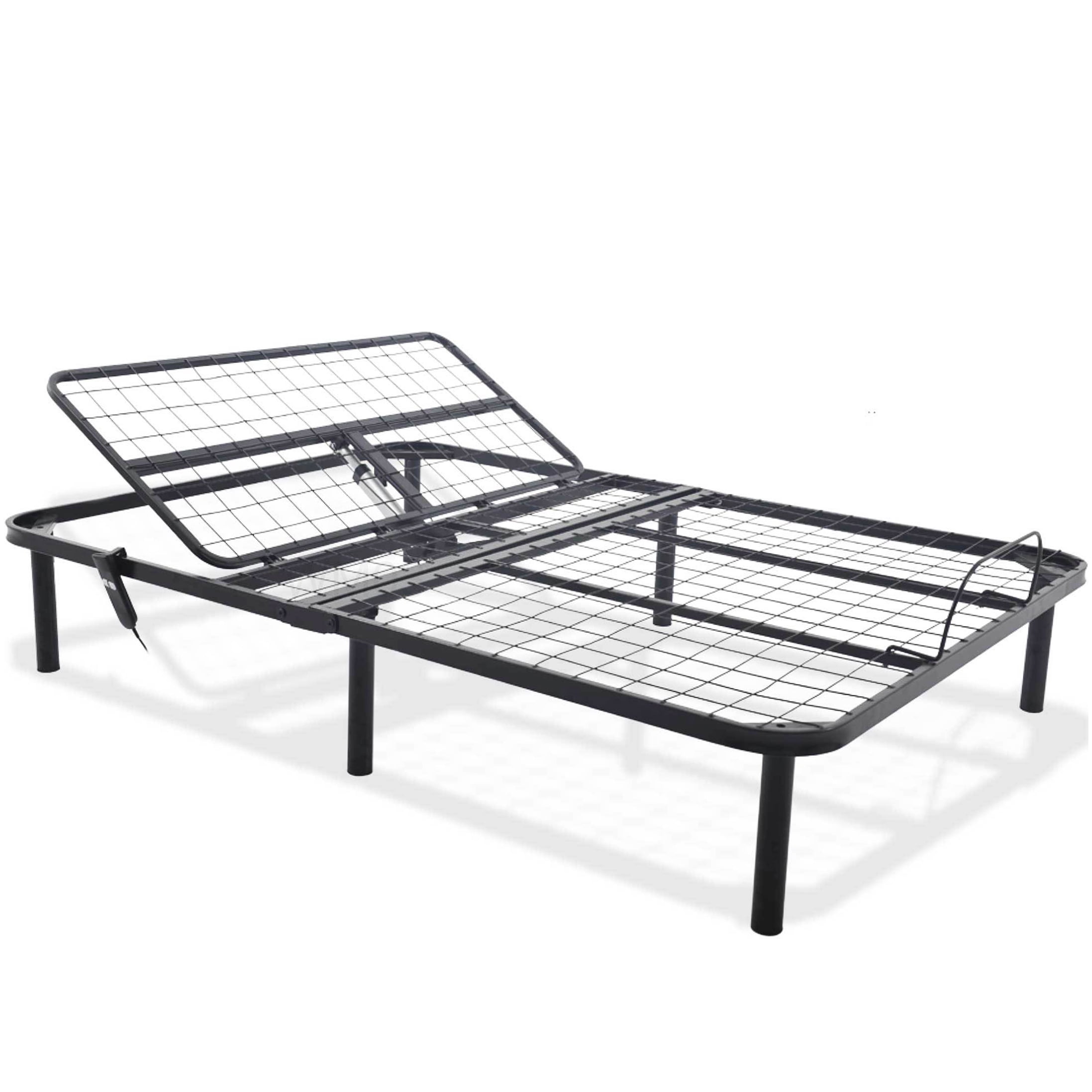
Adjustable bed frames enhance comfort by allowing precise control over spinal alignment and pressure distribution. By raising the head or legs, these frames can alleviate respiratory issues, improve circulation, and reduce strain on the lower back. This customization shifts the body into positions that a traditional flat mattress simply cannot achieve, promoting deeper, restorative sleep.
The Mechanics of Articulation and Ergonomic Support
To understand how adjustable bed frames impact comfort, one must first understand the concept of articulation. In the context of sleep systems, articulation refers to the frame's ability to bend at specific pivot points. Most modern frames feature at least two zones of movement—the upper body (head) and the lower body (foot)—though premium models often include a third pivot point for lumbar support or a "neck tilt" feature.
When a person lies on a traditional flat mattress, gravity exerts uniform downward pressure. However, the human body is not flat. The natural curves of the spine, particularly the lumbar region, often remain unsupported on a flat surface, leading to muscle tension as the body tries to maintain its own alignment during the night. By raising the head or foot sections, the bed frame contours to the body's natural shape. This eliminates the gaps between the mattress and the body, effectively "cradling" the sleeper and distributing weight across a larger surface area.
This redistribution of weight is the primary driver of physical comfort. When weight is concentrated on specific points—such as the hips and shoulders—it restricts blood flow and irritates nerves, leading to the tossing and turning known as sleep fragmentation. Lowering or raising segments of the bed allows for a personalized "pressure map," ensuring that no single part of the anatomy bears an undue burden.
Impact of Head Elevation on Respiratory and Digestive Comfort
One of the most immediate benefits of raising the head of an adjustable bed frame is the improvement of airway patency. When lying flat, gravity can cause the soft tissues at the back of the throat to collapse, which is a primary cause of snoring and obstructive sleep apnea.
Mitigation of Snoring and Apnea
By elevating the torso by just 7 to 15 degrees, gravity helps keep these tissues in place. This slight incline opens the windpipe, allowing for smoother airflow. For many users, this elevation reduces the frequency of snoring episodes and may alleviate mild cases of sleep apnea. In 2026, many high-end adjustable frames come equipped with "anti-snore" presets that can be activated via remote or even automatically triggered by integrated biometric sensors that detect the sound of snoring.
Relief from Acid Reflux and GERD
Comfort is not solely about muscles and bones; internal health plays a massive role in how well one sleeps. Gastroesophageal Reflux Disease (GERD) and general acid reflux are often exacerbated by lying flat, as stomach acid can more easily travel up the esophagus. Raising the head of the bed utilizes gravity to keep gastric contents in the stomach. Medical professionals often recommend an incline of 6 to 8 inches for chronic sufferers. Unlike using a stack of pillows, which can crimp the neck and cause cervical pain, an adjustable bed frame inclines the entire upper torso, maintaining a straight and comfortable alignment while providing the necessary elevation.
Reducing Sinus Pressure
For individuals dealing with chronic allergies or seasonal colds, lying flat often leads to a "clogged" feeling in the sinuses. Elevating the head allows for natural lymphatic drainage and prevents the buildup of pressure in the maxillary and frontal sinuses. This makes breathing through the nose easier, which is essential for achieving the REM stages of sleep.
The Physiological Benefits of Raising the Legs
Raising the lower portion of an adjustable bed frame impacts the circulatory system and the lower spine. While head elevation is often about "breathing and digestion," foot elevation is primarily about "recovery and relief."
Improved Blood Circulation and Edema Reduction
Raising the feet above the level of the heart—a position often referred to as "leg elevation therapy"—is a standard recommendation for individuals with poor circulation or edema (swelling). When the legs are elevated, gravity assists the venous return of blood to the heart. This reduces the workload on the cardiovascular system and helps prevent blood from pooling in the lower extremities. This is particularly beneficial for individuals who spend long hours standing or those with conditions like varicose veins.
Decompressing the Lumbar Spine
One of the most common causes of sleep-related discomfort is lower back pain. When the legs are flat, the psoas muscle can pull on the lower spine, increasing the arch (lordosis) of the lower back and causing tension. By raising the foot of the bed, the knees are slightly bent, which tilts the pelvis back and flattens the lumbar spine against the mattress. This "neutralization" of the spine allows the muscles in the lower back to fully relax, providing significant relief for those with sciatica or herniated discs.
The Science of the Zero-Gravity Position
The most famous configuration for an adjustable bed frame is the Zero-Gravity position. Originally developed by NASA to help astronauts cope with the intense g-forces of takeoff, this position has been adapted for home use to maximize sleep comfort.
In the Zero-Gravity position, the head is raised slightly above the heart, and the knees are elevated to be roughly level with the chest. This creates an approximate 120-degree angle at the hips. The primary comfort impacts of this position include:
- Total Muscle Relaxation: By mimicking the body's "neutral posture," the Zero-Gravity position requires the least amount of muscular effort to maintain.
- Maximum Pressure Relief: Weight is distributed most evenly across the mattress in this state, virtually eliminating pressure points on the tailbone and shoulder blades.
- Enhanced Lung Capacity: The chest is positioned in a way that allows the lungs to expand more fully with less effort.
| Position Name | Head Angle | Foot Angle | Primary Benefit | Best For |
|---|---|---|---|---|
| Flat | 0° | 0° | Traditional feel | Stomach sleepers |
| Zero-Gravity | 15° | 30° | Weightlessness | Back pain & circulation |
| Anti-Snore | 10-12° | 0° | Airway opening | Snorers & GERD |
| TV/Reading | 45-60° | 15° | Upright support | Lifestyle/Activities |
| High Leg | 0° | 40°+ | Venous drainage | Swollen feet/Edema |
Impact on Joint Pain and Chronic Conditions
For individuals living with arthritis or fibromyalgia, the transitions of getting in and out of bed can be as painful as the sleep itself. Adjustable bed frames impact comfort by assisting with these transitions. By raising the head to a nearly seated position, a user can "swing" their legs out of bed with much less strain on the core and hip joints.
Furthermore, for those with osteoarthritis in the knees or hips, the ability to micro-adjust the angles of the bed allows them to find the "sweet spot" where joint inflammation is least aggravated. Even a change of two or three degrees in leg elevation can significantly alter the tension on the patellar tendon or the hip capsule, making the difference between a restless night and a restorative one.
Evolution of Comfort: Technological Features in 2026
As of 2026, the technology behind raising and lowering bed frames has evolved to provide "active" comfort rather than just "passive" support. Modern frames now include features that respond to the sleeper’s movements in real-time.
- Wall-Hugging Technology: Older adjustable beds would move the sleeper away from their nightstand as the head was raised. Modern "wall-hugger" engineering ensures that as the head rises, the base glides back toward the wall, keeping the user in reach of their lamp and water.
- Silent Drive Motors: The mechanical vibration and noise of adjusting a bed can be a source of discomfort for a sleeping partner. Current 2026 models utilize brushless DC motors that operate at decibel levels near total silence.
- Lumbar Bridge Adjustments: Beyond just "head and foot," many frames now feature a lumbar bridge that can be raised or lowered independently. This provides targeted support to the small of the back, which is crucial for side sleepers who need more "fill" in the waist area to keep their spine straight.
- Biometric Syncing: Some systems now integrate with wearable health trackers. If the tracker detects a spike in heart rate or a drop in blood oxygen, the bed can subtly adjust its angle to optimize the sleeper's physiology without waking them.
Choosing a Compatible Mattress for Maximum Comfort
The impact of raising and lowering a bed frame is heavily dependent on the mattress paired with it. A mattress that is too stiff will "bridge" (create a gap between the mattress and the frame), while one that is too flimsy will not provide the necessary support once angled.
- Memory Foam: Generally considered the best for adjustable bases because of its inherent flexibility and ability to contour to the frame's angles without losing structural integrity.
- Latex: Highly durable and flexible, offering a more "responsive" feel than memory foam while still bending easily.
- Hybrid Mattresses: These can be used if they feature "pocketed coils." Traditional innerspring mattresses with a connected wire grid cannot be used on adjustable frames, as the wire will bend and snap.
- Air Beds: Specifically designed high-end air beds (like those from Sleep Number) are often compatible, provided the air chambers are designed to flex.
Maintenance and Operational Limitations
To maintain the comfort levels provided by an adjustable frame, users must be aware of weight capacities and motor maintenance. Overloading a frame—especially when it is in an articulated position—can strain the motors and lead to jerky movements that disrupt sleep.
Most residential adjustable frames have a weight limit ranging from 650 to 850 lbs, which includes the weight of the mattress and the sleepers. It is also vital to ensure that the "retainer bars" (the metal bars at the foot of the bed) are properly installed. Without them, the mattress will slide off the frame as the head is raised, creating a significant comfort and safety issue.
Frequently Asked Questions
Does sleeping with the head raised cause neck pain?
If done correctly, it should not. Neck pain usually occurs if only the head is propped up (like with multiple pillows), which chin-tucks the sleeper. An adjustable bed frame raises the entire upper torso, keeping the neck in a neutral line with the spine. For best results, use a low-profile pillow when the bed is elevated.
Can side sleepers use adjustable bed frames?
Yes, though the adjustments are usually more subtle than for back sleepers. Side sleepers often find comfort by slightly raising the head and the foot to create a shallow "cradle" that relieves pressure on the shoulders and hips.
Are adjustable bed frames loud to operate at night?
Most modern frames produced in the last few years use high-quality DC motors that are very quiet. While there is a mechanical hum, it is generally not loud enough to wake a partner, especially in models with "whisper-quiet" designations.
Will an adjustable bed frame ruin my current mattress?
It depends on the mattress type. Memory foam, latex, and pocketed coil mattresses are built to flex. However, a traditional "Bonnell spring" or continuous wire mattress will be permanently damaged if used on an adjustable base.
Is the Zero-Gravity position safe for everyone?
For most people, it is highly beneficial. However, individuals with specific medical conditions, such as certain types of spinal fusion or recent abdominal surgeries, should consult their physician. The position is generally praised by organizations like the Mayo Clinic for reducing physical stress.
Final Recommendation
When considering how adjustable bed frames impact comfort, the goal should be to move beyond "trial and error." Start by identifying your primary sleep disruption—whether it is lower back tension, snoring, or poor circulation. Use the Zero-Gravity setting as a baseline for back pain relief, and utilize slight head elevation for respiratory issues. To ensure long-term satisfaction, prioritize a frame with wall-hugging technology and a mattress with high conformability, such as memory foam or specialized hybrid units. For those with chronic health conditions, a consultation with a physical therapist can help determine the exact degrees of elevation required for your specific anatomy.