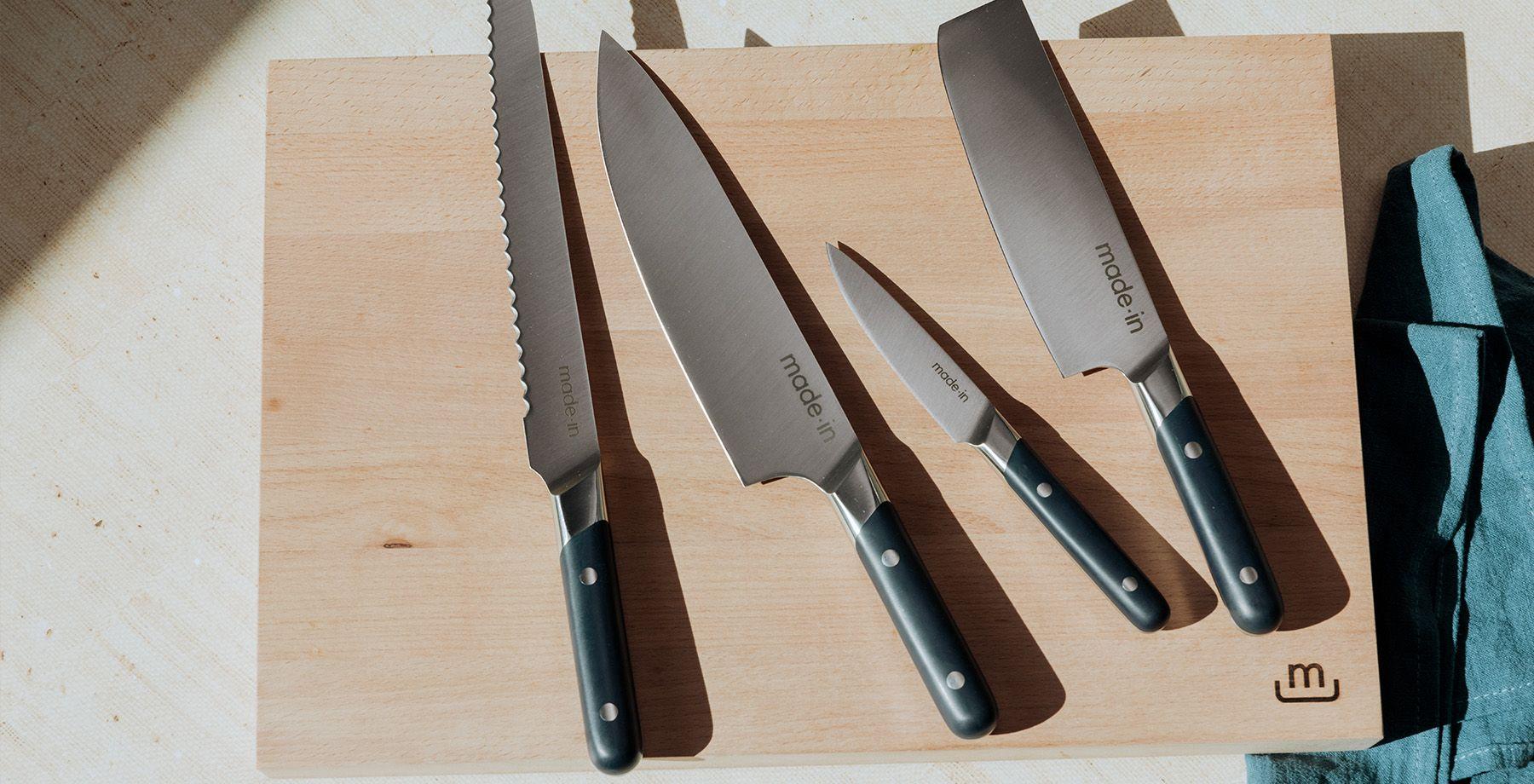
Building a versatile and efficient home kitchen begins with selecting the right core blades, as a well-chosen collection of high-performing knives transforms food preparation from a tedious chore into a seamless culinary experience. Rather than purchasing bulky, pre-packaged blocks filled with specialty utensils that rarely see use, most home cooks can accomplish nearly every kitchen task with just five foundational blades: a chef's knife, a paring knife, a serrated utility or bread knife, a utility knife, and a boning or slicing knife. Understanding the unique geometry, steel composition, maintenance requirements, and ideal applications of each blade ensures you invest in durable tools that elevate your cooking precision and kitchen safety.
1. The Chef's Knife (The Workhorse)
No home kitchen can function efficiently without a reliable chef's knife, universally regarded as the absolute anchor of any cutlery collection. Typically ranging from 6 to 10 inches in length—with 8 inches serving as the most popular and balanced standard for the majority of home cooks—this multi-purpose tool handles approximately 80 to 90 percent of all everyday cutting tasks.
Core Design and Mechanics
A classic Western-style chef's knife features a curved belly that allows the blade to rock smoothly against a cutting board, facilitating rapid mincing of herbs, garlic, and onions. Japanese-style chef's knives, often known as gyutos, typically feature flatter profiles, thinner cross-sections, and harder steel alloys optimized for push-cuts and precise, paper-thin slices. The width of the blade provides vital knuckle clearance above the cutting board and doubles as a convenient flat surface for crushing garlic cloves.
Primary Applications
- Chipping and Dicing: Breaking down root vegetables, squashes, and potatoes into uniform cubes.
- Mincing: Rapidly processing leafy herbs, shallots, and aromatics using a rock-and-chop motion.
- Slicing Proteins: Cutting raw or cooked meats, poultry, and fish into portioned fillets or strips.
When evaluating a chef's knife, prioritize how the handle feels in your palm and whether the balance point—where the blade meets the handle—feels natural. A full-tang construction, where the steel of the blade extends entirely through the handle, provides superior durability, weight distribution, and structural integrity under heavy pressure.
2. The Paring Knife (Precision Detail Work)
Where the chef's knife provides heavy-duty power and reach, the paring knife delivers absolute control for delicate, intricate tasks that require close proximity to the blade. Featuring a short, narrow blade typically measuring between 3 and 4 inches, this knife is essentially a scaled-down chef's knife designed to be held comfortably in the air rather than rested flat on a cutting board.
Control and Ergonomics
Because of its diminutive size, the paring knife allows for exceptional maneuverability. Cooks frequently hold the food item in one hand and the paring knife in the other, making ergonomics and a secure, slip-resistant handle grip paramount. Both forged and stamped variations are widely available, though forged options generally offer a more substantial weight and heel.
Primary Applications
- Hulling and Coring: Removing strawberry stems, apple cores, and tomato eyes with pinpoint accuracy.
- Peeling: Scraping skins off citrus fruits, root vegetables, and tubers with minimal waste of the edible flesh underneath.
- Detailed Scoring: Creating decorative patterns on pastries, scoring fat caps on roasts, or carving small garnishes.
3. The Bread Knife / Serrated Utility Knife (Textural Mastery)
The serrated knife is a specialized instrument engineered to conquer foods with hard, unyielding exteriors and soft, delicate interiors without crushing or tearing them. While often referred to simply as a bread knife, its utility extends far beyond loaves of sourdough, making it an indispensable asset in any well-rounded kitchen.
The Mechanics of Serration
Unlike smooth-edged blades that slice by pressing downward and sliding across a surface, a serrated knife features a series of sharp, saw-like teeth. These points pierce hard crusts or waxy skins, while the recessed valleys slice cleanly through the soft crumb or juicy interior beneath. This design minimizes friction and prevents foods like soft sandwich bread or ripe tomatoes from being squashed into flat clumps.
Primary Applications
- Baking: Slicing artisan loaves, crusty baguettes, soft brioche, and delicate sponge cakes without generating excessive crumbs.
- Produce Processing: Piercing the tough, waxy skins of tomatoes, peaches, bell peppers, and citrus fruits.
- Pastry Work: Levelling cake layers or slicing through layered pastries and delicate tortes.
Because sharpening serrated blades requires specialized diamond files and meticulous individual attention, investing in a high-quality stainless steel serrated knife that holds its factory edge for years is a smart long-term strategy.
4. The Utility Knife (The Mid-Sized Mediator)
Bridging the noticeable physical and functional gap between the bulky chef's knife and the diminutive paring knife, the utility knife usually features a narrow blade measuring between 5 and 6 inches. While some purists argue that a skilled cook can manage without one, its specific dimensions make it exceptionally handy for quick, mid-sized preparation tasks that do not justify pulling out a full-sized chef's knife.
Everyday Versatility
The utility knife shines when working with ingredients that are slightly too large for a 3.5-inch paring knife but do not require the heavy-duty heft of an 8-inch chef's blade. Its slender profile allows for great agility when making shallow cuts or trimming fats from smaller cuts of meat.
Primary Applications
- Sandwich Preparation: Slicing cucumbers, radishes, hard-boiled eggs, and blocks of cheese.
- Produce Management: Halving avocados, slicing medium-sized stone fruits, and trimming green beans.
- Quick Kitchen Tasks: Any situation where a smaller cutting board is used or when prepping a single snack item quickly.
5. The Boning or Slicing Knife (Specialized Protein Handling)
The fifth essential knife depends heavily on your personal cooking habits, but for most home kitchens that prepare meat, poultry, or fish, a specialized boning knife or a long slicing knife rounds out the core quintet. A boning knife features a narrow, highly flexible or semi-stiff blade (usually 5 to 6 inches) that tapers to an ultra-sharp point, allowing the cook to navigate closely around bones, joints, and connective tissue. Alternatively, if you frequently roast large cuts of beef, pork, or whole turkeys, a long, slender slicer (or carving knife) with a granton edge—dimples etched along the side to prevent meat from sticking—serves this category brilliantly.
Navigating Bone and Muscle
For home butchers and enthusiastic cooks who buy primal cuts of meat to break down themselves, a boning knife reduces food waste by ensuring maximum meat is cleanly separated from bones. The flexibility of the blade allows it to bend smoothly along contours, making poultry deboning significantly easier.
Primary Applications
- Meat Butchery: De-boning chicken thighs, trimming silver skin from tenderloins, and removing fat caps.
- Fish Filleting: Separating delicate flesh from salmon or whitefish backbones and skin.
- Roast Carving: Producing clean, uniform slices of roasted meats without shredding the fibers.
Comprehensive Comparison of Essential Kitchen Knives
To help you visualize how these five foundational tools complement one another, review the structural and functional breakdown below:
| Knife Type | Typical Blade Length | Primary Edge Style | Main Purpose | Ideal Skill Level |
|---|---|---|---|---|
| Chef's Knife | 6 to 10 inches | Straight or Curved (Plain) | General chopping, dicing, and mincing | Beginner to Professional |
| Paring Knife | 3 to 4 inches | Straight (Plain) | Detailed peeling, hulling, and coring | All Levels |
| Bread Knife | 8 to 10 inches | Serrated (Saw-tooth) | Cutting crusty bread and soft produce | All Levels |
| Utility Knife | 5 to 6 inches | Straight or Serrated | Mid-sized prep and sandwich making | Intermediate |
| Boning/Slicing Knife | 5 to 9 inches | Flexible/Stiff (Plain) | Butchering meat, deboning, and carving | Intermediate to Advanced |
Material Composition: Forged vs. Stamped Blades
When shopping for these five essential home kitchen knives, you will frequently encounter two primary manufacturing methods: forged and stamped. Understanding the differences is critical for assessing durability, price point, and overall value.
Forged Knives
Forged knives are crafted from a single solid bar of heated steel that is pounded and shaped into form—either by traditional artisan blacksmiths or modern industrial drop-hammers. This intense thermal and mechanical processing aligns the steel's grain structure, resulting in a heavier, more rigid blade that typically features an integrated bolster (the thick junction where the blade meets the handle) for added finger protection and balance. Forged knives generally hold their edge longer and offer a substantial, traditional feel in the hand.
Stamped Knives
Stamped knives are punched out of a large sheet of rolled steel, much like cutting cookies out of dough, and are subsequently heat-treated, ground, and sharpened. Historically viewed as inferior, modern manufacturing technology has allowed stamped knives to reach exceptional levels of performance. They are lighter, more flexible, and usually more budget-friendly than forged alternatives, making them an excellent choice for cooks who experience hand fatigue from heavy blades.
Essential Maintenance and Care Guidelines
Purchasing high-quality knives is only half the battle; proper maintenance is mandatory to preserve their performance and longevity. Improper care can ruin even the most expensive blades within months.
- Never Put Knives in the Dishwasher: The harsh detergent granules, extreme water temperatures, and violent rattling against other utensils inside a dishwasher will dull edges, pit steel, and warp wooden handles. Always wash knives immediately by hand with warm, soapy water and dry them thoroughly with a towel.
- Use Proper Cutting Boards: Avoid cutting directly on hard surfaces like granite, glass, ceramic, marble, or stainless steel counters, as these materials instantly roll and dull fine steel edges. Stick to end-grain or face-grain wooden boards and high-density polyethylene plastic boards.
- Honing vs. Sharpening: Honing with a steel rod realigns microscopic burrs that bend during normal use; this should be done every few uses. Sharpening actually removes microscopic layers of metal to create an entirely new, razor-sharp edge and should typically be performed once or twice a year depending on usage frequency.
- Safe Storage: Never toss loose knives into a crowded kitchen drawer where blades can strike other metal tools, dulling edges and posing safety hazards. Utilize a wooden knife block, an in-drawer wooden tray insert, a magnetic wall-mounted knife strip, or individual blade guards.
Frequently Asked Questions
Do I really need all five of these knives to start cooking at home?
No. If you are operating on a strict budget or minimalist kitchen space, you can comfortably accomplish nearly all basic cooking tasks with just a high-quality 8-inch chef's knife and a 3.5-inch paring knife. Adding a bread knife later when baking or working with crusty produce completes a practical three-piece starter kit.
How often should I sharpen my home kitchen knives?
Frequency depends entirely on how often you cook and the hardness of the steel, but as a general rule, a home cook who prepares meals daily should have their knives professionally sharpened or use a whetstone once or twice a year. Honing with a steel rod should occur every 3 to 5 cooking sessions to maintain alignment between sharpenings.
Is carbon steel better than stainless steel for home cooks?
Carbon steel offers exceptional edge retention and is remarkably easy to sharpen to a terrifyingly sharp edge, but it reacts quickly to acidic foods and moisture, leading to rust and discoloration if not wiped and oiled immediately after use. Stainless steel (including modern high-carbon stainless alloys) resists corrosion and staining much better, making it the preferred, lower-maintenance choice for most home kitchens.
Why do some chef's knives have dimples along the blade?
Those dimples are known as a Granton edge (or kullenschliff). They create tiny pockets of air between the blade and the food item being sliced, which significantly reduces friction and prevents starchy or fatty foods—such as potatoes, cheese, and thin slices of meat—from sticking to the side of the blade.
Can I use an electric knife sharpener on expensive Japanese blades?
Most electric sharpeners remove a fixed, aggressive amount of metal at a preset Western angle (typically 20 degrees), which can ruin the finer, steeper edge geometry (usually 15 degrees) of high-end Japanese blades like gyutos or santokus. For premium Japanese cutlery, traditional water stones or professional sharpening services are strongly recommended.
Next Steps for Your Kitchen Setup
Equipping your kitchen with the right tools is an investment in both culinary enjoyment and efficiency. Begin by auditing your current cutting tools, discarding any warped, dull, or uncomfortable implements that frustrate your workflow. If you are starting fresh, prioritize investing the bulk of your budget into a superior chef's knife—the undisputed cornerstone of food preparation—followed by a reliable paring knife and a serrated bread knife. Pair your new blades with a proper wooden cutting board and a honing steel, and commit to safe hand-washing habits to ensure your investment serves you reliably for decades to come.