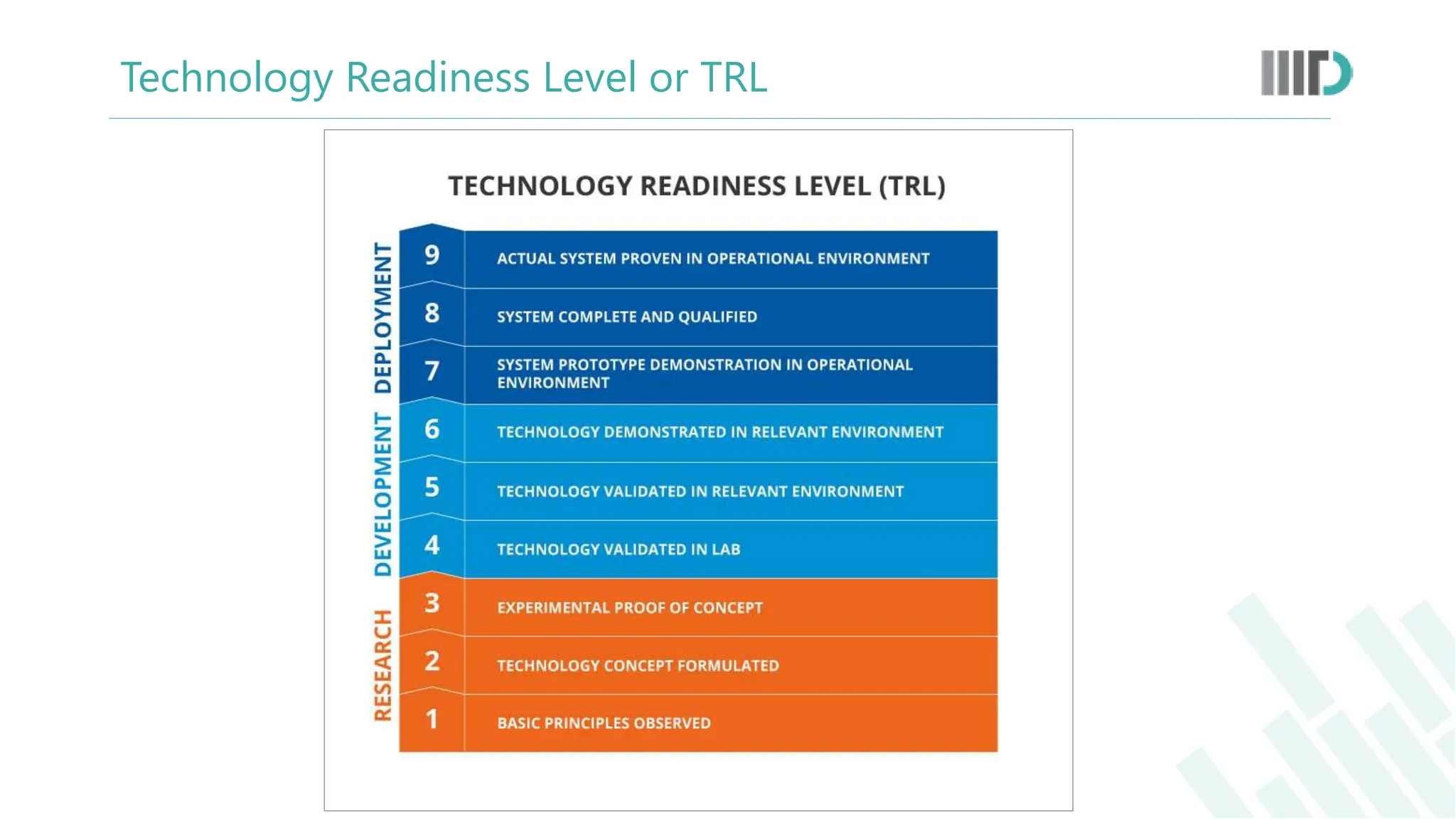
Technology Readiness Level (TRL) 5 represents a critical inflection point in the development of new technologies, marking the transition from laboratory validation to operationally relevant environments. At this stage, a technology must demonstrate that its basic components work together as an integrated system in a high-fidelity environment. Disagreements regarding TRL 5 status typically stem from subjective interpretations of "relevant environment," the scale of integration required, and the threshold for performance reliability before moving toward TRL 6.
Understanding the TRL 5 Threshold
The Technology Readiness Level scale, originally developed by NASA and widely adopted by the European Space Agency (ESA), the U.S. Department of Defense (DoD), and private industry, serves as a common language for assessing the maturity of a project. TRL 5 is defined as the "Component and/or breadboard validation in a relevant environment."
Unlike TRL 4, which focuses on validating individual components in a laboratory or simulated environment, TRL 5 demands that these components be integrated into a breadboard—a preliminary version of the system—that mimics the final application in a way that captures the complexities of the real-world operational context.
The transition to TRL 5 requires stakeholders to move away from idealized, controlled laboratory conditions. The primary challenge here is not just proving the physics work, but proving that the system can handle the noise, temperature, interference, or physical stressors of its intended environment. This is where most projects encounter the "valley of death," where theoretical success in a lab fails to translate into functional success in the field.
Key Changes Required for TRL 5 Advancement
Transitioning from TRL 4 to TRL 5 involves a fundamental shift in engineering focus. Projects must move from proving a concept to proving a prototype.
- Integration of Subsystems: At TRL 4, you might have tested a sensor and a processor separately. At TRL 5, these must be interconnected. The interface between these components becomes the primary focus of testing.
- Increased Fidelity of Environment: The "relevant environment" requirement means testing moves out of the benchtop. For a satellite component, this could mean using a vacuum chamber with thermal cycling. For software, it means moving from synthetic data to representative real-world data streams.
- Risk Reduction Focus: Testing objectives shift from "Does this work?" to "Where does this break?" Engineers at this stage are specifically looking for failure modes that were not visible in the isolation of a laboratory.
- Operational Interface Definition: The project must define how the prototype interacts with other systems. Even if those systems aren't fully built yet, the simulated inputs and outputs must be calibrated to match the specifications of the final product.
- Documentation of Variances: Developers must now track how the breadboard differs from the intended flight or final production model. This "delta" documentation is essential for ensuring that the testing data is relevant to the final design.
Points of Disagreement: Why Projects Stall
Disagreements at TRL 5 often arise during formal review boards or stakeholder audits. Because the definitions provided by standards bodies like ISO 16290:2013 leave room for interpretation, different technical teams often clash over whether a project has truly "cleared" the level.
The Definition of "Relevant Environment"
The most frequent point of contention is what constitutes a "relevant environment." If a startup claims their drone software is TRL 5 because it works in a backyard, but the end-user expects it to operate in high-wind, high-latitude environments, the TRL assessment will conflict.
- Engineering View: Argues that the core algorithms function and that the environment is "sufficiently" representative to validate the physics.
- Stakeholder View: Argues that the TRL 5 label implies a readiness to enter more expensive development phases (TRL 6+), and that testing in non-representative environments creates a false sense of security regarding maturity.
The "Breadboard" Complexity Gap
There is frequent debate over how complex the breadboard needs to be. Some teams push for a minimal breadboard to save time and budget, while others insist on "high-fidelity" breadboards. A minimal breadboard may fail to catch integration-related bugs, leading to catastrophic failures later at TRL 6 or 7. Disagreement here often centers on the cost-benefit analysis of early-stage prototyping versus the risks of late-stage redesign.
Performance Requirements vs. Reliability
At TRL 5, there is often pressure to demonstrate high performance. However, TRL 5 is not about performance optimization; it is about viability. When a team presents data showing high performance but low reliability, reviewers often argue the project is still at TRL 4. Conversely, developers might argue that they have met the TRL 5 goal of "system validation," even if the system is still brittle.
Comparative Assessment of TRL Transitions
The following table highlights the differences between TRL 4, 5, and 6 to clarify why disagreement occurs during the movement between these specific phases.
| Feature | TRL 4 (Component Level) | TRL 5 (System/Breadboard) | TRL 6 (System Prototype) |
|---|---|---|---|
| Focus | Proof of concept | Breadboard integration | High-fidelity prototype |
| Environment | Lab (controlled) | Relevant (representative) | Operational (simulated) |
| Integrity | Isolated components | System connectivity | Full-scale performance |
| Primary Risk | Fundamental physics failure | Integration/Interface failure | Operational environment failure |
| Decision Point | Can it work? | Will it function together? | Is it reliable? |
Strategies for Mitigating Disagreements
To minimize friction during TRL assessments, projects should adopt a "Requirements-Driven Maturity" approach.
- Establish Criteria Early: Agree with stakeholders on the specific testing environment criteria before testing begins. Document what "representative environment" looks like for your specific niche.
- Use Third-Party Verification: When internal teams are too close to the project, they often suffer from confirmation bias regarding TRL readiness. Bringing in an independent technical auditor to evaluate the test data can resolve disputes regarding whether the TRL threshold has been met.
- Focus on Interface Documentation: Most disagreements start at the interface. Spend more time documenting the specifications of inputs and outputs than on the internal logic of the components themselves. If the interface is stable, the TRL status is much harder to challenge.
Technical Depth and Limitations
It is important to note that TRL is a measure of maturity, not a measure of success. A project can be at TRL 5 and still be a failure, provided that the testing successfully identifies that the concept will not work in the intended environment.
Furthermore, the TRL scale does not account for cost, schedule, or market fit. A technology can be at TRL 5 with a massive cost-to-produce that makes it unviable. Stakeholders often conflate "technological maturity" with "business readiness," which leads to misplaced expectations regarding the speed of transition to TRL 6.
Frequently Asked Questions
1. Can a project be TRL 5 without being fully functional? Yes. TRL 5 requires validation of the breadboard in a relevant environment. It does not require that the breadboard is a functional, finished product. The goal is to prove the integrated system logic works under realistic constraints, not that it is ready for commercial or operational deployment.
2. How do I resolve a disagreement regarding TRL status? The most effective way to resolve a disagreement is to map your testing parameters directly to the specific TRL definitions provided by your organization or sector standard (e.g., NASA TRL definitions). If the dispute persists, commission an "Independence Review" using objective evidence from your testing phase.
3. Is TRL 5 the same as "Alpha Testing"? While there is overlap, they are not identical. Alpha testing usually refers to software or product development stages where internal users test a near-final product. TRL 5 is more rigorous regarding environmental stressors and component integration, often used in hardware, aerospace, and defense engineering.
4. Why is the "relevant environment" so subjective? It is subjective because the "relevant environment" depends entirely on the system's mission. A sensor designed for a ground vehicle in a desert has a different relevant environment than one for a satellite in low-Earth orbit. The subjectivity is a feature, not a bug, allowing the scale to be applied across diverse industries.
Next Steps for Project Managers
If you are currently managing a project navigating the transition to TRL 5, your immediate next action should be to conduct a "Gap Analysis" between your current test data and the intended operational requirements of the final product.
Review your test plan against the standard definitions of your industry. If your team cannot define exactly which variables represent the "relevant environment," pause and formalize these criteria. Attempting to force a TRL 5 classification without a clear, objective consensus on the environment will inevitably lead to expensive rework when you reach the inevitable TRL 6 design review. Focus on documenting the limits of your breadboard; knowing where the system breaks is the single most valuable outcome of the TRL 5 process.