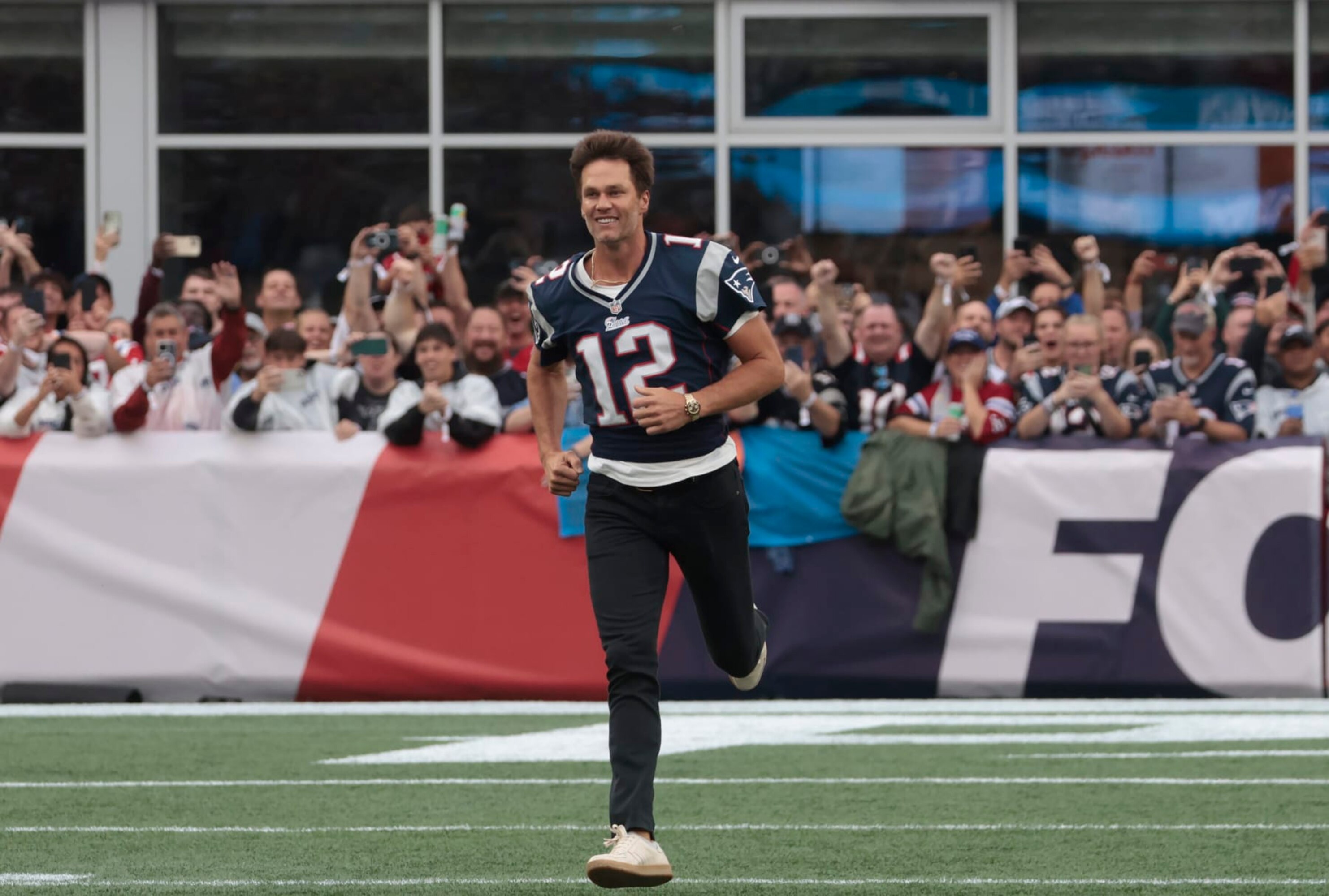
Tom Brady completed the 2000 NFL Scouting Combine 40-yard dash in 5.28 seconds, a famously pedestrian time for a professional quarterback that underscored his lack of elite physical traits coming out of the University of Michigan and contributed to his historic slide to the sixth round of the draft.
Evaluating a professional athlete's career often involves looking backward from unprecedented success to the very beginning, when talent evaluators and scouts assessed raw potential. For Tom Brady, who would go on to win a record seven Super Bowl titles and cement his status as the greatest quarterback in NFL history, that beginning is famously anchored in Indianapolis at the 2000 NFL Scouting Combine. Long before he was breaking passing records, Brady was a lanky, unheralded prospect whose performance in the 40-yard dash became the stuff of football folklore. This examination explores the exact details of Brady's combine performance, the testing environment of the era, the context of his draft stock, and how this iconic metric compares to the broader history of NFL evaluations.
The 2000 NFL Scouting Combine: Context and Environment
The NFL Scouting Combine in the year 2000 was a vastly different production compared to the multi-million-dollar televised spectacle it is today. Held annually in Indianapolis at the RCA Dome, the event served primarily as an enclosed, low-key job fair where medical personnel, coaches, and general managers gathered to vet prospects in relative anonymity. There were no primetime television broadcasts of the 40-yard dash, and the hyper-quantified sports science metrics used today—such as GPS tracking, acceleration profiling, and high-speed biomechanical cameras—did not exist.
Quarterbacks arriving at the 2000 combine faced scrutiny based on traditional tape evaluation, positional drills, and a standardized set of athletic testing protocols: the vertical jump, the broad jump, the 20-yard shuttle, the three-cone drill, and the foundational 40-yard dash. Brady arrived as an afterthought. Having shared time at the University of Michigan with Drew Henson, Brady was not viewed as a franchise savior. He was viewed as a durable, highly accurate game-manager with limited mobility. His physical measurements at the combine—standing at roughly 6-foot-4 and weighing 211 pounds—offered a prototypical frame, but his athletic testing numbers instantly revealed a distinct lack of lateral quickness and straight-line speed.
Deconstructing the 5.28-Second 40-Yard Dash
When Brady stepped up to the starting line for his 40-yard dash, expectations for his speed were modest, but the resulting time exceeded even the most pessimistic projections for a modern professional athlete. Brady was clocked at 5.28 seconds. To put that number into perspective, it is slower than the average time recorded by many offensive linemen, defensive tackles, and tight ends.
| Metric / Attribute | Tom Brady (2000 Combine) | Positional Average (Modern Era QB) | Elite Mobility Benchmark |
|---|---|---|---|
| 40-Yard Dash Time | 5.28 seconds | ~4.75 – 4.85 seconds | Under 4.50 seconds |
| Vertical Jump | 24.5 inches | ~30 – 32 inches | 35+ inches |
| Broad Jump | 8 feet, 3 inches | ~9 feet | 10+ feet |
| Draft Round / Pick | Round 6, Pick 199 | Varies | Round 1 |
The footage of Brady running that 40-yard dash remains an enduring meme in sports culture. Striding across the turf with a labored, upright running form, Brady appeared to be fighting gravity rather than accelerating through it. His start was sluggish, his stride frequency was low, and his top-end speed quickly plateaued. While scouts did not expect him to run like a wide receiver or a running back, a time in the low 5.2-second range cemented the narrative that Brady possessed zero functional mobility outside the pocket.
Physical Profile and Athletic Testing Breakdown
The 40-yard dash is only one component of the NFL combine's testing gauntlet, but for Brady, his entire athletic profile painted a consistent picture of a traditional pocket passer devoid of explosive traits. Beyond the 5.28-second 40-yard dash, his other metrics highlighted his limitations as an explosive athlete:
- Vertical Jump: 24.5 inches, demonstrating limited lower-body explosiveness for driving the football or escaping collapsing pockets.
- Broad Jump: 8 feet, 3 inches, reinforcing the lack of twitch-muscle fibers in his lower extremities.
- Three-Cone Drill and Shuttles: While precise official tracking for agility drills from the 2000 combine can occasionally vary across historical archives, Brady's times reflected a quarterback who relied heavily on anticipation and timing rather than scrambling ability.
Scouts evaluate these numbers not in isolation, but in relation to position-specific thresholds. For quarterbacks, straight-line speed is rarely the primary metric of success—arm talent, decision-making, accuracy, and poise under pressure consistently rank higher. However, a sub-par athletic score combined with modest collegiate statistics provided evaluators with an easy justification to pass on him through the first five rounds of the draft.
The Draft Fall: From Michigan to Pick 199
Brady’s underwhelming combine performance did not single-handedly cause him to fall to the sixth round, but it acted as a physical confirmation of existing doubts. Thirty-two NFL teams passed on Brady a combined 198 times during the 2000 NFL Draft. Quarterbacks like Chad Pennington, Giovanni Carmazzi, Chris Redman, Tee Martin, Spergon Wynn, and Tom Brady's eventual backup-turned-rival Drew Henson were all drafted ahead of him.
| Draft Round | Quarterbacks Selected Before Brady | Notable Context |
|---|---|---|
| Round 1 | Chad Pennington (18th overall) | High-accuracy prospect drafted by the New York Jets. |
| Round 3 | Giovanni Carmazzi (65th overall) | Drafted by the San Francisco 49ers, never threw an NFL regular-season pass. |
| Round 3 | Chris Redman (75th overall) | Drafted by the Baltimore Ravens. |
| Round 5 | Tee Martin (163rd overall) | Drafted by the Pittsburgh Steelers. |
| Round 6 | Spergon Wynn (183rd overall) | Drafted by the Cleveland Browns. |
| Round 6 | Tom Brady (199th overall) | Drafted by the New England Patriots. |
The New England Patriots selected Brady with the 199th overall pick, a compensatory selection in the sixth round. Head coach Bill Belichick and player personnel director Scott Pioli valued Brady's intelligence, poise, and competitive drive, choosing to look past his poor combine metrics. It stands as the greatest value selection in professional sports history, proving that laboratory athletic testing cannot measure intangible qualities such as pocket presence, leadership, and obsessive preparation.
Frequently Asked Questions
What was Tom Brady's exact 40-yard dash time at the NFL Combine?
Tom Brady ran the 40-yard dash in 5.28 seconds at the 2000 NFL Scouting Combine. This time was among the slowest recorded by a quarterback prospect in modern draft history and contributed to his slide into the sixth round.
Did Tom Brady improve his speed later in his career?
No. Brady was never known as a running quarterback or a dual-threat option in the NFL. Throughout his 23-season career, he famously relied on exceptional pocket awareness, quick release times, and pre-snap reads to avoid pass rushers rather than running away from them. His career rushing statistics include over 1,000 yards, largely accumulated through quarterback sneaks.
How does Brady's 40-yard dash compare to modern quarterbacks?
Modern NFL quarterbacks, such as Lamar Jackson, Josh Allen, and Patrick Mahomes, frequently post much faster and more dynamic athletic metrics. Contemporary quarterbacks are increasingly evaluated on their ability to extend plays outside the pocket, making elite mobility a premium asset in today's game compared to the traditional dropback era in which Brady entered the league.
Why did Tom Brady fall to the sixth round of the draft if he was so talented?
Brady's drop in the 2000 NFL Draft was the result of a combination of factors: modest physical testing numbers (including his 5.28 40-yard dash), a lack of elite arm strength by traditional scouting standards, and sharing playing time at the University of Michigan, which kept scouts from seeing a sustained, dominant sample size of elite play until his senior year.
Is Tom Brady's 40-yard dash the slowest ever recorded for a quarterback?
While it is exceptionally slow for a professional athlete, it is not the slowest ever recorded. Several pocket-style quarterbacks and historic prospects have posted times in the 5.3-second range or slower, though Brady's time remains one of the most famous due to his subsequent historic career achievements.
Conclusion and Legacy
Tom Brady's 5.28-second 40-yard dash at the 2000 NFL Scouting Combine remains one of the most famous historical footnotes in sports history. It serves as a permanent reminder of the limitations of athletic testing when trying to project greatness, competitiveness, and football IQ. While modern scouting departments heavily weight metrics like speed, explosiveness, and agility, Brady’s career proved that preparation, mental processing, and execution inside the pocket far outweigh raw straight-line speed on a turf track.