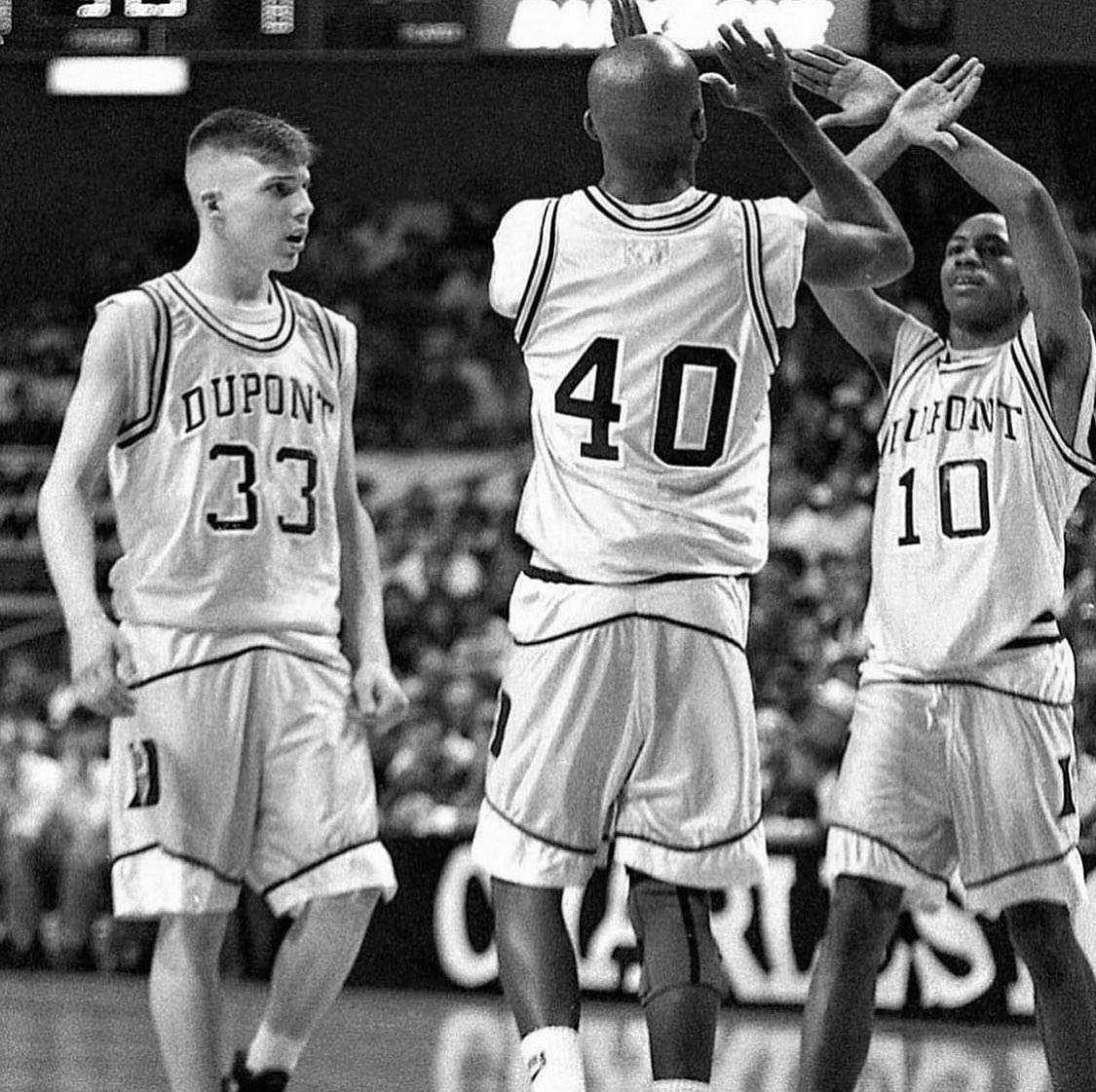
Public record and consistent media presence confirm that Randy Moss and Jason Williams remain close friends, maintaining a bond that dates back to their high school days in West Virginia. Despite their divergent paths in professional sports—one becoming an NFL Hall of Fame wide receiver and the other a charismatic NBA champion—the two athletes have consistently supported one another throughout their post-retirement lives.
Shared Roots in Belle, West Virginia
To understand the longevity of the friendship between Randy Moss and Jason Williams, one must look at their formative years in West Virginia. Both men grew up in the Kanawha Valley, a region known for producing elite high school athletic talent. Moss, a standout at DuPont High School, and Williams, who attended DuPont before transferring to nearby schools, were part of the same athletic ecosystem during the mid-1990s.
Their connection was forged long before the bright lights of professional stadiums. In the tight-knit communities of West Virginia, athletic prodigies often crossed paths through summer league play, local gym culture, and mutual social circles. This shared background provided a foundation of trust and understanding that proved to be more durable than the transient nature of professional sports friendships. When two individuals rise from the same small-town environment to reach the pinnacle of their respective sports, that shared history often creates a unique, lifelong tether.
Divergent Paths: The NFL and the NBA
As their careers progressed, the logistics of their friendship became significantly more complicated. Randy Moss was drafted by the Minnesota Vikings in 1998, beginning a legendary journey that would see him become one of the most prolific wide receivers in NFL history. Simultaneously, Jason "White Chocolate" Williams was drafted into the NBA in 1998, famously joining the Sacramento Kings and revolutionizing the point guard position with his flair and unorthodox passing.
Operating in different professional leagues meant that Moss and Williams lived in entirely different time zones for most of the year. During the late 90s and 2000s, the demands of travel, training camps, and high-pressure media scrutiny made maintaining long-distance relationships difficult for most professional athletes. However, throughout their active playing years, both men frequently spoke in interviews about their mutual admiration and continued communication. Even while Moss was making highlight-reel catches in Minnesota, Oakland, and New England, and Williams was orchestrating offenses in Sacramento, Miami, and Orlando, their link to West Virginia remained a primary point of contact.
Public Support and Digital Interactions
In the modern era of social media, the status of celebrity friendships is often easier to track. As of 2026, both Moss and Williams remain active in the public eye through media appearances, podcasts, and digital engagement. It is not uncommon for the two to acknowledge each other on social platforms or during televised broadcasts.
The transition from active player to retired veteran has arguably made it easier for them to sustain their friendship. Without the grueling travel schedule of an 82-game NBA season or the physical attrition of a 17-game NFL schedule, both men have had the freedom to reconnect. They have appeared in various media segments together, often reminiscing about their West Virginia origins. These public displays are not merely curated PR moments; they are extensions of a genuine personal history that neither has ever sought to distance themselves from.
Table: Historical Parallels and Shared Bonds
| Aspect | Randy Moss | Jason Williams |
|---|---|---|
| High School Origin | DuPont High School (WV) | DuPont High School (WV) |
| Draft Year | 1998 | 1998 |
| Professional League | NFL (Wide Receiver) | NBA (Point Guard) |
| Retirement Status | Retired (Hall of Fame) | Retired (NBA Champion) |
| Friendship Status | Confirmed Close | Confirmed Close |
The Impact of Regional Identity
The bond between Moss and Williams is heavily influenced by their shared West Virginia identity. In professional sports, where players are often uprooted and moved to new cities every few years, the "hometown connection" functions as a form of grounding.
For someone like Moss, who faced intense scrutiny throughout his career, and Williams, who dealt with the pressures of being an NBA folk hero, having a peer who understood the specific culture of their upbringing was invaluable. Their friendship is a testament to the idea that regional identity can serve as an anchor in the chaotic world of professional athletics. They are two of the most recognizable figures to ever emerge from their home state, and they have carried that banner together, representing the pride of West Virginia at the highest levels of global sport.
Overcoming Misconceptions
Over the years, various rumors have occasionally surfaced suggesting fallouts between high-profile athletes. In the case of Moss and Williams, however, there has been no substantive evidence to support claims of a rift. On the rare occasion that their names appear in the same headline, it is typically in the context of nostalgia or local pride.
The misconception that professional athletes from the same area must be close is sometimes countered by the reality of different career paths, but in this specific instance, the assumption of friendship is actually accurate. They have never engaged in public disputes, and their infrequent but consistent public interactions serve as a clear indicator of a stable, respectful, and friendly relationship.
Lessons from Their Longevity
The friendship between these two stars offers a lesson in the importance of maintaining roots. While the average person may not reach the heights of the NFL or NBA, the necessity of having long-term friends who knew one's character before personal success occurred is a universal theme.
Moss and Williams have managed to survive the "fame cycle," where many friendships wither due to jealousy, time constraints, or change of status. By keeping their focus on their shared history rather than their individual accolades, they have preserved a genuine connection. Their relationship serves as a bridge between the intense culture of professional sports and the grounded reality of their West Virginia roots.
Frequently Asked Questions
Are Randy Moss and Jason Williams from the same town? Yes. Both athletes hail from the Kanawha Valley region in West Virginia and attended DuPont High School. This shared educational and geographic foundation is the primary catalyst for their lifelong friendship.
Do they play together in charity events? While both have participated in various high-profile charity games and celebrity events over the years, their friendship is largely maintained through private communication and local community involvement in West Virginia rather than professional collaboration.
How do they interact in 2026? As of 2026, their interaction is consistent with that of old friends who have settled into retirement. They maintain contact via private channels and occasionally acknowledge one another during media appearances, maintaining a warm and professional rapport.
Did their different sports impact their friendship? While their schedules differed significantly during their active playing years, their parallel career trajectories—both being drafted in 1998 and achieving stardom simultaneously—actually served to strengthen their bond, as they were navigating the pressures of fame at the same time.
Are there any known public disputes between them? No. There is no evidence or public reporting to suggest any personal animosity or disputes between Randy Moss and Jason Williams. Their relationship has remained characterized by mutual respect and nostalgia for their shared origins.
Next Steps for Fans
For those interested in seeing the legacy of these two athletes, the best approach is to follow their official media appearances and contributions to West Virginia athletics. Both men continue to act as ambassadors for their home state, and their occasional collaborative appearances in regional media are the most reliable way to observe their ongoing friendship in action. If you are researching their impact on sports, focusing on the cultural history of West Virginia athletes provides the most accurate context for why their bond remains so significant to this day.