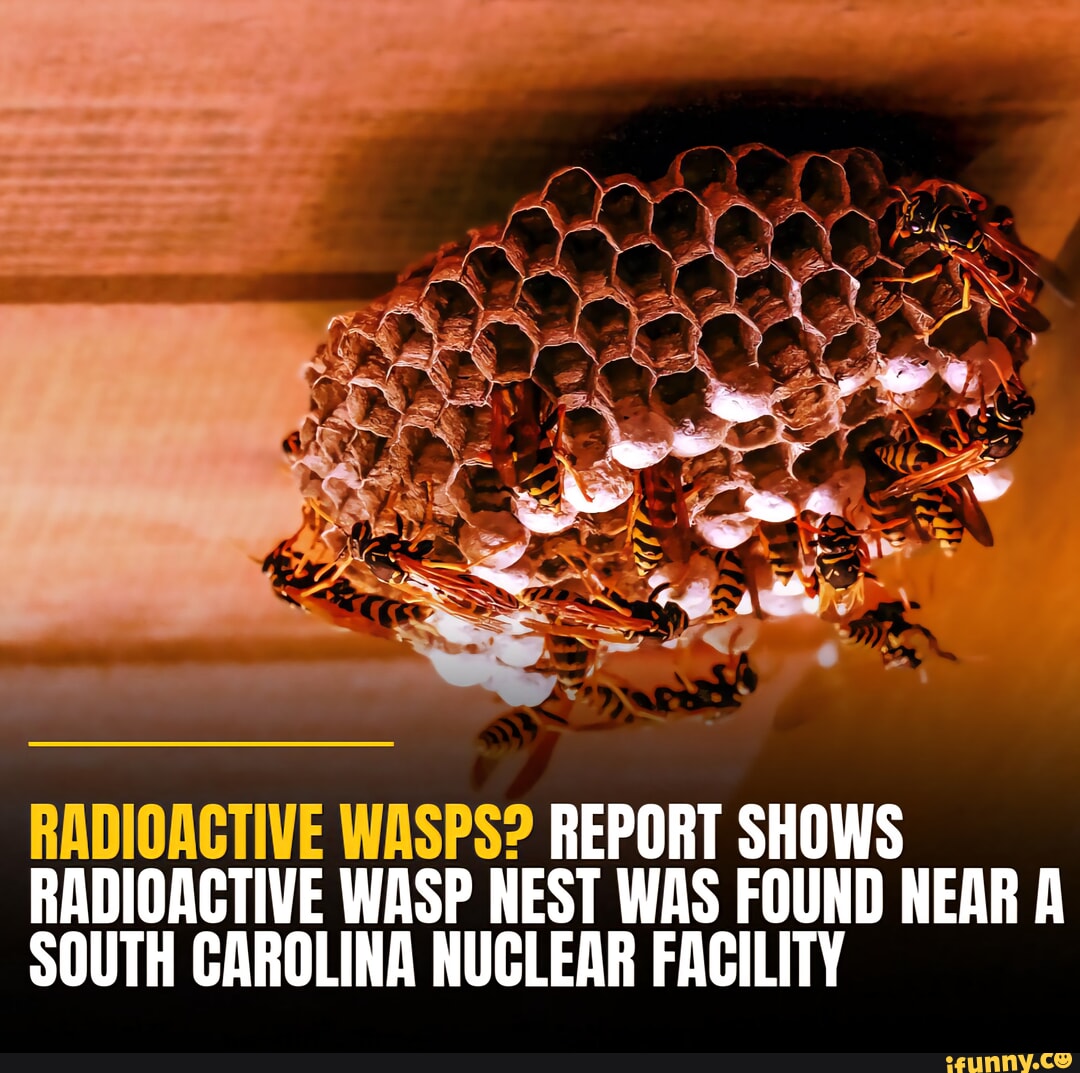
Radioactive wasps are not real; there is no scientific evidence, historical record, or biological mechanism that supports the existence of insects mutated into "radioactive" status through exposure to nuclear radiation. While the concept is a staple of science fiction and internet folklore, it remains firmly within the realm of speculative fantasy rather than biological reality.
The Origins of the Radioactive Insect Myth
The persistent myth of radioactive creatures, including wasps, is primarily a byproduct of mid-20th-century popular culture. Following the dawn of the atomic age in the 1940s, nuclear energy became a dominant theme in cinema, literature, and comic books. Authors and filmmakers frequently used "radiation" as a convenient, pseudo-scientific plot device to explain rapid mutation, giantism, or supernatural abilities in animals.
This narrative trope gained significant traction during the 1950s—the "Atomic Horror" era—where fear of the Cold War and the unknown effects of nuclear fallout were synthesized into stories about mutated insects. The idea that radiation could turn a common stinging insect into a glowing or lethal, super-powered entity was never based on the actual biological effects of ionizing radiation. In reality, ionizing radiation is destructive to cellular structures; it does not grant the complex, functional evolutionary traits depicted in fiction.
Understanding the Biological Effects of Radiation on Insects
To understand why radioactive wasps do not exist, one must look at how ionizing radiation—the kind emitted by radioactive isotopes—actually affects biological organisms. Insects, as a class, are notably more resistant to radiation than mammals, but they are not immune to it, nor do they develop "powers" from it.
Cellular Damage and Lethality
When an insect is exposed to high levels of ionizing radiation, the primary result is DNA damage. This often manifests as chromosomal breakage, cellular death, or developmental failure. If an insect survives a significant dose of radiation, it is usually because it possesses robust DNA repair mechanisms that allow it to recover from minor damage. However, this does not result in the acquisition of new, beneficial genetic traits.
Instead, high-level exposure in the environment—such as that found near the Chernobyl Exclusion Zone or the Fukushima Daiichi Nuclear Power Plant site—typically leads to higher rates of developmental instability or mortality. Researchers studying insect populations in these zones have observed that while insects can inhabit radioactive environments, they are not "radioactive" in the sense of being mutants; they are simply animals that have adapted to live in a challenging, albeit contaminated, habitat.
The Myth of "Glowing" or Super-Mutated Insects
In fiction, radioactive wasps are often depicted as glowing (bioluminescence) or possessing unnatural strength. There is no biological mechanism by which ionizing radiation would induce bioluminescence in a species like the common yellowjacket or hornet. Bioluminescence in nature is a complex chemical process involving luciferins and enzymes, evolved over millions of years for specific purposes like communication or attracting prey. Radiation does not trigger the random development of these biochemical pathways.
Environmental Context: Radiation in the Natural World
It is important to distinguish between an organism being "radioactive" and an organism living in a radioactive environment. If a wasp were to land on material contaminated with radioactive isotopes (such as cesium-137 or strontium-90), it could theoretically pick up radioactive particles on its exoskeleton. This would make the insect a vector for surface contamination, but it would not alter the biology or the genetic composition of the wasp itself.
Environmental monitoring agencies, such as the International Atomic Energy Agency (IAEA), maintain rigorous standards for tracking environmental contamination. There has never been a documented case where a wasp—or any insect—has undergone a mutation that resulted in a new, aggressive, or "radioactive" subspecies that posed a threat to humans through the mechanism of radiation.
Comparative Biological Resistance
To better grasp the scale of radiation resilience in nature, researchers often compare insect responses to those of other taxa. The following table highlights the difference between the reality of radiation exposure and the fictionalized expectations.
| Aspect | Biological Reality | Fictionalized Myth |
|---|---|---|
| Exposure Effect | DNA fragmentation and cell death | Mutation and "super powers" |
| Appearance | No physical change; potential health decline | Glowing or unnaturally large |
| Longevity | Reduced lifespan due to systemic stress | Indefinite life or enhanced vitality |
| Human Risk | Minimal (external contamination risk) | Attack by "radioactive" super-wasps |
Investigating Anomalous Reports
Occasionally, reports of "mutant" insects surface on the internet. These often stem from misidentifications of rare species, photographic manipulation, or the simple observation of insects exhibiting abnormal behavior due to disease or pesticides.
For instance, the "Asian giant hornet" (Vespa mandarinia) is often the subject of alarmist media coverage. While this species is large, aggressive, and possesses a potent sting, it is a naturally occurring biological entity. Its existence is the result of millions of years of evolution, not nuclear experimentation. When members of the public encounter such insects, the lack of familiarity with local or invasive biodiversity can lead to the false conclusion that the creature is a "mutant" or an unnatural product of human activity.
Safety and Public Health Perspectives
Because the concept of "radioactive wasps" is a myth, there are no specific medical protocols or safety guidelines regarding them. However, standard precautions for dealing with stinging insects remain valid. The primary risks posed by wasps in 2026 are the same as they have always been: allergic reactions, localized swelling, and potential secondary infection from stings.
If you are concerned about insect activity in areas that have been identified as environmentally sensitive or near known industrial sites, rely on official health department reports rather than social media speculation. If you encounter an insect that appears physically deformed or behaves erratically, it is likely a result of environmental pollutants like pesticides or insecticides, rather than radiological exposure.
Managing Stinging Insect Risks
- Identify the species: Understanding if you are dealing with a honeybee, yellowjacket, or hornet is key to appropriate behavior.
- Avoid nesting sites: Do not disturb colonies, particularly during late summer when worker populations are at their peak.
- Professional removal: If a nest is in a high-traffic area, use certified pest control services that employ standardized, proven removal techniques.
- Emergency care: Always carry an epinephrine auto-injector if you are known to have a severe allergy (anaphylaxis) to stings, regardless of the perceived species of the insect.
Frequently Asked Questions
Could radiation ever create a "mutant" insect species?
Radiation is a mutagenic force, but its effects are almost exclusively deleterious. Rather than creating a "super" insect, radiation tends to cause genetic errors that lead to reduced viability, infertility, or death. Evolution requires millions of years and selective pressure; radiation only induces random, destructive changes.
Do wasps become radioactive if they live near nuclear plants?
If a wasp walks across a contaminated surface, it may accumulate radioactive dust on its body (surface contamination). However, the wasp does not become "radioactive" in a biological sense. It remains an ordinary insect that has come into contact with environmental contaminants.
Are there any insects that are immune to radiation?
While no insect is truly "immune," some are remarkably resistant. The parasitoid wasp Habrobracon juglandis has been studied in laboratory settings for its high resistance to radiation compared to other species. This is a matter of specialized cellular repair, not a "superpower," and it certainly does not result in the wasp becoming a radioactive hazard.
Why do people think radioactive wasps are real?
The myth is fueled by a combination of science fiction media, the confusion between "nuclear" and "toxic" waste in public discourse, and the general fear of the unknown. As long as media outlets and film studios use the "radioactive mutant" trope, the misconception will likely persist as modern folklore.
What should I do if I find an insect that looks strange?
If an insect exhibits unusual colors or shapes, it is likely a rare species, a manifestation of a specific virus or parasite, or a genetic variation. You should avoid handling it, as many insects with unusual markings may also be venomous or irritating. You can contact your local university extension office or department of agriculture for identification.
Next Actions and Conclusion
If you find yourself concerned about the potential for environmental hazards impacting local wildlife, the most effective step is to contact your local environmental protection agency or university entomology department. They provide verified information on local species and monitor the health of the ecosystem accurately.
The legend of radioactive wasps is a compelling story, but it remains confined to the screen and the page. By understanding the true biological limitations of insects and the nature of radiation, you can differentiate between science and spectacle, ensuring you are prepared for the very real—but definitely not radioactive—insects that exist in the natural world.