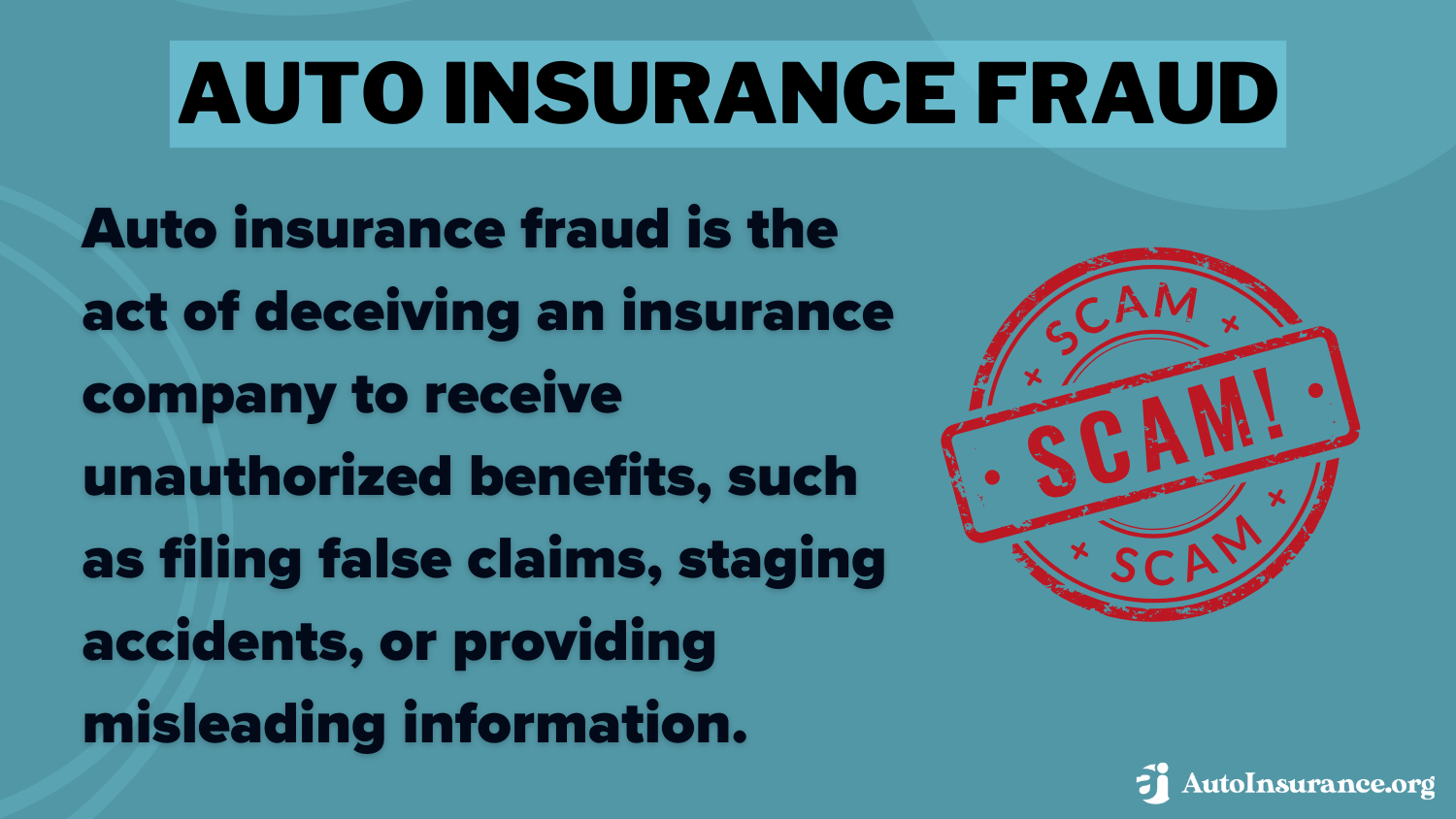
Auto insurance fraud typically involves the intentional deception of an insurance company to secure an illegitimate financial gain. A common example involves "staged accidents," where individuals orchestrate a low-speed collision, often involving multiple vehicles or fabricated injuries, to file claims for damages and medical expenses that never actually occurred or were significantly misrepresented.
Defining Auto Insurance Fraud
Auto insurance fraud is a pervasive issue that impacts the insurance industry and policyholders globally. It occurs when a claimant, policyholder, or service provider intentionally provides false information, exaggerates legitimate losses, or creates fraudulent events to obtain money from an insurance carrier. In practice, this takes many forms, ranging from simple "padding" of repair estimates to sophisticated, multi-party organized crime schemes involving staged accidents.
The financial consequences are significant. According to the Coalition Against Insurance Fraud, fraudulent activity costs the insurance industry billions of dollars annually. These costs are often passed down to honest consumers in the form of increased premiums. Understanding how these schemes operate is the first step toward recognizing them and protecting oneself from becoming an unwitting participant or a victim of such activity.
The Mechanics of a Staged Accident
One of the most classic examples of auto insurance fraud is the staged accident. This practice typically follows a predictable sequence. Perpetrators often seek out unsuspecting, law-abiding drivers to act as the "at-fault" party.
- Targeting: Fraudsters look for drivers who may be distracted, elderly, or driving luxury vehicles with high-limit liability coverage.
- The Setup: Common maneuvers include the "Swoop and Squat," where one vehicle cuts in front of the victim and slams on the brakes, forcing a rear-end collision. Another variation is the "Wave," where a driver signals for the victim to pull into traffic, only to speed up and collide with them, then deny having given the signal.
- The Aftermath: Once the collision occurs, the fraudster and their passengers often feign severe injuries, such as whiplash or soft-tissue damage, which are difficult for doctors to disprove through imaging. They may use accomplices to pose as "independent witnesses" to confirm the victim’s supposed negligence.
Identifying Patterns and Warning Signs
For the average driver, recognizing a potential setup can prevent a lengthy, stressful, and costly legal ordeal. While it is impossible to predict every encounter, certain patterns are common among professional fraudsters.
- Excessive Witnesses: If multiple people emerge from a vehicle or bystanders appear immediately at the scene to corroborate the fraudster's story, exercise caution.
- Rapid Medical Attention Requests: Fraudsters often insist on going to specific medical clinics or chiropractic centers immediately, often those that are "in-network" or recommended by the other driver's legal counsel.
- Unusual Maneuvering: Any driver who is overly cautious, repeatedly checking their mirrors, or driving in a manner that invites a collision should be treated as a potential hazard.
- Lack of Vehicle Damage: In some staged incidents, the fraudster intentionally hits a stationary object or uses a vehicle that was already damaged to collect a payout for existing body work.
Comparison of Legitimate Claims vs. Fraudulent Activity
Distinguishing between a standard insurance claim and a fraudulent one requires attention to detail. Insurance adjusters and law enforcement rely on specific indicators to flag potential fraud.
| Feature | Legitimate Claim | Fraudulent Claim |
|---|---|---|
| Witnesses | Real bystanders or none | Recruited "ghost" witnesses |
| Injuries | Consistent with collision physics | Exaggerated or impossible to verify |
| Repair Quotes | Market-standard rates | Inflated or from "partner" shops |
| Communication | Transparent and responsive | Evasive or aggressive/demanding |
| Documentation | Police report filed at scene | Often lacks a formal police report |
The Role of Medical and Repair Provider Fraud
Insurance fraud does not always require a collision. Often, it involves the collusion of service providers. A repair shop might write an estimate for a genuine accident but bill the insurer for premium-brand parts while installing cheap, salvaged, or counterfeit components. Similarly, a medical clinic might bill for treatments, physical therapy sessions, or diagnostic tests that were never performed.
This "provider-side" fraud is particularly insidious because it often occurs with the passive knowledge of the victim, who may be told, "Don't worry about the deductible; we'll handle the paperwork." By accepting this, the policyholder becomes an accessory to the fraud, putting themselves at risk of policy cancellation, denial of coverage, and potential criminal charges.
Financial and Legal Consequences
The repercussions of participating in or facilitating auto insurance fraud are severe. Insurance carriers utilize advanced data analytics and specialized investigation units (SIUs) to detect anomalies in claim submissions.
- Premium Hikes: Fraud creates a "fraud tax" on the entire insurance pool. As claims costs rise, carriers raise rates to maintain solvency, impacting every policyholder in the region.
- Criminal Liability: Depending on the jurisdiction, insurance fraud is a felony offense. Penalties include heavy fines, mandatory restitution, loss of professional licenses for service providers, and incarceration.
- Claim Denial: If an insurance company discovers fraud, they will not only deny the current claim but may retroactively void the policy back to its inception, leaving the individual without coverage for any past or future losses.
- Civil Litigation: Perpetrators may face civil suits from the insurance company for damages incurred during the investigation and processing of the fraudulent claim.
Steps to Take After an Accident
If you are involved in a traffic collision, regardless of how it happens, your primary duty is to document the facts accurately to protect your position.
- Call Law Enforcement: Always request a police officer to the scene. A neutral, third-party report is the most effective tool to prevent a fraudster from changing their story later.
- Document the Scene: Use your smartphone to take high-resolution photos of all four sides of both vehicles, the positions of the cars, and the surrounding environment.
- Capture Passenger Information: Note the number of passengers in the other vehicle, their descriptions, and whether they seem to be communicating in a coordinated manner.
- Do Not Admit Fault: Never apologize or take responsibility at the scene. Statements made immediately after an accident can be used against you, even if you were the victim of a setup.
- Report to Your Insurer Directly: Provide only the facts to your insurance company. If you suspect you were targeted, inform your adjuster of your concerns, providing as much detail as possible about the other driver's behavior.
Frequently Asked Questions
What should I do if the other driver demands cash instead of filing a claim? Refuse. A request to handle an accident "off the books" is a major red flag for fraud or an attempt to avoid legal repercussions for driving without insurance. Always exchange information and involve the police to ensure the event is officially logged.
Can I be charged with fraud if I simply agree to a repair shop's scheme? Yes. Even if you do not actively plan the fraud, signing documents that you know to be false makes you complicit. If the insurer discovers the discrepancy, you are legally responsible for the documentation you submitted.
Why do insurance companies seem so suspicious of legitimate claims? Due to the prevalence of organized fraud, insurers have strict protocols to ensure the validity of every payout. These measures, such as requiring police reports and photos, are designed to protect the integrity of the insurance pool for all members.
What is the "Swoop and Squat" method? This is a coordinated driving maneuver involving two cars. The "swoop" car cuts in front of the target, and the "squat" car follows closely behind to ensure the target cannot switch lanes, forcing the target to rear-end the lead vehicle.
How do I report suspected auto insurance fraud? Most jurisdictions have an insurance fraud bureau or a state-level department of insurance website where you can submit anonymous tips. You can also report your suspicions directly to your insurance company’s fraud unit.
Final Recommendation
The best defense against auto insurance fraud is proactive awareness and scrupulous documentation. Drive defensively, maintain a dash camera if possible to provide objective evidence of traffic incidents, and never agree to "side deals" with repair shops or other drivers after a collision. If you feel you are being coerced, disengage, document the scene as thoroughly as possible, and contact your insurance company and law enforcement immediately. Protecting the integrity of the insurance process is a collective responsibility that keeps the market fair and functional.