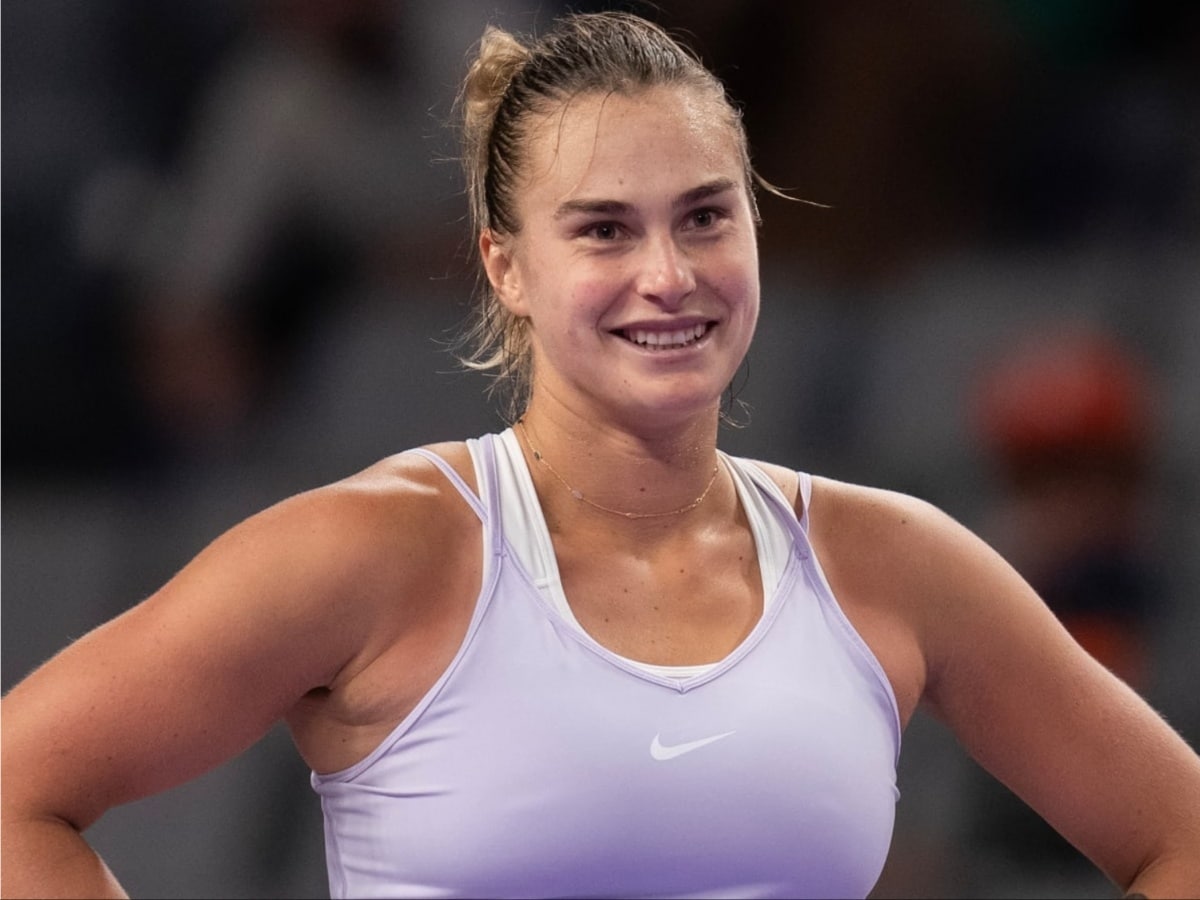
Aryna Sabalenka originated in Minsk, Belarus, where she was born on May 5, 1998. Introduced to tennis at six years old by her late father, Sergey Sabalenka—a former professional ice hockey player—she developed her signature aggressive playstyle at the National Tennis Center in Minsk before rising to become a multi-time Grand Slam champion and World No. 1.
Birthplace and Early Childhood in Minsk, Belarus
Aryna Sabalenka’s personal and athletic identity is deeply connected to her hometown of Minsk, the capital of Belarus. Born in May 1998 during a period of sports modernization in post-Soviet Eastern Europe, Sabalenka grew up in an environment where athletic discipline was highly respected.
Minsk provided a supportive infrastructure for youth sports, particularly through state-funded athletic facilities and specialized training programs. Unlike many elite tennis players who move to warm-weather academies in Florida or Southern Europe at a very young age, Sabalenka spent her crucial developmental years training directly within Belarus.
Her early childhood was defined by a balance between regular schooling and rigorous daily fitness routines. Her mother, Yulia Sabalenka, and her father focused on raising an active, resilient child. Sabalenka often reflects on her childhood in Minsk as grounded and focused on family life, shared alongside her younger sister, Tonechka.
The cold winters in Minsk meant that much of her early technical development occurred on indoor hard courts and fast carpet surfaces. These indoor facilities played a key role in shaping her baseline-oriented, quick-strike game. Fast indoor courts naturally reward aggressive shot-making and explosive footwork, laying the groundwork for her aggressive style of play.
Family Roots: The Influence of Her Father, Sergey Sabalenka
The story of Aryna Sabalenka’s origin in tennis is built around a chance moment with her father, Sergey Sabalenka. Sergey was an accomplished athlete in his own right, having played professional ice hockey as a goaltender in Belarus. His background in team sports gave him a deep understanding of the physical and psychological demands of high-level competition.
- Sergey Sabalenka (Ice Hockey Player)
- Introduced Aryna to Tennis (Age 6, Minsk)
- National Tennis Center Training
- International WTA & Grand Slam Success
- National Tennis Center Training
- Introduced Aryna to Tennis (Age 6, Minsk)
The introduction to tennis happened by accident when Aryna was six years old. While driving through Minsk, Sergey happened to pass a set of open public tennis courts and decided to take his young daughter to try hitting a few balls. Sabalenka immediately connected with the sport, enjoying the sensation of striking the ball with full power. Sergey recognized her natural hand-eye coordination, explosive power, and competitive instinct, promptly enrolling her in structured local lessons.
Throughout her junior years and initial transition into professional tennis, Sergey served as her primary mentor, pillar of emotional support, and driving athletic force. He instilled in her an unyielding competitive mentality, encouraging her to play courageously and embrace a high-risk, high-reward strategy on the court.
In November 2019, Sergey Sabalenka passed away unexpectedly at the age of 43 due to a sudden illness. His passing was a monumental emotional shock for Aryna, who was 21 years old at the time and establishing herself near the top 10 of the WTA Tour official rankings.
Following his death, Sabalenka frequently cited her father’s memory as her primary motivation to achieve the ultimate goal they had set together: becoming the World No. 1 player and winning Grand Slam singles titles. His memory remains a central focus of her court presence, symbolized by her intense emotional drive and the tiger tattoo on her left forearm—a design inspired by her fierce, aggressive court demeanor that earned her the nickname "The Belarusian Tiger."
Development at the National Tennis Center in Minsk
Aryna Sabalenka’s path through youth tennis differed significantly from the traditional junior pipeline seen in Western Europe or North America. Rather than traveling extensively on the International Tennis Federation (ITF) junior circuit, her development was primarily managed within the Belarusian national training ecosystem.
Her training was centered at the National Tennis Center in Minsk, a premier facility established to nurture native athletic talent. There, Sabalenka benefited from specialized coaching, high-performance physical conditioning, and sparring opportunities with top national junior and senior players.
| Feature / Milestone | Details | Impact on Career |
|---|---|---|
| Birthplace & Year | Minsk, Belarus (May 5, 1998) | Established her athletic roots in Eastern Europe |
| Primary Early Academy | National Tennis Center (Minsk) | Built heavy baseline power on indoor surfaces |
| Junior Circuit Strategy | Limited ITF Junior events; early transition to ITF Pro Circuit | Accelerated readiness for adult physical play |
| Fed Cup / BJK Cup Debut | 2016 (Representing Belarus) | Proved big-match capability on a national stage |
| First WTA Singles Title | 2018 (New Haven) | Confirmed elite tour-level competitiveness |
| Grand Slam Breakthrough | Australian Open Champion (2023, 2024), US Open (2024) | Achieved her lifelong dream shared with her father |
Her primary developmental coaches in Minsk focused heavily on maximizing her natural height (6 feet 0 inches / 1.82 meters) and leverage. Instead of molding her into a defensive counter-puncher, her local coaches refined her groundstrokes to generate deep power from both the forehand and backhand wings.
A pivotal strategic decision by her team was to minimize her participation in high-profile international junior Grand Slam tournaments. While many top-tier prospects build early reputations at events like Junior Wimbledon or Les Petits As, Sabalenka transitioned early into adult ITF Women’s Circuit events across Europe and Asia.
Competing against adult women while still a teenager exposed her early on to real-world power, tactical variety, and the physical demands of professional tennis. By age 17, she had already captured several ITF singles titles, demonstrating that her fast-paced game was well-suited for professional competition.
Technical Origin: Shaping Her Aggressive Playstyle
To understand Sabalenka's origin as an elite player, one must examine the evolution of her game style, which blends raw physical power with high-margin shot selection.
1. The Heavy Groundstroke Foundation
Sabalenka's signature shot is her explosive forehand, capable of reaching speed metrics that rival top men's tour averages. Her backhand is equally formidable, hit with a compact backswing that allows her to take balls early on the rise. Developed on fast indoor hard courts in Minsk, these mechanics force opponents behind the baseline, giving her control of the point early in rallies.
2. Service Motion Mechanics and Overcoming Yips
Power has always been central to Sabalenka's serve, but her high-risk delivery initially caused severe double-fault issues early in her career. In 2022, rather than relying solely on traditional coaching, she collaborated with biomechanics experts to overhaul her toss trajectory and shoulder rotation. This technical adjustment turned a liability into one of the most reliable first serves on the WTA Tour.
- Initial High-Risk Service Motion (Pre-2022)
- Inconsistent Toss & High Double-Fault Counts
- Biomechanics Overhaul & Shoulder Realignment
- Consistent First-Serve Weapon & Lower Error Margins
3. Mental Conditioning and On-Court Presence
Early in her career, Sabalenka’s emotional intensity was a double-edged sword, leading to unforced errors during high-stress moments. Recognizing this limit, she added a sports psychologist to her team, developing breath-control techniques and routine focus rituals. This work allowed her to maintain her signature intensity while staying composed under pressure.
International Expansion and Coaching Evolution
While Sabalenka’s roots remain firmly tied to Minsk, her ascent to top-tier status required building an international support network. As her ranking rose, she expanded her team beyond regional coaches to include international technical and fitness experts.
A major turning point in her professional development came through her partnership with former ATP professional Dmitry Tursunov, who coached her from 2018 to 2019. Tursunov played a key role in refining her power game, teaching her how to select better targets, adjust her shot selection based on court surfaces, and manage her energy during long matches.
Following her work with Tursunov, Sabalenka promoted her longtime hitting partner, Anton Dubrov—a fellow Belarusian—to the role of primary coach. Under Dubrov’s guidance, alongside fitness and movement coach Jason Stacy, Sabalenka transformed from an unpredictable power hitter into a reliable, consistent Grand Slam champion.
To maintain year-round training conditions, Sabalenka established a secondary operational base in South Florida, utilizing facilities such as the Evert Tennis Academy in Boca Raton and training centers in Miami. This location provides ideal conditions for warm-weather preparation before major hard-court and clay tournaments, offering a functional balance to her roots in Minsk.
Representing Belarus and Neutral Flag Status
Aryna Sabalenka’s identity as an athlete is tied to her nation’s modern tennis history. Before reaching individual Grand Slam fame, she built a reputation as a fierce team competitor for Belarus in the Fed Cup (now the Billie Jean King Cup).
In 2017, an 18-year-old Sabalenka led the Belarusian Fed Cup team to an unexpected place in the final against the United States. Playing in front of her home crowd at the Chizhovka Arena in Minsk, she defeated higher-ranked opponents, demonstrating her ability to perform under high-stakes conditions and becoming a national sports figure in Belarus.
- 2016-2017: Leads Belarus to Billie Jean King Cup Final in Minsk
- 2018-2021: Represents Belarus at International Tournaments & Tokyo Olympics
- 2022-Present: Competes as a Neutral Athlete under WTA / ITF / Grand Slam Regulations
In March 2022, following geopolitical conflicts involving Russia, Belarus, and Ukraine, governing bodies including the International Tennis Federation (ITF), the WTA, and the four Grand Slam tournaments altered registration rules for athletes from Russia and Belarus. Under these guidelines, Sabalenka continues to compete as a neutral athlete, without national symbols, flags, or anthem representations during official tour events and Grand Slam presentations.
While navigating these administrative shifts and complex international questions, Sabalenka has consistently stated her preference to keep her focus on sport, peace, and professional sportsmanship, maintaining strong personal ties with family and friends in Minsk while traveling year-round on the global tour.
Comprehensive Summary of Sabalenka's Development
| Developmental Phase | Location / Facility | Primary Focus & Milestones |
|---|---|---|
| Early Childhood (Ages 6–12) | Public Courts & Local Clubs, Minsk | Initial introduction to tennis by her father; fundamental swing mechanics and athletic foundation. |
| Junior & ITF Transition (Ages 13–18) | National Tennis Center, Minsk | Skipping mainstream international junior events to compete early on the adult ITF circuit; developing raw baseline power. |
| WTA Breakthrough (Ages 19–21) | International Tour / Minsk Base | Fed Cup Final run for Belarus; working with Dmitry Tursunov; entering the top 10 of the WTA rankings. |
| Consolidation & Peak (Ages 22+) | South Florida / Global Tour | Technical biomechanics adjustments on serve; mental conditioning with Jason Stacy and Anton Dubrov; winning Grand Slam singles titles and reaching World No. 1. |
Frequently Asked Questions
Where was Aryna Sabalenka born?
Aryna Sabalenka was born in Minsk, Belarus, on May 5, 1998. She grew up in Minsk, where she started playing tennis and spent her primary developmental years training at local athletic facilities.
Who introduced Aryna Sabalenka to tennis?
She was introduced to tennis by her father, Sergey Sabalenka, a former professional ice hockey goalie. He brought her to a public tennis court in Minsk when she was six years old to try out the sport.
What role did her father play in her tennis career?
Sergey Sabalenka was her main athletic inspiration, encouraging her to play with power and confidence. After his sudden death in November 2019, Aryna dedicated her tennis ambitions to his memory, using their shared goal of winning Grand Slams and reaching World No. 1 as her primary motivation.
Why does Aryna Sabalenka play under a neutral flag?
Following international sports sanctions implemented in March 2022 by the WTA, ATP, ITF, and Grand Slam organizations regarding the war in Ukraine, athletes from Belarus and Russia are required to compete without displaying national flags, country names, or anthems.
Where does Aryna Sabalenka currently live and train?
While Sabalenka maintains strong personal roots and family ties in Minsk, Belarus, her primary physical training and off-season preparation base is located in South Florida (Miami/Boca Raton), providing consistent warm-weather courts and high-level training facilities year-round.
What is the meaning behind her tiger tattoo?
Sabalenka has a prominent tiger tattoo on her left forearm, which she got around age 18. The tiger represents her fierce on-court attitude, aggressive playing style, and relentless competitive drive, earning her the nickname "The Belarusian Tiger."
Practical Takeaways for Tennis Fans and Student-Athletes
Understanding Aryna Sabalenka’s origin offers valuable insights into modern athletic development and elite sports preparation:
- Non-Traditional Pathways Work: Skipping high-profile junior Grand Slams in favor of playing adult ITF Circuit tournaments early can build physical strength and professional readiness faster than junior success alone.
- Adaptability is Key: Player development does not stop at age 18 or 20. Overhauling serve biomechanics and mental conditioning well into a professional career can turn severe weaknesses into championship-winning strengths.
- Environment Shapes Style: Early training on fast indoor courts in colder climates naturally encourages aggressive, take-charge tennis, proving that local training conditions strongly shape a player's long-term tactical style.